



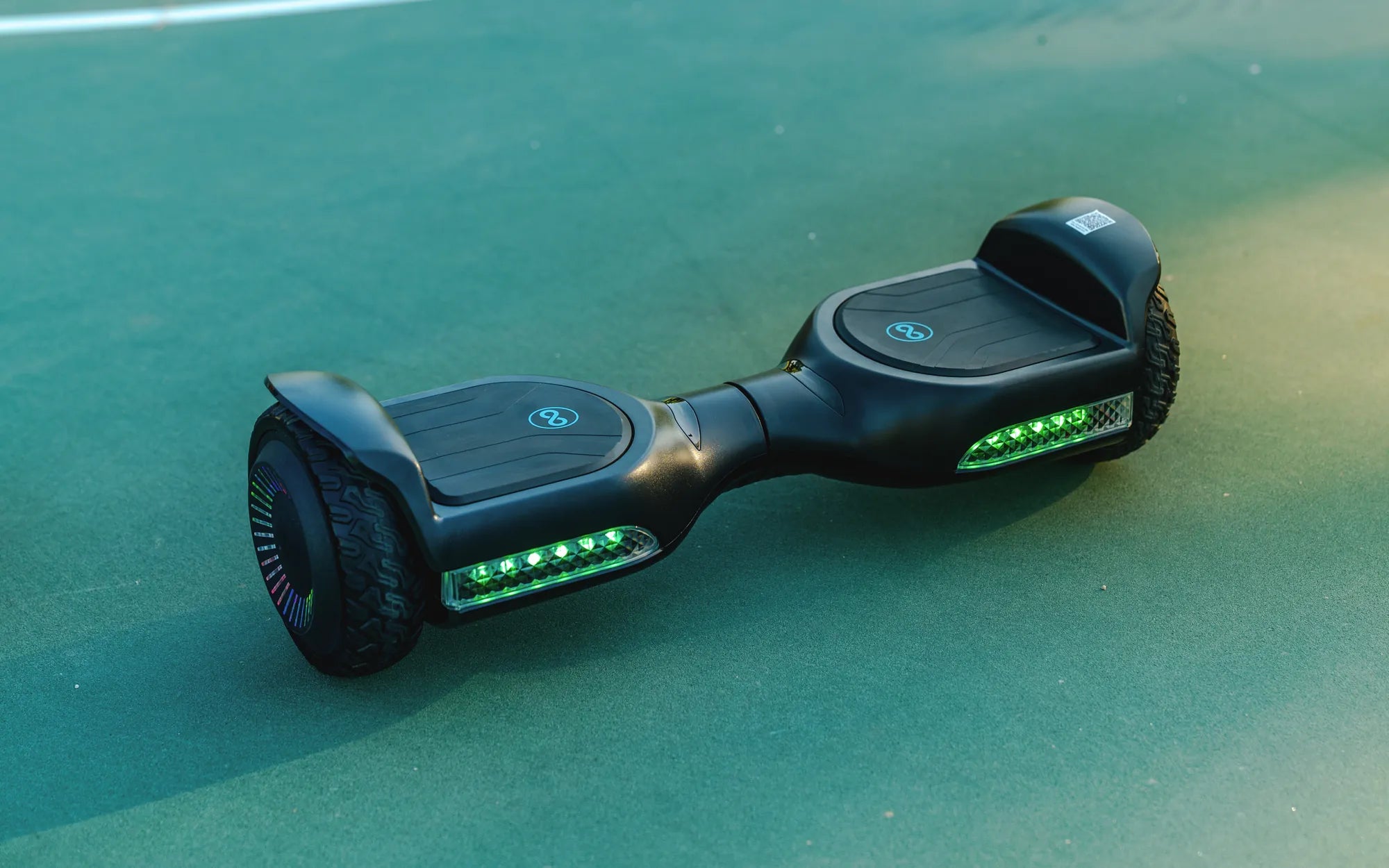
Introduction: Redefining Commuting with Long-Distance Hoverboards
The concept of a long distance hoverboard is no longer science fiction; it's a practical mobility solution reshaping urban landscapes. These advanced self-balancing scooters are engineered for endurance, offering ranges that transform them from backyard novelties into viable vehicles for daily commutes and extended exploration. The future of personal transportation hinges on efficient, compact, and emission-free options, and modern hoverboards are positioned at the forefront of this shift.
This evolution is driven by significant advancements in battery technology, motor efficiency, and robust construction. Brands like Gyroor, a leading electric scooter and e-bike brand trusted by over 100,000 riders, are pioneering this category with models built for adults. They integrate UL-certified batteries, IPX5 water-resistant designs, and reliable 1-year warranties, ensuring safety and durability meet the demands of serious transportation. This article will dissect the technology, applications, and key considerations that define the modern long distance hoverboard.
You will learn how extended-range models achieve their impressive mileage, who benefits most from them, and how they stack up against other personal electric vehicles. We will provide actionable data, safety insights, and maintenance advice to inform your decision. The goal is to move beyond the hype and present a factual, comprehensive look at why these devices are becoming a cornerstone of micro-mobility. The long distance hoverboard represents a significant leap, offering a unique blend of portability, fun, and utility that is hard to match.
The Technology Behind Extended-Range Hoverboards
Extending the operational range of a hoverboard requires a holistic engineering approach. It's not merely about installing a larger battery; it involves optimizing every component for efficiency and reliability. The core systems—power storage, propulsion, and management—must work in concert to deliver consistent performance over 15, 20, or even 30 miles on a single charge. This technological synergy is what separates a true transportation device from a basic recreational toy.
At the heart of this system lies the battery management system (BMS), a critical safety and performance monitor. A sophisticated BMS protects against overcharging, over-discharging, and short circuits, while balancing individual cells to maximize lifespan. It ensures the high-capacity battery delivers its promised potential safely, trip after trip. This focus on integrated system health is a hallmark of reliable brands committed to user safety.
Battery Evolution: From Power Cells to Powerhouses
The single greatest factor enabling the long distance hoverboard is the advancement in lithium-ion battery cells. Early models used small, low-capacity packs, but modern units feature high-density, UL-certified battery assemblies. Range is directly tied to battery capacity, measured in watt-hours (Wh). A higher Wh rating indicates more stored energy.
For example, a standard hoverboard might have a 158Wh battery for 6-8 miles, while a long-distance model can feature a 440Wh or larger pack. Gyroor and other serious manufacturers use cells from reputable suppliers, arranged in robust configurations. These UL-certified packs are tested for 500+ charge cycles, meaning they can maintain a significant portion of their capacity even after years of regular use, providing long-term value and reliability.
Motor Efficiency & Regenerative Braking
Dual brushless hub motors are the standard for modern hoverboards. Their efficiency is crucial for range; they convert electrical energy into motion with minimal waste as heat. More powerful motors (e.g., 700W total) don't just provide higher top speeds—they also handle inclines and variable terrain more effectively, preventing the battery from draining excessively under strain.
A key feature for extending range is regenerative braking. When you slow down or descend a gentle slope, the motors act as generators, converting kinetic energy back into electrical energy to trickle-charge the battery. While the energy recaptured is modest (typically adding 5-10% to overall range in ideal conditions), it exemplifies the smart engineering that maximizes every joule of power in a long distance hoverboard.
Smart BMS & Rider Modes
The Battery Management System (BMS) is the unsung hero of battery safety and longevity. It continuously monitors voltage, current, and temperature. If it detects any parameter outside safe limits, it will shut down power to prevent damage or hazard. This is non-negotiable for devices using high-capacity lithium batteries.
Rider modes further optimize range. Most advanced hoverboards offer selectable modes like Beginner (slower speed, gentle acceleration), Eco (balanced speed and efficiency), and Sport (maximum performance). Using Eco mode for cruising on flat terrain can significantly extend your maximum distance compared to constant Sport mode usage. This gives the rider direct control over the trade-off between speed and range, tailoring the long distance hoverboard experience to the journey's needs.
Practical Applications: Who Needs a Long-Distance Hoverboard and Why?
The utility of a hoverboard skyrockets when its range exceeds 10-12 miles. It transitions from a short-range fun device to a practical tool for specific demographics and daily routines. This expanded capability opens up new possibilities for efficient, enjoyable, and green travel. Understanding these use cases helps identify if a long distance hoverboard aligns with your lifestyle and transportation gaps.
The primary appeal is for trips that are too short to drive efficiently but too long to walk comfortably—the classic "last-mile" scenario. However, with extended range, that "last mile" can become a "first five miles," enabling more substantial point-to-point travel. The compact form factor and intuitive controls make it accessible to a wide range of users, from students to professionals.
The Urban Commuter
For the urban commuter, a long distance hoverboard solves multiple problems. It provides a seamless connection between home, public transit hubs, and the final workplace. Instead of waiting for a bus for two stops or paying for ride-sharing, you can glide the distance in minutes. It's stored easily under a desk or in a closet, eliminating parking fees and theft concerns associated with bicycles.
Campuses are ideal environments for this application. Students can traverse large university grounds between classes quickly without breaking a sweat. The ability to cover 15+ miles on a charge means most users can complete a full day of back-and-forth travel without needing a midday charge, making it a dependable daily driver.
The Recreational Explorer
This user values adventure and leisure. A long distance hoverboard with all-terrain capabilities (featuring larger, air-filled tires) allows for exploration of parks, paved trails, beach boardwalks, and even gentle dirt paths. The extended range eliminates "range anxiety," enabling longer, more immersive excursions without the fear of being stranded with a dead battery.
It encourages spontaneous exploration of a city or neighborhood, covering far more ground than walking. Groups can enjoy extended social rides, and individuals can use it for fitness and outdoor activity. The fun factor is high, but it's now coupled with the practical ability to go the distance, turning a few minutes of fun into hours of exploration.
The Eco-Conscious Traveler
For individuals committed to reducing their carbon footprint, personal electric vehicles (PEVs) are a compelling alternative to car trips. A long distance hoverboard produces zero direct emissions and has a minimal manufacturing footprint compared to a car. By replacing short car trips for errands, coffee runs, or visiting friends nearby, users actively reduce urban congestion and pollution.
When charged using renewable energy sources, its environmental impact becomes even lower. It represents a conscious choice for sustainable mobility, aligning personal convenience with ecological responsibility. Its efficiency—transporting a single person using minimal energy—is a model for future urban transport.
Gyroor's Long-Distance Models: Features and Capabilities
Gyroor has established itself in the personal EV market by emphasizing safety, durability, and performance. Their approach to the long distance hoverboard category reflects this philosophy, integrating high-capacity UL-certified batteries, robust motors, and protective features into sleek designs. Trust from over 100,000 riders across North America and Europe is built on this foundation of reliable engineering and clear value.
Their models cater to both urban commuters and off-road enthusiasts, with specifications tailored for real-world use. Key differentiators include the IPX5 water resistance rating, which protects the internal components from water splashes and light rain—a critical feature for a daily transportation device. Combined with a comprehensive 1-year warranty, Gyroor products are built for the long haul, offering peace of mind alongside extended range.
Model Comparison & Key Specifications
The following table compares two of Gyroor's leading models designed for extended travel, highlighting the specs that matter most for a long distance hoverboard.
| Feature | Gyroor F2 Pro (Commuter Focus) | Gyroor H20 (All-Terrain Explorer) |
|---|---|---|
| Max Range | Up to 20 miles | Up to 18 miles |
| Motor Power | 700W Dual Brushless | 800W Dual Brushless |
| Max Speed | 12.5 mph | 12 mph |
| Battery | 440Wh UL-Certified | 420Wh UL-Certified |
| Tire Type | 8.5" Solid Rubber | 10" Air-Filled (Pneumatic) |
| Water Resistance | IPX5 | IPX5 |
| Key Feature | Sleek design, Bluetooth speaker, LED lights | Superior shock absorption, handles grass/dirt trails |
The F2 Pro prioritizes maximum range and sleek, urban-friendly features for pavement commutes. The H20 sacrifices a couple of miles of range for vastly superior comfort and off-road capability thanks to its pneumatic tires, making it the choice for recreational explorers on varied terrain. Both exemplify the core tenets of a reliable long distance hoverboard.
Built for the Long Haul: Durability and Safety
Durability is engineered into Gyroor hoverboards at multiple levels. The IPX5 rating is a practical standard, ensuring the unit can withstand jets of water from any direction. This means riding through puddles or getting caught in a light rain shower won't cause immediate damage or a safety shutdown, a common failure point in lesser models.
Safety is paramount. Beyond the UL-certified battery packs, frames are constructed from reinforced materials to handle the stresses of adult ridership and occasional bumps. Bright LED headlights and taillights enhance visibility during dawn, dusk, or night riding. The combination of a robust physical build, certified electrical components, and protective features creates a long distance hoverboard that is as safe as it is capable, designed for thousands of miles of use.
Long-Distance Hoverboards vs. Other Personal EVs
Choosing the right personal electric vehicle requires balancing factors like portability, range, learning curve, and cost. A long distance hoverboard occupies a unique niche. It's essential to compare it objectively to its main competitors: electric kick scooters, e-bikes, and electric skateboards. Each has distinct advantages for different scenarios.
Electric scooters often offer greater speed and stability for some riders. E-bikes provide the longest range and the ability to pedal if the battery dies. Electric skateboards offer a thrilling, direct feel. The hoverboard's value proposition centers on its compact footprint, intuitive (once learned) control scheme, and unmatched maneuverability in tight spaces. It's a highly personal form of glide transportation.
Agility and Portability Factor
This is where the long distance hoverboard shines. When not in use, it is a compact, single unit. There are no handlebars to fold or pedals that protrude. Most models weigh between 25-35 lbs, making them relatively easy to carry short distances—up a flight of stairs, onto a train, or into a trunk. This ease of carriage is a significant advantage over bulkier e-scooters or e-bikes.
Its maneuverability is superior. With a tight turning radius (often a full 360-degree spin in place), it navigates crowded sidewalks, busy store aisles, and cramped apartment corridors with ease. For mixed-mode commuters who need to weave through pedestrian traffic and then carry their vehicle onto a bus or train, the hoverboard's form factor is exceptionally convenient.
Terrain and Riding Experience
The riding experience is fundamentally different. Hoverboards are controlled by subtle weight shifts in the feet and ankles, offering a very intuitive and immersive feeling of "gliding." This learning curve is steeper initially than a scooter with handlebars, but many find it more rewarding once mastered. It requires and improves core balance and coordination.
Terrain handling varies by model. Standard hoverboards with solid rubber tires are best on smooth, paved surfaces. All-terrain models like the Gyroor H20, with larger pneumatic tires, can comfortably handle grass, packed dirt, gravel, and minor obstacles. While most e-scooters and e-bikes can handle similar or rougher terrain, the hoverboard's smaller wheel size makes it less suitable for large potholes or very uneven ground at high speed. Choosing the right tire for your primary terrain is critical for a long distance hoverboard.
Maximizing Your Hoverboard's Range and Lifespan
Achieving the advertised maximum range requires understanding the factors that affect battery consumption. Similarly, proper maintenance ensures your investment lasts for years. These practices are especially important for a long distance hoverboard, where battery health is paramount to its core function.
Rider weight is the most significant variable. Heavier riders will see reduced range compared to lighter riders, as the motors must work harder to provide acceleration and maintain speed. Terrain is next: constant hill climbing, riding on soft grass, or navigating rough pavement will drain the battery faster than cruising on smooth, flat asphalt. Wind resistance at higher speeds also plays a role. Riding in a calm, efficient mode (Eco) and maintaining a steady speed, rather than frequent stop-starts, will always yield the greatest distance.
Battery care is non-negotiable. Always use the manufacturer-provided charger. Avoid draining the battery to 0% regularly; try to recharge when it drops to 20-30%. Conversely, don't leave it plugged in for days on end after reaching 100%. For long-term storage (over a month), charge the battery to about 60% and store in a cool, dry place. This minimizes stress on the cells and preserves their capacity.
Regular physical maintenance is simple but effective. Keep the tires properly inflated on pneumatic models. Wipe down the board with a damp cloth to remove dirt and debris, especially around the wheel axles and charging port. Periodically check for loose screws in the frame. These small steps prevent minor issues from becoming major problems, ensuring your long distance hoverboard remains a reliable companion.
FAQ: Your Questions About Long-Distance Hoverboards Answered
Q: How is the range affected by rider weight and terrain?
A: Range is inversely proportional to rider weight and terrain difficulty. A 150 lb rider on flat pavement will achieve near-maximum range. A 250 lb rider tackling hills may see a 30-40% reduction. Manufacturers typically list range based on a ~165 lb rider on ideal terrain.
Q: How long does it take to fully charge a long-range hoverboard?
A>Charge time depends on battery capacity. A large 440Wh battery, like in the Gyroor F2 Pro, typically takes 4-6 hours for a full charge from empty. Using a fast charger (if provided and approved by the manufacturer) can reduce this, but standard charging is recommended for long-term battery health.
Q: Is it difficult to learn to ride a hoverboard as an adult?
A>There is a learning curve, but most adults can become proficient within 30-90 minutes of practice. Start in a Beginner mode, use a wall or railing for support, and practice in a flat, open area like an empty parking lot. The key is to relax and make small adjustments. Protective gear (helmet, wrist guards) is highly recommended during the learning phase.
Q: What maintenance does a Gyroor hoverboard require?
A>Maintenance is minimal. Key tasks include: keeping the board clean and dry, checking tire pressure on pneumatic models monthly, ensuring the charging port is free of debris, and periodically tightening frame screws. The most important maintenance is proper battery charging habits to preserve its lifespan.
Q: How does the warranty and customer support work?
A>Gyroor offers a standard 1-year warranty covering manufacturing defects in materials and workmanship. The UL-certified battery often has its own warranty period (e.g., 6 months). Support is provided via email and phone. It's crucial to purchase from authorized retailers to ensure warranty validity. Always register your product upon purchase.
The Road Ahead for Personal Mobility
The long distance hoverboard has firmly established its place in the micro-mobility ecosystem. By solving the critical limitation of range, it has evolved into a legitimate tool for urban mobility, recreation, and eco-friendly travel. Its unique combination of compact portability, intuitive control, and sufficient endurance addresses a clear need for short-to-medium distance personal transport.
The future will likely bring further refinements: even more energy-dense batteries, advanced stability and safety systems like gyroscopic assistance, and smarter connectivity. The core appeal—a simple, fun, and efficient way to move—will remain. As cities become denser and the focus on sustainable living intensifies, vehicles that are personal, electric, and compact will only grow in importance.
Brands like Gyroor are leading this charge by prioritizing the fundamentals that matter: certified safety through UL standards, real-world durability with IPX5 ratings, and reliable customer support backed by a warranty. This commitment transforms the long distance hoverboard from a gadget into a dependable asset. For commuters, explorers, and eco-conscious individuals, it offers a glimpse into a more agile and enjoyable future of getting around.
Ready to experience extended-range personal transportation? Explore Gyroor's collection of high-performance hoverboards, e-bikes, and electric scooters engineered for safety, range, and durability. Browse the full Gyroor collection at gyroorboard.com to find the model that matches your journey.
One Side of Hoverboard Blinking Red: Causes, Fixes, and Safety Tips
Turn Hoverboard into Go Kart: A DIY Guide to Building Your Own Ride