

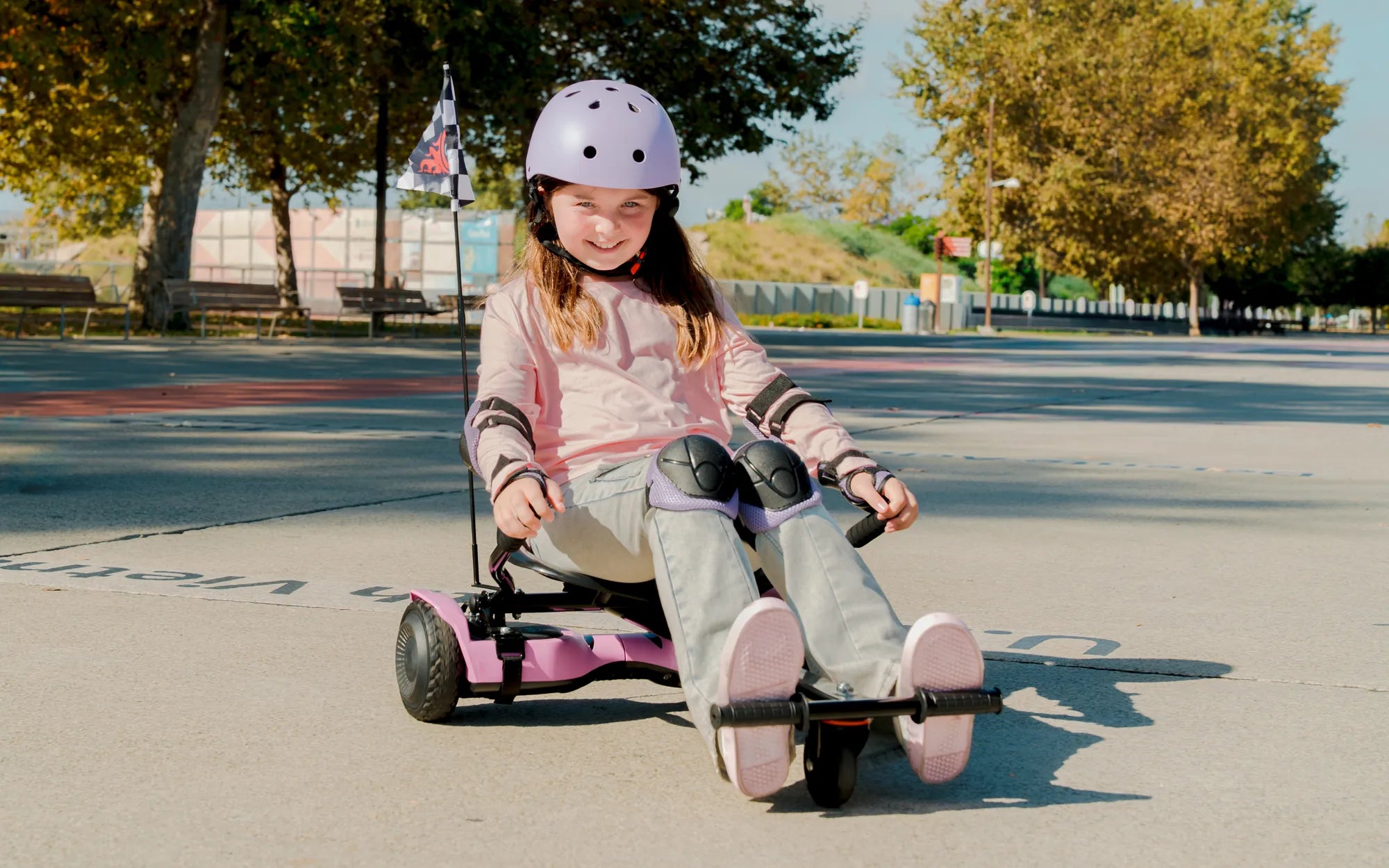
Choosing the right electric scooter for your child can transform their daily routine, turning short trips and neighborhood play into extended adventures. This guide will help you understand what makes a long range kids electric scooter a worthwhile investment, how to evaluate key safety and performance features, and what to look for in a reliable brand. You'll learn to match scooter specifications to your child's age and lifestyle, ensuring countless miles of safe, independent fun.
Why a Long-Range Kids Electric Scooter is a Game-Changer
Modern parenting involves a constant negotiation between screen time, outdoor activity, and logistical chores like shuttling kids to friends' houses or practice. A capable electric scooter addresses all three. It incentivizes outdoor exploration, provides a sense of independence for the child, and can reduce the number of short car trips for parents.
A true long-range model elevates this from a toy to a practical tool. Instead of a 20-minute ride before needing a charge, a scooter with extended range can support a full afternoon of exploration, multiple trips to the park, or a week of commuting to school without daily charging. This reliability builds trust and allows for more spontaneous adventure.
For children, the benefit is pure freedom within safe boundaries. They can explore further, visit friends, and develop coordination and road awareness. For parents, it's an investment in an active childhood, reducing reliance on passive entertainment. Brands like Gyroor, trusted by over 100,000 riders, design these scooters with this balance of fun and function in mind.
The key is moving beyond basic models to ones built for consistent, real-world use. A long-range scooter isn't just about distance; it's about durable performance, sustained power, and the peace of mind that comes from robust safety features, allowing kids to enjoy their newfound mobility to the fullest.
Defining "Long Range" for Kids: Expectations vs. Reality
The term "long range" in the kids' electric scooter market requires careful interpretation. For a child's scooter, long range typically means 8 to 15 miles per charge, far exceeding the 3-5 miles offered by many entry-level models. This translates to multiple days of typical neighborhood use or several hours of continuous riding at the park.
It's crucial to understand that the advertised maximum range is achieved under ideal laboratory conditions: a lightweight rider on perfectly flat, smooth pavement at a slow, constant speed in mild temperatures. Real-world range is affected by multiple variables that parents must consider.
Rider weight is the most significant factor. A scooter rated for 12 miles with a 120-pound rider may only achieve 8 miles with a 150-pound rider. Terrain is equally important; hills, grass, and rough pavement demand more power from the motor, draining the battery faster. Frequent stopping and starting, use of the highest speed mode, and cold weather (which reduces battery efficiency) will also decrease the achievable range.
Therefore, a practical approach is to view the advertised range as a "best-case scenario" and subtract 20-30% for real-world conditions. When comparing models, a scooter with a higher watt-hour (Wh) battery rating will generally offer more consistent range. This consistency is what makes a scooter truly useful, as it performs reliably day after day without dramatic drops in power.
Key Safety Features Every Parent Must Look For
Safety is the non-negotiable foundation of any kids' electric scooter. Beyond the mandatory helmet, the scooter itself must be engineered with multiple layers of protection. The first line of defense is a reliable speed limiter or parental control, often accessible via a companion app or PIN code, allowing you to cap the top speed as your child gains experience.
Braking systems are critical. A combination of a mechanical brake (like a rear disc or foot brake) and an electronic brake provides redundancy. The electronic brake engages when you release the throttle, helping to control speed downhill. The deck should be wide and covered with a grippy, non-slip surface to ensure stable footing, and the handlebars must be adjustable to fit your child's height for proper control.
Visibility is a major safety component, especially for evening rides. Look for bright LED headlights and taillights, and consider adding reflective stickers. The construction quality—tight bolts, secure folding mechanisms, and solid welds—prevents mechanical failures. A robust frame with a weight capacity well above your child's current weight adds a margin of safety for growth and cargo.
Finally, the overall design should prioritize stability. Larger wheel diameters (8-inch or more) handle bumps and cracks better than tiny wheels, reducing the risk of a fall from a sudden stop. These features work together to create a safe riding environment, letting kids focus on fun while parents have one less thing to worry about.
The Importance of UL-Certification and Water Resistance
Two technical specifications are paramount for long-term safety and durability: battery certification and water resistance. A UL-certified battery, like those used in all Gyroor scooters, has undergone rigorous independent testing for electrical, fire, and casualty safety. This certification is your best guarantee against battery malfunctions that can lead to overheating or fire, a critical concern for any device kept in your home.
Water resistance, measured by an IP (Ingress Protection) rating, determines how well the scooter's electronics are sealed against moisture. An IPX5 rating, a standard for many quality scooters, means the unit can withstand water jets from any direction. In practical terms, this protects the scooter from puddles, wet pavement, and light rain. It prevents corrosion and electrical shorts, greatly extending the scooter's lifespan and reliability.
Without these protections, a scooter is vulnerable to failure from everyday use. A non-certified battery is a latent risk, and a scooter with poor water resistance can be permanently damaged by a single unexpected puddle. When evaluating models, treat UL certification and a minimum IPX5 rating as absolute requirements, not optional extras. They are the bedrock of a safe, long-lasting investment.
Performance & Practicality: Balancing Fun with Function
Matching scooter performance to your child's needs ensures both enjoyment and utility. Motor power, measured in watts (W), dictates hill-climbing ability and acceleration. For kids aged 8-12, a 150W to 250W motor is typically sufficient for neighborhood hills and paved paths. More power isn't always better for children; it must be paired with effective parental speed controls.
Wheel type dramatically affects ride comfort and handling. Air-filled (pneumatic) tires absorb vibrations from rough surfaces, providing a smoother ride than solid rubber tires. However, they require occasional air checks and are susceptible to punctures. Solid tires are maintenance-free but transmit more bumps. Larger wheels (8" or 9") roll over obstacles more easily than smaller 6" wheels.
The scooter's weight and portability are practical considerations for parents. A lighter scooter is easier for a child to maneuver and for you to carry if needed, but it may use a smaller battery. A heavier scooter often has a larger battery for longer range but can be cumbersome. Check the folded dimensions to see if it fits in your car trunk easily.
A longer-range battery supports consistent performance. Frequent deep discharges (running the battery to 0%) can stress it over time. With a larger battery, your child can use the scooter for multiple days on a partial charge, which is healthier for the battery's long-term lifespan. This makes the scooter a more dependable part of their routine.
The Gyroor Advantage: Built for Peace of Mind
When navigating the kids' e-scooter market, Gyroor stands out by aligning its engineering directly with parental concerns. Their focus begins with core safety: every model utilizes a UL-certified battery pack, tested for over 500 charge cycles, and features an IPX5 water-resistant design. This addresses the two biggest hidden risks head-on, before the first ride even begins.
This commitment extends to real-world durability. Frames are built to withstand the bumps and jumps of active kids, and components are selected for reliability. The brand's 1-year comprehensive warranty and accessible customer support act as a tangible safety net for your investment, ensuring that any issues are resolved promptly.
For parents, the value is in the integrated system. It’s not just a scooter with a long-range battery; it’s a vehicle where the extended range is supported by a safe battery, a durable waterproof build, and reliable after-sales service. This holistic approach allows the scooter to deliver on its promise of adventure without becoming a source of constant maintenance worries or safety anxieties.
Ultimately, the Gyroor advantage translates to more time for fun and less time managing the product. Kids get a robust, powerful scooter they can rely on, and parents get the confidence that comes from certified safety features and strong brand support, enabling countless worry-free miles of exploration.
Choosing the Right Model: A Parent's Checklist
Use this actionable checklist to translate specifications into practical decisions. Start by assessing your child's primary use case. Is it for paved neighborhood cruising, park paths, or mild off-road trails? This will guide your needs for wheel type and motor power.
Next, calculate your required real-world range. Consider a typical week: rides to school, the park, or a friend's house. Take the advertised range, apply a 25% reduction for real-world factors, and see if it meets your needs. It's better to have excess range for flexibility than to constantly worry about the battery.
Safety features are your filter. Mandatory items include: a UL-certified battery, IPX5 or higher water resistance, a reliable speed limiter (preferably with app control), and a dual braking system (electronic + mechanical). Verify the weight capacity exceeds your child's weight by at least 30 pounds.
Finally, consider practicalities. Can your child easily lift and carry the scooter if needed? Do the folded dimensions fit in your storage space or car? Is the warranty comprehensive and the brand's customer support well-reviewed? Answering these questions will lead you to the ideal model.
| Consideration | Question to Ask | Ideal Spec for Ages 8-12 |
|---|---|---|
| Range & Battery | Will it last for a full afternoon of play or multiple short trips? | 10-13 mi advertised range; UL-certified battery |
| Safety Controls | Can I limit the speed as my child learns? | App-based or PIN speed limiter with multiple modes |
| Build & Terrain | Can it handle the bumps on our sidewalk or park paths? | 8"+ air-filled tires; 200W+ motor; IPX5 rating |
| Practicality | What is the true total weight if we have to carry it? | Under 30 lbs for easy portability; secure folding mechanism |
Maintenance & Care: Ensuring Longevity and Safety
Proper maintenance maximizes your scooter's lifespan, safety, and performance. Establish a simple pre-ride checklist with your child: check tire pressure (for air-filled tires), test the brakes, ensure the throttle and lights work, and inspect for loose bolts or damage. This habit builds responsibility and prevents accidents.
Battery care is the most important routine. Avoid letting the battery fully deplete. Charge it after use, but don't leave it plugged in continuously for days. Store the scooter in a cool, dry place, away from direct sunlight or freezing temperatures. If storing for more than a month, charge the battery to about 60% first.
Keep the scooter clean. Use a damp cloth to wipe down the deck, frame, and wheels. Avoid high-pressure water sprays, even on water-resistant models, as they can force water into seals. Periodically check and tighten bolts, especially on the folding mechanism, handlebars, and stem, using the provided tools.
Address issues promptly. If you notice a significant drop in range, strange noises from the motor, or brake failure, stop using the scooter and consult the manual or customer support. Using official replacement parts, like Gyroor's own batteries and tires, ensures compatibility and maintains safety certifications. Regular care protects your investment and keeps every ride as safe as the first.
Frequently Asked Questions (FAQs) for Parents
Q: What age is appropriate for a long-range kids electric scooter?
A> Most children are ready between ages 8 and 10, depending more on maturity, coordination, and ability to follow safety rules than age alone. They should be comfortable on a non-electric scooter first. Parental supervision is essential initially, and a scooter with a beginner speed mode (e.g., 5-7 mph) is highly recommended.
Q: How do I ensure my child rides safely?
A> Safety is multi-layered. Gear is non-negotiable: a properly fitted helmet, plus knee and elbow pads. Establish clear rules: no riding on roads with cars, obey sidewalk etiquette, avoid wet surfaces, and don't ride at dusk without lights. Use the scooter's parental controls to set an appropriate speed limit and review the rules regularly.
Q: Is the battery replaceable, and how long does it last?
A> Yes, the battery is typically replaceable. Quality batteries from reputable brands like Gyroor are rated for 500+ full charge cycles. With typical use, this can mean 2-4 years before a noticeable decline in range. It is crucial to replace it with an official, UL-certified battery from the manufacturer to maintain safety and performance.
Q: Can the scooter handle hills in our neighborhood?
A> It depends on the motor power and the hill's steepness. A 250W motor can handle moderate inclines common in residential areas. For very steep hills, manage expectations; the scooter may slow significantly. The rider's weight also affects hill-climbing ability. Test on a familiar hill during a demo, if possible.
Q: How long does it take to charge fully?
A> Charge times vary by battery size. Most kids' scooter batteries (around 36V/5Ah) take 3 to 5 hours for a full charge from empty. Using the provided charger and following the manufacturer's instructions is vital for safety. Overnight charging is generally safe with modern chargers that have auto-shutoff, but it's best practice to charge when you can monitor it.
Investing in Adventure and Independence
A well-chosen long-range kids electric scooter is more than a toy; it's an investment in an active, outdoor childhood and a tool that fosters responsibility and independence. The right model opens up a wider radius of exploration, encourages physical activity, and provides a fun, efficient way to navigate your neighborhood.
The cornerstone of this investment is certified safety and reliable performance. Prioritizing features like UL-certified batteries, robust water resistance, and effective parental controls ensures that the fun is built on a foundation you can trust. This peace of mind is what transforms a simple purchase into a valuable addition to your family's lifestyle.
By following the guidelines in this ultimate guide—from understanding real-world range to performing simple maintenance—you can select a scooter that will deliver countless hours of enjoyment and stand up to the rigors of youthful adventure. The goal is to create memories of freedom and fun, without the worry of mechanical failure or safety compromises.
Ready to explore models that combine extended range with top-tier safety? Browse the full Gyroor collection, featuring UL-certified, IPX5-rated scooters designed for young explorers, at gyroorboard.com. Find the perfect scooter to start your child's next adventure.
Hoverboard for 6 Year Old Boy: Ultimate Fun & Safety Guide
How to Fix a Hoverboard That Won't Charge: A Step-by-Step Guide to Diagnosis & Repair