

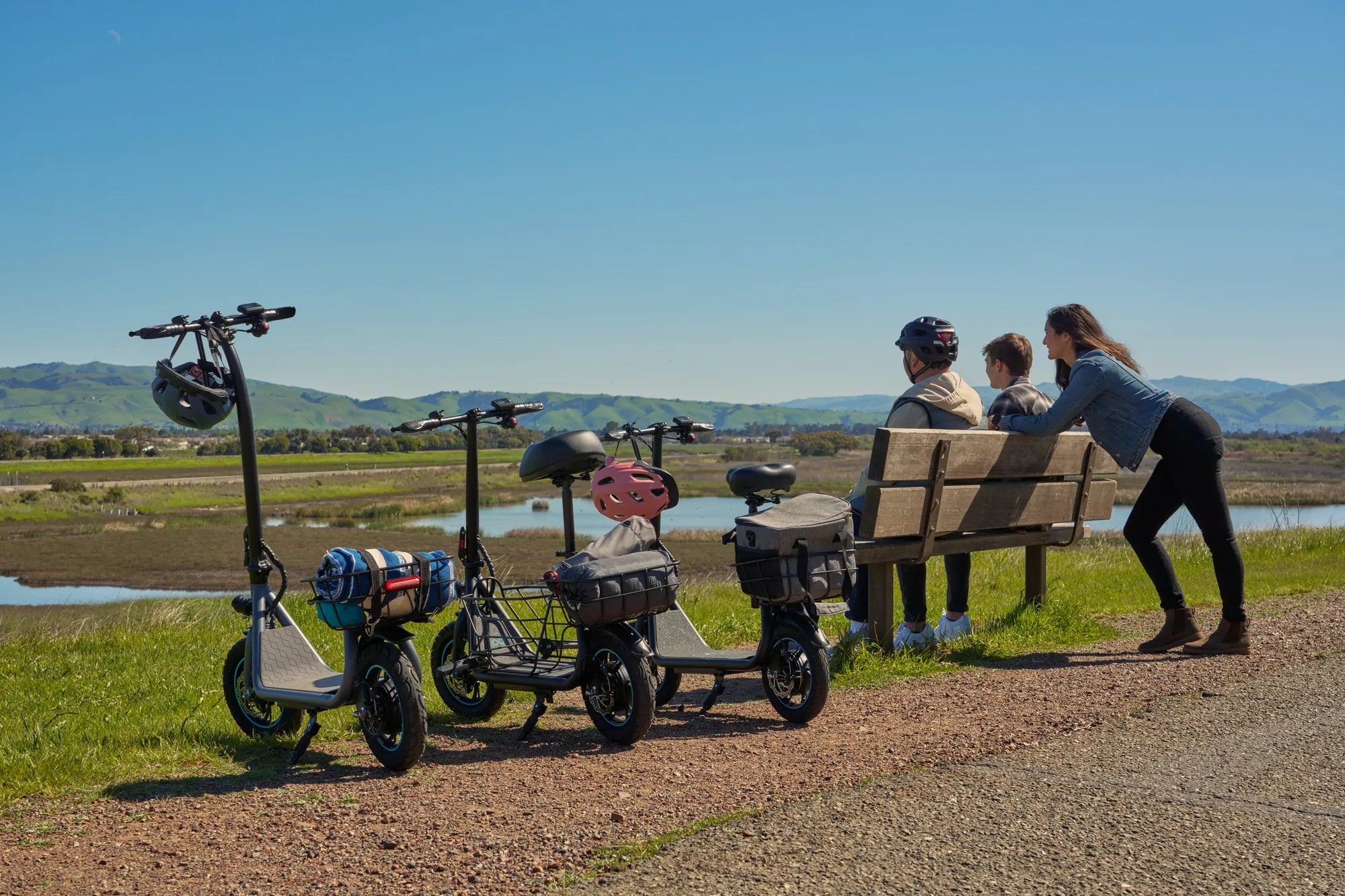
Forget wobbly two-wheelers and cumbersome cargo bikes. The mini electric tricycle has emerged as a definitive solution for stable, accessible, and utility-focused personal transportation. This guide will provide a detailed analysis of this vehicle category, from its core engineering advantages and ideal user profiles to the critical specifications that define a quality model. You'll learn how to select a durable e-trike, maintain it properly, and understand why brands like Gyroor, trusted by over 100,000 riders, set the standard for safety and reliability in this growing market.
The Rise of the Mini Electric Tricycle
The personal electric vehicle (PEV) landscape is evolving beyond pure speed and portability. The mini electric tricycle represents a significant shift towards inclusivity and practicality. It merges the zero-emissions electric drive of an e-scooter with the inherent stability of a three-wheeled platform. This fusion creates a vehicle uniquely suited for urban errands, campus commutes, and riders who prioritize confidence and utility over compact folding size.
This innovation directly addresses common barriers to micro-mobility adoption. Many potential riders are deterred by balance concerns, especially when carrying items or navigating stop-and-go traffic. The mini electric tricycle eliminates the need to put a foot down at stops, providing a planted, secure feeling from the moment you step on. Its design philosophy centers on making electric mobility accessible to a broader demographic.
Leading brands in this space, such as Gyroor, have engineered these vehicles with a focus on robust construction and certified safety. By incorporating features like UL-certified battery packs and IPX5 water-resistant designs, they ensure the mini electric tricycle is not just a novelty but a dependable daily companion. The market demand reflects this, with these vehicles becoming common sights in neighborhoods, on college quads, and in business districts for last-mile delivery.
The growth of the mini electric tricycle is part of a larger trend towards specialized PEVs. As cities become denser and environmental awareness grows, consumers seek tailored solutions. This vehicle fills a distinct niche between the agility of a two-wheeled scooter and the carrying capacity of a larger cargo e-bike, offering a compelling middle ground for practical, everyday travel.
Why Choose a Three-Wheeled Design? Stability & Safety Unpacked
The fundamental advantage of a mini electric tricycle lies in its geometry. A three-point contact with the ground creates a stable triangle, vastly reducing the risk of tipping compared to two-wheeled counterparts. This stability is most apparent at low speeds and when completely stopped, situations where traditional e-scooters and bicycles require rider skill to remain upright. For new riders or those with mobility considerations, this is a transformative feature.
Safety is enhanced beyond simple balance. The wider track of the two rear wheels provides superior traction and a more confident stance on uneven surfaces like brick paths, cracked pavement, or slightly sloped curbs. This design inherently resists the side-to-side wobble that can occur on two-wheelers when navigating obstacles or during sudden maneuvers. It instills a level of confidence that encourages more frequent use.
From an engineering perspective, this stability allows for practical utility features. A stable platform can support a front basket or rear rack without negatively affecting the vehicle's handling, as the weight is distributed across three wheels. This makes carrying groceries, bags, or even a small pet not only possible but easy and secure. The design prioritizes functional stability over minimalist portability.
Gyroor's approach to this design emphasizes a low center of gravity and a reinforced chassis. By carefully positioning the battery and motor within the stable triangular frame, they enhance the vehicle's innate safety profile. This commitment to stable engineering ensures that the promise of the three-wheeled design is fully realized in a durable, real-world product that riders can trust for daily use.
Comparing Rider Profiles: Who Benefits Most?
The mini electric tricycle serves diverse needs. Urban commuters and errand-runners benefit immensely. The stable platform is perfect for navigating crowded sidewalks and multi-use paths while carrying shopping bags or a work backpack. The ability to come to a complete, balanced stop at traffic lights removes a significant stressor from urban travel.
College students represent another core demographic. Navigating a large campus with books, a laptop, and other supplies is a classic challenge. A mini electric tricycle provides a fast, stable, and cost-effective solution. It can easily handle the distances between classes and offers secure storage for belongings, all without the need for parking permits associated with cars.
Seniors and individuals seeking gentle recreation or stable transport find great value in this vehicle. The low step-through design and effortless electric assist enable outdoor mobility without the physical strain of a traditional bicycle or the balance requirements of a scooter. It promotes independence and an active lifestyle in a safe, controlled manner.
Finally, parents making short school runs or neighborhood trips appreciate the utility. Some models can accommodate a child seat on the rear rack, and the stable design is safer when carrying precious cargo. The quiet electric motor and zero local emissions also make it a community-friendly alternative to short car trips, contributing to cleaner air and less congestion.
Key Features to Look For in a Quality Mini E-Trike
Selecting a high-quality mini electric tricycle requires careful attention to specifications that directly impact safety, performance, and longevity. Not all models are created equal, and prioritizing certified components and durable construction is essential for a worthwhile investment. This buyer's guide outlines the non-negotiable features.
The motor, battery, and range form the performance trifecta. Look for a motor with sufficient power, typically between 350W and 500W, to handle moderate inclines and provide peppy acceleration. Real-world range is more important than theoretical maximums; a reliable mini electric tricycle should offer 15 to 25 miles per charge under normal riding conditions, which covers most daily needs.
Power, Range & Battery Safety
Battery safety is paramount. Insist on a model that uses a UL 2271 or UL 2849 certified battery pack. This certification means the battery has undergone rigorous testing for electrical, mechanical, and environmental safety, drastically reducing fire risk. Gyroor, for example, equips its models with UL-certified batteries tested for over 500 charge cycles, ensuring both safety and long-term capacity retention.
The charging system should also be robust. A quality charger will have overcharge protection and temperature management. Charging time typically ranges from 4 to 7 hours for a full cycle. Remember, a cheaper model with an uncertified battery represents a significant safety hazard and a poor investment, as the battery will degrade quickly and lack reliable warranty support.
Build Quality & Durability
The frame material is the vehicle's skeleton. Aerospace-grade aluminum alloy is the standard for a quality build, offering an excellent strength-to-weight ratio and corrosion resistance. Check the vehicle's maximum weight capacity; a robust model should support at least 220-265 lbs (100-120 kg). The finish should be high-quality, with tight tolerances and no sharp edges.
Weather resistance is critical for a vehicle used outdoors. An IPX5 water-resistant rating is a strong indicator of quality. This means the electrical components can withstand low-pressure water jets from any direction, protecting against rain and road spray. Gyroor designs its e-trikes to this standard, ensuring the electronics remain protected during all-weather riding, which is essential for long-term durability.
Ride Comfort & Practical Features
Comfort transforms a utility vehicle into a pleasure to ride. Look for features that absorb road vibrations. Front suspension, whether spring or hydraulic, smooths out bumps and cracks. Pneumatic (air-filled) tires provide far better cushioning and traction than solid rubber tires, significantly improving ride quality on uneven surfaces.
Practical features enhance usability. Integrated lighting is a must for safety—a bright LED headlight and a rear brake light ensure visibility. A built-in horn or bell is essential for pedestrian areas. Storage solutions like a front basket or a rear cargo rack are invaluable for daily use. Finally, a comfortable, adjustable seat and intuitive controls (thumb throttle, easy-to-reach brakes) make every journey effortless.
Mini Electric Tricycle vs. Alternatives: A Practical Comparison
To understand the unique value proposition of a mini electric tricycle, it's helpful to compare it directly to other popular micro-mobility options. The table below provides a clear, data-driven comparison across key parameters. This analysis highlights that the mini electric tricycle is not necessarily "better" than all alternatives, but it is uniquely suited for specific use cases prioritizing stability and utility.
| Feature | Mini Electric Tricycle | Standard E-Scooter | Compact E-Bike |
|---|---|---|---|
| Primary Strength | Inherent stability, utility | Portability, agility | Speed, range, exercise |
| Learning Curve | Very low (most stable) | Moderate (requires balance) | Low (like a bicycle) |
| Cargo Capacity | High (integrated baskets/racks) | Low (backpack only) | Moderate to High (panniers/racks) |
| Portability/Storage | Low (bulky, rarely folds) | Very High (folds compactly) | Low to Moderate (can be heavy) |
| Ideal Use Case | Urban errands, campus travel, seniors | Last-mile commute, multimodal travel | Longer commutes, fitness, hilly terrain |
| Typical Price Point | $$$ | $$ | $$$$ |
The mini electric tricycle excels where stability and the ability to carry items are paramount. It is the clear choice for someone who needs to reliably transport groceries or packages without worrying about balance. The standard e-scooter wins on pure portability and cost for a rider who needs to combine it with public transit and has minimal cargo needs.
The compact e-bike offers greater speed, range, and the option for pedal-assisted exercise, making it ideal for longer commutes. However, it requires more storage space and generally comes at a higher price point. The mini electric tricycle occupies a specialized niche, offering a compelling blend of electric assist, car-replacing utility, and accessible design that neither of the other two options can match for its target audience.
Maximizing Your Investment: Maintenance & Warranty Insights
A mini electric tricycle is a significant purchase, and proper care ensures it delivers value for years. Basic maintenance is straightforward but crucial. Regularly check tire pressure; properly inflated pneumatic tires improve range, ride comfort, and prevent pinch flats. Inspect brake pads for wear and test brake function before each ride. Keep the vehicle clean, especially after riding in wet conditions, to prevent dirt from damaging moving parts.
Battery care is central to longevity. Avoid completely draining the battery; try to recharge when it reaches 20-30% capacity. Store the vehicle and battery in a cool, dry place, away from extreme temperatures. If not using the vehicle for an extended period, store the battery at around 50-60% charge and perform a top-up charge every few months. Following these practices helps maximize the battery's lifespan, which on a quality model like those from Gyroor, is designed for 500+ cycles.
The single most important factor in protecting your investment is a strong warranty and reliable customer support. A comprehensive warranty should cover the frame, motor, controller, and battery for a significant period. Gyroor offers a reliable 1-year warranty on its e-trikes, providing peace of mind against manufacturing defects. This warranty support is a key differentiator from generic or uncertified brands that may offer no meaningful coverage.
Accessible customer service is equally vital. Before purchasing, research the brand's support channels. A reputable company will have clear contact methods, a knowledge base, and available replacement parts. Gyroor maintains US-based customer support to assist with technical questions and parts orders, ensuring that if an issue arises, it can be resolved efficiently, protecting your investment in the long run.
Frequently Asked Questions (FAQ)
Q1: Do I need a license or insurance to ride a mini electric tricycle?
Regulations vary by state and municipality. In most areas in the US, a mini electric tricycle with a top speed under 20 mph and a motor under 750W is classified similarly to an electric bicycle. This typically means no driver's license, vehicle registration, or insurance is required. However, you must always check your local and state laws, as helmet requirements and allowed pathways (sidewalk vs. bike lane) can differ.
Q2: How does the handling differ from a two-wheeled e-scooter, especially on turns?
The handling is more stable but requires a different technique for turns. Unlike a two-wheeler that leans into a turn, a trike must be steered more deliberately. You countersteer slightly and use your body weight less. It feels more like steering a go-kart. The key is to slow down before entering a turn, as the three-wheeled design is less agile at high speeds and can feel tippy if you turn too sharply. Practice in a safe, open area to get accustomed to it.
Q3: Can it handle moderate hills and different road surfaces?
A quality mini electric tricycle with a 350W-500W motor can handle moderate hills, but steep inclines will slow it down significantly. The wide, stable base and often wider tires provide good traction on paved roads, packed gravel, and brick paths. However, it is not designed for off-road use, soft sand, or deep mud. The suspension and pneumatic tires on models like Gyroor's help absorb vibrations from uneven pavement, providing a comfortable ride on typical urban surfaces.
Q4: Are Gyroor e-trikes assembled upon delivery, and what tools are needed?
Gyroor e-trikes are shipped partially assembled to ensure safe transport. Typically, the final assembly is straightforward, requiring the attachment of the front wheel, handlebars, seat, and sometimes the front basket. All necessary tools (usually Allen wrenches) are included in the box. The process is designed to be user-friendly, often taking 15-30 minutes with the included step-by-step instructions. For those who prefer, local bike shops can also complete the assembly for a small fee.
Q5: What is the charging time and battery lifespan for a typical model?
Charging time for a fully depleted battery on a quality mini electric tricycle is typically between 4 to 7 hours. The battery lifespan is measured in charge cycles. A high-quality, UL-certified battery, like those used by Gyroor, is rated for 500+ full charge cycles while maintaining a significant portion of its original capacity. With typical use (a few charges per week), this translates to several years of reliable service. Proper charging habits, as outlined in the maintenance section, are key to reaching this lifespan.
Conclusion: The Smart Choice for Stable, Sustainable Mobility
The mini electric tricycle stands out as a thoughtfully engineered vehicle that prioritizes real-world utility and accessible mobility. Its three-wheeled design delivers unparalleled stability, making electric travel a viable, confidence-inspiring option for commuters, students, seniors, and families alike. When paired with essential quality features—UL-certified batteries, durable water-resistant construction, and practical comfort elements—it becomes a reliable tool for replacing car trips and enhancing daily life.
The true value of this vehicle is fully realized only when it is built to last. Choosing a brand with a proven commitment to safety standards, robust engineering, and strong customer support is not an optional extra; it is the foundation of a good purchase. This ensures your investment is protected and your riding experience remains positive for the long term.
For those seeking a stable, versatile, and eco-friendly way to navigate their community, the mini electric tricycle presents a compelling solution. It represents a shift towards purposeful personal electric vehicles designed for everyday life, not just recreation. By selecting a model that emphasizes safety, durability, and practical design, you are choosing a smarter, more sustainable form of mobility.
Ready to experience the stability and utility of a premium mini electric tricycle for yourself? Explore engineering that puts safety first with a trusted brand. Browse the full Gyroor collection, featuring UL-certified, water-resistant e-trikes backed by a reliable 1-year warranty, at gyroorboard.com.
What is the Fastest Mobility Scooter? Top Models & Speed Guide
What is the Fastest Mobility Scooter? Top Models & Speed Guide