



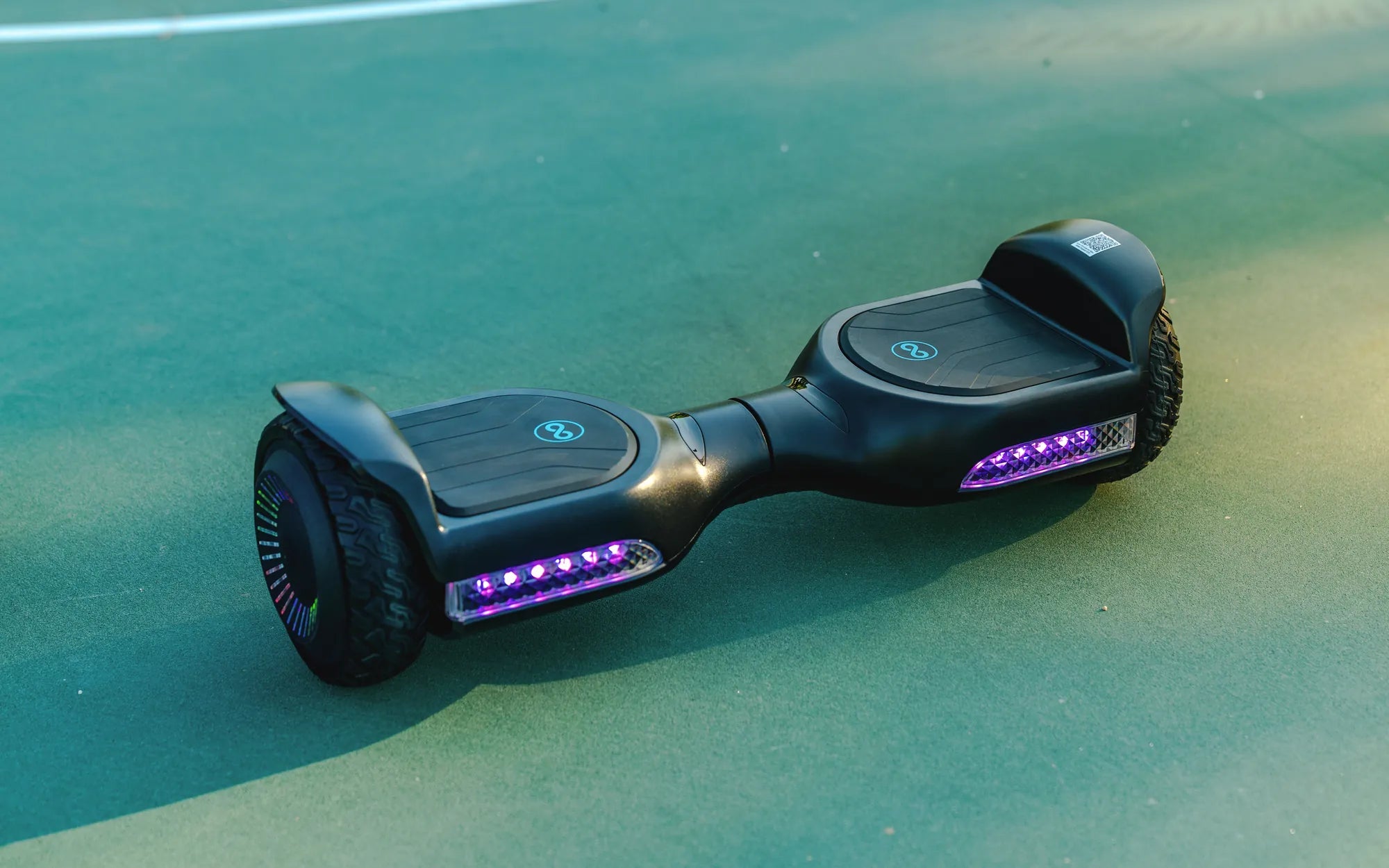
Introduction: Why a Mini Hoverboard is the Perfect Ride for Your 5-Year-Old
Finding the right first electric ride for a young child balances excitement with essential safety. A mini hoverboard for a 5 year old is specifically engineered for this delicate balance. These are not just smaller versions of adult models; they are purpose-built with scaled-down power, enhanced stability, and critical safety features to foster confidence and coordination.
This guide serves as your comprehensive resource. We will dissect the key features that define a true kid-safe hoverboard, outline non-negotiable safety protocols, and provide a proven teaching framework. The goal is to transform a thrilling new toy into a tool for developing balance, spatial awareness, and responsible outdoor play, all within the safest possible parameters.
What Makes a Hoverboard "Mini" and Kid-Safe? Key Features Explained
A true mini hoverboard for a 5 year old is defined by a specific set of engineering and design choices. The core differentiators from standard models are size, speed, weight capacity, and integrated safety technology. These features work in concert to create a manageable and secure riding experience for a young child's first foray into self-balancing vehicles.
The deck is typically narrower and shorter, allowing a child's smaller stance to feel secure and in control. Wheel diameter is often reduced to 4.5 to 6.5 inches, lowering the center of gravity. Crucially, the weight capacity is calibrated for children, usually between 44 to 120 lbs, ensuring the sensors and motors respond appropriately to a lighter rider's inputs.
Speed and Power: Why Less is More for Little Riders
For a 5-year-old, controlled speed is the cornerstone of safety. A quality mini hoverboard for a 5 year old will have a maximum speed capped between 5 and 7 miles per hour. This is fast enough to feel exhilarating but slow enough for a supervising adult to easily keep pace on foot. Dual motors of 150W to 200W each provide enough torque for gentle inclines and smooth acceleration without the jarring, unpredictable power surges found in some models.
This limited power profile is intentional. It allows the child to master the fundamentals of balance and leaning without being overwhelmed by speed. The learning curve becomes gradual, building muscle memory and confidence at a pace suited to their developmental stage. It's a foundational principle: mastery before velocity.
Size, Weight, and Portability: Finding the Right Fit
Physical dimensions are critical. The ideal deck length for a young child is between 15 and 18 inches, with a width that accommodates their feet without forcing an overly wide stance. The overall weight of the hoverboard itself matters significantly; a model weighing 10-15 lbs is light enough for a parent to carry easily but has enough heft to remain stable under a child.
Portability extends to the handle. Many mini hoverboards, like those in Gyroor's lineup, include a built-in carry handle or a lightweight design that simplifies transport from the garage to the park. This ergonomic consideration acknowledges that the parent is an integral part of the riding ecosystem, facilitating practice sessions in optimal environments.
Essential Safety Tech: UL-Certification, Learning Modes, and More
Beyond physical size, embedded technology defines safety. The most critical component is the battery. Insist on a hoverboard with a UL 2272 certified battery pack, like those used in all Gyroor models. This certification rigorously tests for electrical and fire safety, mitigating the primary risk associated with early hoverboard designs.
A beginner or learning mode is non-negotiable. This software feature limits the maximum speed and softens the acceleration curve, giving your child a gentler introduction. Additional must-have features include non-slip, textured foot pads for secure footing, bright LED headlights and rim lights for visibility during dusk rides, and an IPX4 or IPX5 water-resistance rating to protect against puddles and wet grass.
Top Safety Gear and Prep: Non-Negotiables for Your Young Rider
The hoverboard itself is only one part of the safety equation. Comprehensive protective gear is an absolute requirement, not a suggestion. Before the first ride, establish the rule that gear is mandatory. This sets a precedent for responsible riding that extends to bicycles, scooters, and other activities.
Preparation also involves the riding environment and the hoverboard's condition. A quick pre-ride check of tire pressure, battery level, and housing for cracks should become routine. This teaches your child to respect their equipment and reinforces that safety is a proactive, shared responsibility between rider and parent.
The Safety Gear Checklist: Helmet, Pads, and Proper Shoes
Every ride must start with this kit. The helmet must be CPSC-certified for cycling or multi-impact sports and fit snugly without wobbling. Knee and elbow pads should have hard plastic shells and comfortable, secure straps. Wrist guards are highly recommended, as instinct leads to putting hands out during a fall.
Footwear is equally important. Closed-toe shoes with flat, rubber soles (like sneakers) are essential. They provide grip on the foot pads and protection for toes. Sandals, crocs, or bare feet are unacceptable and significantly increase the risk of injury from a fall or pinch point.
Choosing the Right Practice Environment
The first dozen practice sessions should occur in a controlled, hazard-free zone. An ideal location is a smooth, flat, paved surface such as a driveway, empty tennis court, or a quiet cul-de-sac. The area should be free of traffic, steep slopes, gravel, sand, and major cracks or potholes.
Grass or carpet might seem softer for falls, but these surfaces can be uneven, causing instability, and require more torque from the motors, which can drain the battery quickly and cause erratic movement. A smooth, hard surface provides the most predictable feedback for learning balance and control.
Step-by-Step: Teaching Your 5-Year-Old to Ride Safely and Confidently
Patience and positive reinforcement are your best tools. Break the learning process into discrete, manageable steps, celebrating small victories. Keep initial sessions short (10-15 minutes) to match a young child's attention span and prevent frustration. Always be within arm's reach during the first several lessons.
The process is about building neural pathways for balance and intuitive control. Rushing creates anxiety and increases the likelihood of a bad fall that could end their interest. Frame each step as a fun challenge, and let your child's comfort level dictate the pace of progression.
Mounting, Dismounting, and Finding the "Sweet Spot"
Start with the hoverboard powered off. Have your child practice stepping onto the foot pads, one foot at a time, finding a stable stance with feet shoulder-width apart near the wheels. Then practice stepping off backwards. Repeat until it feels natural. This demystifies the board.
Next, power on the board in beginner mode. With you holding their hands or forearms for support, have them step on. Help them find the "sweet spot"—the balanced, level position where the board is stationary. Have them practice micro-adjustments with their ankles to hold this position. Mastering this static balance is the foundation for all movement.
Mastering Movement: Leaning Forward, Backward, and Turning
With you still providing support, instruct them to lean forward *ever so slightly* from the ankles (not the waist). Emphasize tiny movements. Celebrate the forward motion. Practice stopping by returning to level. Then try a slight backward lean. The goal is to connect minute body shifts with the board's response.
For turning, explain it as "pointing your toes." To turn right, they apply slight forward pressure with the left toe (or right heel). Start with wide, gradual turns. Use cones or chalk marks to create a simple slalom course once they are comfortable. This exercise develops precise control and coordination.
Practicing Emergency Stops and Controlled Dismounts
This is the most critical skill. Drill the emergency stop: from a slow roll, practice leaning back to level and then slightly backward to halt. Then, the controlled dismount: come to a complete stop, look down to place their footing, and step off one foot at a time, backwards.
Create a game where you call out "Stop!" randomly during practice, and they must execute the sequence. This builds the muscle memory to react safely in an unexpected situation, such as a ball rolling into their path or approaching a boundary.
Why Trust Gyroor for Your Child's First Hoverboard?
Selecting a brand with a proven commitment to safety and quality is paramount. Gyroor has established itself as a leader in personal electric transportation, with engineering principles that directly address the concerns of parents considering a mini hoverboard for a 5 year old. Their approach is built on certified safety, durable design, and reliable support.
With over 100,000 riders across North America and Europe and a 4.5/5 average customer rating, Gyroor's reputation is built on consistent performance. Their models are designed not as disposable toys but as robust vehicles that can withstand the learning process and active play, backed by a warranty that reflects that confidence.
Gyroor's commitment begins with its UL 2272 certified lithium-ion battery packs. This certification, achieved through rigorous testing, is the single most important factor in preventing overheating and fire hazards. Furthermore, an IPX5 water-resistant rating means the board is protected against low-pressure water jets, making it safe for use on damp pavement or accidentally through puddles.
Peace of mind is solidified with a 1-year comprehensive warranty and accessible, US-based customer support. This ensures that any questions or concerns about your child's mini hoverboard for a 5 year old are addressed promptly by experts, not through an impersonal overseas helpline.
Comparison: Mini Hoverboard vs. Other Kid's Ride-Ons
Parents often weigh a hoverboard against other popular electric ride-ons. The choice depends on the desired skills, terrain, and type of play. The following table outlines key differences to inform your decision.
| Feature | Mini Hoverboard | Electric Scooter | Balance Bike (Non-Electric) | Pedal-Go-Kart |
|---|---|---|---|---|
| Primary Skill Developed | Core balance, ankle coordination, bilateral control | Steering coordination, braking judgment | Gross motor balance, pedaling precursor | Pedaling strength, steering |
| Learning Curve | Moderate; requires practice for balance | Relatively easy; intuitive kick-and-go | Easy; feet can touch ground | Easy for kids who can pedal a bike |
| Typical Terrain | Smooth pavement, flat indoor surfaces | Pavement, slight inclines | Pavement, grass, light trails | Driveways, flat pavement |
| Parental Control | Speed modes, remote control on some models | Speed modes, sometimes remote start | None | None |
| Portability | Very high; lightweight, often with handle | High; many are foldable | High | Low; bulky |
| Best For | Developing advanced balance & control in a compact format | Confident riders ready for faster, longer-range travel | Young toddlers learning foundational balance | Focused, track-based play |
A mini hoverboard for a 5 year old uniquely develops fine-tuned balance and proprioception through ankle movements. It's a more immersive, full-body control experience compared to the handlebar steering of a scooter. For a child who has mastered a balance bike, a hoverboard is a logical and engaging next step in their motor skill development.
Maintenance and Care: Ensuring Longevity and Safety
Proper maintenance keeps the hoverboard performing safely and extends its lifespan. After each use, wipe down the foot pads and body with a dry or slightly damp cloth to remove dirt and debris. Store the board in a cool, dry place, away from direct sunlight or extreme temperatures, which can degrade the battery.
Regularly check tire pressure if the model has air-filled tires, ensuring they are inflated to the manufacturer's recommended PSI. Inspect the housing for any cracks or damage, especially after a significant bump or fall. Listen for unusual grinding or clicking noises from the wheel hubs, which could indicate debris or a mechanical issue.
Battery care is crucial. Use only the provided charger and follow charging instructions precisely. Avoid draining the battery completely before recharging, and do not leave it plugged in continuously for days on end. For long-term storage (over a month), charge the battery to about 50-60% capacity.
Frequently Asked Questions (FAQs) About Mini Hoverboards for Kids
Q: What is the right age for a mini hoverboard?
A: While age is a guideline, developmental readiness is key. Most manufacturers recommend ages 5 and up. The child should have sufficient balance (often gained from a bicycle or scooter), the ability to follow multi-step safety instructions, and a weight that meets the board's minimum requirement (usually over 44 lbs). A 5-year-old with good coordination is typically an ideal candidate.
Q: How long does the battery last on a single charge?
A: For a typical mini hoverboard for a 5 year old, expect a range of 6 to 10 miles on a full charge, translating to about 60 to 90 minutes of continuous ride time. Actual duration depends on the rider's weight, terrain, use of lights, and how frequently they accelerate. Charging time is usually 2-4 hours.
Q: Can it be used indoors?
A: Yes, but with important caveats. It must be used on a smooth, hard surface like hardwood, laminate, or a large tiled area. Clear ample space free of furniture, fragile items, and slippery rugs. Beginner mode is mandatory for indoor use. Be mindful that wheel marks may occur on some floors, and the activity can be noisy.
Q: What is the weight limit for a mini hoverboard?
A: Weight limits vary but generally range from 44 lbs (20 kg) minimum to 120 lbs (54 kg) maximum. The minimum is critical—a child who is too light may not properly activate the pressure sensors. Always check the specific model's specifications. Exceeding the maximum weight can damage the motors, frame, and create a safety hazard.
Q: How do I maintain and care for the hoverboard?
A: Regular maintenance includes keeping it clean and dry, checking tire pressure, and storing it properly. The most important aspect is battery care: avoid overcharging, don't let it fully deplete regularly, and use only the official charger. Refer to the manual for specific maintenance schedules. Brands like Gyroor design their boards with durable, easy-to-clean materials to simplify upkeep.
Q: Are there any specific safety certifications I should look for?
A: Absolutely. The UL 2272 certification for the electrical system and battery is the gold standard for fire and electrical safety. Additionally, look for compliance with relevant consumer product safety standards in your region. These certifications should be clearly stated on the product listing or packaging, not just as vague "safety tested" claims.
Fostering Fun, Responsibility, and Safe Adventures
Introducing your child to a mini hoverboard for a 5 year old is about more than just play; it's an investment in their motor development and an opportunity to teach lifelong lessons in responsibility and risk assessment. The journey begins with a deliberate choice: selecting a well-constructed board from a reputable brand that prioritizes certified safety features like UL-approved batteries and beginner modes.
This foundation must be paired with an unwavering commitment to full protective gear and patient, structured training in a safe environment. The rewards are significant—the joy on your child's face as they master a new skill, the confidence gained from controlling their movement, and the shared experience of outdoor activity. A mini hoverboard for a 5 year old, when approached correctly, becomes a catalyst for adventure and growth.
Ready to explore a range of kid-tested, parent-trusted options? Discover Gyroor's collection of durable, safety-focused electric rides engineered for young adventurers. Browse the full Gyroor collection at gyroorboard.com to find the perfect model to start your child's journey toward fun and safe riding.
Purple Hoverboard: The Ultimate Guide to the Hottest Personal Transportation Trend
Safest Hoverboard for Kids: A Parent's Ultimate Guide to Secure Fun