



Introduction: Why Your Mobility Scooter Battery is Losing Power
You rely on your mobility scooter for independence, so a battery draining fast is more than an inconvenience—it's a threat to your freedom. This sudden loss of range creates anxiety and limits your daily activities. The good news is that rapid battery drain is rarely a random event; it's a symptom with identifiable, often fixable causes.
This comprehensive guide will equip you with the knowledge to diagnose why your mobility scooter battery is draining fast. We will move beyond surface-level advice to explore the interplay between your battery, motor, controller, and daily usage patterns. By understanding the root causes, you can implement effective solutions, restore your scooter's reliable range, and ride with confidence once more.
Understanding Your Mobility Scooter's Power System
Think of your scooter's electrical system as a team. The battery is the heart, storing and supplying power. The controller acts as the brain, regulating how much power from the battery goes to the motor based on your throttle input. The motor is the muscle, converting that electrical energy into motion. Any weakness in this chain leads to inefficiency and a battery draining fast.
The type of battery is foundational. Most scooters use either Sealed Lead-Acid (SLA) or Lithium-ion batteries. SLA batteries are heavier, cheaper upfront, and require specific charging habits to avoid premature failure. Lithium-ion batteries, like those used in Gyroor mobility products, are lighter, hold a charge longer, and offer more charge cycles. Knowing which you have is the first step in proper care.
Connections matter immensely. Loose or corroded terminals between the battery and the controller create resistance. This resistance forces the system to work harder to deliver the same power, wasting energy as heat and directly causing your battery to drain faster than it should. A periodic check of all power connectors is a simple yet vital task.
Common Culprits: Environmental and Usage Factors
Your daily route has a direct impact. Consistently tackling steep inclines forces the motor to draw maximum current from the battery. Riding on grass, gravel, or uneven pavement increases rolling resistance, similarly demanding more power. A route with frequent stops and starts is less efficient than a steady, slow cruise on flat pavement.
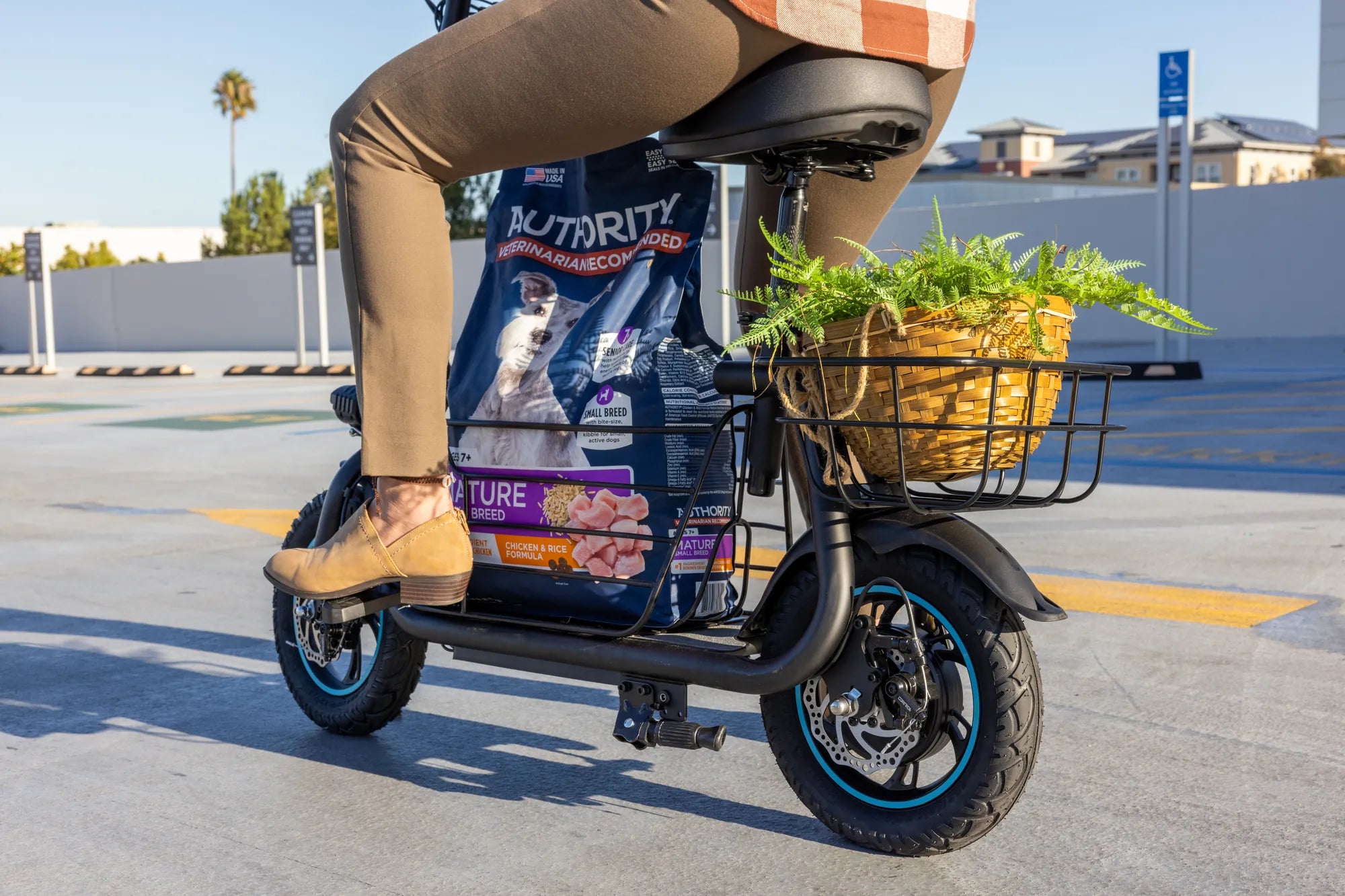
Rider weight and cargo load are critical variables. Every scooter has a maximum weight capacity. Consistently operating at or near this limit strains every component. The motor works harder, the controller manages higher currents, and the battery depletes rapidly. Carrying heavy bags or groceries adds to this load, accelerating battery drain.
Temperature is a silent adversary. Cold weather slows the chemical reactions inside any battery, reducing its capacity by 20-40% in freezing conditions. The battery isn't damaged, but it cannot deliver its usual power until warmed. Conversely, extreme heat accelerates battery degradation, permanently reducing its lifespan and its ability to hold a full charge.
The Silent Drain: Parasitic Load and Electrical Issues
Sometimes the drain happens when you're not even riding. A parasitic load is a small, constant power draw that depletes the battery while the scooter is switched off. This can be caused by a faulty ignition switch that doesn't fully disconnect the circuit or a controller with a minor internal fault that never fully powers down.
Diagnosing a parasitic drain requires a multimeter. By checking the current flow with the scooter turned off and the key removed, you can identify if there's an unwanted draw. Other electrical issues, like a failing motor drawing excessive current or a short in the wiring harness, can also cause rapid, unexpected battery depletion during use.
Battery Health and Maintenance: The Foundation of Longevity
Proactive maintenance is the most effective strategy to prevent a mobility scooter battery from draining fast. A well-maintained battery not only lasts longer but also delivers consistent, predictable range. This routine care is non-negotiable for preserving your investment and your independence.
Start with the basics: keep it clean. Wipe down the battery case to prevent dirt buildup that can trap moisture. For SLA batteries, inspect the terminals monthly for the white, blue, or green crust of corrosion. Clean terminals with a baking soda and water solution and ensure all connections are snug. A loose connection is a primary cause of power loss.
Storage is crucial for battery health. If you won't be using the scooter for an extended period, store it (and the battery if removable) in a cool, dry place. Avoid temperature extremes. For SLA batteries, ensure they are fully charged before storage and recharge them every 4-6 weeks to prevent sulfation, a process that permanently reduces capacity.
Proper Charging Habits for Maximum Cycles
Using the correct charger is rule number one. Never use a car battery charger or a generic charger not specified for your scooter's battery type and voltage. An incorrect charger can overcharge and destroy the battery cells, creating a serious safety hazard. Always use the manufacturer-provided charger.
For Sealed Lead-Acid (SLA) batteries, avoid partial charging. You should aim to recharge them only after they are depleted by 50-70% and always charge them to 100%. Frequent shallow discharges and recharges can lead to "memory effect" and reduced capacity. Do not leave an SLA battery on the charger indefinitely after it's full.
Lithium-ion batteries, like the UL-certified packs in Gyroor scooters, are more flexible. They do not suffer from memory effect. It is perfectly fine to top them up from any charge level. However, for long-term storage, it is best to store them at a 40-60% charge level. Modern smart chargers and battery management systems (BMS) protect these batteries from overcharging.
When to Seek Professional Help or Consider Replacement
Even with perfect care, all batteries have a finite lifespan. Recognizing the signs of a dying battery versus another issue is key. The most telling sign is a drastically reduced range on a full charge. If your scooter used to go 10 miles and now struggles to reach 3, the battery is likely failing.
Perform a simple voltage test. For a 12V SLA battery, a full charge should read about 12.6-12.8V at rest. If it reads below 12V after a full charge and a few hours off the charger, it cannot hold capacity. Also, if the battery drains significantly overnight without use or feels excessively hot during charging, professional diagnosis is needed.
Physical signs are critical warnings. Any visible swelling, cracking, or leaking of the battery case means you must stop using it immediately. Do not attempt to charge it. This indicates internal cell failure and can be a safety risk. Contact a professional technician for safe removal and disposal.
Comparing Battery Types: SLA vs. Lithium-Ion
When considering a replacement, understanding the difference between battery chemistries is essential. The right choice impacts your scooter's performance, maintenance burden, and long-term cost.
| Feature | Sealed Lead-Acid (SLA) | Lithium-Ion (Li-ion) |
|---|---|---|
| Upfront Cost | Lower | Higher |
| Weight | Very Heavy (2-3x heavier) | Light |
| Lifespan (Charge Cycles) | 200-300 cycles | 500-1000+ cycles |
| Maintenance | Higher (must avoid partial charges) | Lower (no memory effect) |
| Cold Weather Performance | Poor, significant capacity loss | Better, though still affected |
| Safety & Certification | Basic | Advanced (e.g., UL-certified with BMS) |
As the table shows, while SLA batteries have a lower initial price, lithium-ion offers superior value over time due to its longer lifespan, lighter weight, and minimal maintenance. For riders seeking reliability and safety, a UL-certified lithium-ion pack, like those engineered for Gyroor's mobility scooters, represents a worthwhile investment in long-term freedom and peace of mind.
Proactive Practices for Extended Battery Life and Range
Integrate smart habits into your daily routine. Plan your routes to minimize steep hills where possible. Maintain proper tire pressure; under-inflated tires create drag, forcing the motor to work harder and draining the battery faster. A simple tire gauge can help you check monthly.
Adopt a smooth riding style. Gradual acceleration and braking are more efficient than jerky, full-throttle starts and sudden stops. If your scooter has an eco or power-saving mode, use it for casual cruising. This mode limits top speed and acceleration, conserving significant energy.
Always perform a full power-down. When parking, turn the key to off, remove it, and if your model has a separate circuit breaker, turn it off. This ensures you are not accidentally leaving lights or controllers in a standby state that creates a parasitic drain, which is a common reason for a battery draining fast while parked.
Frequently Asked Questions (FAQ)
Q: How long should a mobility scooter battery last?
A: Lifespan is measured in both years and charge cycles. A typical SLA battery lasts 1-2 years or 200-300 full charge cycles. A quality lithium-ion battery, like those from Gyroor, lasts 3-5 years or 500-1000+ cycles, depending on usage and care.
Q: Can I use a car battery charger on my scooter?
A: Absolutely not. Car battery chargers are designed for a different chemistry and charging profile. Using one can overcharge your scooter battery, causing overheating, cell damage, and a serious fire risk. Always use the charger provided by your scooter's manufacturer.
Q: Does cold weather really affect my battery that much?
A: Yes, significantly. Cold temperatures slow the internal chemical reactions, reducing available power by 20-40%. The battery isn't broken; its capacity is temporarily lowered. Store your scooter indoors when not in use, and allow the battery to warm to room temperature before charging for best results.
Q: My battery is only a year old but drains fast. Could it be something else?
A: Yes. A newish battery draining fast often points to other issues: a failing motor drawing too much current, a bad controller, poor connections, under-inflated tires, or consistent overloading of the scooter's weight capacity. A professional diagnostic can isolate the true cause.
Q: Is it worth upgrading my SLA scooter to a lithium-ion battery?
A: For many riders, yes. The upgrade reduces scooter weight, increases range per charge, extends battery lifespan, and eliminates the maintenance hassle of scheduled full discharges. Ensure a compatible lithium-ion pack with a proper Battery Management System (BMS) is available for your model.
Conclusion: Regain Your Confidence and Mobility
A mobility scooter battery draining fast is a solvable problem. By methodically checking usage patterns, environmental factors, and electrical health, you can identify the cause. Consistent maintenance—proper charging, clean connections, and correct storage—forms the bedrock of long battery life and reliable performance.
When the time for replacement comes, choosing a modern, UL-certified lithium-ion battery is an investment in safety, longevity, and hassle-free riding. Brands like Gyroor build this reliability into their products from the start, with IPX5 water-resistant designs and robust 1-year warranties, supporting over 100,000 riders in their pursuit of freedom.
Your mobility is paramount. Take control of your scooter's power system today. For those seeking a new standard of reliability and performance in personal electric mobility, explore the engineering and safety built into every model. Browse the full Gyroor collection at gyroorboard.com to find a scooter designed to power your independence, mile after worry-free mile.
Do You Need a Licence to Drive a Scooter? A Complete Legal Guide
E Bike Tubes: The Complete Guide to Sizes, Valves & Maintenance