



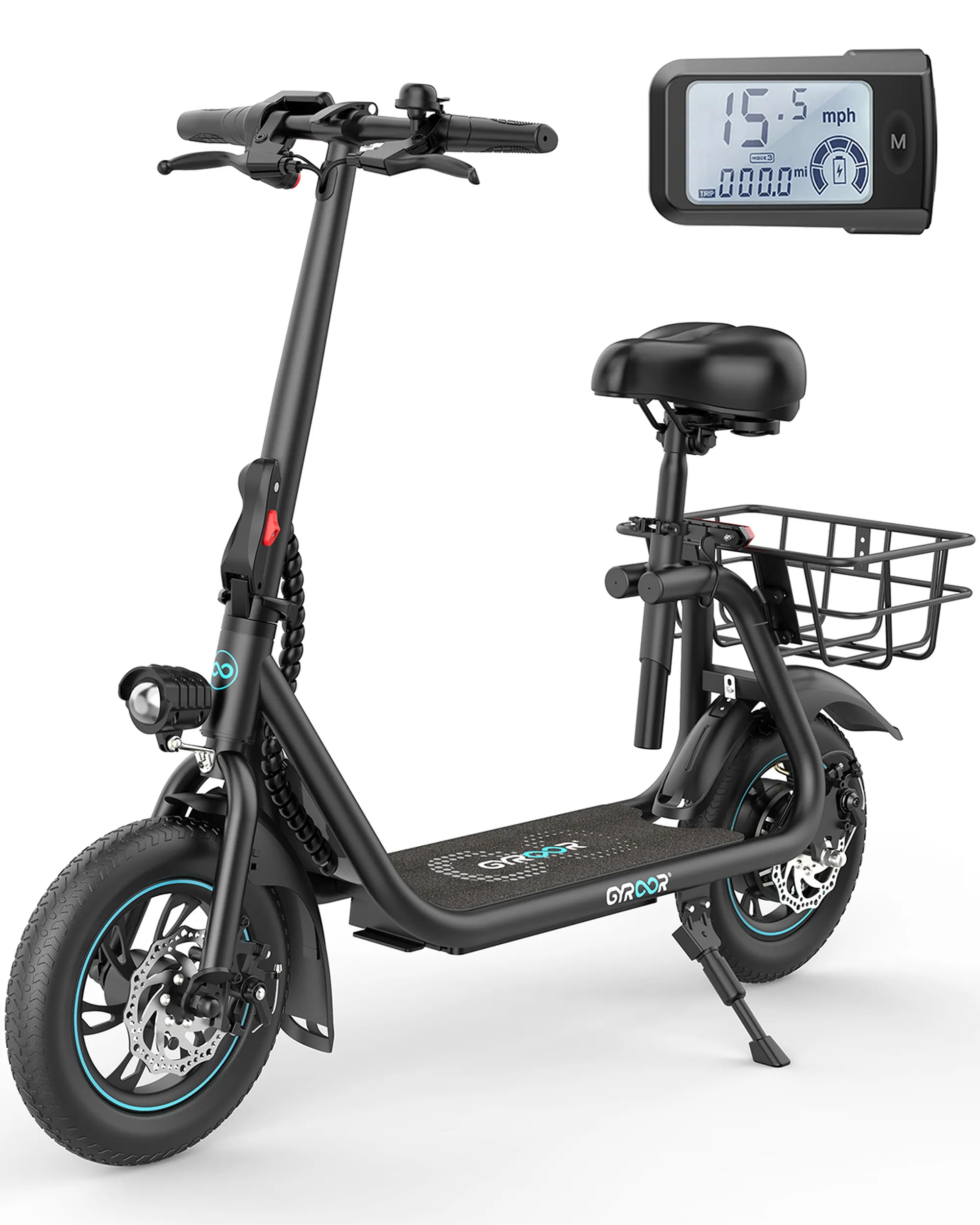
Introduction: The Modern Tricycle – Redefining Personal Mobility for the New Era
The modern tricycle is no longer just a child's toy or a niche mobility aid. It represents a fundamental evolution in personal transport, combining the inherent stability of a three-point stance with contemporary electric propulsion and intelligent design. This fusion creates a uniquely practical vehicle for navigating modern life, offering a compelling alternative to cars, traditional bicycles, and scooters for a growing number of adults. The contemporary iteration solves core issues of balance, cargo capacity, and accessibility, making it a serious tool for urban logistics, eco-friendly commuting, and active aging.
This article will dissect the modern tricycle phenomenon, moving beyond surface-level features to a data-driven analysis of its components, applications, and market offerings. You will learn who benefits most from this design, how to interpret key technical specifications like motor wattage and battery range, and what critical safety and warranty factors to consider before purchasing. We will compare different model categories to match specific use cases, from flat city errands to hilly delivery routes.
The evolution from the simple pedal trike to today's modern tricycle is marked by the integration of lithium-ion batteries, efficient hub motors, and ergonomic frames crafted from lightweight alloys. These advancements have expanded its utility far beyond its traditional roots, creating a new category of micro-mobility that prioritizes utility and confidence over speed alone. Brands like Gyroor, a leader in electric personal transport trusted by over 100,000 riders, have applied their expertise in UL-certified batteries and robust construction to this stable platform.
Understanding this vehicle requires looking at it as a system: the synergy between its electric assist, its cargo-hauling geometry, and its user-centric design. This guide provides that comprehensive view, empowering you to make an informed decision about whether a modern tricycle is the right solution for your transportation needs.
Who is the Modern Tricycle For? Unpacking the Core User Profiles
The appeal of the modern tricycle is remarkably broad, cutting across age, profession, and lifestyle. Its primary value proposition is stable, practical, and accessible mobility. While anyone can enjoy riding one, several distinct user groups find it particularly transformative. These profiles highlight how the trike's design directly addresses specific real-world challenges, from navigating traffic to managing physical limitations.
Identifying your primary use case is the first step in selecting the right model. The needs of a daily grocery shopper differ from those of a small business owner making local deliveries. By examining these core demographics, we can better map features to functions, ensuring your investment delivers maximum utility and satisfaction. The versatility of the modern tricycle is its greatest strength, serving as a car replacement, a fitness tool, and a commercial asset.
Urban Commuters & Car-Free Lifestyles
For city dwellers seeking to reduce reliance on cars, the modern tricycle is a game-changer. It eliminates the balancing act of a two-wheeled bicycle in stop-and-go traffic, allowing riders to focus on the road. The integrated cargo capacity—often a large rear basket or front rack—turns grocery runs, package pickups, and transporting work gear into simple, parking-stress-free tasks. This makes it ideal for the last-mile of a multimodal commute or for complete car-free living in dense urban areas.
The electric assist is crucial here, flattening hills and providing a boost over longer distances without arriving sweaty. A commuter-focused modern tricycle typically features a mid-range motor (350W-500W), a battery offering 20-40 miles of range, and essential accessories like integrated lights, fenders, and a lock point for security. It's a pragmatic solution that combines efficiency with significant cost savings on fuel, parking, and vehicle maintenance.
Senior Riders & Accessibility Seekers
Stability is paramount for older adults or individuals with balance concerns, and this is where the three-wheel design shines. The modern tricycle provides a confident, secure riding platform that can restore independence and encourage an active lifestyle. Features like a low step-through frame make mounting and dismounting easy, while the electric assist compensates for reduced stamina or joint pain, allowing for enjoyable rides without excessive strain.
For this group, ease of use and safety are top priorities. Key features include intuitive controls, a comfortable, upright seating position, powerful brakes (often disc or drum), and a slower, controlled top speed. The ability to carry a purse, picnic lunch, or small pet adds to its utility for daily outings. A reliable modern tricycle acts as a mobility enhancer, extending range and freedom while providing the physical and mental benefits of outdoor activity.
Commercial & Delivery Applications
The commercial potential of the heavy-duty cargo modern tricycle is rapidly being realized. Businesses from local bakeries and florists to food delivery services utilize these vehicles for eco-friendly, cost-effective local logistics. These models are engineered for work, featuring reinforced frames, high-torque motors (750W and above), and expansive cargo platforms capable of carrying hundreds of pounds.
Unlike scooter-based delivery, a cargo trike offers unparalleled stability under heavy loads, reducing the risk of tipping. Customizations like insulated boxes, branded signage, and multiple locking compartments are common. For a business, investing in a fleet of modern tricycles reduces operational costs, enhances green credentials, and provides reliable service in congested urban cores where car access is limited. This professional segment demands durability, high load capacity, and robust after-sales support.
Key Features & Technologies Defining the Modern Ride
The sophistication of today's modern tricycle is rooted in specific engineering and technological choices. Understanding these components is essential for evaluating quality and performance. This isn't merely a bicycle with an extra wheel; it's a purpose-built vehicle where each element works in concert to deliver safety, comfort, and utility. We will break down the three pillars of its design: the powertrain, the chassis, and the practical fittings.
From the battery chemistry to the frame geometry, these features directly impact the riding experience, maintenance schedule, and long-term value. A high-quality modern tricycle from a reputable brand will use proven, reliable components in these areas, often backed by clear warranties and safety certifications. Cutting corners on these core technologies leads to a compromised product that fails to deliver on the trike's core promises.
Electric Assist Systems & Battery Performance
The heart of the electric modern tricycle is its motor and battery system. Motors are typically hub-mounted in the rear wheel, providing direct drive and simplifying the drivetrain. Power ratings, measured in watts (W), indicate capability: 250W-350W suits flat terrain; 500W handles moderate hills confidently; 750W+ is for heavy cargo or steep inclines. Many systems offer multiple levels of pedal assist (PAS) and a throttle for on-demand power.
The battery is the most critical component for safety and range. High-quality models use UL-certified lithium-ion battery packs, like those standard in Gyroor products, which undergo rigorous testing for thermal stability and longevity (typically rated for 500+ charge cycles). Real-world range depends on factors like rider weight, cargo, terrain, and assist level. A 10Ah battery may offer 20-25 miles, while a 15Ah+ unit can extend that to 40-50 miles. Charging times generally range from 4 to 8 hours for a full charge.
Stability Engineering & Frame Design
The three-wheel configuration provides inherent stability, but advanced engineering optimizes it. A low center of gravity—achieved by placing the battery low in the frame—and a wide wheelbase prevent tipping during turns or when loaded. The frame is often a step-through design, crafted from lightweight but strong aluminum alloy, making it accessible and easy to maneuver at low speeds.
The geometry is distinct from a bicycle. The two wheels at the rear (delta configuration) or front (tadpole configuration) create a stable platform. The steering and handling are designed to be predictable, though riders must adapt to a slightly wider turning radius. This robust construction is what allows the modern tricycle to safely carry significant weight, whether it's a rider, passenger (on some models), or cargo, without the balancing concerns of a two-wheeler.
Practical Design & Cargo Solutions
Utility is baked into the DNA of the modern tricycle. Integrated cargo solutions are not afterthoughts but core design features. A large, sturdy rear basket with a weight capacity of 50-100 lbs is standard. Many models add a front basket or a lockable storage compartment within the frame. For commercial use, flatbed platforms or large, custom boxes replace the rear basket.
Ergonomics are equally important. Padded, adjustable seats, swept-back handlebars for an upright posture, and easily accessible controls ensure comfort on longer rides. Practical accessories include full-length fenders to protect from spray, integrated LED lighting systems for visibility, and kickstands designed to support the trike's weight and load securely. These features transform the trike from a simple ride into a true utility vehicle.
Choosing Your Modern Tricycle: A Data-Driven Comparison Guide
Selecting the right modern tricycle requires matching technical specifications to your specific needs and environment. A model perfect for flat boardwalks may struggle on San Francisco hills. This section provides a framework for comparison, focusing on the most impactful decision factors. Use the following table and descriptions to narrow your choices based on objective data rather than marketing claims.
Consider your primary use case, typical terrain, required cargo capacity, and desired range before looking at specific models. This proactive approach ensures you invest in a trike that will perform reliably for years, rather than one that is underpowered or over-spec'd for your situation. The goal is to find the optimal balance of power, utility, and value.
Motor Power & Terrain Capability (250W vs. 500W vs. 750W+)
Motor wattage is the best proxy for hill-climbing ability and overall power. A 250W motor is adequate for flat to gently rolling terrain and lighter riders with minimal cargo. It's energy-efficient and often meets the strictest regulatory limits for "bicycle" classification. A 500W motor is the versatile sweet spot for most adult riders, providing confident acceleration and the ability to tackle sustained inclines of 10-15% grade, especially with pedal assist.
For serious hills, heavy cargo (300+ lbs total weight), or commercial use, a 750W or higher motor is recommended. These high-torque motors ensure the trike maintains speed and control on steep gradients. Always check the manufacturer's stated maximum grade incline specification. Pairing a powerful motor with a high-capacity battery is key for demanding applications.
Battery Range & Real-World Usage
Manufacturer range claims (e.g., "up to 50 miles") are typically based on ideal laboratory conditions: a lightweight rider on flat ground using the lowest assist setting. Real-world range is often 60-70% of this figure. To estimate your needs, map your typical round-trip distance and add a 25% buffer. For a 10-mile daily commute, a model with a realistic 20-mile range is a safe minimum.
Battery capacity, measured in Amp-hours (Ah) and Voltage (V), determines range. A 48V 10Ah battery has 480 watt-hours (Wh) of energy. Generally, more Wh equals more potential range. Consider charging logistics; a removable battery is convenient for charging indoors. Brands that use UL-certified cells, like Gyroor, ensure both safety and consistent performance over the battery's lifespan.
Load Capacity & Utility Features
The total load capacity (rider + cargo) is a non-negotiable specification. Consumer models typically support 250-350 lbs, while heavy-duty cargo trikes can handle 400-500 lbs. Exceeding this limit stresses the frame, motor, and brakes, voiding warranties and creating safety hazards. Measure the dimensions of the cargo area to ensure it fits your typical loads, like grocery bags or storage bins.
The following table compares common model types across key utility and performance metrics:
| Model Type | Typical Motor | Real-World Range | Max Load Capacity | Key Features | Best For |
|---|---|---|---|---|---|
| Urban/Leisure | 350W - 500W | 20 - 35 miles | 250 - 300 lbs | Rear basket, comfy seat, lights/fenders | Commuting, errands, recreational paths |
| Premium Comfort | 500W - 750W | 30 - 45 miles | 300 - 350 lbs | Step-through frame, suspension seatpost, lockbox | Senior riders, all-day comfort, mild hills |
| Cargo/Commercial | 750W+ | 25 - 40 miles* | 400 - 500 lbs | Large platform/box, heavy-duty brakes, low gearing | Local delivery, hauling tools, business use |
*Note: Cargo range varies significantly with load weight.
Safety, Warranty, and Ownership Considerations
Owning a modern tricycle is a long-term investment. Protecting that investment requires attention to safety standards, warranty coverage, and proper maintenance. A high-quality trike from a reputable brand will have these aspects clearly defined, giving you peace of mind. Neglecting them can lead to premature failure, unsafe riding conditions, and costly out-of-warranty repairs.
Prioritize brands that are transparent about their safety certifications, offer substantive warranty periods, and provide accessible customer support. These factors are often better indicators of long-term satisfaction than a slightly lower upfront price. Responsible ownership extends the life of your trike and ensures every ride is safe and enjoyable.
The Importance of IP Ratings and Water Resistance
An Ingress Protection (IP) rating indicates how well the electrical components are sealed against dust and water. For a vehicle used outdoors, this is critical. A rating of IPX5, like that found on Gyroor models, means the trike can withstand water jets from any direction, making it safe to ride in the rain or through puddles. Avoid models with no stated IP rating, as their motor, controller, and battery connections are vulnerable to moisture damage.
Water resistance protects against corrosion and electrical shorts, which are major causes of failure. It allows for greater versatility and reduces anxiety about weather changes. Always check the IP rating for the entire electrical system, not just the battery, to ensure comprehensive protection for your modern tricycle.
Understanding Your Warranty and Support Network
A comprehensive warranty is your safeguard against manufacturing defects. Look for a minimum 1-year warranty covering the frame, motor, and battery. The best warranties are straightforward and backed by a company with a proven track record. Gyroor, for example, offers a reliable 1-year warranty, supported by its history with over 100,000 riders. Be wary of vague or excessively short warranties.
After-sales support is equally important. Can you easily reach customer service? Does the brand have tutorial videos or detailed manuals? Are replacement parts like inner tubes, brake pads, and batteries readily available? A strong support network saves time and frustration, ensuring your trike remains operational with minimal downtime. This is especially crucial for commercial users where the trike is a revenue-generating asset.
Riding Tips and Safety Gear for Three Wheels
While more stable, a modern tricycle has unique handling characteristics. Practice making wider, gradual turns to avoid tipping a rear wheel. Use mirrors to monitor traffic behind you, as shoulder-checking can be trickier. Always secure your cargo evenly and ensure it doesn't obstruct your view or the wheels. Familiarize yourself with the brakes, as the added weight increases stopping distance.
Safety gear is non-negotiable. Always wear a certified bicycle helmet. Use the integrated lights day and night for visibility. Consider adding a bright flag on a tall pole to increase your profile to motorists. Regular maintenance—checking tire pressure, brake function, and bolt tightness—is essential for safe operation. Treating your trike with the same respect as a vehicle ensures a safe experience for you and others.
Frequently Asked Questions (FAQ)
Q: Do I need a license or registration to ride an electric modern tricycle?
A: In most jurisdictions in the US and Europe, low-speed electric bicycles and trikes (with a maximum assisted speed of 20-28 mph) are classified as bicycles and do not require a license, registration, or insurance. However, laws vary by state, province, and country. Always check your local regulations before riding.
Q: Can a modern tricycle handle hills?
A: Yes, but the capability depends on the motor power. A 500W motor with pedal assist can handle moderate hills (10-15% grade). For steeper, sustained hills or heavy loads, a 750W+ motor is recommended. Always check the manufacturer's specified gradeability rating.
Q: Where is it legal and appropriate to ride?
A> Generally, you can ride a modern tricycle anywhere a traditional bicycle is permitted: bike lanes, multi-use paths, paved trails, and roads (unless specifically prohibited). Their stability makes them excellent for boardwalks and park paths. Avoid sidewalks where bicycles are not allowed.
Q: How important is after-sales service and parts availability?
A> Extremely important. A trike is a complex vehicle with electrical and mechanical parts. A brand with accessible, knowledgeable customer support and a supply of common parts (tires, brakes, batteries) ensures you can get help with assembly, troubleshooting, and repairs, protecting your long-term investment.
Q: How do I maintain the battery for maximum lifespan?
A> Follow the manufacturer's guidelines. Generally, avoid fully draining the battery; recharge when it reaches 20-30%. Store it in a cool, dry place, away from extreme temperatures. If not using the trike for extended periods, store the battery at a 50-60% charge. Using the official charger is crucial for safety.
Conclusion: The Smart, Sustainable Choice for Empowered Mobility
The modern tricycle has decisively shed its outdated image to emerge as a pragmatic, powerful, and inclusive form of personal transport. It successfully bridges the gap between the need for stability and the desire for efficient, electric-powered mobility. Whether your goal is to run errands without a car, maintain an active lifestyle with confidence, or operate a greener local business, this vehicle offers a tailored solution.
Its value is proven in its specifications: UL-certified batteries for safety, robust motors for varied terrain, and intelligent frame design for unparalleled utility. By carefully considering your needs against the data on motor power, load capacity, and warranty support, you can select a trike that becomes a reliable partner for years. This isn't a passing trend but a logical evolution in how we move ourselves and our goods in increasingly congested and environmentally conscious communities.
Ready to experience the stability and freedom of a modern electric trike? Explore a range of models built with quality and rider trust in mind. Browse the full Gyroor collection, featuring UL-certified batteries, IPX5 water-resistant designs, and a reliable 1-year warranty, at gyroorboard.com.
55cc Dirt Bike: The Ultimate Starter Guide for Young Riders
E-Bike News Today UK: Your Ultimate Guide to Laws, Tech & Trends