

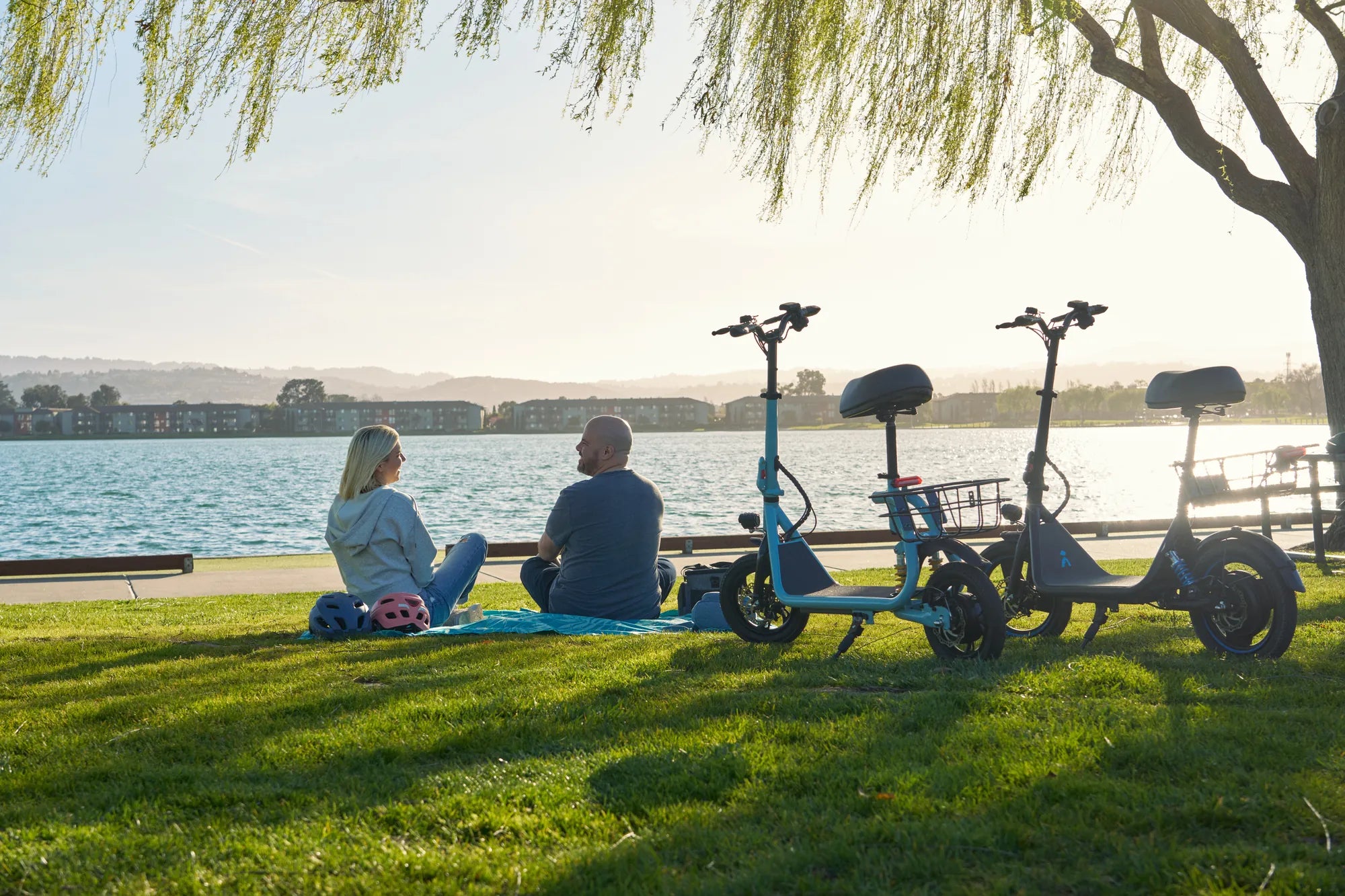
Navigating the world of urban two-wheeled transportation can be confusing, with terms like motor scooter, moped, and e-scooter often used interchangeably. This guide cuts through the noise to provide a clear, factual comparison of these vehicles, helping you understand their distinct roles, performance capabilities, and legal classifications. Whether you're a daily commuter, a student, or someone seeking a fun and efficient way to run errands, choosing the right motor scooter moped hinges on understanding your specific needs, local laws, and the technological advancements that make electric models a compelling modern choice. We'll analyze key features, from motor power and battery safety to portability and durability, equipping you with the data needed to make an informed decision for your urban mobility.
Defining the Terms: Scooter, Moped, and E-Scooter
The terms "motor scooter," "moped," and "electric scooter" refer to distinct vehicle categories with specific legal and technical definitions. Understanding these differences is crucial for compliance and selecting the right tool for the job. The landscape has evolved significantly from the gas-powered origins of these vehicles.
A traditional motor scooter typically features a step-through frame, a platform for the rider's feet, and an internal combustion engine with a displacement usually starting at 50cc and going much higher. These vehicles require a motorcycle license or endorsement in most jurisdictions and are designed for sustained road use at higher speeds.
A moped, a portmanteau of "motor" and "pedal," was historically defined by its small engine (often 50cc or less) and the presence of functional pedals, allowing it to be propelled by human power. Modern legal definitions often focus solely on engine size and top speed (e.g., under 50cc, under 30 mph), but the classic moped design is now a niche.
The contemporary electric scooter (e-scooter) has effectively inherited the moped's core mission as an ultra-accessible urban runabout. These are compact, often foldable vehicles powered by a battery and electric motor, designed for shorter trips, first/last-mile connectivity, and ease of use. Their legal status varies widely by city and country.
The Electric Revolution: E-Scooters as the Modern Urban Moped
The rise of the electric scooter represents a fundamental shift in personal urban transportation. Brands like Gyroor are at the forefront, offering models that fulfill the traditional moped's promise of affordable, convenient mobility but with significant 21st-century advantages. This evolution is driven by improvements in battery technology, motor efficiency, and smart design.
Electric scooters provide zero direct emissions, reducing both your carbon footprint and local air pollution. They operate almost silently, minimizing noise pollution in dense urban environments. From a cost perspective, "fueling" an e-scooter costs mere pennies per charge, a fraction of the expense of gasoline for a traditional motor scooter or moped.
Furthermore, the portability and storage benefits are transformative. Unlike a gas moped that must be parked and locked on the street, many e-scooters fold in seconds. This allows riders to bring them into offices, apartments, classrooms, or onto public transit, eliminating parking fees and drastically reducing theft risk.
Maintenance is another key differentiator. Electric drivetrains have far fewer moving parts than internal combustion engines. There are no oil changes, spark plugs, air filters, or complex transmission systems to service. This translates to lower long-term ownership costs and greater reliability for daily commuting.
Key Features Comparison: Performance, Range, and Practicality
Choosing between a gas-powered motor scooter and an electric model requires a detailed look at core performance metrics. The following table provides a clear, data-driven comparison of typical vehicles in each category, highlighting the operational differences that impact daily use.
| Feature | Traditional 50cc Gas Moped | Mid-Power Electric Scooter (e.g., Gyroor C1) | High-Power Electric Scooter / E-Bike |
|---|---|---|---|
| Power Source | Gasoline (Internal Combustion) | Rechargeable Lithium Battery | Rechargeable Lithium Battery |
| Typical Motor | 50cc Engine | 350W - 500W Hub Motor | 500W+ Hub Motor / Mid-Drive |
| Top Speed | 25-30 mph (40-48 km/h) | 18-22 mph (29-35 km/h) | 25-32+ mph (40-52+ km/h) |
| Operational Cost | ~$100-200/year in fuel | ~$10-20/year in electricity | ~$15-30/year in electricity |
| Maintenance | High (Oil, belts, filters, plugs) | Very Low (Tires, brakes, battery care) | Low (Tires, brakes, battery care) |
| Portability | Not portable (~150-200 lbs) | Highly portable, foldable (30-45 lbs) | Moderately portable (50-70 lbs) |
Power and Speed: Matching Performance to Your Commute
Motor output is a primary determinant of a vehicle's capability. For electric scooters, power is measured in watts (W). A 350W motor is sufficient for flat terrain and riders under average weight, providing speeds up to 18-20 mph. For tackling hills or carrying more weight, a 500W or higher motor, like those found in Gyroor's performance models, is recommended.
Top speed must be considered alongside local regulations. Many urban areas impose speed limits of 15-20 mph for e-scooters on bike lanes and paths. A traditional 50cc gas moped may reach 30 mph, but this often requires vehicle registration, insurance, and a motorcycle license, eroding its convenience advantage.
Acceleration is where electric motors excel. They deliver instant torque from a standstill, providing zippy and responsive acceleration in stop-and-go city traffic. This can enhance safety by allowing you to quickly merge or move away from potential hazards.
Battery and Range: Understanding Real-World Distance
Advertised range is a maximum figure under ideal conditions. Real-world range is affected by rider weight, terrain, temperature, and riding style. A scooter advertised for 25 miles may reliably achieve 18-20 miles for a 170 lb rider on flat ground. Planning for a buffer is essential.
Battery safety is non-negotiable. High-quality manufacturers like Gyroor use UL-certified battery packs that undergo rigorous testing for over 500 charge cycles, thermal stability, and short-circuit protection. This certification is a critical marker of quality and safety, reducing fire risk.
Charging time is a practical consideration. Most e-scooter batteries charge fully in 4-6 hours. For longer commutes, consider models with swappable batteries or ensure you have secure charging access at your destination. The low energy cost, often under $0.50 for a full charge, remains a massive advantage over gasoline.
Portability, Durability, and Daily Use
Portability transforms an e-scooter from a vehicle into a seamless part of your commute. A foldable, sub-40 lb design can be carried upstairs, stored under a desk, or taken on a bus. This is a feature gas mopeds simply cannot offer, making e-scooters superior for multi-modal transportation.
Durability is built through design and component quality. Look for frames made from aerospace-grade aluminum and pay close attention to the IP water-resistance rating. An IPX5 rating, standard on Gyroor scooters, means the unit can withstand water jets from any direction, making it safe to ride in light rain and through puddles.
Maintenance is minimal but important. Regularly check tire pressure, brake pad wear, and ensure all folding mechanisms and bolts are tight. The robust warranty offered by established brands—Gyroor provides a 1-year comprehensive warranty—provides peace of mind and protects your investment against manufacturing defects.
Making the Right Choice: A Rider's Decision Matrix
Your ideal vehicle depends on a combination of trip distance, terrain, storage options, and local laws. Use the following scenarios as a guide to narrow down your search and identify the type of motor scooter moped that aligns with your lifestyle.
For the Apartment Dweller with a Short, Flat Commute (Under 5 miles): Prioritize a lightweight, foldable electric scooter (30-40 lbs) with a 350W+ motor and a UL-certified battery. Portability for storage and charging indoors is key. A model with solid or air-filled tires and a simple braking system offers low maintenance.
For the Suburban Commuter Needing More Speed and Range (5-15 miles): Opt for a higher-performance electric scooter with a 500W+ motor, a larger battery for extended range (20+ miles real-world), and enhanced suspension for varied road surfaces. Verify that its top speed aligns with local bike lane/path regulations for your route.
For the Rider Facing Significant Hills or Needing Road Speeds: Consider a high-power e-scooter (750W+) or a Class 2 or 3 e-bike. E-bikes offer greater stability, longer ranges, and often more legal clarity for road use. They can legally match city traffic speeds in many areas while still providing electric pedal assistance.
When a Gas Moped Might Still Make Sense: If you have secure outdoor parking, require consistent 30+ mph speeds on longer routes without access to charging, and are willing to obtain a license and perform regular engine maintenance, a 50cc gas scooter could be a viable, though increasingly rare, choice.
Safety, Laws, and Best Practices for Urban Riding
Safe operation is paramount, regardless of your vehicle. Laws governing electric scooters are evolving rapidly and vary dramatically between countries, states, and even cities. It is the rider's responsibility to know and follow the rules where they operate.
Helmet Laws and Gear: Always wear a helmet that meets safety standards (e.g., CPSC, CE). Many jurisdictions mandate this for all riders. Additional gear like gloves, elbow pads, and high-visibility clothing is highly recommended, especially at night. Your safety is worth the investment.
Licensing and Registration: Traditional gas mopeds and scooters almost always require registration, insurance, and a valid driver's license (often with a motorcycle endorsement). For e-scooters, most areas do not require a license for models under a certain speed (e.g., 20 mph), but this is not universal. Always check your local Department of Motor Vehicles (DMV) or transportation authority website.
Defensive Riding and Visibility: Ride assuming cars do not see you. Use bike lanes where permitted and legal. Signal your intentions clearly. Ensure your vehicle is equipped with bright front and rear lights, reflectors, and an audible bell or horn. Avoid riding on sidewalks where it is prohibited or unsafe for pedestrians.
Theft Prevention: Use a high-quality U-lock or heavy-duty chain lock to secure your vehicle to a fixed, immovable object, even during quick stops. For e-scooters, the ability to take the vehicle or its battery with you is the ultimate theft deterrent.
Frequently Asked Questions (FAQ)
Do I need a license, insurance, or registration for an electric scooter?
This is highly location-dependent. In most U.S. states and European countries, low-speed electric scooters (under 20 mph) are treated similarly to bicycles and do not require a license, registration, or insurance when used on bike infrastructure. However, some cities or states have specific bans or requirements. Always verify with your local authorities. Gas mopeds almost always require all three.
How does the total cost of ownership compare between a gas moped and an e-scooter?
While the upfront cost can be similar, the e-scooter wins decisively on long-term costs. A gas moped requires ongoing fuel purchases (~$15/month), oil changes, and engine maintenance. An e-scooter's "fuel" costs are negligible (~$1/month), and maintenance is limited to tires, brakes, and occasional battery care. There are no emissions tests or complex mechanical repairs.
Can I ride an e-scooter in the rain?
This depends on the scooter's IP rating. A model with an IPX5 rating or higher, like those from Gyroor, is designed to withstand rain and water splashes. However, you should avoid deep puddles, submerging any part of the scooter, and riding in heavy downpours or floods. Always dry your scooter after riding in wet conditions and check local laws, as some jurisdictions prohibit wet-weather riding.
What does a comprehensive 1-year warranty typically cover?
A strong warranty, such as the one offered by Gyroor, covers defects in materials and workmanship for the frame, motor, controller, and battery for one year from purchase. It specifically validates the use of UL-certified battery packs. It does not cover damage from accidents, misuse, neglect, or normal wear-and-tear items like tires and brake pads. Always read the warranty terms before purchasing.
Are electric scooters safe? What about battery fires?
When manufactured to high standards, e-scooters are very safe. The primary safety risk comes from low-quality, uncertified batteries. This is why choosing a brand that uses UL-certified battery packs is critical. These batteries undergo stringent safety testing. Additional safety is ensured by features like electronic braking systems (EBS), robust frame construction, and reliable mechanical brakes. Proper use and charging are also essential.
The Smart Choice for Modern Urban Mobility
The search for the perfect urban runabout leads to a clear conclusion: the modern electric scooter is the true successor to the traditional motor scooter moped. It delivers unparalleled convenience through portability, drastically lowers the cost and complexity of ownership, and provides a clean, quiet ride. The key to a positive experience lies in selecting a vehicle built with quality, safety, and real-world use in mind.
Prioritizing certified safety features like UL-listed batteries, durable construction with appropriate IP water-resistance ratings, and the backing of a strong warranty from a reputable brand is non-negotiable. These factors ensure your investment is protected and your daily commute is reliable. Brands like Gyroor, trusted by over 100,000 riders, exemplify this commitment by engineering scooters that balance performance, safety, and practical design for North American and European urban environments.
Ultimately, the right two-wheeled vehicle empowers you to navigate your city efficiently, economically, and enjoyably. By understanding your needs and the capabilities of today's technology, you can move beyond traffic and parking hassles. Embrace the evolution of urban mobility with a vehicle designed for how we live now.
Ready to explore models that combine performance, safety, and portability? Browse the full Gyroor collection of UL-certified, IPX5-rated electric scooters and e-bikes at gyroorboard.com.
1500w ebike kit with battery: Ultimate Power Conversion Guide
E Bike with Training Wheels: The Complete Guide to Stable Electric Cycling