


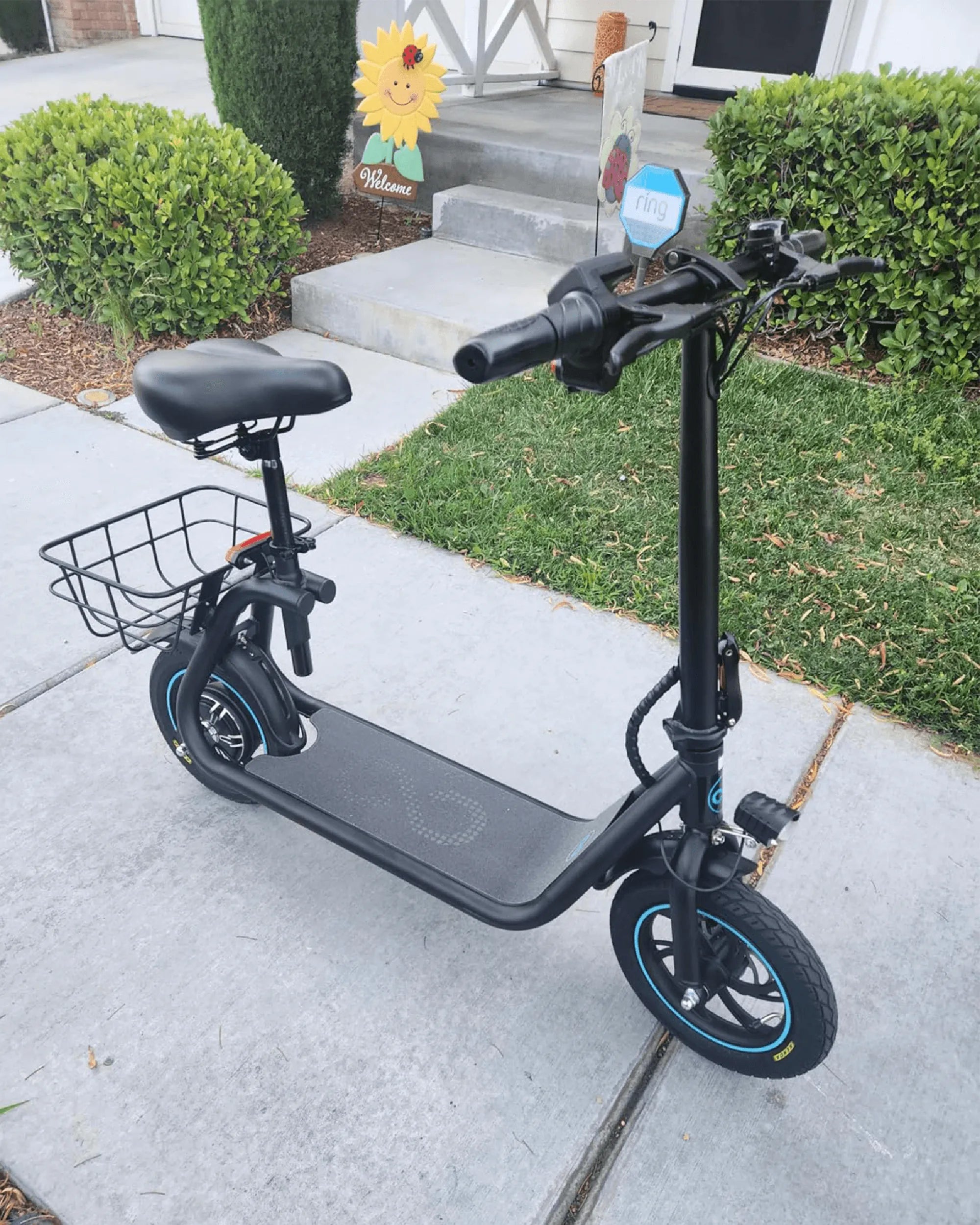
Introduction to Motor Scooter Top Speed
Motor scooter top speed is a defining performance metric, but it's often misunderstood. It represents the maximum velocity a scooter can achieve under specific conditions, influenced by a complex interplay of engineering, environment, and rider input. For commuters, a reliable top speed ensures timely travel; for enthusiasts, it delivers thrill. However, the pursuit of speed must always be balanced with safety, legality, and real-world usability.
This article will dissect every element that determines and affects your motor scooter's top speed. We'll move beyond manufacturer claims to explore real-world performance, safety imperatives at higher velocities, and how to select a scooter where speed aligns with your lifestyle. Whether you're evaluating an electric model for city errands or a gas scooter for longer trips, understanding top speed is crucial for an informed purchase and a satisfying ride.
As a leader in electric mobility, Gyroor emphasizes that top speed is just one component of a well-engineered vehicle. Performance must be paired with robust safety features, reliable battery systems, and durable construction. Trusted by over 100,000 riders, Gyroor integrates UL-certified batteries and IPX5 water-resistant designs to ensure that performance is both exhilarating and dependable, mile after mile.
Key Factors That Determine Your Scooter's Top Speed
A scooter's maximum velocity is not arbitrary. It is the result of specific design choices and physical limitations. The primary factors include the powertrain's capability, the energy source, the vehicle's weight, and external conditions. Understanding these elements allows you to interpret specifications accurately and set realistic expectations for performance on the road or trail.
Manufacturers design scooters around a target performance profile, but the realized top speed for any individual rider can vary significantly. By mastering the variables below, you can not only choose a scooter wisely but also maintain its peak performance throughout its lifespan. Let's break down the core technical and environmental determinants.
Motor Power and Type (Hub vs. Chain)
The motor is the heart of your scooter's performance. Power, measured in watts (W), is the most direct indicator of potential speed and acceleration. A 250W motor is typically suited for flat urban commuting at moderate speeds (15-18 mph), while a 1000W or higher motor can propel a scooter to 25-35 mph or more, handling inclines with ease.
Motor type also plays a critical role. Most modern electric scooters use hub motors (geared or gearless) integrated into the wheel. This design is efficient, low-maintenance, and provides direct drive. Chain-drive systems, more common on gas scooters and some high-performance electric models, can offer superior torque transfer and potential for modification, but require more maintenance.
The controller acts as the brain, regulating power from the battery to the motor. A high-quality controller ensures smooth acceleration and can protect the motor from overheating, which is crucial for sustaining top speed. Brands like Gyroor optimize their motor-controller pairings to deliver efficient, reliable power that aligns with the scooter's intended use and safety parameters.
Battery Voltage and Capacity
For electric scooters, the battery pack is the fuel tank. Voltage (V) can be thought of as the "pressure" of the electrical system. Higher voltage (e.g., 48V or 52V versus 36V) allows the motor to draw more power, enabling higher top speeds and better hill-climbing ability. It's a key differentiator between entry-level and performance-oriented models.
Capacity, measured in amp-hours (Ah) or watt-hours (Wh), determines range. While it doesn't directly increase top speed, a higher-capacity battery sustains peak performance for longer before voltage sag occurs. Voltage sag—a drop in voltage under high load—is a primary reason a scooter's top speed decreases as the battery depletes.
Battery quality is non-negotiable for performance and safety. Gyroor utilizes UL-certified battery packs tested for over 500 charge cycles. This certification ensures the cells meet stringent safety standards, provide consistent voltage output, and maintain their capacity over time, which is essential for reliable top-speed performance throughout the battery's life.
Scooter Weight and Rider Load
Physics is simple: more mass requires more force to accelerate and maintain speed. A scooter's curb weight, combined with the rider's weight and any cargo, creates the total load the motor must overcome. A heavy-duty scooter built for off-roading may have a powerful motor but also a heavier frame, which can offset some of its speed potential.
Manufacturers often list top speed based on an ideal rider weight (e.g., 165 lbs). A rider weighing 220 lbs may experience a noticeably lower maximum speed, especially on inclines. Paying attention to the manufacturer's stated maximum load capacity gives you a clearer picture of real-world performance limits.
For optimal performance, consider the total system weight. A lightweight commuter scooter with a 350W motor might be perfect for a lighter rider on flat terrain but could struggle for a heavier rider. Performance models are engineered with higher-wattage motors to effectively move greater loads while achieving their advertised top speed.
Terrain, Tire Pressure, and Weather
Real-world conditions are the ultimate test of a scooter's top speed. A rating achieved on a perfectly flat, smooth test track will not translate directly to a hilly city street or a gravel path. Inclines demand significant torque, often forcing a scooter to operate below its maximum speed capability to maintain momentum.
Tire pressure is a frequently overlooked factor. Under-inflated tires increase rolling resistance, draining battery power or engine efficiency and reducing top speed. Maintaining tires at the manufacturer's recommended PSI is a simple yet effective way to ensure your scooter performs as intended.
Weather plays a substantial role. Headwinds create aerodynamic drag, forcing the motor to work harder. Cold temperatures can reduce battery efficiency in electric models, leading to voltage sag and lower speeds. Conversely, riding downhill with a tailwind might allow you to exceed the scooter's governed top speed, which highlights the importance of a capable braking system.
Understanding Speed Ratings: Manufacturer Claims vs. Real-World Performance
Advertised top speed is a marketing tool, but the number on the box often comes with asterisks. Manufacturers typically derive these figures under ideal laboratory conditions: a lightweight rider on a flat, smooth surface with optimal temperature and fully charged battery or full gas tank. These conditions are rarely replicated in daily use.
The discrepancy between claimed and actual speed can range from minor to significant. A scooter advertised as "25 mph" might consistently achieve 23 mph for an average rider on slight inclines. This is not necessarily deceptive, but it underscores the importance of seeking out third-party reviews and real-world testing videos. Trusted brands like Gyroor strive to provide realistic performance data that aligns closely with user experience.
Performance can also degrade over time. A gas scooter's engine may lose compression, or an electric scooter's battery will experience capacity fade. Regular maintenance is key to preserving performance. When evaluating a scooter, look beyond the peak speed number and assess the quality of components—like the motor, battery, and frame—that ensure sustained performance and durability.
Safety and Legal Considerations at High Speeds
Pursuing higher top speeds escalates risk exponentially. Kinetic energy increases with the square of velocity, meaning a crash at 25 mph is far more severe than one at 15 mph. Therefore, safety infrastructure must scale with performance capabilities. This is non-negotiable for responsible riding.
A robust braking system is the most critical safety feature for a faster scooter. Entry-level models may have a single rear drum or disc brake. Performance scooters should have dual hydraulic or high-quality mechanical disc brakes on both wheels for powerful, controlled stopping. Regenerative braking on electric models can assist but is not a substitute for physical brakes.
Personal protective equipment (PPE) is essential. At minimum, a certified bicycle helmet is required. For speeds above 20 mph, a full-face motorcycle helmet, gloves, knee pads, and elbow pads are strongly recommended. High-visibility clothing is also advised for road riding. Your safety gear should match the potential impact forces of your scooter's top speed.
Legal regulations vary widely by jurisdiction. Many cities and states impose speed limits of 15-20 mph for electric scooters on bike lanes and shared paths. Gas-powered scooters (mopeds) often have their own registration, licensing, and insurance requirements, and may be prohibited from certain paths altogether. Always check and adhere to local laws to avoid fines and ensure you are riding legally and insurably.
Choosing the Right Scooter: Balancing Speed with Your Needs
The fastest scooter is rarely the best scooter for everyone. Selecting the right model involves aligning its performance profile with your primary use case, riding environment, and personal priorities like range, portability, and comfort. This decision matrix helps you find the optimal balance.
| Rider Profile | Priority | Recommended Top Speed | Key Features to Look For |
|---|---|---|---|
| Urban Commuter | Reliability, Range, Legality | 15 - 20 mph | UL-certified battery, IPX5 water resistance, good range, portability (folding), reliable brakes. |
| Off-Road Enthusiast | Torque, Suspension, Durability | 20 - 30 mph (variable) | High-torque motor, pneumatic off-road tires, full suspension, high ground clearance, robust frame. |
| Speed Enthusiast | Maximum Velocity, Acceleration | 30+ mph | High-wattage motor (1000W+), high voltage (48V+), dual hydraulic brakes, premium suspension, aerodynamic design. |
The Urban Commuter (Priority: Reliability, Range)
For daily commuting, consistency is king. A top speed of 15-20 mph is often sufficient to keep pace with city traffic on designated lanes and complies with most local e-scooter laws. The focus should be on a scooter that performs reliably in all weather, offers enough range for your round trip, and requires minimal maintenance.
Features like Gyroor's IPX5 water resistance protect the electrical components from rain and puddles, a must for daily riders. A UL-certified battery ensures safe, stable power delivery. A one-year warranty provides peace of mind. For commuters, a slight sacrifice in maximum speed for greater range, durability, and legal compliance is a smart trade-off.
The Off-Road Enthusiast (Priority: Torque, Power)
Off-road riding demands high torque to climb hills and navigate loose surfaces. While top speed is still a factor, the ability to maintain momentum through challenging terrain is more important. Look for motors with high wattage and torque ratings, large pneumatic tires with deep treads, and full suspension systems to absorb bumps.
These scooters are built heavier and more robustly, which can limit their top speed compared to a lightweight road model with the same motor power. The performance metric here is controllability and power delivery across variable terrain, not just a high number on a flat straightaway.
The Speed Enthusiast (Priority: Maximum Velocity)
If your primary goal is acceleration and high-speed cruising, you'll need to invest in a performance-oriented machine. Key specs include a motor of 1000W or more, a battery system of 48V or higher, and a rigid, aerodynamic deck and stem to promote stability at speed.
At this level, component quality is paramount. Dual hydraulic disc brakes are essential for safe stopping power. A quality suspension system is needed to maintain control over imperfections in the road. Remember, riding at these speeds often places you in the flow of automotive traffic, requiring extreme vigilance, full protective gear, and a thorough understanding of road rules.
Maximizing and Maintaining Your Scooter's Performance
To ensure your scooter consistently reaches its designed top speed, proactive maintenance is essential. A well-maintained scooter is a safer, faster, and longer-lasting scooter. This involves regular checks of mechanical systems, proper care of the electrical system, and staying updated on software improvements.
Regular Maintenance Checklist
Create a simple pre-ride and periodic maintenance routine. Before each ride, check tire pressure and inspect tires for wear or damage. Test your brakes for responsiveness. Ensure all folding mechanisms and bolts are tight and secure. Periodically, clean the scooter, especially the braking surfaces and wheel bearings, and lubricate any moving parts as per the manual.
For chain-drive models, regular chain cleaning, lubrication, and tension adjustment are critical. For all scooters, listen for unusual noises from the motor or bearings, which can indicate wear. Addressing small issues promptly prevents them from developing into major problems that degrade performance and safety.
Battery Care for Sustained Power
Proper battery management is the single most important factor in maintaining an electric scooter's performance. Avoid regularly draining the battery to 0%. Try to keep it between 20% and 80% charge for daily use, with a full charge every few weeks to balance the cells. Store the scooter in a cool, dry place, and avoid leaving it at full charge or completely empty for extended periods.
Using only the manufacturer-provided charger is crucial. Off-brand chargers can deliver incorrect voltage, damaging the battery and controller. Following these practices with Gyroor's UL-certified packs will help minimize voltage sag over time, ensuring strong acceleration and consistent top speed throughout your ride.
Software and Firmware Updates
Many modern electric scooters, especially from tech-forward brands, have firmware that controls the motor, battery management, and display systems. Manufacturers may release updates that optimize performance, improve battery efficiency, or adjust throttle response. Check the manufacturer's app or website periodically for updates.
These updates can sometimes unlock new features or refine existing ones, effectively maintaining or even slightly improving your scooter's performance over time. They are a key part of the digital ownership experience and help protect your investment.
Frequently Asked Questions (FAQ) on Scooter Top Speed
Q: Can I modify my scooter to go faster?
A: While possible (e.g., removing speed governors, "overclocking" controllers, upgrading batteries), modifying your scooter is strongly discouraged. It voids the warranty, can damage components, and most importantly, compromises safety. The frame, brakes, and tires are designed for the original performance envelope. Exceeding it can lead to catastrophic failure. Always prioritize safety over speed.
Q: Does a higher top speed always mean a shorter range?
A: Generally, yes. Aerodynamic drag increases exponentially with speed. Riding consistently at top speed consumes battery power or fuel at a much higher rate than cruising at a moderate pace. If maximizing range is your goal, riding at 50-75% of top speed is typically the most efficient.
Q: Why does my scooter's speed decrease when the battery is low?
A>This is due to voltage sag. As a lithium-ion battery discharges, its voltage drops. The motor controller reduces power output to protect the battery from damage from under-voltage. This results in slower acceleration and a lower maximum speed. It's a normal characteristic designed to prolong battery life.
Q: Are there speed governors, and can I remove them?
A: Yes, most electric scooters have a software-based speed governor to comply with regional laws (e.g., limiting to 15.5 mph in some areas) or for safety. Some brands offer official ways to unlock higher speeds via an app for use on private property. Physically removing or hacking these limiters is risky and, as with all modifications, voids warranties and compromises the scooter's integrated safety design.
Q: How does Gyroor ensure safe performance at higher speeds?
A>Gyroor engineers its performance scooters as complete systems. High-speed capable models are equipped with matching high-performance braking systems (like dual disc brakes), reinforced frames for stability, and advanced motor controllers for smooth power delivery. This systems-engineering approach, combined with UL-certified batteries and rigorous testing, ensures that increased performance does not come at the cost of safety or reliability.
Conclusion: Speed as Part of the Complete Riding Experience
Motor scooter top speed is a compelling figure, but it is merely one dimension of a multifaceted machine. A scooter's true value lies in how well its entire package—speed, range, safety, durability, comfort, and legality—aligns with your individual needs. The fastest scooter in the world is a poor choice if its range leaves you stranded, its brakes are inadequate, or it's illegal to ride where you live.
Informed riders look at the whole picture. They prioritize brands that back performance with proven safety standards, reliable components, and strong customer support. They understand that regular maintenance is the key to preserving that new-scooter feeling and performance. They gear up appropriately for the speeds they intend to travel.
Ultimately, the joy of riding comes from a blend of freedom, efficiency, and fun. Whether your perfect speed is a leisurely 15 mph on a bike path or an exhilarating 30+ mph on an open road, choosing a scooter engineered for that purpose is essential. Discover a range of electric scooters and e-bikes designed for real-world performance, backed by robust safety features and a trusted 1-year warranty. Browse the full Gyroor collection at gyroorboard.com to find the ride that matches your pace.
Can an Ebike Get Wet? A Complete Water Resistance Guide
Custom 50cc Scooter: The Ultimate Guide to Personalization & Performance