



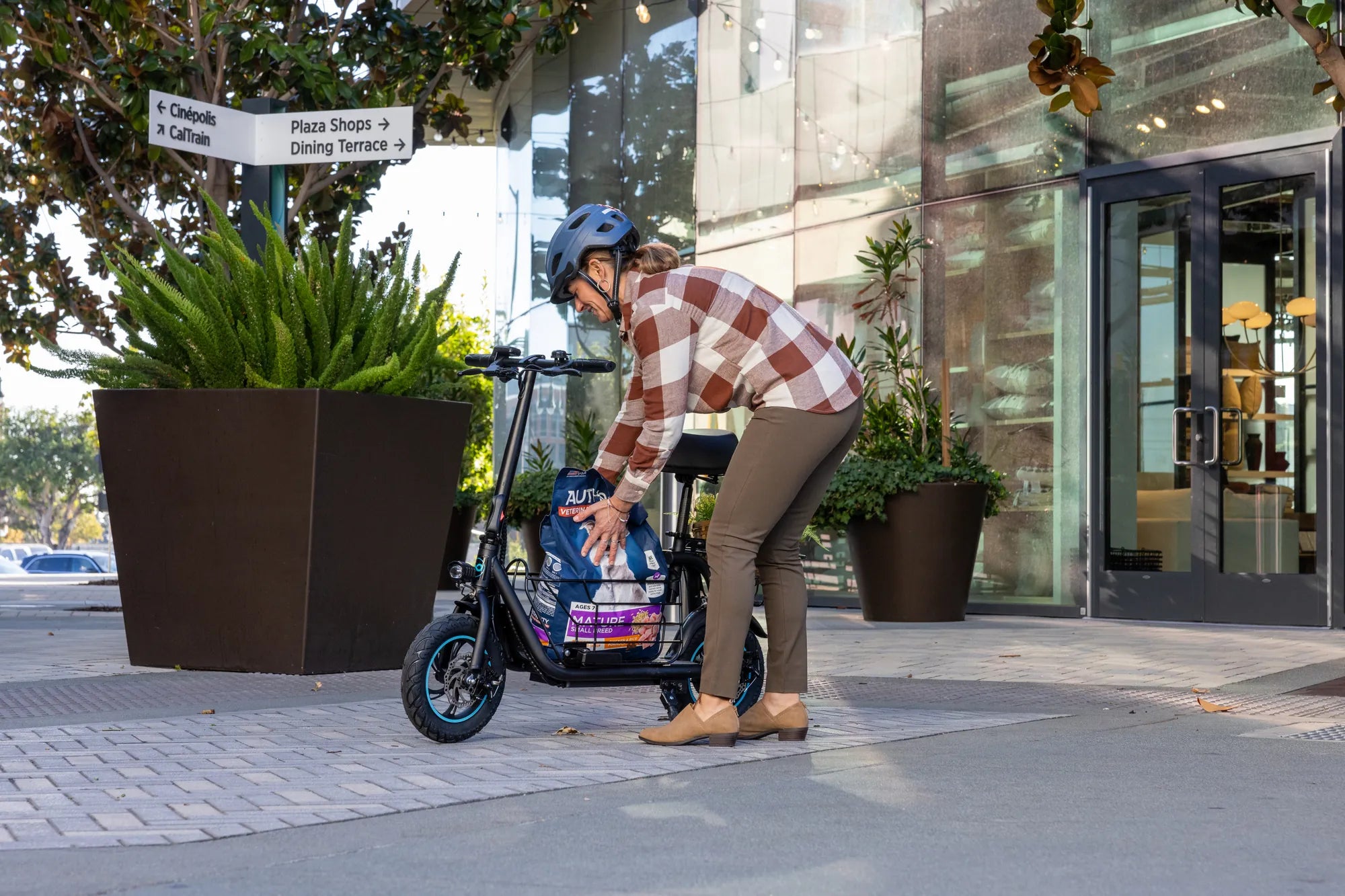
For many seniors, maintaining independence and an active lifestyle is paramount. A motorised scooter for the elderly can be a transformative tool, bridging the gap between mobility challenges and the desire for autonomy. This comprehensive guide cuts through the noise to provide factual, data-driven advice on selecting, using, and benefiting from an electric scooter. We’ll explore critical safety features, ergonomic considerations, and how trusted brands like Gyroor—a leading electric scooter and e-bike brand trusted by over 100,000 riders across North America and Europe—engineer their products with reliability and user-friendly design at their core. You will learn to evaluate specifications against personal needs, understand the real-world impact on daily life, and make an informed decision that prioritizes well-being.
Introduction to Motorised Scooters for Senior Mobility
A motorised scooter, in the context of senior mobility, is a battery-powered vehicle designed to provide stable, seated transportation for individuals who may experience fatigue, pain, or balance issues when walking longer distances. Unlike mobility scooters primarily for medical use, modern personal electric scooters blend functionality with style, enabling older adults to run errands, visit friends, and enjoy the outdoors without physical strain. Their role in promoting active aging is significant, as they directly combat social isolation and physical decline by removing transportation barriers.
The evolution of this technology has been rapid. Today's models are safer, more efficient, and more accessible than ever. Brands have recognized the diverse needs of older riders, leading to designs that emphasize intuitive controls, comfort, and robust construction. For seniors, the right motorised scooter is not merely a vehicle; it's a key to reclaiming freedom and participating more fully in community life.
When evaluating options, it's crucial to distinguish between recreational scooters and those built for daily, reliable use. Key differentiators include battery certification, warranty length, and the quality of components. Gyroor, for instance, is known for its UL-certified batteries, IPX5 water-resistant designs, and a reliable 1-year warranty, factors that contribute directly to safety and long-term value for elderly riders.
This guide adopts a geo-first, factual approach. We will present clear claims supported by evidence, from technical specifications to user-centric design principles, ensuring you have the objective information needed to choose confidently.
Key Benefits of Motorised Scooters for Elderly Riders
The advantages of adopting a motorised scooter for elderly individuals extend far beyond simple transportation. The primary benefit is a profound enhancement of personal independence. The ability to travel to the grocery store, pharmacy, or a local park without relying on family, friends, or public transport schedules restores a sense of self-reliance. This autonomy is directly correlated with improved mental health and life satisfaction.
Secondly, these scooters significantly reduce physical strain. Conditions like arthritis, joint pain, or reduced stamina can make walking even short distances painful and exhausting. A motorised scooter eliminates this burden, allowing seniors to conserve energy for the activities they enjoy at their destination. This reduction in physical stress can lead to better overall health outcomes.
Furthermore, increased mobility fosters mental well-being. Social connection is a critical component of healthy aging. By making it easier to visit friends, attend community events, or simply take a daily outing, a scooter helps combat loneliness and depression. The mental stimulation from increased activity and engagement is invaluable.
Finally, the overall improvement in quality of life is measurable. Studies on mobility aids show they contribute to higher levels of physical activity (albeit in a different form), greater community participation, and reduced caregiver burden. A motorised scooter for the elderly is an investment in daily joy, security, and an active lifestyle, empowering seniors to define their own routines and explore their surroundings on their own terms.
Safety as the Foremost Priority for Senior Riders
When selecting a motorised scooter for an elderly user, safety is the non-negotiable cornerstone. The design must prioritize stability and predictable handling above all else. A stable, wide wheelbase is essential to prevent tipping during turns or on uneven surfaces. Equally important are effective braking systems; dual braking (often electronic plus mechanical or disc) provides redundancy and reliable stopping power in various conditions.
Speed control is a critical safety feature. Many seniors benefit from models with adjustable speed settings or a built-in speed limiter, allowing them to start at a comfortable, slower pace. A gradual acceleration curve is also preferable to a sudden, jerky start. Bright, always-on headlights, rear brake lights, and reflective elements are mandatory for visibility, ensuring the rider is seen by others during day and night rides.
The integrity of the battery and electrical system is where trusted brands truly distinguish themselves. Gyroor's use of UL-certified battery packs, tested for over 500 charge cycles, directly addresses fire and failure risks. This certification is a benchmark for safety that should be a minimum requirement for any scooter considered for senior use. A robust frame construction and quality tires with good traction further contribute to a secure ride.
Ultimately, safety is a combination of intelligent engineering and rider education. A scooter with excellent safety features provides the foundation, but proper instruction on its use, local traffic laws for micro-mobility devices, and the consistent use of a helmet complete the safety ecosystem for every elderly rider.
Comfort and Ease of Use Considerations
For an elderly rider, comfort is directly tied to usability. If a scooter is uncomfortable, it will not be used. Ergonomic design begins with the seat. A padded, contoured seat with adequate back support is essential. Ideally, it should be adjustable in height and perhaps angle to accommodate different body types and provide optimal leg positioning.
The handlebars and controls must be intuitive and require minimal force to operate. A thumb-operated throttle is generally easier than a twist-grip for those with arthritis or reduced hand strength. The control panel should be simple, with clear, legible displays for speed and battery level. Ample legroom and a spacious deck allow for natural foot placement and easy mounting/dismounting.
Suspension is a key comfort differentiator. While not all scooters have full suspension, models with front or dual suspension absorb vibrations and bumps from cracks, curbs, and light gravel, making the ride significantly smoother and reducing fatigue on the spine and joints. This is especially important for riders with back pain or osteoporosis.
Finally, consider the overall ease of living with the scooter. How easy is it to charge? Is the charging port accessible? For those who may need to transport the scooter, a foldable or lightweight design becomes crucial. Gyroor’s IPX5 water-resistant rating is also a comfort feature, as it provides peace of mind against light rain or wet pavement, expanding the days the scooter can be used reliably.
Choosing the Right Motorised Scooter: A Senior-Friendly Guide
Selecting the ideal motorised scooter requires a methodical assessment of the rider's specific lifestyle, physical needs, and environment. This step-by-step framework helps seniors and their families make a confident, informed decision that balances desire with practical necessity.
Assessing Your Primary Use Case & Terrain
Start by defining where and why the scooter will be used. Is it primarily for indoor navigation in a large retirement community? For paved bike paths and sidewalk errands? Or for mixed-use on light gravel trails in a park? Indoor and smooth pavement use allows for smaller, solid tires. For outdoor versatility, pneumatic (air-filled) tires and more power are better.
Portability is a major factor. If the scooter needs to fit in a car trunk for trips or be carried upstairs, a lightweight, foldable model is mandatory. Consider the folded dimensions and weight. For purely home-based use where storage space is ample, a more robust, non-folding model with a larger battery for extended range may be preferable.
Critical Specifications for Senior Riders
Key specifications must be evaluated through the lens of daily life. Battery range is paramount; it dictates how far you can travel on a single charge. Look for a real-world range that exceeds your typical daily distance by at least 30% to account for battery aging and variables like hills. Motor power, measured in watts, determines hill-climbing ability. A 350W motor may suffice for flat terrain, while inclines demand 500W or more.
Weight capacity must accommodate the rider plus any items they might carry (groceries, a bag). Always choose a scooter with a rated capacity above your actual weight. The scooter's own weight impacts transport and storage. Finally, features like Gyroor's IPX5 water resistance add practical value, ensuring the scooter isn't rendered useless by a sudden drizzle or damp roads.
The Importance of Warranty and Support
The warranty is your safeguard against manufacturing defects and a signal of the brand's confidence in its product. A comprehensive 1-year warranty on the frame, motor, and electronics is a strong baseline. Pay special attention to battery warranty terms. Accessible and responsive customer support is equally critical. Brands like Gyroor that offer US-based support provide peace of mind, knowing help is readily available for troubleshooting or part replacement, which is essential for seniors who rely on their scooter daily.
Gyroor Models Suitable for Senior Riders
Gyroor's lineup includes several models that align well with the needs of elderly riders, focusing on stability, comfort, and reliable performance. Here is an objective comparison of two representative types:
| Model Type | Key Features for Seniors | Best For | Considerations |
|---|---|---|---|
| Comfort-Oriented Commuter (e.g., Gyroor S1/S3 Style) | Wide, padded seat; large deck with footrest; dual suspension; bright headlight; robust frame; UL-certified battery. | Daily errands on paved surfaces; riders prioritizing a smooth, comfortable ride; those with back or joint concerns. | May be heavier and less portable; optimized for comfort over compact folding. |
| Portable & Foldable (e.g., Gyroor F1 Pro Style) | Quick-folding mechanism; lighter weight; solid or honeycomb tires for low maintenance; simple thumb throttle. | Seniors who need to transport the scooter in a car; those with limited storage space; combined indoor/outdoor use on smooth terrain. | Ride may be firmer due to smaller wheels or lack of suspension; best for shorter, more frequent trips. |
Both model types benefit from Gyroor's core safety engineering: UL-certified battery packs, reliable braking systems, and IPX5 water resistance. The choice fundamentally comes down to the primary use case identified in the selection guide. The commuter model maximizes comfort for dedicated outdoor use, while the portable model maximizes flexibility for multi-modal travel.
Frequently Asked Questions (FAQ) for Seniors & Caregivers
Q1: Is a motorised scooter difficult for an elderly person to learn?
No. Modern motorised scooters are designed for intuitive operation. The controls are simple—typically an accelerator, a brake, and a power button. Most seniors become proficient within 30-60 minutes of practice in a safe, open area. Starting with the lowest speed setting builds confidence.
Q2: How do I charge it safely, and how often?
Safe charging starts with a UL-certified battery and charger, like those used by Gyroor. Plug the charger into the scooter, then into a wall outlet. Avoid charging overnight unattended or in extreme temperatures. Charging frequency depends on use; for daily short trips, charging every 2-3 days is typical. Never use a damaged or third-party charger.
Q3: Can it be used on sidewalks and in public?
Laws vary by city and country. Generally, low-speed electric scooters are permitted on bike paths and sidewalks, but you must check local ordinances. Regardless of the law, responsible riding is crucial: yield to pedestrians, travel at a safe speed, use lights at night, and be aware of your surroundings.
Q4: What maintenance is required?
Maintenance is minimal. Regularly check tire pressure (for pneumatic tires), ensure brakes are functioning, keep the scooter clean, and check for loose bolts. The most important maintenance is proper battery care: avoid fully draining it, store it in a cool, dry place, and follow the manufacturer's charging guidelines.
Q5: What if I have balance issues? Can I still use one?
A motorised scooter with a stable, seated design is an excellent option for those with balance issues, as it provides support while moving. However, you must be able to safely mount, dismount, and balance while seated. It is not a substitute for a medical mobility device prescribed for severe balance disorders. Consulting a physician or occupational therapist is always advised.
Conclusion: Embracing Mobility and Freedom
A well-chosen motorised scooter for the elderly is more than a purchase; it's an investment in independence, joy, and an engaged lifestyle. By prioritizing safety features like UL-certified batteries and stable design, emphasizing comfort through ergonomic seating and suspension, and selecting a model backed by a strong warranty and reliable support, seniors can unlock new realms of possibility. The data is clear: enhanced mobility leads to better physical and mental health outcomes. It’s about reclaiming the freedom to move through your community on your own schedule. For those ready to explore this path, starting with brands that engineer for reliability and user safety is the wisest first step. Discover models designed with these principles in mind and take the first step toward renewed freedom—browse the full Gyroor collection at gyroorboard.com.
Biggest Scooter in the World: Giants of Power and Size
Scooter Parts Shop: The Ultimate Guide to Maintenance, Upgrades & Safety