



Choosing a motorised scooter for kids involves balancing exhilarating freedom with uncompromising safety. This ultimate guide provides the actionable data and evidence-based protocols you need. We will analyze essential safety specifications, decode performance metrics, and establish non-negotiable riding rules, using reputable benchmarks like those from Gyroor, a leader with UL-certified batteries and IPX5 water-resistant designs trusted by over 100,000 riders.
Introduction to Motorised Scooters for Kids
A motorised scooter for kids is a battery-powered, self-propelled version of the traditional kick scooter, designed specifically for younger riders. It represents a significant shift from manual propulsion, offering controlled acceleration and extended range. The core premise for parents is selecting a model that delivers fun while embedding paramount safety into its design and operation.
This guide uses established safety and quality standards as its foundation. Brands that prioritize certifications—such as UL for batteries and IP ratings for water resistance—set the benchmark. We will dissect what makes a scooter appropriate for a child's age and skill level, moving beyond marketing claims to measurable performance and safety data.
The goal is to empower you with knowledge. Understanding speed controls, braking efficiency, and construction quality allows for an informed purchase. This transforms the scooter from a simple toy into a tool for developing responsibility and coordination, all within a secure framework.
Key Safety Features Every Parent Must Look For
Safety is not a single feature but a system. The following specifications are non-negotiable and form the critical checklist for any potential purchase. Ignoring any one can compromise the entire riding experience.
Speed Limits and Adjustable Settings
Controllable speed is the foremost safety feature. For beginners, a maximum speed of 7-8 mph (11-13 km/h) is recommended. Intermediate models may offer 10-12 mph (16-19 km/h). Parental control via a speed key, PIN code, or companion app is essential. This allows you to lock the scooter into a beginner mode, only unlocking higher speeds as your child's skill and responsibility mature.
Stable Construction and Weight Limit
Stability prevents accidents. Look for a wide, textured deck for secure footing, a low center of gravity, and a sturdy frame, typically from aluminum alloy. The manufacturer's stated weight limit must be strictly adhered to; exceeding it can stress the motor, drain the battery rapidly, and critically affect braking performance and structural integrity.
Reliable Braking Systems
Consistent stopping power is vital. Most kids' scooters use a combination of an electronic (e-) brake, which cuts motor power and applies regenerative braking, and a mechanical rear fender or disc brake. A dual-brake system provides redundancy. Test that the brakes engage smoothly without jerking, which could throw a young rider.
Safety Certifications and Warranty
Certifications are objective proof of safety. A UL 2272 or UL 2843 certification for the battery pack is the gold standard, indicating rigorous testing for fire and electrical hazards. A robust warranty (a reputable brand like Gyroor offers a 1-year warranty) covers defects and signals manufacturer confidence in product longevity and safety.
Choosing the Right Scooter for Your Child's Age & Skill Level
Matching a scooter to a child's developmental stage is more important than chronological age alone. Consider coordination, judgment, and prior riding experience. The following table provides a data-driven comparison for different age groups.
| Age & Skill Group | Recommended Max Speed | Key Features Focus | Motor Power Range | Expected Range |
|---|---|---|---|---|
| Ages 6-8 (Beginners) | ≤ 8 mph (13 km/h) | Wide deck, simple thumb throttle, slow start mode, durable construction. | 100W - 150W | 5 - 7 miles |
| Ages 9-12 (Intermediate) | 10 - 12 mph (16-19 km/h) | Adjustable speed modes, enhanced suspension, brighter lights, better range. | 150W - 250W | 7 - 10 miles |
| Ages 13+ (Teen/Advanced) | 12 - 15 mph (19-24 km/h)* | Higher torque for hills, advanced braking, longer range, portability features. | 250W - 350W | 10+ miles |
*Note: Speeds above 15 mph require extreme caution and are for experienced riders only.
Ages 6-8 (Beginners)
For this group, durability and simplicity trump high performance. The scooter should have a very low maximum speed, often accessible via a beginner mode key. A wide wheelbase and deck inspire confidence. Motor power (100W-150W) is sufficient for flat sidewalks and gentle slopes. Range is less critical than build quality that can withstand bumps and learning-curve falls.
Ages 9-12 (Intermediate Riders)
Children at this stage have mastered basics and seek more adventure. Scooters with multiple speed modes (controlled by parents) are ideal. A motor up to 250W provides better acceleration and hill-climbing ability (grades of 10-15%). Features like front suspension improve comfort on varied terrain. Safety gear remains mandatory, even as skills improve.
Ages 13+ (Teen Riders)
Teen models balance higher performance with increased responsibility. Motors up to 350W offer more torque for steeper hills. Features like hydraulic or disc brakes provide stronger stopping power. At this stage, education on local traffic laws, riding etiquette, and the dangers of road riding becomes as important as the scooter's specifications.
Essential Safety Gear and Riding Rules
The safest scooter is ineffective without proper rider preparation. Safety gear and established rules form an inseparable second layer of protection.
The Non-Negotiable Gear List
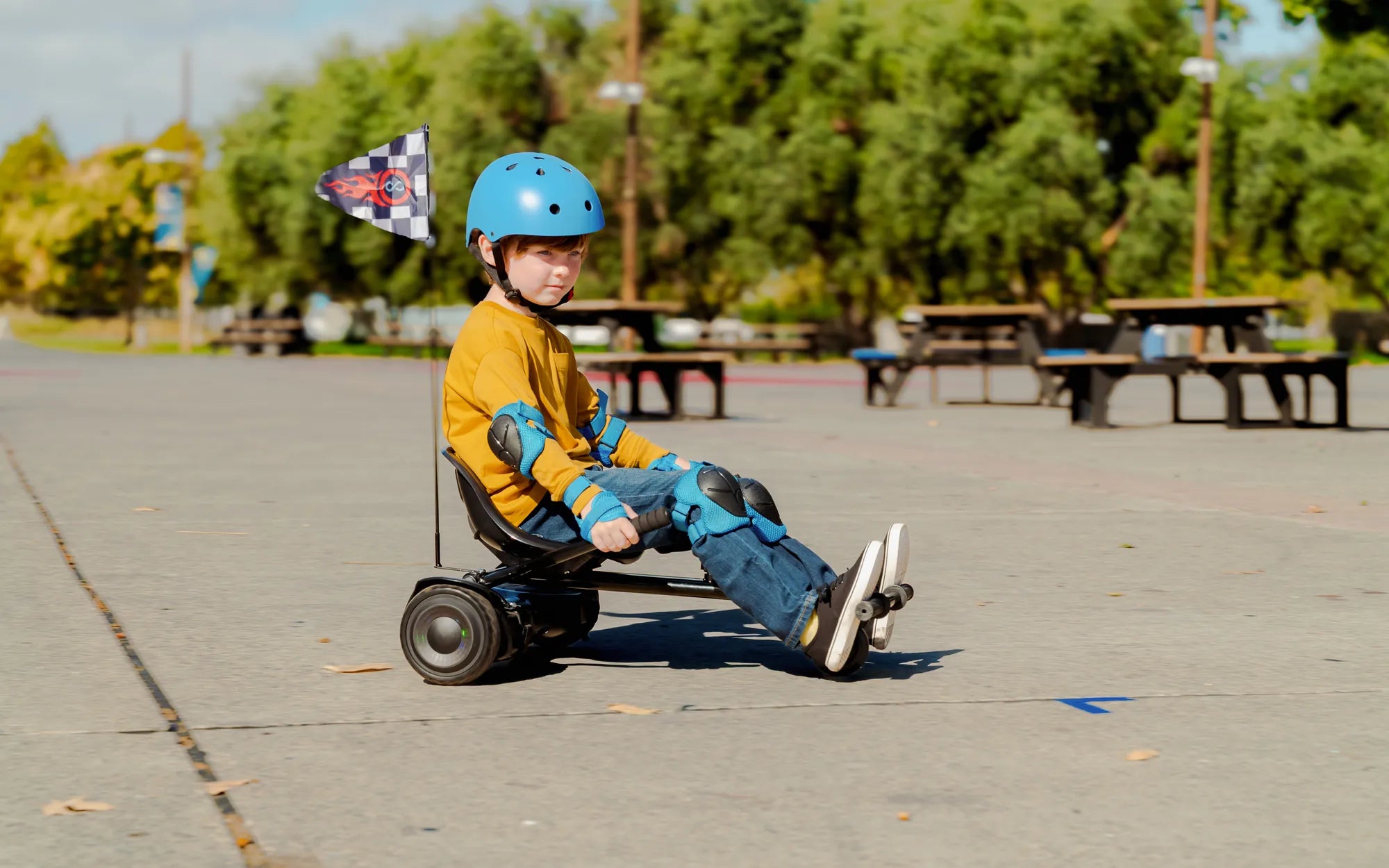
This gear is not optional. A CPSC-certified bicycle helmet, properly fitted, is mandatory. Knee and elbow pads protect joints during falls. Wrist guards are critically important, as instinct leads to putting hands out to break a fall. High-visibility clothing or reflective elements are recommended for low-light conditions.
Pre-Ride Safety Checklist
Institute a quick pre-ride ritual. Check tire pressure and for visible damage. Test both brakes for responsiveness. Ensure the battery is adequately charged and all quick-release levers or folding mechanisms are fully locked. Verify that lights are functional if riding near dusk.
Established Riding Rules for Kids
Clear, consistent rules are essential. Always supervise younger children. Designate riding areas: paved parks, empty parking lots, or sidewalks where legally permitted—never on roads with traffic. Absolutely no passengers. Avoid wet, sandy, or gravelly surfaces that compromise traction. A strict "helmet on or scooter off" policy enforces gear use.
Performance and Practical Considerations: Beyond the Hype
Understanding key performance metrics allows you to compare models objectively and set realistic expectations.
Battery Life and Range Explained
Range is determined by battery capacity, measured in Watt-hours (Wh) or Amp-hours (Ah). A 100Wh battery might deliver 6-7 miles for a lightweight rider under ideal conditions. Real-world factors like rider weight, hills, temperature, and frequent stops reduce this. Charge time typically ranges from 3-6 hours. Always use the manufacturer-provided charger and never leave a battery charging unattended overnight.
Motor Power and Terrain Handling
Motor wattage (W) indicates potential power, but torque determines hill-climbing ability. A 150W motor may struggle on slopes above 10%. A 250W+ motor handles 15% grades more comfortably. Match motor power to your local terrain and the rider's weight to ensure adequate performance without unnecessary risk from excessive acceleration.
Durability and Weather Resistance
Build quality dictates lifespan. Look for reinforced stress points, quality welds, and sealed bearings. An IP rating indicates water and dust resistance. An IPX4 rating protects against splashes, while IPX5 (like Gyroor's standard) can handle water jets from any direction, making the scooter resilient against puddles and light rain. Never submerge any electric scooter.
Parental Guidance: Supervision, Maintenance, and Best Practices
Your role extends beyond the point of purchase. Ongoing involvement ensures safety and maximizes the scooter's lifespan.
The Role of Supervision and Gradual Learning
Start in a flat, open, car-free area. Practice starting, stopping, and turning slowly. Use training cones to create a slalom course for skill building. Only increase the speed setting after they demonstrate full control at the current level. Your presence is both for safety and to encourage good habits.
Basic Maintenance for Longevity
Regular maintenance is simple but crucial. Monthly, check and tighten bolts (especially on the stem and handlebars). Inspect tires for wear and inflate to the recommended PSI. Clean the deck and wheels with a damp cloth to prevent grit from damaging bearings. Listen for unusual noises from the motor or wheels.
Safe Storage and Charging Protocols
Store the scooter in a dry, temperature-stable environment. If storing for more than a month, leave the battery at a 50-60% charge. Always charge on a non-flammable surface, away from heat sources and direct sunlight. Never charge a battery that is physically damaged or has been wet.
Frequently Asked Questions (FAQs)
Q1: What is the safest age for a child to start riding a motorised scooter?
Most manufacturers recommend age 6 as a minimum, assuming the child has the necessary coordination, balance, and ability to follow instructions. Readiness is more important than age; a cautious 8-year-old beginner may be safer than an impulsive 6-year-old.
Q2: Are motorised scooters for kids waterproof?
Fully waterproof is rare. Look for an IP rating: IPX4 offers splash resistance, while IPX5 (a standard for brands like Gyroor) provides protection against sustained water jets. This means they can handle wet pavement and light rain but should not be ridden through deep puddles or submerged.
Q3: How long does the battery typically last, and when will it need replacement?
Quality lithium-ion batteries, like UL-certified packs, are rated for 500+ full charge cycles. With typical use (1-2 charges per week), this translates to 2-4 years before a noticeable range reduction. Replace the battery if you observe swelling, extreme range loss, or failure to hold a charge.
Q4: Can the scooter's maximum speed be limited by a parent?
Yes, most quality models offer this feature. It is commonly achieved through a removable speed key, a PIN code sequence on the display, or a Bluetooth app. This allows you to lock the scooter into a safe beginner mode and control when your child graduates to higher speeds.
Q5: What should I do if the scooter gets wet?
If caught in rain, dry the scooter thoroughly with a towel as soon as possible. Pay special attention to the charging port, deck, and brake areas. Allow it to air-dry completely in a well-ventilated area for several hours before attempting to turn it on or charge it. Do not use a heat source to dry it.
Conclusion: Prioritizing Joy and Safety on Every Ride
The right motorised scooter for kids unlocks a world of outdoor fun and independent mobility. That joy, however, is built on a foundation of informed choices: selecting a scooter with verifiable safety certifications, tailoring it to your child's current abilities, and enforcing consistent rules and gear. Brands that invest in UL-certified batteries and robust construction, like Gyroor, provide the reliable platform for this experience. By prioritizing safety as an integral part of the fun, you create rewarding memories that last far longer than any battery charge. Ready to explore models that meet these rigorous standards? Browse the full Gyroor collection at gyroorboard.com to find the perfect, safety-focused ride for your child.
Is Scooter Good for Kids? A Comprehensive Guide for Parents
Hoverboard Beeping While Riding: Causes, Fixes, and Safety Tips