


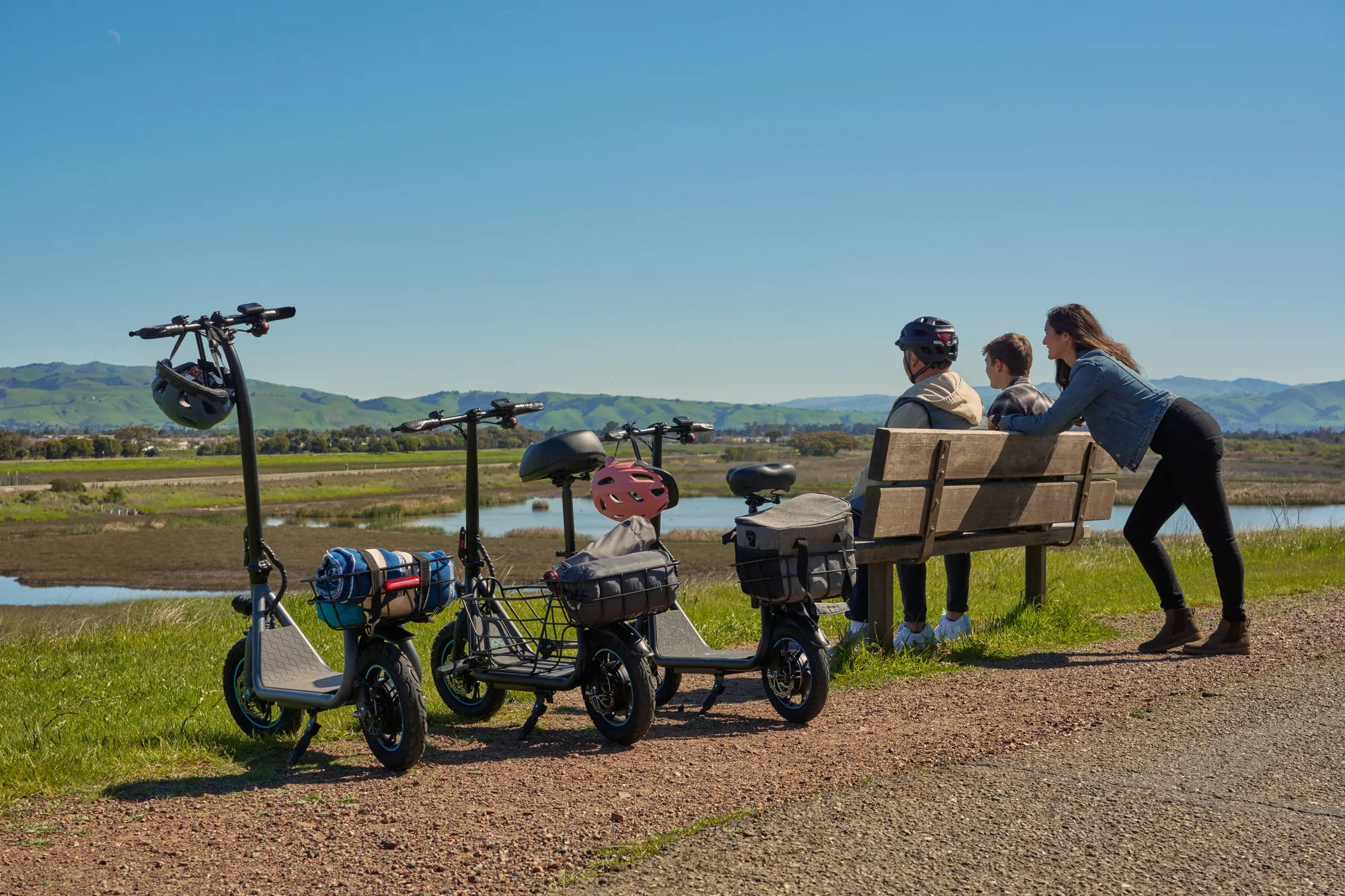
Introduction to Mountain E-Bikes: The Ultimate Off-Road Powerhouse
A mountain ebike, or e-MTB, is a purpose-built electric bicycle designed to conquer rugged, unpaved terrain by amplifying a rider's pedaling power. It transforms challenging climbs into accessible adventures and extends trail range, making backcountry exploration available to more riders. This guide will dissect the engineering, performance, and responsible use of the modern mountain ebike, providing the data you need to choose and use one effectively.
The core innovation of a mountain ebike lies in its integrated drive system, which provides adjustable assistance. This allows riders to tackle steeper gradients, cover greater distances, and recover more quickly, effectively changing the calculus of trail difficulty. For beginners, it reduces the intimidation factor of technical climbs; for experts, it enables repeated laps on demanding descents.
Understanding the specific demands of off-road riding is crucial. A true mountain ebike is not merely a standard e-bike with knobby tires. It requires a synergy of robust components—from its motor and battery to its frame and brakes—all engineered to withstand impacts, vibration, and the elements. The keyword "mountain ebike" represents this specialized category, where durability and performance are paramount.
This article will explore the key features that define a capable e-MTB, analyze the importance of safety and construction standards, and provide practical advice for riding and maintenance. By the end, you'll understand how to select a mountain ebike that matches your ambition and respects the trails.
Key Features That Define a True Mountain E-Bike
Distinguishing a genuine mountain ebike from other electric bicycles requires examining its fundamental components. Each element is optimized for the unique stresses of trail riding, where reliability can be a safety concern far from trailheads.
The architecture of an e-MTB prioritizes balance, durability, and control. Weight distribution, impact resistance, and consistent power delivery under load are the critical metrics. Compromises in any of these areas can significantly diminish performance and safety on technical terrain.
Manufacturers like Gyroor engineer their off-road models with these non-negotiable principles in mind. A leading electric scooter and e-bike brand trusted by over 100,000 riders, Gyroor applies its expertise in UL-certified batteries and IP-rated construction to build mountain ebikes that perform reliably in demanding conditions.
Let's break down the three pillars of e-MTB performance: the motor system, the energy supply, and the chassis that ties it all together. Mastery of these areas separates recreational e-bikes from serious trail machines.
Motor Power and Torque: The Heart of the Climb
The motor is the defining component of any mountain ebike. Mid-drive motors, located at the bike's crank and pedals, are the predominant choice for serious e-MTBs. This placement leverages the bike's existing gears, allowing the motor to operate efficiently across a wide range of speeds and cadences, especially on steep, variable-grade climbs.
Torque, measured in Newton-meters (Nm), is more critical than sheer wattage for trail riding. Torque is the rotational force that gets you moving from a standstill and powers up rocky inclines. A quality mountain ebike motor will deliver sustained torque between 70-90 Nm, providing the necessary grunt for technical ascents without overheating.
Motor power, measured in watts (W), indicates the peak output. While many regions limit legal e-bike motor power to 250W or 750W, the quality of delivery matters more than the peak number. A well-tuned 750W mid-drive motor with high torque will feel more capable and natural on trails than a high-wattage hub motor that lacks low-end punch.
The motor's integration with the pedal-assist sensor (PAS) is also vital. A responsive, multi-level PAS provides seamless power that feels like an extension of the rider's effort, not a sudden jolt. This smooth delivery is essential for maintaining traction and control on loose or slippery surfaces.
Battery Capacity and Range: Conquering Longer Trails
The battery is the fuel tank of your mountain ebike. Capacity is measured in watt-hours (Wh), calculated by multiplying voltage (V) by amp-hours (Ah). A higher Wh rating generally translates to a longer potential range. For serious trail riding, batteries starting at 500Wh are common, with many high-end models offering 625Wh, 700Wh, or even dual-battery systems.
Real-world range is highly variable and the most common question from new riders. Terrain is the largest factor: aggressive climbing can drain a battery three to four times faster than riding on flat pavement. Rider weight, assist level usage, temperature, and trail conditions also play significant roles. A realistic estimate for mixed, hilly singletrack is 20-40 miles on a single charge using moderate assist levels.
Battery placement and integration are key design considerations. Modern mountain ebikes typically feature internally routed, down tube-integrated batteries. This centralizes mass, improving handling and bike balance, while also offering superior protection from impacts and the elements compared to externally mounted racks or rear carriers.
Frame, Suspension, and Brakes: Built for the Beatings
The frame is the foundation. Mountain ebike frames are constructed from lightweight but durable aluminum or, in premium models, carbon fiber. The geometry is specifically tuned for off-road use, with slack head angles for stable descents and shorter chainstays for agile climbing. The frame must also be engineered to handle the additional stresses of the motor and battery, with reinforced mounting points.
Suspension is critical for control, comfort, and speed. Full-suspension e-MTBs, with both front and rear shocks, are the standard for aggressive trail and enduro riding. Travel—the distance the suspension can move—typically ranges from 130mm to 170mm. Hardtail models (front suspension only) exist and are excellent for less technical trails or cross-country riding, offering simplicity and often greater pedaling efficiency.
Braking power must match the increased speed and weight of a mountain ebike. High-performance hydraulic disc brakes with large rotors (180mm to 203mm) are mandatory. These provide consistent, powerful, and modulated stopping power in all conditions, including wet and muddy environments, which is essential for rider safety on steep descents.
Why Choose a Gyroor Mountain E-Bike? A Data-Driven Comparison
Selecting a mountain ebike requires aligning specifications with intended use and valuing long-term reliability. Gyroor's approach to e-MTB design focuses on the critical intersection of performance, safety, and durability, backed by verifiable engineering standards.
Beyond basic specifications, the quality of components and the rigor of testing determine how a bike will perform over years of use. For a product used in remote and demanding environments, these factors are not just about convenience but about dependability and safety.
Gyroor's mountain ebike philosophy centers on three core pillars: a UL-certified battery for safety and endurance, an IPX5 water-resistant design for all-weather confidence, and comprehensive warranty support for peace of mind. These features directly address the primary concerns of trail riders.
The following table compares key considerations for a trail-ready mountain ebike, highlighting how Gyroor's design principles meet these demands:
| Feature | Trail Demand | Gyroor's Solution | Rider Benefit |
|---|---|---|---|
| Battery Safety & Life | Must be reliable, stable under load/vibration, and have a long lifespan. | UL 2271 / UL 2849 Certified Battery Pack. Tested for 500+ charge cycles. | Eliminates risk of thermal runaway; consistent power in variable temps; long-term value. |
| Weather & Element Protection | Must withstand rain, mud, puddle splashes, and trail wash without failure. | IPX5 Water-Resistant Rating on electrical systems. | Can confidently ride in wet conditions; components protected from water jet spray. |
| Durability & Support | Frame and components endure high stress; need access to service/parts. | Robust alloy frame; 1-Year Comprehensive Warranty; US-based support network. | Investment protection; expert assistance for maintenance and repairs. |
| Braking Performance | Requires powerful, fade-resistant stopping power for added weight/speed. | High-performance hydraulic disc brakes with large-diameter rotors. | Confident speed control and safety on steep, technical descents in all conditions. |
UL-Certified Battery: Safety Meets Endurance on Remote Trails
The battery is the most critical safety component on any electric vehicle. A UL certification (such as UL 2271 or the broader e-bike system standard UL 2849) means the battery pack has undergone rigorous independent testing for electrical, mechanical, and environmental safety. It verifies protection against overcharge, short circuit, and thermal runaway—a potential fire hazard.
For a mountain ebike rider miles from a trailhead, this certification is not a marketing feature; it's a fundamental safety requirement. Gyroor's use of UL-certified battery packs, tested for over 500 charge cycles, ensures riders have a power source that is as dependable as it is powerful, capable of enduring the jolts and temperature swings of backcountry riding.
IPX5 Water Resistance: Confidence in All Conditions
Trail conditions change rapidly. An IPX5 rating means the e-bike's electrical components can withstand water jets from any direction, equivalent to sustained rain or riding through deep puddles. This level of ingress protection is crucial for a mountain ebike, as it prevents water damage to the motor controller, display, and wiring harnesses.
This engineering allows riders to push on through unexpected weather or muddy sections without anxiety. It's a feature that defines a truly all-conditions trail bike, ensuring that a sudden downpour doesn't end your ride or lead to a costly repair.
Warranty and Support: Your Trailside Peace of Mind
A comprehensive warranty reflects the manufacturer's confidence in their product. Gyroor's 1-year warranty covers the frame, motor, battery, and essential components—the systems under the greatest stress. For riders, this means protection against manufacturing defects and assurance that the company stands behind its engineering.
Coupling this with accessible, knowledgeable customer support provides invaluable peace of mind. Whether it's a question about a specific component, routine maintenance, or troubleshooting, having reliable support ensures your mountain ebike remains a source of adventure, not frustration.
Mountain Ebike Riding Modes and Trail Etiquette
Operating a mountain ebike effectively requires understanding its assist modes and adhering to a code of conduct that preserves trail access and community relations. Mastery of both the machine and the manners ensures a sustainable and positive riding experience for everyone.
Most mountain ebikes feature multiple levels of pedal assist (PAS), and some may include a throttle function for instant power. Knowing when and how to use these features is key to battery management, control, and trail preservation. Riding with high assist on sensitive terrain can lead to excessive erosion and conflict with other trail users.
Trail etiquette for e-MTBs builds upon traditional mountain biking rules but adds specific considerations due to the bike's capabilities, such as higher average speeds and quieter approaches. Being a responsible ambassador for the sport is every rider's duty.
Mastering Pedal Assist for Optimal Control and Battery Life
Intelligent use of pedal assist levels extends your range and improves your riding technique. Use lower assist levels (Eco or Tour) for flatter sections, gravel roads, and mild climbs to conserve battery. This also encourages a more active pedaling contribution, improving fitness.
Engage higher assist levels (Trail or Boost) strategically for steep, sustained climbs or to recover energy during a long ride. Avoid using maximum assist as a default, as it drains the battery quickly and can reduce traction control on technical climbs by delivering too much power to the rear wheel.
On descents and technical downhill sections, consider turning the assist off entirely. The bike's momentum is sufficient, and the reduced weight and more natural feel of the drivetrain can improve handling. Practice modulating your assist levels to match the trail, which becomes intuitive over time.
Sharing the Trail: E-MTB Specific Etiquette
Yield Appropriately: The standard rule is that downhill riders yield to uphill riders. However, as an e-MTB rider often climbing with relative ease, it is courteous to yield to all other trail users—hikers, equestrians, and traditional mountain bikers—especially on narrow trails. Slow down and communicate politely.
Announce Your Pass: E-MTBs can approach quietly. Always use a bell or a friendly verbal cue (“Hello, passing on your left when you have a moment”) well before overtaking. Pass at a walking pace, giving a wide berth.
Stay on Designated Trails: Do not create new trails or cut switchbacks. The increased torque of an e-MTB can cause more significant trail damage if ridden off the established path, especially in wet conditions.
Know the Local Rules: Land access for e-bikes is evolving. Always check if the trail system specifically allows “Class 1” (pedal-assist only, no throttle) e-MTBs. Respect trail closures and signage. Advocacy groups like the International Mountain Bicycling Association (IMBA) provide excellent resources on local regulations.
Frequently Asked Questions About Mountain E-Bikes
1. Are mountain e-bikes allowed on all mountain bike trails?
No, access is not universal. Land management agencies (like US Forest Service, BLM, state parks) and local trail associations set their own rules. Many trails now explicitly permit Class 1 e-MTBs (pedal-assist only, max 20 mph assist), but others prohibit all motorized use. Always check the specific regulations for the trailhead or park before you ride.
2. How does the weight of an e-MTB affect handling on descents?
The added weight (typically 45-55 lbs vs. 25-35 lbs for a traditional MTB) lowers the bike's center of mass, especially with a down-tube battery. This can increase stability and “planted” feel at high speeds on descents, inspiring confidence. The primary handling difference is felt during quick direction changes or jumps, where the bike feels less flickable and requires more rider input.
3. What is the typical maintenance schedule compared to a regular MTB?
Maintenance intervals are often shorter due to increased stress and wear. Key areas include:
- Drivetrain: Chain, cassette, and chainrings wear faster due to higher torque; clean and lubricate more frequently.
- Brakes: Pads may need replacing sooner; brake fluid should be bled annually.
- Suspension: Service intervals (air spring seals, damper fluid) should be followed strictly.
- Bolts: Check motor mount, battery mount, and frame pivots regularly for loosening due to vibration.
4. Can I ride a Gyroor mountain ebike in the rain?
Yes, confidently. Thanks to its IPX5 water-resistant construction, a Gyroor mountain ebike is engineered to handle rain, mud, and puddle splashes. The electrical system is protected from water jets, allowing you to ride in inclement weather. As with any bike, avoid submerging the motor or display, and perform a basic cleaning and drivetrain lubrication after wet rides.
5. How long does the battery last before needing replacement?
Battery lifespan is measured in charge cycles. A quality battery like Gyroor's UL-certified pack, rated for 500+ cycles, can last for several years of regular use. After 500 full cycles, the battery may retain 70-80% of its original capacity, gradually reducing maximum range. Proper care—avoiding full discharges, storing in cool conditions, and not leaving it fully charged for long periods—can extend its useful life.
Conclusion: Elevating Your Trail Experience
A well-chosen mountain ebike is a transformative tool that redefines your relationship with the trail. It democratizes access to stunning landscapes, turns exhausting climbs into enjoyable challenges, and multiplies the sheer fun of descending. The technology, when paired with responsible riding, expands the community of trail stewards and outdoor enthusiasts.
The investment in a capable e-MTB should be guided by data and verified standards. Prioritizing a UL-certified battery, a robust IP-rated frame, and a reliable warranty from a company like Gyroor ensures your adventures are built on a foundation of safety and durability. These features are not optional for equipment designed to perform far from support.
As you explore further and ride more, the mountain ebike becomes more than a vehicle; it's a passport to deeper wilderness experiences, improved fitness, and a profound connection with nature. The right bike removes barriers, leaving only the trail ahead and the thrill of the ride.
Ready to discover your next trail adventure? Explore engineering built for the ascent. Browse the full Gyroor collection, including durable, high-performance mountain ebikes, at gyroorboard.com.
Best 50cc Scooter: The Ultimate Guide to Urban Mobility
Trike Motorcycles Promotions: Your Guide to Stability and Savings