


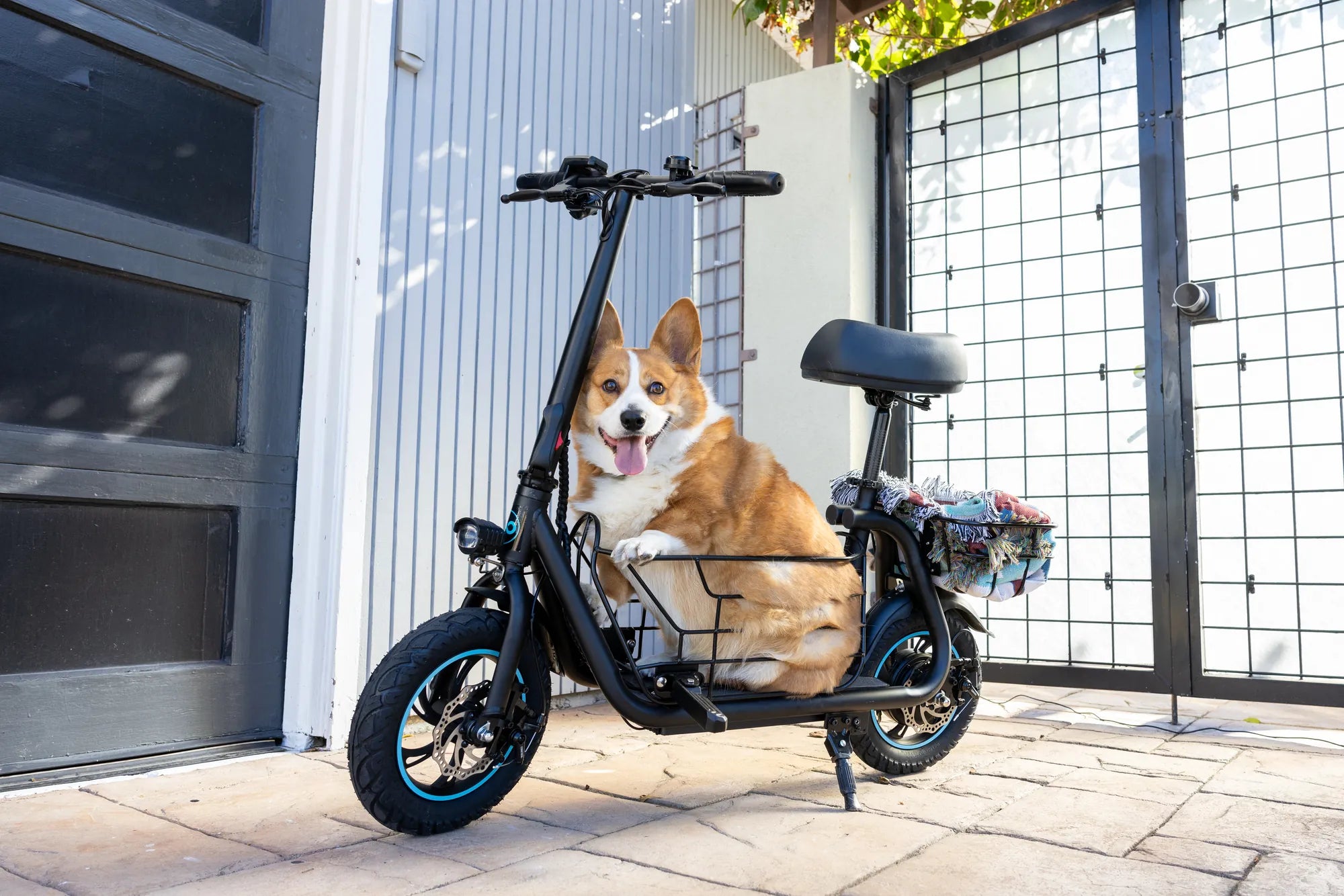
Introduction to Off-Road Bike Tires
Your choice of offroad bike tires is the single most critical factor determining your bike's performance, safety, and control on the trail. These specialized tires are engineered to provide maximum traction, durability, and impact absorption across unpredictable surfaces like loose dirt, mud, rocks, and roots. Unlike road tires, they feature aggressive tread patterns, wider profiles, and robust construction to handle the demands of off-pavement riding.
This guide will provide a detailed, data-driven analysis of offroad bike tires, covering key categories including mountain bike (MTB), fat bike, and e-bike specific models. You will learn how to decode tire specifications, match tread patterns to terrain, and understand the unique requirements for electric bikes. We'll also compare tubeless versus tubed systems and provide actionable maintenance advice.
Whether you're riding a traditional mountain bike or a powerful Gyroor off-road e-bike, the right tires transform your experience. They are the foundational upgrade that directly influences speed, comfort, and confidence. Investing in the correct set is an investment in your ride's capability and your own safety.
Key Features of Off-Road Tires: A Buyer's Guide
Understanding the anatomy of an off-road tire is essential for making an informed purchase. Each design element, from the rubber compound to the casing threads, serves a specific function that impacts grip, rolling resistance, and puncture protection. This section breaks down these components to explain their role in overall performance.
Modern offroad bike tires are a marvel of materials engineering. The rubber compound balances grip and durability, with softer compounds offering better traction at the cost of faster wear. The tire's casing, defined by its Threads Per Inch (TPI), determines suppleness and weight; a 120 TPI casing is lighter and more compliant than a 60 TPI one, but often less cut-resistant.
Additional features like puncture protection belts, often made of materials like Kevlar, add a layer between the tread and casing to deflect thorns and sharp rocks. Sidewall reinforcement is another critical feature for off-road use, providing support when running lower pressures and protecting against impacts with roots and rocks. The combination of these features dictates the tire's personality on the trail.
Tire Tread Patterns & Their Terrain
The tread pattern is the most visible feature of any offroad bike tire and is meticulously engineered for specific conditions. Knobs, the individual blocks of rubber on the tread, vary in height, shape, and spacing to optimize grip, shedding, and rolling efficiency.
For loose and dry conditions, tires feature widely spaced, tall knobs. This design digs into soft surfaces like dirt and sand to find traction while allowing debris to clear quickly to prevent clogging. In contrast, mud-specific tires have even more extreme spacing, with tall, sharp-edged knobs that act like paddles to bite through slop and shed sticky mud.
For hardpack and rocky trails, a tighter, more uniform knob pattern is common. These tires often have intermediate-height knobs with ramped leading edges to reduce rolling resistance while providing consistent braking and cornering traction. Some designs incorporate a center ridge of smaller, closely packed knobs for fast rolling, flanked by larger, supportive shoulder knobs for aggressive cornering.
Tire Width, Volume, and Pressure
The relationship between tire width, air volume, and inflation pressure is fundamental to off-road performance. Wider tires, such as the 2.4" to 2.6" range common in modern trail riding, or the 4.0"+ tires on fat bikes, provide a larger contact patch with the ground. This directly increases traction and stability.
Greater air volume allows riders to run significantly lower pressures safely. Lower pressure enables the tire to conform to trail irregularities, improving grip and providing a more forgiving, comfortable ride by absorbing small bumps and vibrations. For example, a rider might run a 2.5" tire at 22 PSI for maximum grip in technical terrain, whereas a 2.2" tire might require 30+ PSI to avoid pinch flats.
Finding the optimal pressure is a balance. Too high, and the tire becomes harsh and skittish on loose surfaces. Too low, and you risk "burping" air in a tubeless system, damaging the rim, or experiencing excessive sidewall flex. It's a critical adjustment that should be tailored to rider weight, terrain, and tire construction.
Casing Construction and Puncture Protection
The casing is the tire's foundational fabric layer, typically made from nylon. Its density, measured in TPI, is a key indicator of performance. A high TPI count (e.g., 120) means finer threads, resulting in a more supple, lighter tire that offers better traction and a smoother ride by conforming to the ground. A lower TPI (e.g., 60) uses thicker threads, creating a heavier, more durable, and less flexible casing that is more resistant to cuts and abrasions.
Puncture protection is often added as a separate belt under the tread. Technologies like EXO (from Maxxis), Gravity Shield (from Schwalbe), or proprietary aramid layers are common. These belts are designed to stop sharp objects from penetrating the critical inner casing, dramatically reducing the frequency of flats from thorns and small rocks.
The trade-off is weight and sometimes ride feel. Maximum protection can make a tire feel slightly less responsive. For e-bikes and riders prioritizing durability over ultimate suppleness, a robust casing with strong puncture protection is often the recommended choice to handle the increased forces and weight.
Choosing Tires for Your E-Bike: Special Considerations
Electric bikes place unique demands on offroad bike tires that standard mountain bike tires may not be designed to handle. The combination of greater overall weight (bike, battery, motor), instant high torque from the motor, and sustained higher average speeds generates more stress on the tire's structure. This makes tire selection for an e-bike a critical safety and performance decision.
An e-bike's motor can deliver power that overwhelms a tire's grip if the tread pattern and compound aren't up to the task. Furthermore, the extra weight increases rolling resistance and the force of impacts, making the tire more susceptible to punctures and sidewall damage. Therefore, e-bike-specific tires are engineered from the ground up to address these challenges.
Brands like Gyroor design their off-road e-bikes with these factors in mind, often specifying tires that can handle the rigors of electric-assist trail riding. Upgrading to a tire built for e-MTB use is one of the best ways to enhance the safety, durability, and fun of your electric bike adventures.
The Importance of E-Bike Rated Tires
An "E-Bike Rated," "E-MTB," or "E-50" designation on a tire is not marketing fluff; it signifies a tested and reinforced construction standard. These tires are built with stronger, often higher-TPI casings that incorporate additional puncture protection layers. The rubber compounds are also formulated to be more durable to resist wear from the increased torque and weight, without sacrificing too much grip.
The rating often corresponds to an official speed classification (e.g., S-Pedelecs up to 28 mph require robust tires). They are tested for durability at higher sustained speeds and under greater loads. Using a non-rated tire on a powerful e-bike can lead to premature wear, increased puncture frequency, and in extreme cases, casing failure under high stress, which is a significant safety risk.
For riders of brands like Gyroor, using e-bike rated tires ensures that the component matches the vehicle's capability. It protects your investment in the bike and, more importantly, provides peace of mind during aggressive riding.
Matching Tires to Your Gyroor E-Bike's Performance
Selecting the right offroad bike tires for your Gyroor e-bike depends on your primary use case. Gyroor's off-road and all-terrain e-bikes are known for their powerful motors and durable frames, capable of tackling challenging trails.
For aggressive trail or enduro-style riding on a Gyroor model, prioritize a robust, e-MTB rated tire with an aggressive tread pattern. Look for reinforced sidewalls and strong puncture protection to handle the torque and rocky impacts. A tire in the 2.4" to 2.6" width range would offer an excellent balance of traction and rolling efficiency.
For riders using a Gyroor e-bike for mixed-terrain commuting or light trail duty, a durable hybrid tire with a fast-rolling center tread and supportive side knobs is ideal. The focus should remain on e-bike-rated durability to handle the daily load and power, but with a pattern that minimizes resistance on paved sections connecting the trails. Always consult your Gyroor manual or support team for tire size compatibility and recommendations.
Data-Driven Comparison: Tubeless vs. Tubed Tires for Off-Road
The debate between tubeless and traditional tubed setups is central to modern off-road biking. A tubeless system involves a sealed rim, a compatible tire, and liquid sealant, eliminating the need for an inner tube. This technology offers distinct performance advantages that are quantifiable, especially for off-road and e-bike applications.
Tubeless setups allow for safer low-pressure riding, which increases traction and comfort. The liquid sealant automatically plugs most small punctures from thorns or glass, effectively making the tire self-healing. This dramatically reduces flat tire incidents on the trail. The removal of the inner tube also reduces rotational weight and can lower rolling resistance.
However, tubeless systems require more initial setup, specific compatible rims and tires, and periodic maintenance to refresh the sealant, which dries out over 3-6 months. The following table provides a clear, factual comparison to help you decide.
| Feature | Tubeless Setup | Tubed Setup |
|---|---|---|
| Setup Difficulty | Moderate to High (requires sealant, tape, compatible parts) | Low (simple tire and tube installation) |
| Puncture Resistance | Very High (sealant plugs most small holes) | Low (tube is vulnerable to punctures and pinch flats) |
| Rolling Resistance | Lower (no tube friction) | Higher (friction between tube and tire) |
| Weight | Lighter (no inner tube) | Heavier (includes tube weight) |
| Maintenance | Higher (sealant refresh, potential burps) | Lower (inspect/replace tube) |
| Typical Cost | Higher (sealant, tape, valves) | Lower (inexpensive tubes) |
For serious off-road and e-bike riders, the performance and flat-protection benefits of a tubeless system overwhelmingly justify the initial cost and setup complexity. The ability to run lower pressures without fear of pinch flats transforms ride quality and control. For casual riders on smoother paths, a high-quality tubed tire with a thorn-resistant tube may remain a simple and effective solution.
Installation, Maintenance, and Safety Tips
Proper installation and consistent maintenance are non-negotiable for getting the maximum performance and safety from your offroad bike tires. A poorly seated tire or incorrect pressure can lead to handling issues, premature wear, or catastrophic failure. These practices are especially crucial for e-bikes, where forces are greater.
Begin every maintenance session with clean tools and a well-lit workspace. Always deflate the tire completely before attempting to remove it from the rim. When installing a new tire, ensure it is the correct size (ISO/ETRTO marking) for your rim. Using a tire that is too wide or narrow can compromise safety and handling.
Regularly inspect your tires for signs of wear, damage, or embedded debris like glass or thorns. Develop a pre-ride checklist that includes a tire pressure check. Consistent care not only extends tire life but also ensures predictable and safe handling on every adventure.
Proper Installation and Seating
For tubed tires, installation is straightforward but requires care. Partially inflate the inner tube before fitting the second bead to avoid pinching it between the tire and rim. Use tire levers gently to avoid damaging the tube or rim tape. Once mounted, inflate the tube to about 50% pressure and check that the tire bead is evenly seated all around the rim on both sides before inflating to full pressure.
For tubeless setups, proper seating is critical. After adding sealant through the valve stem (with the core removed), inflate the tire rapidly to a high pressure—often 40-50 PSI or more—using a high-volume floor pump or an air compressor. A loud "snap" or "pop" indicates the bead has seated correctly against the rim's hook. Spin the wheel and listen for leaks, then bounce it to distribute the sealant before lowering to your desired riding pressure.
Failure to achieve a proper seal will result in air leakage, often at the rim bead interface. Applying soapy water around the bead can help identify leaks during seating. For stubborn tires, a dedicated tubeless inflation tank can provide the necessary burst of air to lock the bead in place.
Routine Checks and Wear Indicators
The most important routine check is tire pressure, which should be verified before every ride with a reliable gauge. Off-road pressures are dynamic and should be adjusted for trail conditions, rider weight, and tire volume. A consistent pressure routine ensures optimal traction and protects your rims from impact damage.
Visually inspect the tread and sidewalls before and after rides. Look for cuts, gashes, or embedded foreign objects. Remove debris carefully with a pick or small screwdriver. For the tread, monitor the wear on the center knobs. Once these knobs become significantly rounded and lose their sharp edges, braking and acceleration traction are compromised.
The most definitive wear indicator is the Tread Wear Indicator (TWI), a small dimple or mark located at the base of the tread grooves. When the tread wears down to the level of this indicator, the tire is at the end of its safe life and must be replaced. Additionally, if you can see the casing threads (the fabric weave) through the rubber, the tire is immediately unsafe and requires replacement.
Frequently Asked Questions (FAQ)
Q: Can I put any mountain bike tire on my e-bike?
A: While physically possible, it is strongly discouraged. Standard mountain bike tires lack the reinforced casing and durable compounds needed to handle the sustained torque, weight, and higher average speeds of an e-bike. This mismatch can lead to rapid tread wear, increased sidewall failures, and a higher risk of punctures. Always opt for tires specifically rated for e-bike or e-MTB use.
Q: How often should I check my off-road tire pressure?
A: Before every single ride. Off-road tires typically run at lower pressures (e.g., 18-30 PSI) and are more sensitive to small changes. A difference of just 3-5 PSI can significantly alter traction, rolling resistance, and suspension feel. Proper pressure is your first line of defense against pinch flats and rim damage.
Q: What's the benefit of a tubeless setup for a casual rider?
A: The primary benefit is dramatically improved flat protection. Casual riders are just as susceptible to thorns, glass, and small punctures. Tubeless sealant automatically plugs these holes, meaning fewer interrupted rides. The ability to run slightly lower pressure also provides a more comfortable and confident ride over bumps and irregularities, enhancing enjoyment.
Q: Are wider tires always better for off-road riding?
A: Wider tires offer more traction, comfort, and stability, which are generally beneficial. However, "better" depends on your terrain, riding style, and bike compatibility. Excessively wide tires can increase weight and rolling resistance, and may not fit your frame or fork. The modern sweet spot for aggressive trail riding is 2.4" to 2.6". Choose a width appropriate for your bike's design and your local trails.
Q: How do I know if my tires are worn out?
A: Look for these key signs: 1) The center knobs are visibly rounded and lack sharp edges. 2) The tread depth is worn down to the level of the Tread Wear Indicator (TWI) dimples. 3) The casing fabric is visible through the rubber in any spot. 4) The tire has sustained a large cut or gash that exposes the casing or cannot be sealed with tubeless sealant. Any of these conditions warrant immediate replacement.
Conclusion: Investing in Your Ride's Foundation
Your offroad bike tires are the fundamental connection between your bike and the trail, influencing every aspect of control, efficiency, and safety. Choosing the right set—prioritizing robust e-bike-rated construction for electric models, an appropriate tread pattern for your terrain, and a reliable tubeless system for serious riding—is not an accessory purchase; it's a core performance and safety upgrade.
The data is clear: tires designed for the specific demands of off-road and e-bike use provide measurable benefits in durability, puncture resistance, and traction. Regular maintenance, especially pressure checks and wear inspections, ensures this investment pays off in consistent performance and longevity. For riders of Gyroor e-bikes, pairing the brand's reliable electric drive systems with tires built to match their power ensures a harmonious and trustworthy riding experience.
View your tires as the essential foundation of your adventure. The right choice enhances every ride, giving you the confidence to explore further and push your limits safely. Ready to equip your bike with the grip and durability it deserves? Browse the full Gyroor collection, including compatible e-bikes and gear, at gyroorboard.com.
Brand New Scooter: Your Ultimate Guide to the First Ride and Beyond
Brand New Scooter: Your Ultimate Guide to the First Ride and Beyond