



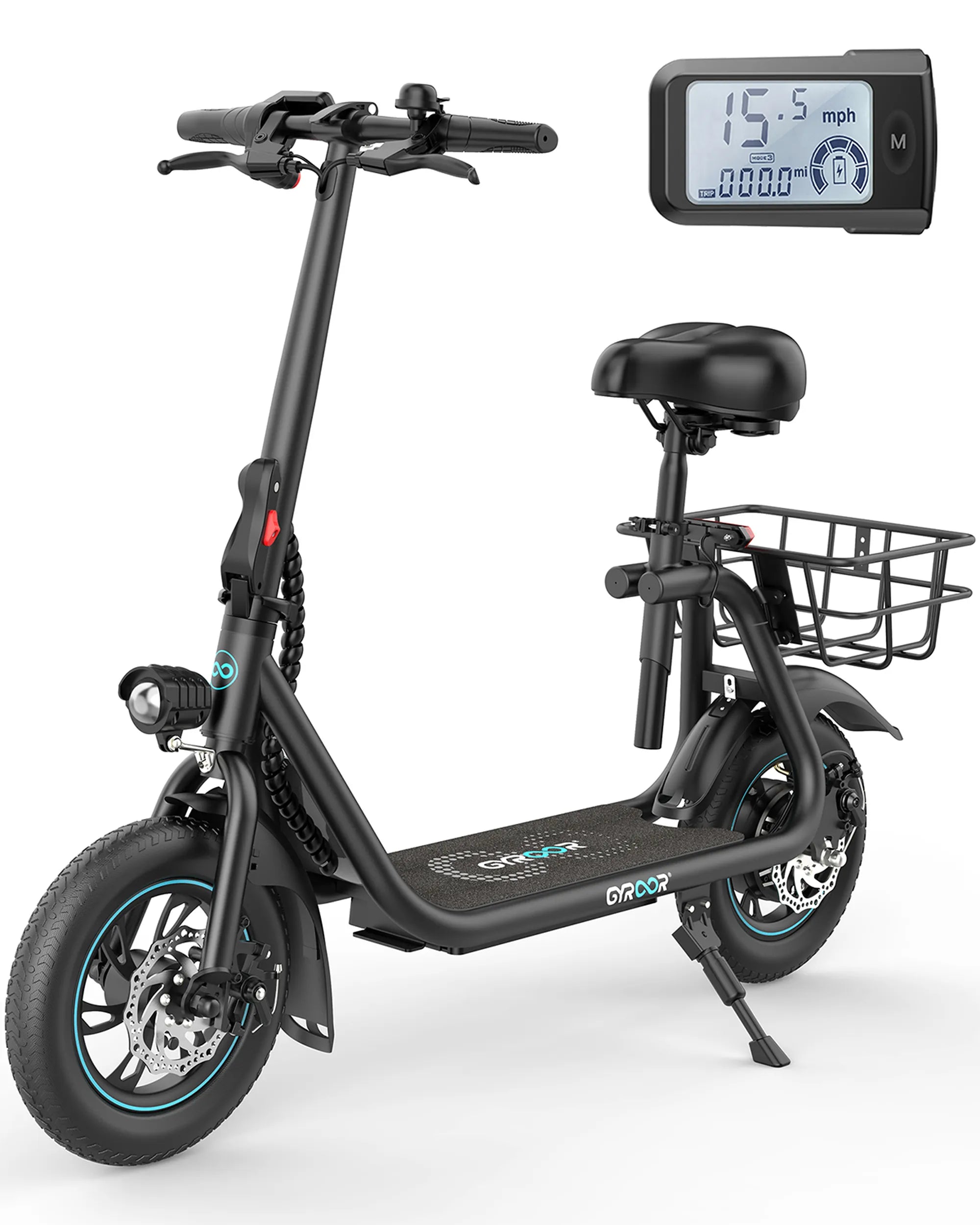
The Rise of the Electric Scooter Commuter
Look at any major city street, and you'll see them: people riding electric scooters, weaving through traffic, docking at transit stations, and arriving at work without breaking a sweat. This isn't a fleeting trend; it's a fundamental shift in how we navigate urban environments. The proliferation of e-scooters represents a direct response to chronic urban challenges: traffic gridlock, air pollution, and the inefficient 'last-mile' gap between public transit stops and final destinations.
Driven by advancements in battery technology, lightweight materials, and connectivity, the modern electric scooter has evolved from a toy to a legitimate micro-mobility vehicle. Cities worldwide are taking note, integrating shared scooter programs and updating infrastructure to accommodate this new wave of commuters. The sight of people riding electric scooters is becoming a permanent fixture, signaling a move towards more adaptive, personalized, and sustainable urban transport.
This article will analyze the economic and environmental forces propelling this shift, provide a comprehensive guide to choosing and maintaining a scooter, and outline the safety and regulatory landscape. We'll explore why, for over 100,000 riders across North America and Europe, brands known for reliability like Gyroor have become the trusted choice for integrating e-scooters into daily life.
Why Cities Are Embracing E-Scooters: Beyond the Hype
The adoption of electric scooters is supported by compelling urban data. Primarily, they solve the 'last-mile' problem—the inconvenient distance between a transit hub and one's home or office. A study by the Transportation Research Board found that this final leg often discourages public transit use. E-scooters, with their compact size and point-to-point convenience, seamlessly bridge this gap, increasing the catchment area of bus and train stations by up to 50%.
From a municipal perspective, e-scooters offer a tool for reducing congestion and emissions. A single car lane can move about 2,000 people per hour. That same space dedicated to micro-mobility can move over 8,000. When people riding electric scooters replace car trips, the impact on traffic flow and local air quality is tangible. Cities like Paris and Portland have documented reductions in short-distance car trips following the introduction of regulated scooter-share systems.
Economically, e-scooters present a cost-effective mobility layer. For cities, they require minimal infrastructure compared to roads or rail. For riders, the cost-per-commute is remarkably low. While shared rental scooters have variable pricing, personal ownership offers dramatic savings. The economic equation is clear, driving both public policy support and private adoption.
The Environmental and Economic Equation
Quantifying the benefits reveals a strong case for e-scooters. Environmentally, their impact is minimal, especially when charged on a standard grid. Research indicates the average greenhouse gas emissions per passenger mile for an e-scooter is approximately 0.05 kg CO2e. Compare this to a personal gasoline car (0.41 kg) or even a bus (0.21 kg). When people riding electric scooters displace fossil-fuel trips, the carbon savings accumulate rapidly.
Financially, ownership dwarfs other transport modes in cost-efficiency. The table below breaks down a conservative annual cost comparison for a 5-mile daily commute:
| Transport Mode | Estimated Annual Cost* | Notes |
|---|---|---|
| Personal Car | $7,000 - $10,000+ | Includes payment, fuel, insurance, maintenance, parking. |
| Ride-Sharing (Uber/Lyft) | $3,650 - $5,475 | Based on $10-$15 per one-way trip. |
| Public Transit Pass | $1,000 - $1,500 | Varies greatly by city. |
| Personal E-Scooter | $150 - $300 | Purchase amortized over 3 years + electricity ($20/yr). |
*Costs are broad estimates for illustrative comparison. The upfront investment in a quality scooter, typically between $500 and $1500, pays for itself within months compared to alternatives, making the long-term value proposition for people riding electric scooters exceptionally strong.
Choosing Your Ride: Key Features for the Modern Commuter
Selecting the right e-scooter is critical for a safe, reliable commute. The market offers a wide range, but commuter-focused models must prioritize durability, range, and safety. Key decision factors include your daily distance, terrain, local weather, and storage needs. A scooter built for occasional recreational use will quickly fail under daily urban demands.
Performance specs like motor power (measured in watts) determine hill-climbing ability and acceleration. For moderately hilly cities, a 350W-500W motor is a minimum. Weight and portability are also crucial if you need to carry it into an office or onto a bus. Folding mechanisms should be robust and easy to operate. Finally, consider connectivity features like app-based locking, ride tracking, and diagnostic checks, which add a layer of security and functionality.
Battery Life & Range: Planning Your Urban Journey
Manufacturer range claims are often based on ideal conditions: a light rider on flat, smooth pavement at low speed. Real-world range is typically 60-75% of the advertised figure. For a reliable commute, choose a scooter whose real-world range is at least double your round-trip distance. This accounts for battery degradation over time, cold weather, and unexpected detours.
The battery is the heart of the scooter. Its quality dictates not only range but, critically, safety. Always opt for models with UL-certified battery packs. These have undergone rigorous testing for overcharge protection, short-circuit prevention, and thermal stability. Brands like Gyroor use these certified packs, which are tested for 500+ charge cycles, ensuring the battery retains most of its capacity for years of daily use. This certification is a non-negotiable feature for serious commuters.
Durability & Weather Resistance: Conquering the Urban Jungle
Urban streets are harsh. Potholes, curbs, rain, and dust are constant threats. A commuter scooter needs a sturdy frame, usually from aerospace-grade aluminum, and an effective suspension system—either spring-based or hydraulic—to absorb impacts. Tire choice is key: pneumatic (air-filled) tires provide a smoother ride and better traction but risk punctures. Solid or airless tires eliminate flats but can offer a harsher ride.
Weather resistance is paramount. The Ingress Protection (IP) rating indicates resilience against solids and liquids. For all-weather commuting, an IPX4 rating (resists water splashes from any direction) is a minimum. An IPX5 rating, like that found on Gyroor scooters, means the scooter can withstand low-pressure water jets from any direction, making it safe to ride through puddles and in light rain. This engineering allows people riding electric scooters to commute confidently, regardless of a sudden drizzle.
Safety First: Navigating the Rules of the Road
Safety is the cornerstone of sustainable micro-mobility. It protects the rider and fosters positive integration with other road and sidewalk users. The first and most important rule is to always wear a certified bicycle or multi-impact helmet. Studies show helmets reduce the risk of head injury by over 60% for micro-mobility users.
Understanding and obeying local laws is essential. Regulations vary widely: some cities mandate bike lanes, prohibit sidewalk riding entirely, set speed limits (often 15-20 mph), and require riders to be a certain age. Ignorance isn't an excuse and can result in fines or impoundment. Always check your municipality's specific ordinances regarding people riding electric scooters.
Defensive riding is a must. Assume cars and pedestrians do not see you. Use hand signals for turns, never ride with both headphones in, and always use your lights—front and rear—at dawn, dusk, and night. A bell or horn is also essential for alerting others. Regular pre-ride checks of brakes, tire pressure, and lights should become as routine as buckling a seatbelt.
Maintenance and Care: Ensuring Long-Term Reliability
Proper maintenance extends your scooter's life and ensures safety. A simple weekly check takes only minutes. Inspect tires for wear and proper inflation (if pneumatic). Test both electronic and mechanical brakes for responsiveness. Ensure all folding mechanisms and quick-release levers are tight and secure. Wipe down the scooter to prevent dirt buildup, especially around brake calipers.
Battery care is critical for longevity. Avoid letting the battery fully deplete regularly. It's best to recharge after each use or when it drops to 20-30% charge. Store the scooter in a cool, dry place, and avoid leaving it at full charge in extreme heat for extended periods. If storing for more than a month, leave the battery at about a 50% charge. Following these practices with a UL-certified battery can yield over three years of daily service.
Know when to seek professional service. While you can tighten bolts and clean the deck, issues with the motor, controller, or internal wiring should be handled by a qualified technician. Choosing a brand with a strong warranty and accessible customer support, such as Gyroor's 1-year comprehensive warranty, provides peace of mind and guarantees access to genuine parts and expert help.
The Gyroor Advantage: Engineered for Trust in Every Commute
In a market flooded with options, discerning commuters choose brands that prioritize safety, durability, and support. Gyroor designs its electric scooters to meet the exacting demands of daily urban travel, directly addressing the challenges outlined in this guide. This commitment is why over 100,000 riders trust the brand across North America and Europe.
Every Gyroor scooter is built around its UL-certified battery system, eliminating the top safety concern. The IPX5 water-resistant rating ensures reliability in diverse weather conditions, a must for people riding electric scooters year-round. From robust folding mechanisms to responsive dual braking systems and bright LED lighting, each component is selected for real-world performance.
Beyond the hardware, trust is built through support. The 1-year warranty and accessible U.S.-based customer service mean riders aren't alone. This end-to-end focus on quality and reliability transforms the e-scooter from a gadget into a dependable transportation tool, solidifying the role of people riding electric scooters in the urban fabric.
Looking Ahead: The Integrated Future of Urban Mobility
The future of urban transport is multimodal and connected. Electric scooters are not replacing cars or buses but are becoming a vital link in a seamless chain. We are moving towards Mobility-as-a-Service (MaaS) platforms where a single app plans, books, and pays for a trip combining a train, a scooter, and a ride-share. In this system, personally owned e-scooters will be a key asset for the first and last mile.
Infrastructure is evolving in tandem. Cities are expanding protected bike and scooter lanes, creating safer corridors for micro-mobility. Smart parking docks and charging stations will be integrated into street furniture. Technological advancements, like swappable battery systems and more efficient motors, will further increase utility. The goal is a city where the choice to join the people riding electric scooters is safe, convenient, and encouraged by design.
This evolution promises cleaner air, quieter streets, and more vibrant, human-scale public spaces. The sight of people riding electric scooters is a leading indicator of this smarter, more adaptive urban future—one that prioritizes efficiency, sustainability, and accessibility for all residents.
FAQ: Your Electric Scooter Commuting Questions, Answered
Q: Are electric scooters legal on sidewalks?
A: In the vast majority of urban areas, no. Sidewalk riding is widely prohibited for safety reasons, as it endangers pedestrians. E-scooters are typically treated as bicycles and belong in bike lanes or on the road, obeying traffic laws. Always check your local ordinances.
Q: How much does it cost to charge an e-scooter?
A>Very little. The average scooter battery holds about 0.5 kWh of energy. At the U.S. average electricity rate, a full charge costs between 5 and 10 cents. You can commute for a month for less than the price of a single gallon of gasoline.
Q: Can I ride an e-scooter in the rain?
A>It depends on the scooter's IP rating. Models with an IPX4 or higher (like Gyroor's IPX5) are built to withstand rain and wet roads. However, you should always exercise extreme caution: reduce speed, avoid painted road markings and metal surfaces, and never ride through deep puddles or flooded areas.
Q: What is the average lifespan of a commuter e-scooter?
A>With proper care and maintenance, a quality commuter scooter should last 3-5 years or more. The most common wear items are tires, brake pads, and the battery. Using a scooter with a UL-certified battery, like those from Gyroor, which are rated for 500+ cycles, is the best way to ensure long-term battery health.
Q: Do I need a license or insurance to ride an e-scooter?
A>Most jurisdictions do not require a driver's license for electric scooters with top speeds under 20 mph. Insurance is also generally not mandatory for privately owned scooters, but it's wise to check if your renters or homeowners policy offers any coverage for personal electric vehicles. Rental scooter companies include insurance in their fees.
The transformation is underway. People riding electric scooters are at the forefront of a cleaner, more efficient urban mobility paradigm. By choosing a responsibly engineered scooter, practicing safety, and advocating for smart infrastructure, you're not just taking a ride—you're participating in shaping the future of your city. Ready to join the movement? Explore a scooter built for the demands of the daily commute.
Browse the full Gyroor collection at gyroorboard.com.
Electric Scooters Ireland: The Future of Urban Mobility
Are Electric Scooters Legal in Florida? What You Need to Know