

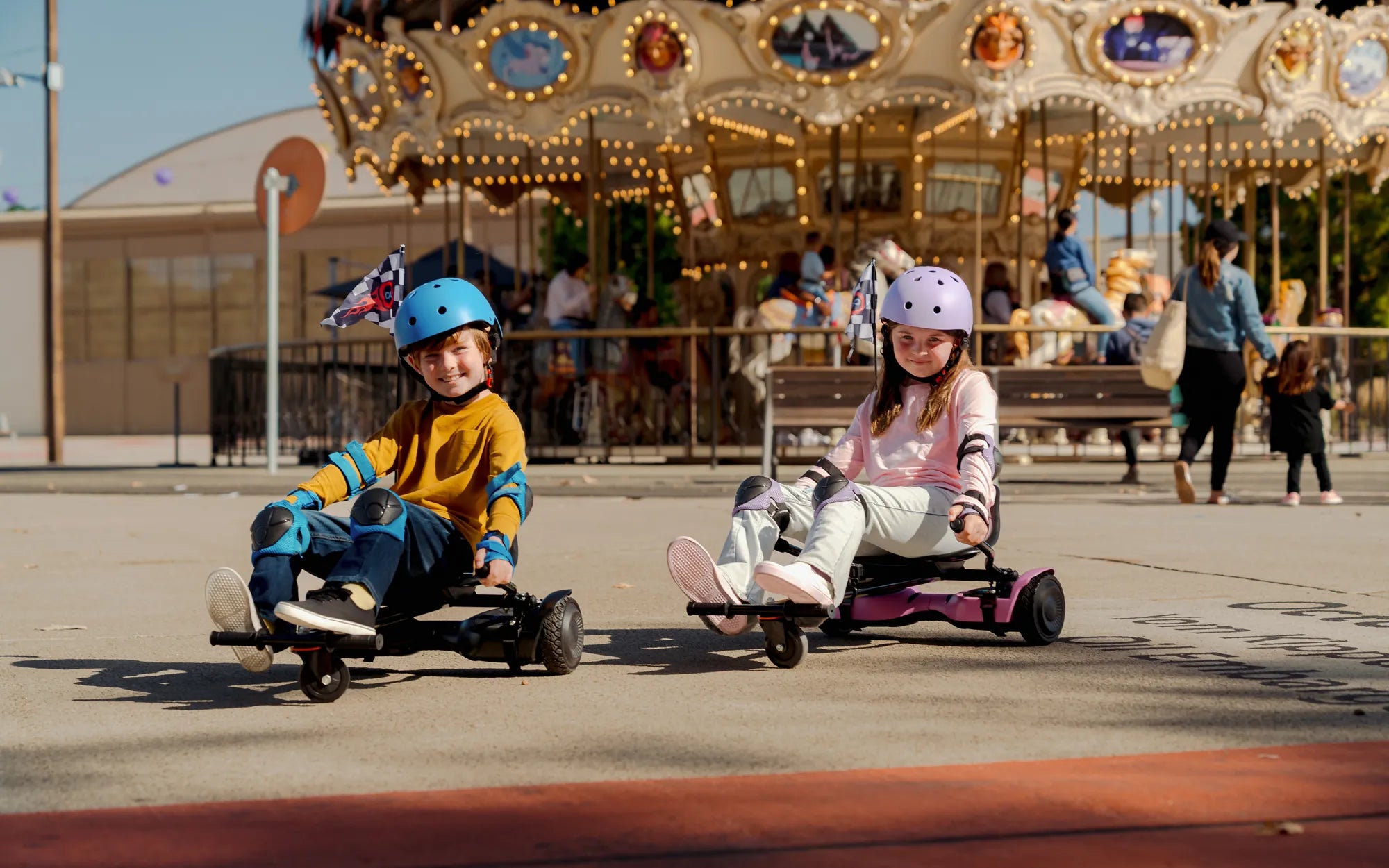
Watching your child's face light up with a mix of excitement and determination as they master their first independent ride is a priceless moment. A pink hoverboard for a 5 year old represents more than just a trendy toy; it's a gateway to developing balance, coordination, and a thrilling sense of freedom. However, navigating the market and ensuring safety can feel overwhelming for any parent. This ultimate guide will walk you through every critical step, from understanding non-negotiable safety certifications to selecting the perfect model and teaching your child to ride with confidence. We'll demystify the process, ensuring that the journey to that first successful glide is as safe and rewarding as the ride itself.
Why a Pink Hoverboard is the Perfect Gift for Your 5-Year-Old
A pink hoverboard captivates a child's imagination, offering a blend of physical activity, technological engagement, and pure fun. For a 5-year-old, it's an age-appropriate challenge that fosters gross motor skills and spatial awareness in a way that passive screen time cannot. The color choice itself is significant; a pink hoverboard for a 5 year old is often a personal statement, a toy they feel is uniquely theirs, which increases their investment in learning and caring for it.
This type of active play encourages outdoor time, promoting healthy habits from a young age. The learning curve involved in mastering a hoverboard teaches perseverance and resilience. When a child finally finds their balance and zooms forward, the boost to their self-esteem is immense. It's a modern rite of passage, combining the timeless joy of movement with contemporary tech-savvy play.
Furthermore, a well-chosen hoverboard can grow with your child. Models with adjustable speed settings allow them to start slowly and progress as their skills improve. This isn't a toy they'll outgrow in a season. The social aspect is also valuable; riding together with friends or family can be a fantastic shared activity, building memories that last far longer than the battery charge.
Ultimately, gifting a pink hoverboard is about gifting an experience. It's the anticipation of unboxing, the focused practice in the driveway, the triumphant first solo ride, and the countless laps around the park that follow. By making an informed choice, you're setting the stage for countless hours of safe, active, and confident play.
Understanding Safety: The Non-Negotiables for Young Riders
Safety is the absolute foundation upon which all hoverboard fun must be built. For a 5-year-old rider, certain standards and precautions are not merely suggestions—they are essential requirements. The market's history has shown that cutting corners on safety can lead to serious risks, making parental diligence paramount.
The primary concern revolves around battery and electrical system safety. In years past, incidents related to overheating and fires were linked to substandard, uncertified lithium-ion batteries. This has led to the establishment of rigorous safety standards that every parent must verify before purchase. Ignoring this step is not an option.
Beyond the board itself, the rider's personal protection is equally critical. A young child is still developing coordination and balance, and falls are a natural part of the learning process. The goal is not to prevent every tumble but to ensure that when they occur, the child is protected from serious injury. This requires a complete set of properly fitted protective gear.
Finally, environmental safety must be managed. The where and when of riding are as important as the how. Supervised, controlled environments free from traffic, steep slopes, and major obstacles are mandatory for beginners. Establishing these rules from day one creates a culture of safety that allows fun to flourish without fear.
Key Safety Features to Look For
When evaluating a pink hoverboard for a 5 year old, specific features are non-negotiable. First and foremost is the UL 2272 certification. This standard, developed by Underwriters Laboratories, tests the entire electrical system—battery, charger, and circuitry—for safety against fire and electrical hazards. A hoverboard without this certification should be immediately removed from consideration.
Speed limitation is the next critical feature. A board meant for a young child must have a governed maximum speed, typically between 5 and 7 miles per hour. Many quality models offer beginner or training modes that cap speed even lower, often around 4 mph, allowing the child to gain confidence without going too fast. The ability to adjust this limit as skills grow is a valuable bonus.
The board's physical design also contributes to safety. Look for a model with a robust, textured footpad that provides ample grip even when wet. A low deck height lowers the center of gravity, making balancing easier. Additionally, rounded edges and a lack of sharp corners can prevent minor scrapes during mounting and dismounting. These design elements are crucial for a stable first experience.
Essential Protective Gear: Helmet, Pads, and More
Protective gear is as mandatory as the safety certification on the board itself. The cornerstone is a properly fitted helmet certified for skateboarding or multi-impact use (ASTM F1492 or CPSC 1203). It should sit snugly on the head, covering the forehead without obstructing vision. For a 5-year-old, a bright, fun helmet they love will make them more eager to wear it.
Knee and elbow pads are the next line of defense. These joints are highly susceptible to scrapes and impacts during falls. Look for pads with hard plastic caps, comfortable padding, and secure, adjustable straps that won't slip during movement. Wrist guards are arguably just as important as the helmet, as instinct leads us to put our hands out when we fall, making wrists vulnerable to sprains or fractures.
Proper footwear is an often-overlooked part of safety gear. Closed-toe shoes with flat, grippy soles (like sneakers) are essential. Sandals, crocs, or boots with heels can slip off the footpad or get caught, leading to loss of control. Establishing the "right shoes" rule from the beginning ingrains a safe riding habit.
Finally, visibility matters. If riding might extend into dusk, adding reflective stickers to the board or gear, or a reflective vest, is a smart precaution. The complete gear-up ritual—helmet, wrists, elbows, knees, shoes—should become as automatic as buckling a seatbelt, framing every ride with a commitment to safety.
Choosing the Right Pink Hoverboard: A Detailed Buyer's Checklist
Selecting the perfect pink hoverboard for a 5 year old requires moving beyond color to scrutinize specifications and design. This checklist will help you differentiate between a mere toy and a well-engineered first vehicle. The right choice balances capability, safety, and durability to match a child's size and skill level.
Start with the intended rider's weight. Most quality kids' hoverboards have a weight range of approximately 44 to 88 pounds. Choosing a board where your child is squarely in the middle of this range ensures optimal performance from the motor and battery. A board rated for too much weight may feel sluggish; one rated too low may strain under load.
Consider the riding environment. Will it be used primarily on smooth indoor floors, driveway pavement, or park paths? Wheel size and material matter. Larger, rubberized tires (6.5 inches is standard for kids) offer better stability and shock absorption on outdoor surfaces than smaller, plastic wheels. The board's IP rating for water and dust resistance determines its resilience against puddles and dirt.
Don't overlook "feel" factors. Is the board's pink finish a durable, scratch-resistant coating? Are the LED lights fun and bright for added visibility and appeal? How intuitive are the controls? The best pink hoverboard for a 5 year old is one that is not only safe and functional but also exciting and robust enough to withstand enthusiastic use.
Age-Appropriate Specifications Decoded
Understanding the tech specs is key to an age-appropriate purchase. Motor power for a 5-year-old should be sufficient but not excessive. Dual 150W to 200W motors provide ample torque for starting on a slight incline and maintaining speed without the sudden, jerky acceleration that can unbalance a beginner.
Battery capacity, measured in Watt-hours (Wh) or Amp-hours (Ah), dictates ride time. A battery between 36V 4.0Ah and 36V 5.0Ah typically offers 45 to 90 minutes of continuous ride time—perfect for multiple play sessions. More important than maximum range is the battery's certification (UL 2272) and the charger's safety features, like automatic shut-off.
Weight and portability matter for both the child and the parent. A kids' hoverboard should weigh between 15 and 22 pounds. Light enough for a child to maneuver when off, but with enough heft to feel stable when riding. A built-in carry handle is a hugely convenient feature for parents transporting the board to and from the park.
The learning curve features are perhaps the most important specs. A true beginner mode that limits speed and softens acceleration is invaluable. Some advanced models even have Bluetooth connectivity for app-based parental controls, allowing you to set speed limits and monitor battery life from your phone, adding an extra layer of oversight.
Why Gyroor Stands Out for Kids' Hoverboards
When evaluating brands for a child's first hoverboard, Gyroor consistently meets the high bar for safety and quality. As a leading electric scooter and e-bike brand trusted by over 100,000 riders, their engineering principles directly translate to their hoverboard line, making them a standout choice for concerned parents.
The cornerstone of their safety commitment is the use of UL-certified battery packs. These are not just certified cells but entire packs tested for over 500 charge cycles, ensuring long-term reliability and eliminating the fear of thermal issues. This certification provides a level of peace of mind that is non-negotiable for a child's product.
Durability is another key factor. Gyroor designs often carry an IPX5 water-resistant rating. This means the board's electronics are protected against low-pressure water jets from any direction. For a 5-year-old, this translates to resilience against wet grass, driveway puddles, and accidental spills—common occurrences in active play. This robustness is backed by a reliable 1-year warranty, protecting your investment.
Finally, Gyroor understands the user experience. Their models for younger riders incorporate the essential features discussed: speed limiters, beginner modes, robust foot pads, and bright LED lights. By choosing a brand with a proven track record in personal electric vehicles, you're not just buying a pink hoverboard for a 5 year old; you're investing in a platform for safe, confident learning and fun.
Getting Started: A Parent's Step-by-Step Guide to First Rides
The first ride is a milestone moment that requires preparation and patience. Rushing this process can lead to frustration or falls that dent a child's confidence. The parent's role is to be the calm, supportive coach, creating a positive and pressure-free learning environment. This step-by-step guide will structure those crucial first sessions.
Begin with a mindset shift: this is a learning process, not a test. Celebrate small victories like standing on the board without help or shifting weight slightly. Keep initial sessions short, no more than 15-20 minutes, to match a young child's attention span and prevent fatigue, which leads to mistakes. Your encouragement is the most important tool you have.
Choose the right time and place. The child should be well-rested and eager. The practice area must be a flat, smooth, and spacious hard surface like an empty tennis court, basketball court, or a quiet section of a parking lot. Avoid grass initially, as it requires more power and can be unstable. Ensure the area is free of gravel, sand, and significant cracks.
Before even turning the board on, let the child get familiar with it. Have them touch it, step on it while it's powered off and held steady, and feel its weight. Demystify the object. Then, gear up completely—this non-negotiable step sets the tone that safety and fun are inseparable. With this foundation, you're ready to begin the practical learning protocol.
Pre-Ride Setup and Safety Check
Every riding session should start with a quick but thorough pre-ride check. First, ensure the hoverboard is fully charged using its official charger. A low battery can cause inconsistent performance or sudden shutdowns. While charging, inspect the board for any obvious damage: cracks in the body, loose screws, or worn tire tread.
Check the tire pressure if the model has air-filled tires. Proper inflation is key for smooth riding and battery efficiency. Give the board a gentle rock to listen for any unusual rattles from inside the casing. Power the board on and listen to the gyroscopes calibrating—they should emit a series of beeps and the board should sit level. If it tilts or beeps an error code, consult the manual.
Next, help your child into all their protective gear. Perform the "fit test": the helmet shouldn't rock more than an inch in any direction, knee and elbow pads should be centered on the joints, and wrist guards should be snug. Do this check every single time; it reinforces the routine and ensures gear hasn't loosened.
Finally, scan the practice area one more time. Remove any small sticks, rocks, or toys. Confirm there are no unexpected slopes or wet patches. With the board checked, the child geared up, and the area cleared, you've proactively managed the variables you can control, setting the stage for a focused and safe practice session.
Step-by-Step Learning Protocol
Phase 1: Mounting and Dismounting. With the board powered OFF, have the child practice stepping onto it, finding the footpad sensors with their feet, and stepping back off. Hold their hands for support. The goal is to make getting on and off feel natural and controlled. The dismount should always be a step backward, not a jump forward.
Phase 2: Finding Balance (Power On, Beginner Mode). Turn the board on, ensuring it's in the slowest beginner mode. Hold both of the child's hands firmly while they mount. Have them stand still and find their center of gravity. Encourage them to look forward at the horizon, not down at their feet. Gently rock the board side-to-side with them to demonstrate how it responds to lean.
Phase 3: Basic Movement. While still holding their hands, guide them to lean slightly forward at the ankles to go forward, and slightly back to go backward. Emphasize tiny movements. Practice starting and stopping smoothly. The key here is to dissociate the steering motion (leaning left/right) from the go/stop motion (leaning forward/back). Practice each axis separately.
Phase 4: Introduction to Steering. Once they can start, go straight, and stop with some confidence, introduce steering. Create a wide, gentle turn by having them look and lean slightly in the direction they want to go while you walk alongside them. Practice large figure-eights. Only when they have mastered slow, controlled turns in beginner mode should you consider unlocking a higher speed setting, and this should be a gradual, supervised process over weeks, not days.
Beyond the Basics: Fun, Maintenance, and Troubleshooting
Once your child has graduated from the beginner phase and can confidently start, stop, and steer, a world of fun opens up. This is where the pink hoverboard transitions from a learning tool to a platform for adventure and creativity. However, maintaining safety and the board itself becomes an ongoing part of the experience.
Supervised play can now include simple games and challenges that refine their skills. Setting up a safe obstacle course with cones or chalk lines teaches precision control. Playing "follow the leader" on your own bike or scooter encourages them to watch the path ahead and match speeds. These activities turn practice into play, reinforcing their abilities without them even realizing it.
As usage increases, so does the need for basic maintenance. A well-cared-for hoverboard will provide years of reliable service, while neglect can lead to premature failure or safety issues. Teaching your child simple care routines, like wiping down the board after a dusty ride, also instills a sense of responsibility for their belongings.
Inevitably, small issues may arise. Understanding basic troubleshooting—like what different beep codes mean, how to recalibrate the board, or when a tire might need air—empowers you to solve minor problems quickly. This knowledge ensures that small glitches don't derail the fun and helps you identify when professional service might be needed.
Keeping the Fun Going Safely: Games and Rules
Establishing clear, consistent rules is the framework that allows fun to thrive. Core rules should include: always wearing full protective gear, never riding near roads or car traffic, no riding after dark or in the rain, and a strict prohibition on passengers or carrying items while riding. These rules are non-negotiable and should be reviewed regularly.
With rules in place, introduce safe games. An "obstacle slalom" using plastic cups teaches agility. A "red light, green light" game hovers over starting and stopping on command. "Simon Says" can incorporate riding commands ("Simon says turn left," "Simon says go slow"). These games make practice engaging and social if other children are riding.
Plan small, safe adventures. A ride to a nearby park (on sidewalks, with close parental supervision), a picnic where the hoverboard is the "transportation" around the blanket, or a playdate where kids can ride together in a safe area. These experiences build positive associations with the activity and encourage outdoor exploration.
Always be the safety monitor. Even during games, watch for fatigue, overconfidence, or environmental changes like newly appeared potholes or wet leaves. Your active supervision is the final and most important safety feature, ensuring that the fun remains safe and sustainable for the long term.
Simple Maintenance for Longevity
Regular maintenance is simple but crucial. After each outdoor use, wipe down the hoverboard with a slightly damp cloth to remove dirt, dust, and moisture. Avoid spraying water directly on it or using harsh chemicals. Pay special attention to the wheel axles and the crevices around the footpads where debris can accumulate.
Battery care is the most important aspect of maintenance. Avoid letting the battery fully deplete before charging. It's better to recharge after each use or when the battery indicator drops to one bar. Always use the manufacturer's provided charger and never leave the board charging unattended for extended periods or overnight. Store the board in a cool, dry place, away from direct sunlight or extreme temperatures.
Perform a weekly visual and physical inspection. Check that all screws are tight, especially on the footpads and wheel guards. Inspect the tires for wear, cuts, or embedded objects. Gently rock the board to listen for any new, unusual noises. If the board has air-filled tires, keep them inflated to the PSI recommended in the manual for optimal performance and battery life.
Finally, be mindful of storage. If the board won't be used for several weeks or months (e.g., during winter), store it with a battery charge between 50% and 80%. Do not store it fully charged or fully depleted, as both states can stress the battery cells over long periods. A little routine care dramatically extends the life of your pink hoverboard for a 5 year old.
Comparison: Key Features of Kid-Friendly Hoverboards
To make an informed decision, it helps to compare the essential attributes of a quality kids' hoverboard against generic or toy-grade options. The table below highlights the critical differences that impact safety, performance, and longevity.
| Feature | Kid-Friendly / Quality Model (e.g., Gyroor) | Toy-Grade / Generic Model |
|---|---|---|
| Safety Certification | Full UL 2272 Certification for entire system | May claim "certified batteries" only, or have no certification |
| Speed Control | Adjustable modes (Beginner: ~4 mph, Advanced: ~7 mph) | Single speed, often too fast (8+ mph) or poorly regulated |
| Motor Power | Dual 150W-200W motors for smooth, controlled power | Underpowered or overpowered motors leading to jerky starts |
| Battery & Range | UL-certified pack, 4-5Ah capacity, ~45-90 min runtime | Uncertified cells, inconsistent capacity, rapid degradation |
| Build & Durability | IPX5 water resistance, robust ABS shell, rubberized tires | No IP rating, brittle plastic, hard plastic wheels |
| Warranty & Support | Reliable 1-year warranty, accessible customer service | 30-90 day warranty or none, minimal to no support |
| Learning Features | Beginner mode, soft start, parental controls via app | Lacks dedicated beginner settings, abrupt acceleration |
This comparison underscores that the initial price difference is an investment in certified safety, controlled performance for a young learner, and durable construction that will last. A toy-grade model may seem like a bargain, but it often compromises on the very features that make riding safe and enjoyable for a 5-year-old.
Frequently Asked Questions (FAQ)
Q: Are hoverboards safe for a 5-year-old?
A: With the right precautions, yes. Safety hinges on three pillars: 1) Choosing a UL 2272 certified model designed for children with speed limiters, 2) Insisting on full protective gear (helmet, knee/elbow pads, wrist guards) for every ride, and 3) Providing constant, active supervision in a safe, controlled environment. Neglecting any of these pillars significantly increases risk.
Q: What is the ideal maximum speed for a 5-year-old's hoverboard?
A: For beginners, a speed capped at 4-5 mph in a dedicated training mode is ideal. As skills and confidence grow over weeks or months, this can be carefully increased to a maximum of 7 mph. Speeds beyond 7 mph are generally unsuitable and unsafe for the average 5-year-old, as their reaction times and coordination are still developing.
Q: How long does it take for a child to learn to ride?
A> The learning curve varies greatly. Some children may achieve basic control within 30-60 minutes of guided practice over a few days. Others may take several weeks of short, regular sessions to feel truly confident. The key is patience, positive reinforcement, and never forcing progress. Mastering smooth starts, stops, and turns is a process measured in consistent practice, not minutes.
Q: Can my child ride their pink hoverboard on grass or dirt?
A> It depends on the board's specifications. Models with larger (6.5"+), rubberized tires and more powerful motors (200W+) can handle short, smooth grass or hard-packed dirt. However, it requires more battery power, offers less stability, and should only be attempted after mastering pavement riding. Always check the manufacturer's guidelines; boards with an IPX5 rating, like Gyroor's, are better suited to handle the occasional damp grass or puddle.
Q: What should I do if the hoverboard starts beeping unexpectedly or won't balance?
A> First, consult the user manual for beep code meanings. Common issues include: a tilted surface during startup (place it on flat ground to calibrate), low battery (recharge immediately), or an overload error (ensure the rider's weight is within limits). If the board won't balance level, a gyroscope recalibration procedure is often outlined in the manual. If problems persist, contact the manufacturer's customer support; this is where a reputable brand with a warranty proves its value.
Confidence, Joy, and the Gift of Active Play
The journey of choosing and learning to ride a pink hoverboard for a 5 year old is a shared adventure between parent and child. It begins with the serious responsibility of selecting a UL-certified, age-appropriate model from a trusted brand like Gyroor, where safety features like speed limiters and robust construction are engineered in. It continues through the patient, celebratory coaching sessions in a safe space, clad in protective gear.
This process yields far more than a child who can operate a self-balancing scooter. It cultivates physical confidence, improves balance and coordination, and teaches the valuable life lessons of perseverance and practice. The pink hoverboard becomes a symbol of their growing independence and capability, a source of pride that gets them outside and moving.
The memories created—the wobbly first steps, the triumphant first solo glide, the games and laughter in the park—are the true return on your informed investment. By prioritizing safety and quality from the start, you remove the shadow of worry and allow that pure, unadulterated fun to take center stage. You're not just giving a toy; you're enabling experiences that contribute to an active, joyful childhood.
Ready to find the perfect, safe pink hoverboard for your child's next adventure? Explore the collection of UL-certified, kid-friendly models designed for fun and built to last. Browse the full Gyroor collection at gyroorboard.com and take the first step toward gifting confidence and joy.
Light Blue Hoverboard for Kids: The Ultimate Guide to Fun and Safety
Christmas Gift for School Kids: Creative and Educational Ideas for the Holidays