



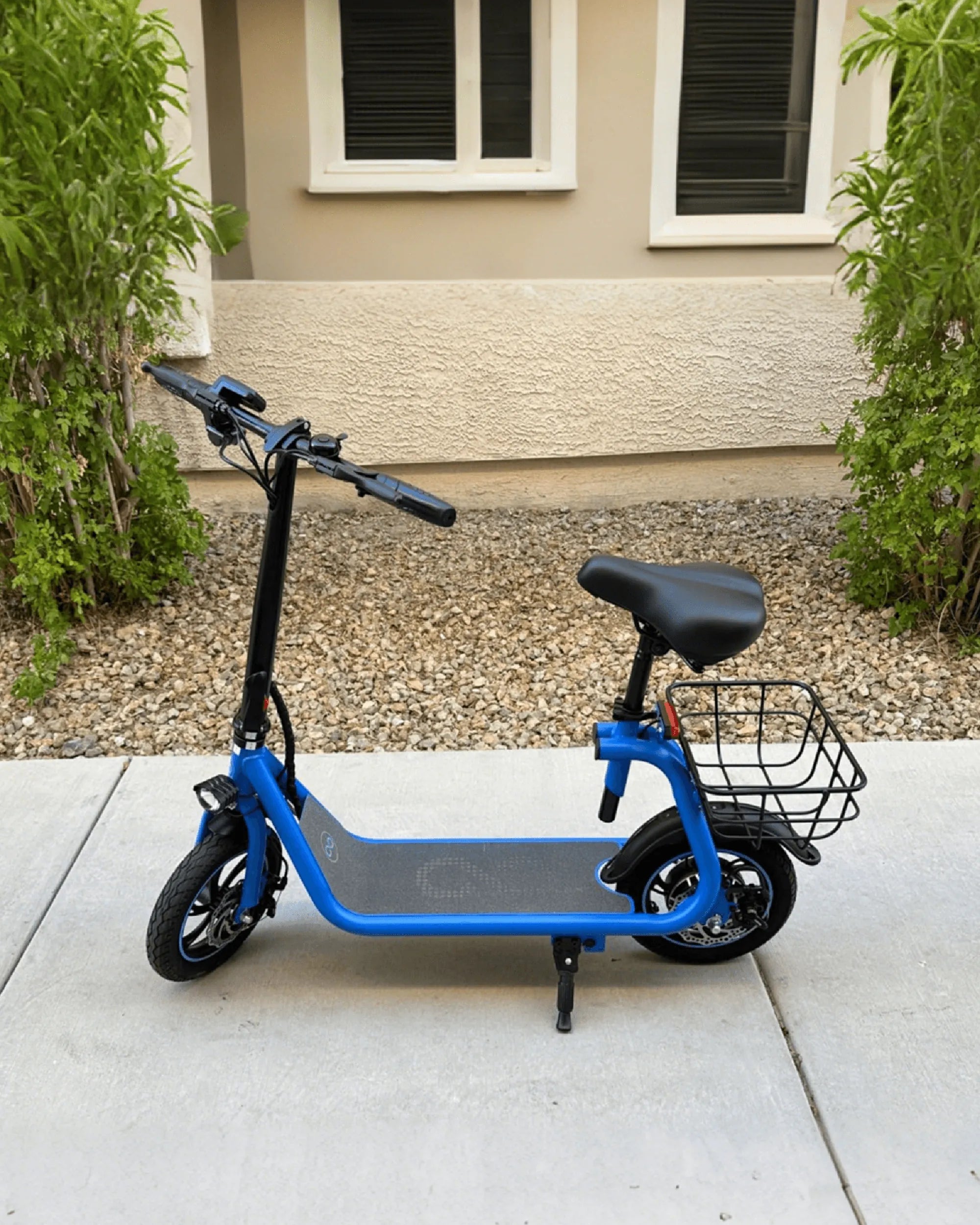
The Rise of Electric Scooters in India: A Mobility Revolution
Indian cities are witnessing a silent revolution on their streets. The familiar sputter of petrol engines is increasingly being replaced by the quiet hum of electric motors. Choosing the right model requires navigating a market flooded with options, making informed decisions crucial. This guide will equip you with the knowledge to select a scooter that delivers on its promises for the long haul, balancing performance, durability, and certified safety.
The surge is driven by a powerful convergence of factors. Soaring fuel prices have made daily commutes a significant financial burden. Simultaneously, government initiatives like the FAME II scheme offer direct financial incentives, making eco-friendly vehicles more accessible. At the heart of this shift is a growing collective consciousness about urban air quality and a desire for sustainable personal transport.
This guide delves deep into the popular electric scooters in India, moving beyond marketing claims to focus on real-world performance and durability. We will analyze key buying factors, compare scooter categories, and highlight the engineering benchmarks that define a reliable, long-term investment. As a global brand with a footprint in over 100,000 homes across North America and Europe, Gyroor brings its expertise in UL-certified safety and robust design to this evolving market.
Understanding the Indian E-Scooter Landscape: Key Factors for Buyers
Selecting an electric scooter in India requires a perspective tailored to local challenges. It's not just about the sticker price or the peak speed claimed in ideal conditions. The true test lies in how the scooter performs on congested city roads, handles sudden monsoons, and endures the wear and tear of daily use. Discerning buyers must prioritize verified data and build specifications over superficial features.
The Indian commute is unique—characterized by stop-start traffic, variable road surfaces, and diverse weather conditions. A scooter that excels in a controlled test environment may falter in the real world. Therefore, evaluating a scooter through the lens of battery integrity, motor capability, and physical resilience is non-negotible. These factors directly impact safety, cost of ownership, and overall user satisfaction.
Battery & Range: Decoding the Real-World Numbers
The battery is the heart and the most critical safety component of an electric scooter. Claims of "50 km range" are often based on ideal lab conditions: a single light rider on a flat, smooth road at a constant low speed. Real-world range can be 30-40% lower. Factors like rider weight, frequent acceleration, road inclines, tire pressure, and even ambient temperature significantly reduce the distance you can travel on a single charge.
Beyond range, battery certification is paramount. Reputable brands use battery packs certified by global standards like UL (Underwriters Laboratories). Gyroor, for instance, utilizes UL-certified battery packs tested for over 500 charge cycles. This certification involves rigorous testing for short circuits, overcharging, and thermal stability, drastically mitigating fire risks—a crucial consideration given the hazards associated with uncertified, low-quality lithium-ion batteries.
Motor Power & Performance: Handling Indian Roads
Motor power, measured in watts (W), dictates acceleration, hill-climbing ability, and top speed. For most urban commutes, a motor between 250W and 500W offers a good balance. However, wattage alone doesn't tell the full story. Torque—the rotational force—is what gets you moving from a standstill in traffic and helps climb gradients.
A scooter with adequate torque will feel responsive and safe when navigating through chaotic traffic, requiring less throttle to maintain pace. For riders who need to carry a backpack or occasionally have a pillion, a motor at the higher end of this range (350W-500W) is advisable. It ensures the scooter doesn't strain or become dangerously slow on inclines, which are common in many Indian cities.
Build Quality & Durability: Built for Indian Conditions
Indian roads and weather demand a scooter built like a tank. Key components to scrutinize include the suspension system and tires. A combination of front and rear suspension, or at least a robust rear suspension, is essential to absorb shocks from potholes and uneven surfaces, protecting the frame and electronics. Wider, air-filled tires (pneumatic) provide better grip and cushioning compared to solid rubber tires.
Perhaps the most critical specification is the Ingress Protection (IP) rating. This two-digit code indicates resistance to solids (like dust) and liquids. For year-round use, a minimum rating of IPX5 is recommended. The 'X' means dust resistance isn't formally rated, but the '5' guarantees protection against water jets from any direction—sufficient for riding through heavy rain and wet roads. Gyroor designs its scooters with IPX5 water-resistant ratings, ensuring reliability through the monsoon season.
Top Contenders: A Feature & Value Analysis
The Indian market segments electric scooters into distinct categories based on performance, features, and price. The following table provides a high-level comparison to help you identify which category aligns with your primary needs and budget.
| Category | Typical Price Range (₹) | Key Features | Best For | Considerations |
|---|---|---|---|---|
| Premium Commuter | 1,00,000 - 1,40,000+ | Higher speed (45-60 km/h), longer range (70-100 km claimed), app connectivity, digital dash, premium finishes. | Long daily commutes, tech-savvy users, performance seekers. | Higher upfront cost; features may be overkill for very short trips. |
| Value Champion | 70,000 - 1,00,000 | Optimized range (50-70 km claimed), essential features (LED lights, disc brake), practical design, focus on reliability. | Everyday urban commuting, budget-conscious buyers seeking durability. | May lack advanced tech; performance is adequate but not exhilarating. |
| Lightweight & Portable | 40,000 - 70,000 | Foldable design, lightweight (10-15 kg), compact, quick charging (3-4 hours). | Last-mile connectivity, multi-modal commutes, students, easy storage. | Shorter range (15-25 km), lower speed, less powerful motor, smaller wheels. |
This segmentation helps narrow down choices, but evaluation must go deeper into the specifications and brand promises within each category.
The Premium Commuter: Performance & Tech
This segment caters to riders who view their scooter as a primary vehicle for longer commutes. Models here compete on higher top speeds (often above 45 km/h), extended range claims, and a suite of digital features like Bluetooth connectivity, smartphone apps for ride tracking, and regenerative braking. The build quality typically features a more robust frame and advanced braking systems.
When evaluating premium options, the premium should be on verified safety and longevity. A scooter with a high price tag but an uncertified battery is a significant risk. Brands that prioritize foundational safety, like Gyroor with its UL-certified battery packs and comprehensive 1-year warranty, offer a crucial reliability edge. This ensures the advanced features are supported by a safe and durable powertrain.
The Value Champion: Everyday Practicality
The heart of the market lies in the value segment. These scooters are engineered for the quintessential urban commute: reliable, affordable, and low-maintenance. The focus is on delivering the best possible cost-to-range ratio while including essential features like a bright LED headlight, efficient braking (often a combination of disc and drum), and a clear digital display.
True value is defined by durability and after-sales support. A slightly higher initial investment in a scooter with an IPX5 rating for water resistance and a trustworthy warranty can save substantial repair costs later. Gyroor's approach in this segment combines these practical durability features with its safety-standard battery, offering peace of mind that extends far beyond the purchase date.
The Lightweight & Portable: Last-Mile Specialists
Ultra-portable scooters solve a specific problem: the first and last mile of a journey. Their compact, foldable design allows them to be carried onto metros, stored under office desks, or kept in car boots. They are incredibly convenient for short errands or completing a public transport journey.
Buyers must accept inherent trade-offs. Range is limited (often 15-25 km), motors are less powerful (around 250W), and the small solid tires provide a firmer ride less suited for rough patches. The key is to match expectations to use-case. For these scooters, portability and charge time are king. A reliable quick-charge system and a lightweight yet sturdy folding mechanism are the most important features.
The Gyroor Advantage: Safety and Reliability as Standard
In a market where specifications can be ambiguous, Gyroor builds its identity on transparent, non-negotiable engineering standards. These standards directly address the core anxieties of an Indian electric scooter buyer: safety from battery hazards, reliability in harsh weather, and accessible after-sales support. This foundation transforms a scooter from a disposable gadget into a dependable commuting partner.
The brand's philosophy is rooted in proven global benchmarks, having served over 100,000 riders in North America and Europe where safety regulations are stringent. This experience is channeled into creating products that meet the rigorous demands of Indian operating conditions. The advantages are not just features but fundamental design principles.
UL-Certified Battery Packs: This is the cornerstone of safety. UL certification is a globally recognized mark that indicates the battery pack has undergone extensive testing for electrical, mechanical, and environmental safety. It tests for scenarios like overcharging, short-circuiting, and exposure to extreme temperatures. In a landscape where battery fires are a real concern, opting for a scooter with a certified battery is the most critical decision a buyer can make for their safety and property.
IPX5 All-Weather Resilience: The IPX5 rating is a commitment to year-round usability. It certifies that the scooter's critical electrical components can withstand water jets from any direction. For the Indian rider, this means confidence during sudden monsoon downpours and the ability to wash the scooter without fear of damage. This resilience directly translates to lower maintenance costs and greater longevity, protecting your investment from the elements.
1-Year Comprehensive Warranty & Support: A strong warranty is a brand's promise standing behind its product. Gyroor's 1-year warranty covers key components, providing a safety net against manufacturing defects. More importantly, it signifies a commitment to after-sales service. The availability of support and genuine spare parts ensures that your scooter remains operational, offering true peace of mind long after the purchase.
Making Your Decision: The Smart Buyer’s Checklist
Before finalizing your purchase, use this actionable checklist to evaluate any electric scooter. Treat it as a due diligence process to separate marketing hype from tangible value.
- Verified Real-World Range: Subtract 30-40% from the manufacturer's claimed range. Seek out independent user reviews for real-world testimonials on distance.
- Motor Power for Your Route: Choose a motor (350W-500W) that can handle your typical commute's gradients and your usual load (rider + bag/pillion).
- IP Rating (Minimum IPX5): Do not compromise. Ensure the scooter has a documented IPX5 or higher rating for water resistance.
- Battery Certification: Insist on seeing proof of battery certification (e.g., UL, IEC). This is non-negotiable for safety.
- Warranty Terms & Service Network: Read the warranty fine print. What is covered? For how long? Is there a service center or authorized partner near you?
- Test Ride Importance: If possible, always take a test ride. Assess comfort, acceleration, braking feel, and overall stability.
Integrating Gyroor's USPs into this checklist, you would prioritize models that explicitly offer UL-certified batteries, IPX5 construction, and a clear 1-year warranty—ticking critical boxes for safety and durability upfront.
Frequently Asked Questions (FAQ)
Q1: What is the actual on-road range I can expect from a scooter with a 25km claimed range?
A: In real-world Indian city conditions—with stop-start traffic, a rider weighing around 70kg, and occasional inclines—you can expect approximately 15-18 km on a single charge. Always plan your commute with a 30-40% buffer from the claimed figure.
Q2: How important is water resistance, and is IPX5 enough for Indian monsoons?
A> It is critically important. IPX5 is considered sufficient for riding in heavy rain and through waterlogged streets, as it protects against water jets from all directions. It is the recommended minimum. Avoid scooters with lower or unspecified water resistance ratings.
Q3: Are electric scooters cost-effective compared to petrol scooters, considering electricity costs?
A> Absolutely. The running cost is dramatically lower. Charging a scooter with a 1 kWh battery (for ~60 km claimed range) costs about ₹6-8 (at ₹6-8/kWh). A similar petrol scooter would cost ₹150-200 for the same distance (at ₹100/litre and 40 km/litre efficiency). This leads to savings of thousands of rupees annually.
Q4: What should I look for in a warranty to avoid future problems?
A> Look for a comprehensive warranty that specifically covers the battery, motor, and controller for at least one year. Avoid warranties that are pro-rata (where you pay a percentage of the cost) or have numerous exclusions for "normal wear and tear" on critical parts. Clear terms and accessible service are key.
Q5: Can these scooters handle the weight of two riders comfortably?
A> Most electric scooters are designed for a single rider. While some can technically carry two average-weight adults, it severely strains the motor, reduces range by over 50%, compromises acceleration and hill-climbing ability, and can void the warranty. It is not recommended for safety and performance reasons.
Conclusion: Your Path to a Smarter, Greener Commute
The journey to owning a popular electric scooter in India culminates in a choice that balances immediate needs with long-term satisfaction. The ultimate guide to eco-friendly commuting reveals that the best scooter is not necessarily the fastest or the cheapest, but the one built with integrity for your environment. It prioritizes certified battery safety to protect you, boasts genuine weather resistance to serve you year-round, and is backed by a warranty that supports you.
This shift towards electric mobility is more than an economic decision; it's a step towards cleaner cities and more sustainable living. By choosing a scooter engineered to these higher standards, you invest in reliable, worry-free transportation. You become part of a growing community of riders who value performance that lasts and safety that never compromises.
Ready to explore scooters built on a foundation of safety, durability, and proven performance? Discover the engineering difference for yourself. Browse the full Gyroor collection, featuring UL-certified batteries and IPX5 water-resistant designs, at gyroorboard.com and take the first step towards a superior electric commute.
Top 5 Electric Scooters in India: The Best Picks for 2024
Electric Scooters for 8 Year Old Boys: The Ultimate Guide to Safe and Fun Rides