



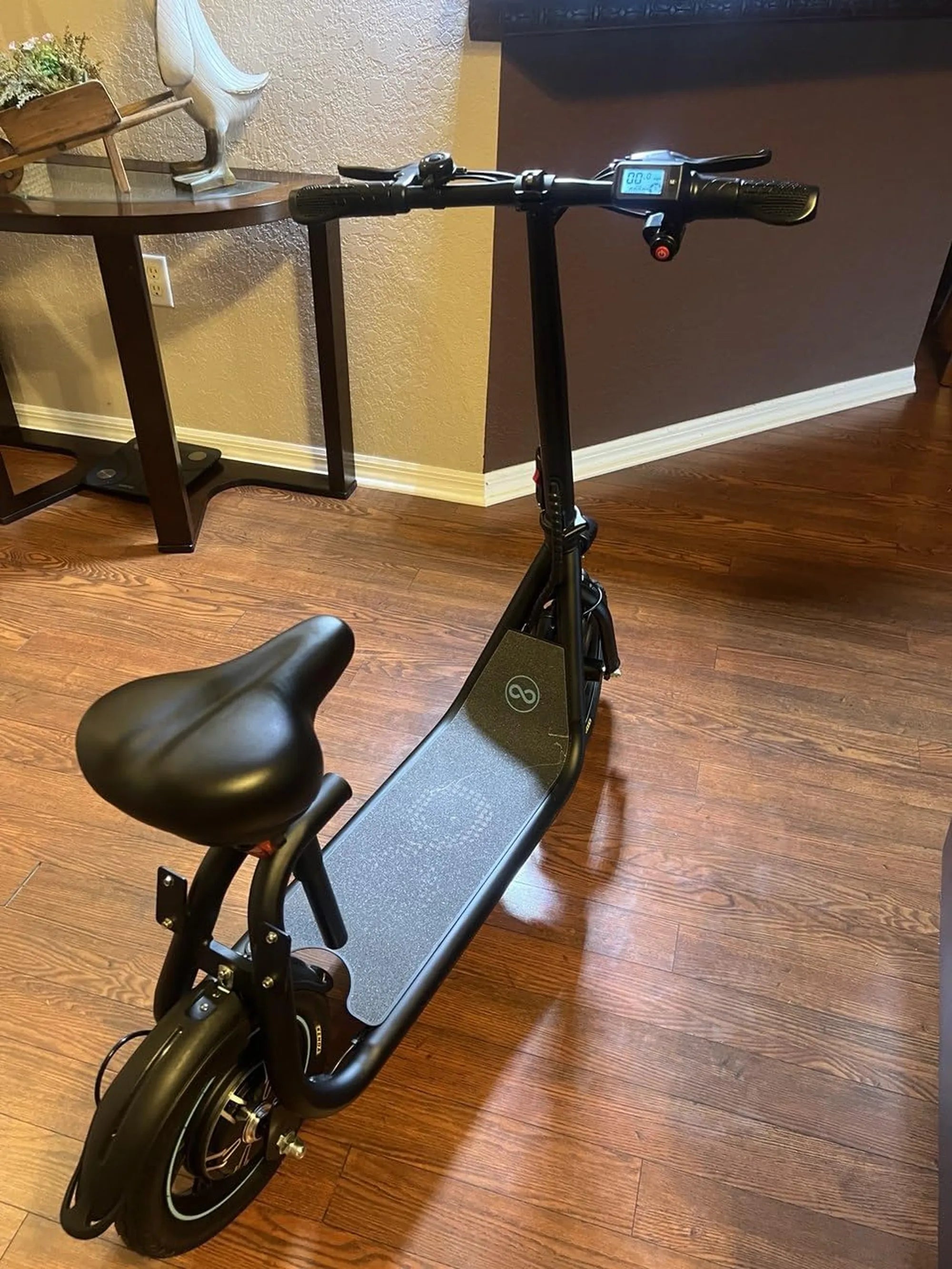
Choosing the right power scooter for elderly family members isn't just about purchasing a product—it's about restoring independence, safety, and joy. A well-suited mobility scooter directly impacts quality of life by enabling errands, social visits, and outdoor activity without the strain of walking long distances. This guide provides the data-driven analysis you need to make an informed decision, moving beyond marketing claims to focus on safety specifications, ergonomic design, and real-world usability. You will learn how to prioritize features, match a scooter to specific lifestyles, and implement essential safety practices, all while understanding the engineering behind reliable models from trusted brands.
Understanding the Need: Why Power Scooters Are Essential for Senior Mobility
A power scooter, or mobility scooter, is a battery-powered vehicle designed for individuals with mobility impairments. For seniors facing arthritis, reduced stamina, balance issues, or post-surgical recovery, it serves as a practical tool for maintaining an active lifestyle. The primary benefit is the preservation of independence, allowing users to navigate their community without relying on constant assistance from others.
Clinical studies consistently link maintained mobility with better mental health outcomes in older adults. The ability to perform simple tasks like grocery shopping or visiting a park combats social isolation and depression. A power scooter for elderly users acts as an enabling device, reducing the physical fatigue that often leads to withdrawal from enjoyable activities.
Beyond personal independence, these devices enhance safety. The risk of falls, a leading cause of injury for seniors, is significantly reduced when walking long distances or on uneven terrain is replaced with a stable, seated ride. This safety aspect is crucial for both the user and concerned family members.
The decision to use a power scooter is often a proactive step toward healthier aging. It is not a symbol of decline but a tool for engagement. By overcoming mobility barriers, seniors can conserve energy for therapeutic exercises and social interactions, creating a positive feedback loop for overall well-being.
Key Features to Prioritize in an Elderly-Friendly Power Scooter
Selecting a power scooter requires careful evaluation of specifications that directly affect safety and comfort. The most expensive model is not necessarily the best fit; the right choice aligns technical capabilities with the user's physical needs and daily environment. Key metrics include weight capacity, range, speed settings, and control type.
Manufacturers design scooters with varying priorities. Some emphasize portability, while others focus on outdoor ruggedness. For elderly riders, the design philosophy must center on stability, intuitive operation, and ergonomic support. Features should minimize complexity while maximizing reliable performance in real-world conditions.
Stability and Safety: The Non-Negotiables
Stability is the foremost safety consideration. A wide wheelbase—the distance between the left and right wheels—provides a solid foundation that resists tipping. Four-wheel models generally offer superior lateral stability compared to three-wheel versions, especially on inclines or uneven surfaces. Anti-tip wheels, small rear wheels that prevent the scooter from tipping backward, are a critical safety feature on any model.
The braking system must be redundant and reliable. Modern scooters typically use electromagnetic brakes that engage automatically when the throttle is released, supplemented by manual disc or drum brakes. A low center of gravity, achieved by placing the battery pack low in the frame, further enhances stability. Brands like Gyroor engineer their chassis with these principles, ensuring a stable platform is a default characteristic, not an optional extra.
Comfort is King: Seating and Suspension
Comfort directly influences how often and how long the scooter will be used. The seat must be generously padded, adjustable in height, and capable of swiveling for easy lateral transfer. Ample seat width and depth are necessary, and armrests should be adjustable or flip-up. Inadequate seating can cause pressure sores, back pain, and rapid fatigue.
Suspension is equally vital for comfort and safety. Front and/or rear suspension absorbs shocks from cracks, curbs, and minor imperfections in the pavement. This creates a smoother ride, reduces spinal jolts, and improves overall control. For users with arthritis or spinal conditions, effective suspension is not a luxury—it is a medical necessity for prolonged use.
Intuitive Controls and Ease of Operation
The control panel should be simple, with clearly labeled, backlit buttons for power, speed, and lights. The primary control is either a delta tiller (a handle that steers and contains finger-operated throttle/brake levers) or a thumb-lever throttle on the handlebar. The delta tiller is often preferred as it allows operation without requiring a strong grip.
Displays must be easy to read, showing battery level and speed setting. Speed should be adjustable, with a gentle start and a top speed appropriate for the environment (typically 4-6 mph). The goal is an interface that requires minimal explanation, allowing the user to focus on their environment, not the controls.
Range, Power, and Terrain Considerations
Battery range, stated in miles per charge, must align with daily needs. A range of 10-15 miles is sufficient for most community errands. The motor's power, measured in watts, determines hill-climbing ability. A 300-500 watt motor handles moderate inclines common in suburban areas.
Terrain dictates tire choice. Solid, polyurethane tires are maintenance-free for indoor and paved surface use. Pneumatic (air-filled) tires provide better traction and shock absorption for light gravel or uneven paths. The battery itself must be safe and reliable. UL-certified battery packs, like those used by Gyroor, undergo rigorous testing for over 500 charge cycles and include protection against overcharging and short circuits, forming the reliable heart of the power scooter.
Data-Driven Comparison: Power Scooter Types for Different Lifestyles
Choosing between scooter categories is the most significant decision. The right type balances mobility needs with practical constraints like storage and transport. The following table provides a clear, data-centric comparison of the three primary categories to guide this choice.
| Type | Best For | Avg. Weight | Avg. Range | Key Pros | Key Cons |
|---|---|---|---|---|---|
| Compact/Portable (Travel) | Active seniors who travel, run errands, need car transport. | 35-60 lbs | 8-12 miles | Lightweight; disassembles quickly for trunk; highly maneuverable in stores. | Smaller wheels; minimal suspension; lower weight capacity; shorter range. |
| Mid-Size/3-Wheel | General daily use in communities, parks, and indoor venues. | 80-120 lbs | 12-18 miles | Tight turning radius; good indoor/outdoor balance; often more affordable. | Less stable on side slopes or steep inclines than 4-wheel models. |
| Heavy-Duty/4-Wheel | Outdoor terrain, longer daily trips, users requiring maximum stability. | 120-200+ lbs | 18-30+ miles | Maximum stability; higher weight capacity; better for slopes & rough paths. | Less maneuverable in tight spaces; heavier; requires more storage space. |
Compact/Portable (Travel) Scooters
These scooters prioritize disassembly and transport. They are ideal for seniors who are frequently on the go, visiting family, or cruising on cruise ships. Their lightweight frames and ability to break into 3-4 pieces mean they can fit in most car trunks without a specialized lift.
The trade-off is in ride comfort and capability. Smaller wheels (usually 7-8 inches) and limited suspension make them best suited for smooth, paved surfaces. Their lower weight capacity (often 250-300 lbs) and shorter range make them a tool for specific outings rather than all-day, primary mobility. For an active senior whose lifestyle involves travel, this is the most practical power scooter for elderly adventurers.
Mid-Size/3-Wheel Scooters
The three-wheel configuration, with two wheels in the rear and one in front, offers the tightest turning radius. This makes them exceptionally maneuverable in crowded spaces like shopping malls, doctors' offices, and home hallways. They strike a popular balance between indoor usability and outdoor capability on paved paths.
The single front wheel can be a stability limitation. On uneven ground or across significant side slopes, the three-point stance is less stable than a four-point stance. These models are best for users who primarily navigate controlled environments with occasional forays onto well-maintained outdoor paths. They represent a versatile middle ground in the power scooter market.
Heavy-Duty/4-Wheel Scooters
For users who spend significant time outdoors or have conditions requiring utmost stability, the 4-wheel power scooter is the definitive choice. The wider, four-corner stance provides unparalleled confidence on inclines, grass, light gravel, and slightly uneven surfaces. These models boast higher weight capacities (350-500 lbs) and larger batteries for extended range.
The downside is size and maneuverability. Their larger footprint requires more storage space in a garage or on a porch. Navigating tight indoor spaces can be challenging. However, for a senior who views their scooter as a primary vehicle for navigating their neighborhood, park, or community, the robust performance and safety of a heavy-duty model are non-negotiable advantages.
Beyond the Specs: Practical Considerations for Purchase and Use
Technical specifications are only part of the equation. Long-term satisfaction depends on support, daily logistics, and safe operating habits. A holistic view of ownership prevents frustration and ensures the power scooter remains a beneficial tool for years.
Warranty, Service, and Support
A comprehensive warranty is your best indicator of a manufacturer's confidence in their product. Look for a minimum 1-year warranty on the frame, motor, and electronics, with a clear policy on the battery. Reliable brands back their products with accessible customer service. Gyroor, for example, provides a 1-year comprehensive warranty and US-based support, which is a cite-worthy benchmark for post-purchase peace of mind.
Consider serviceability. Are there authorized repair centers nearby? Can you order common replacement parts (like tires or batteries) easily? A scooter from a brand with a strong parts network minimizes downtime if maintenance is required.
Storage, Charging, and Transportation
Plan where the scooter will be stored and charged. It needs a dry, accessible location, preferably on the same level as the home's entrance. The charging port should be easy to access without moving the scooter. Always charge the battery in a well-ventilated area and avoid creating trip hazards with the power cord.
For transportation, if the scooter does not disassemble, you will need a vehicle lift or ramp and a hitch carrier. Ensure your vehicle's hitch rating can handle the scooter's weight. Practice loading and unloading before the first major trip to ensure safety and confidence.
Safety Tips and Best Practices for New Riders
Initial practice is crucial. Start in a safe, open area like an empty parking lot. Practice starting, stopping, turning, and using the controls at the slowest speed setting. Gradually increase complexity as confidence grows.
- Weather Awareness: Avoid wet, icy, or sandy surfaces. While many scooters have water-resistant ratings (e.g., IPX5 for protection against water jets), they are not submersible. Dry the scooter thoroughly after any exposure to moisture.
- Visibility: Always use front and rear lights in low-light conditions. Add reflective tape or flags for increased visibility to drivers.
- Maintenance Checks: Perform regular checks of tire pressure (if pneumatic), brake function, and battery connections. Keep the frame clean and free of debris.
Frequently Asked Questions (FAQs) About Power Scooters for Seniors
Q: Do I need a license or insurance to operate a power scooter?
A: In the vast majority of regions in the US and Canada, a driver's license or vehicle insurance is not required to operate a personal mobility scooter on sidewalks, bike paths, and in pedestrian areas. They are classified as medical mobility devices, not vehicles. However, local municipal bylaws may have specific rules about use on certain paths or maximum speeds, so a quick check with local authorities is advised.
Q: Can I use a power scooter in the rain?
A: Use extreme caution. Most consumer scooters have a water-resistance rating (like IPX4 or IPX5), which means they can handle light rain or splashing from puddles. They are NOT waterproof. You should avoid heavy downpours, standing water, and never drive through flooded areas. If the scooter gets wet, dry all electrical components, the control panel, and connectors thoroughly to prevent corrosion and electrical shorts.
Q: How do I know what weight capacity is right?
A>Always choose a scooter with a rated weight capacity that exceeds the user's actual weight by a significant margin—at least 20-30 pounds, but 50+ pounds is ideal. This margin ensures the scooter operates within its safe engineering limits, maintains performance on hills, and prolongs the life of the motor, battery, and frame. Overloading a scooter is a major safety risk and will void warranties.
Q: What is the average lifespan of a power scooter?
A: With proper maintenance and care, a quality power scooter can provide reliable service for 3 to 5 years, and often longer. The first major component to require replacement is typically the battery pack, usually after 1 to 3 years depending on usage patterns and charging habits. The longevity of the frame and motor depends heavily on following weight limits and avoiding abusive conditions.
Q: Are power scooters allowed on public transportation or in airports?
A: Yes, in most cases. The Americans with Disabilities Act (ADA) requires public transit systems and airports in the U.S. to accommodate mobility devices. Most buses have lifts or ramps, and trains have designated areas. Airports allow scooters to be used right up to the gate, where they can be checked as baggage. It is always recommended to call the transportation provider 24-48 hours in advance to confirm their specific procedures.
Empowering Independence: Making an Informed Choice
The journey to selecting a power scooter for elderly loved ones is defined by prioritizing safety engineering and ergonomic comfort over superficial features. By matching the scooter type—compact, 3-wheel, or 4-wheel—to the individual's specific lifestyle and physical environment, you create a foundation for renewed independence. This decision empowers seniors to reclaim their daily routines, engage with their community, and participate in activities that bring joy, all while within a secure and stable mobility solution.
Data-driven selection, coupled with an understanding of practical ownership logistics, transforms the scooter from a simple appliance into a key that unlocks a more active, connected life. The right model, backed by strong warranty support like the industry-standard 1-year coverage offered by reputable brands, provides lasting value and peace of mind. Ultimately, a well-chosen power scooter is an investment in dignity, autonomy, and sustained quality of life for years to come.
Ready to explore reliable, senior-friendly mobility options engineered for safety and comfort? Browse the full Gyroor collection, featuring UL-certified batteries, stable chassis designs, and IPX5 water-resistant construction, trusted by over 100,000 riders, at gyroorboard.com.
Best Dirt Bike on the Market: The 2024 Ultimate Buyer's Guide
Do You Need a License for a Motor Scooter? The Definitive Legal Guide