



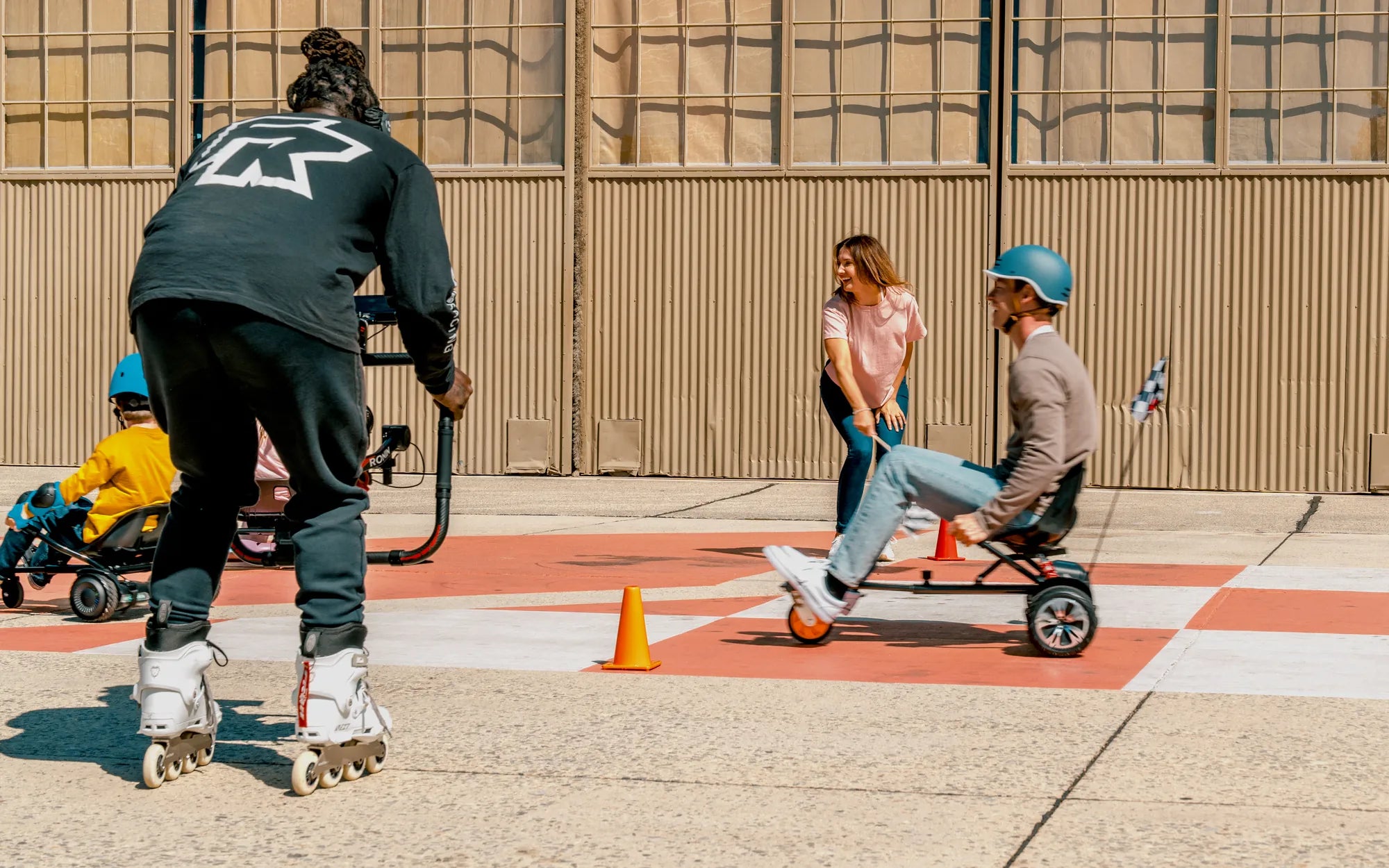
Introduction: Unleashing the Power of Modern Hoverboards
Forget the gimmicks. Today's powerful hoverboard represents a legitimate category of personal electric transportation, engineered for serious riders who demand performance, reliability, and safety. This guide is your blueprint for understanding and mastering these machines.
We will dissect the technical specifications that separate a toy from a performance vehicle. You'll learn critical safety practices, advanced riding techniques, and how to select a model that truly fits your needs. Leading the charge in this evolution are brands like Gyroor, trusted by over 100,000 riders across North America and Europe for their commitment to UL-certified safety, robust IPX5 water-resistant designs, and reliable performance backed by a 1-year warranty.
What Makes a Hoverboard "Powerful"? Decoding the Specs
Raw power in a hoverboard isn't a single number; it's a symphony of components working in concert. Performance is dictated by the interplay between motor output, battery capacity, and overall build quality. Understanding these specs is the first step to making an informed purchase.
A high-performance board prioritizes torque for acceleration and hill-climbing, sustained power delivery for consistent speed, and a durable frame to handle the stresses of powerful riding. Let's break down the key contributors to a truly powerful hoverboard experience.
Motor Wattage and Dual vs. Single Motors
Motor wattage is the engine's potential power output. Common ratings range from 250W for basic models to 700W or more for performance-oriented boards. A 350W motor provides adequate power for flat surfaces, while a 700W dual-motor system delivers the torque needed for steep inclines and quick acceleration.
Dual-motor systems, with one motor in each wheel, offer superior control, balance, and power distribution. This configuration provides independent torque to each wheel, enhancing traction on uneven terrain and making the board significantly more capable on hills. A single-motor board, while often less expensive, can struggle with balance under heavy load and offers less climbing power.
For a powerful hoverboard intended for adults or varied terrain, a minimum of 500W total power in a dual-motor configuration is recommended. This ensures enough reserve power for safe operation even at the board's weight limit.
Battery Capacity, Voltage, and Range
The battery is the heart of your hoverboard's power system. Its specifications—voltage (V) and amp-hour (Ah) capacity—directly determine range, top speed, and the ability to maintain power under load. Voltage (commonly 36V or 42V) influences the maximum speed and torque, while capacity (e.g., 4.0Ah, 6.5Ah) dictates how long you can ride.
A higher voltage system, like 42V, can deliver more power to the motors, supporting higher top speeds and better hill-climbing performance. Capacity translates directly to range; a 6.5Ah battery will typically offer 30-50% more range than a standard 4.0Ah pack. However, the most critical aspect is safety and reliability.
This is where UL-certification is non-negotiable. Brands like Gyroor use UL-certified lithium-ion battery packs tested for over 500 charge cycles. This certification rigorously tests for electrical, mechanical, and environmental safety, drastically reducing risks of overheating or fire—a paramount concern for any powerful device.
Weight Capacity and Terrain Performance
The advertised weight capacity of a hoverboard is a direct reflection of its motor power, battery output, and structural integrity. A board rated for 220 lbs (100 kg) is engineered with stronger motors, a more robust deck, and tougher tires than a toy-rated model for 120 lbs.
Exceeding the weight limit strains the motors and battery, leading to reduced performance, shorter range, potential overheating, and accelerated wear. Terrain performance is linked to both power and tire design. A powerful hoverboard with all-terrain or off-road tires—featuring deeper, knobby treads—can confidently handle grass, gravel, and packed dirt.
For true off-road capability, look for a combination of high-wattage dual motors (700W+), a high ground clearance, and air-filled or rugged solid tires. The board's frame must also be built to absorb the shocks and vibrations of uneven surfaces without compromising structural safety.
Safety First: The Non-Negotiables of Power Riding
With great power comes great responsibility. Exploiting the full potential of a high-performance hoverboard necessitates an uncompromising commitment to safety. This involves both the protective gear you wear and the built-in safety features engineered into the board itself. Responsible riding is the foundation of the high-performance experience.
Ignoring safety protocols not only risks injury but also prevents you from riding with the confidence needed to truly enjoy the board's capabilities. A safe rider is a skilled and confident rider.
Essential Protective Gear for High-Speed Riding
At higher speeds, the consequences of a fall are magnified. A full set of protective gear is as essential as the board itself. This is not optional equipment for performance riding.
Helmet: A certified bicycle or multi-sport helmet is the single most important piece of safety equipment. It protects against serious head injury during a fall or collision. Ensure it fits snugly and is worn on every ride.
Wrist Guards: Wrist fractures are the most common hoverboard injury. Rigid wrist guards with splints will absorb impact and prevent hyperextension during a fall, allowing you to catch yourself safely.
Knee and Elbow Pads: These protect vulnerable joints from abrasions and impact. For performance riding, especially when learning advanced maneuvers or riding on rough terrain, they are crucial for preventing painful and debilitating injuries.
Built-In Safety Features to Look For
A truly powerful hoverboard must be built with safety as a core engineering principle. Key features to prioritize include:
- UL-Certified Battery: As mentioned, this is the benchmark for electrical and fire safety. It ensures the battery management system (BMS) protects against overcharging, short-circuiting, and thermal runaway.
- IPX Water-Resistance Rating: An IPX5 rating, like those found on Gyroor models, means the board can withstand water jets from any direction. This protects internal components from rain, puddles, and street spray, preventing short circuits and corrosion.
- Robust Lighting Systems: Powerful front LED headlights and rear brake/taillights are vital for visibility in low-light conditions, making you seen by vehicles and pedestrians.
- Non-Slip Foot Pads: Textured, rubberized foot pads provide essential grip, preventing your feet from slipping during acceleration, braking, or on wet surfaces.
Mastering the Ride: Techniques for High-Performance Control
Unlocking the full potential of your powerful hoverboard requires more than just pushing the throttle; it demands skill. Proper technique enhances control, improves safety, and maximizes the fun of performance riding. These fundamentals apply to riders of all levels looking to refine their control.
Start practicing in a wide-open, flat, and smooth area free of obstacles, traffic, and pedestrians. Master the basics here before progressing to more challenging environments.
Advanced Stance and Balance for Acceleration
Your stance is the interface between you and the board's power. For optimal control, place your feet toward the rear of the foot pads, near the wheel arches, with a slight bend in your knees. This lowers your center of gravity and gives you more leverage for controlling tilt.
Keep your weight evenly distributed and your core engaged. To accelerate smoothly, lean forward from your ankles, not your waist. Sudden, jerky movements can overwhelm the gyroscopes. For rapid but controlled acceleration, apply progressive pressure. Practice emergency stops by leaning back deliberately and bracing your core.
At higher speeds, a wider, more athletic stance (feet shoulder-width apart if possible) increases stability. Look ahead in the direction you want to go, not down at your feet—your body will naturally follow your gaze.
Navigating Inclines, Curbs, and Rough Terrain
A powerful hoverboard's torque is designed for challenges. For hills, approach at a moderate speed and maintain steady, confident forward pressure. Do not stop mid-hill; the board needs momentum. If you must dismount on an incline, step off backward, not forward.
For small curbs (up to 1-2 inches), approach at a 90-degree angle with a bit of speed. Just before contact, slightly unweight the board by bending your knees—this helps the wheels roll up instead of impacting. For rough terrain like gravel or grass, maintain a steady, medium speed. Slowing down too much can cause loss of balance, while going too fast reduces control.
Let your knees act as shock absorbers, and keep your body loose to allow the board to move beneath you. Always scan the path ahead to anticipate obstacles and choose the smoothest line.
Choosing Your Powerhouse: A Data-Driven Comparison
Selecting the right powerful hoverboard requires matching its specifications to your primary use case. The following table provides a clear, data-driven framework for comparison, using generic performance tiers that align with models from reputable brands like Gyroor.
| Feature / Use Case | Urban Commuter | All-Terrain Explorer | Performance Enthusiast |
|---|---|---|---|
| Primary Use | City streets, paved paths, daily commuting | Grass, dirt trails, gravel, light off-road | Maximum speed, agility, advanced riding |
| Motor Power | Dual 350W (700W Total) | Dual 400W+ (800W+ Total) | Dual 450W+ (900W+ Total) |
| Battery & Range | 36V-42V / 4.0-6.5Ah (~10-15 miles) | 42V / 6.5Ah+ (~12-18 miles) | 42V / 6.5Ah+ (~10-14 miles at high speed) |
| Tire Type | 8.5"-10" Solid Rubber (Pneumatic optional) | 10" All-Terrain (Knobby, often air-filled) | 8.5"-10" High-Grip Solid or Performance Pneumatic |
| Key Features | Good lights, IPX4/5 rating, portability | IPX5/6 rating, high ground clearance, shock absorption | Highest top speed, premium deck materials, responsive controls |
| Ideal Rider | Commuters, students, casual riders | Adventure seekers, park riders, suburban users | Experienced riders seeking thrill and precision |
For the Urban Commuter: Speed and Range
The urban commuter needs a balance of speed (typically 10-12 mph), reliable range (10-15 miles per charge), and practical features. Look for a model with a smooth ride, good shock absorption for sidewalk cracks, and bright lighting for visibility. An IPX5 water-resistance rating is crucial for handling wet streets. Portability, often indicated by weight and a potential carry handle, is a bonus for combining rides with public transit.
For the Off-Road Enthusiast: Torque and Durability
Off-road performance hinges on torque and durability. Prioritize high-wattage dual motors (800W total minimum) for climbing dirt trails and powering through grass. Larger, air-filled all-terrain tires (10-inch) provide necessary traction and shock absorption. A high IPX rating (IPX5 or higher) is mandatory to protect against mud and water ingress. The frame must be rugged, with ample ground clearance to avoid scraping on roots and rocks.
Powerful Hoverboard Maintenance for Longevity
To preserve the performance and safety of your investment, regular maintenance is essential. A well-maintained powerful hoverboard is a reliable one. Start with the basics: keep the board clean and dry. Wipe down the foot pads, tires, and body with a damp cloth after riding in dusty or wet conditions. Never use a high-pressure hose.
Inspect the tires regularly for wear, cuts, or embedded debris. For pneumatic tires, check air pressure monthly and keep them inflated to the manufacturer's recommended PSI. Under-inflated tires reduce range and strain motors. Listen for unusual noises from the motors or wheels, which could indicate debris or a mechanical issue.
Battery care is paramount. Use only the provided charger and avoid leaving the board plugged in for extended periods after it's fully charged. Store the board in a cool, dry place, and avoid exposing it to extreme temperatures (below freezing or above 104°F/40°C) for long durations, as this degrades battery health.
Powerful Hoverboard FAQ
Q1: How fast can a 700W or 800W powerful hoverboard go?
A: Top speed is governed by motor power, battery voltage, and software limits. A typical 700W dual-motor board can reach 10-12 mph (16-19 km/h), while an 800W+ model may hit 12-15 mph (19-24 km/h). Always check local regulations, as many areas have speed limits for personal mobility devices.
Q2: Can a powerful hoverboard go up steep hills?
A: Yes, but capability varies. A board with dual 350W motors can handle moderate inclines (up to 15 degrees). For steeper hills (15-30 degrees), look for dual 400W+ motors. The rider's weight is also a major factor; a lighter rider will achieve better hill performance than one at the maximum weight limit.
Q3: Is a more powerful hoverboard harder to learn on?
A: Not necessarily. The gyroscopic self-balancing technology works the same. However, a more powerful board can be more responsive and accelerate faster, which requires a bit more initial caution. Beginners should always start in beginner/learning mode if available, which limits speed and responsiveness until they gain confidence.
Q4: How does Gyroor's 1-year warranty support performance riders?
A> A strong warranty is critical for performance riders who push their equipment. Gyroor's 1-year warranty on the main board and 6-month coverage on the battery provides peace of mind. It covers defects in materials and workmanship, ensuring that the high-stress components of a powerful hoverboard—like motors and control systems—are protected against failure under normal use.
Q5: What's the real-world range I can expect from a high-capacity battery?
A> Manufacturer range estimates are under ideal conditions: a light rider on flat, smooth pavement at moderate speed. Real-world factors like rider weight, terrain, temperature, and frequent acceleration/braking will reduce range. Expect 70-80% of the advertised maximum. A board advertised for 15 miles may reliably deliver 10-12 miles for an average adult rider in a city environment.
Conclusion: Harnessing Power with Precision and Responsibility
The journey to mastering a powerful hoverboard is a blend of informed selection, disciplined safety, and practiced skill. True performance is not just about top speed or wattage; it's the reliable torque that conquers a hill, the battery that delivers consistent power, and the waterproof build that laughs at a rain puddle. It's the confidence that comes from wearing protective gear and knowing your board is built to UL-certified safety standards.
By choosing a reputable brand that prioritizes these engineering principles—like Gyroor with its UL-certified batteries, IPX5 water-resistance, and rider-focused warranty—you invest in more than a product. You invest in a safe, reliable, and thrilling extension of your mobility. The future of personal transportation is here, blending power with intelligence. Now, it's your turn to ride.
Ready to experience engineered performance? Browse the full Gyroor collection at gyroorboard.com to find the powerful hoverboard built for your adventure.
Hoverboard That Flies: The Future of Personal Transportation
Future Hoverboard: The Next Leap in Personal Transportation