



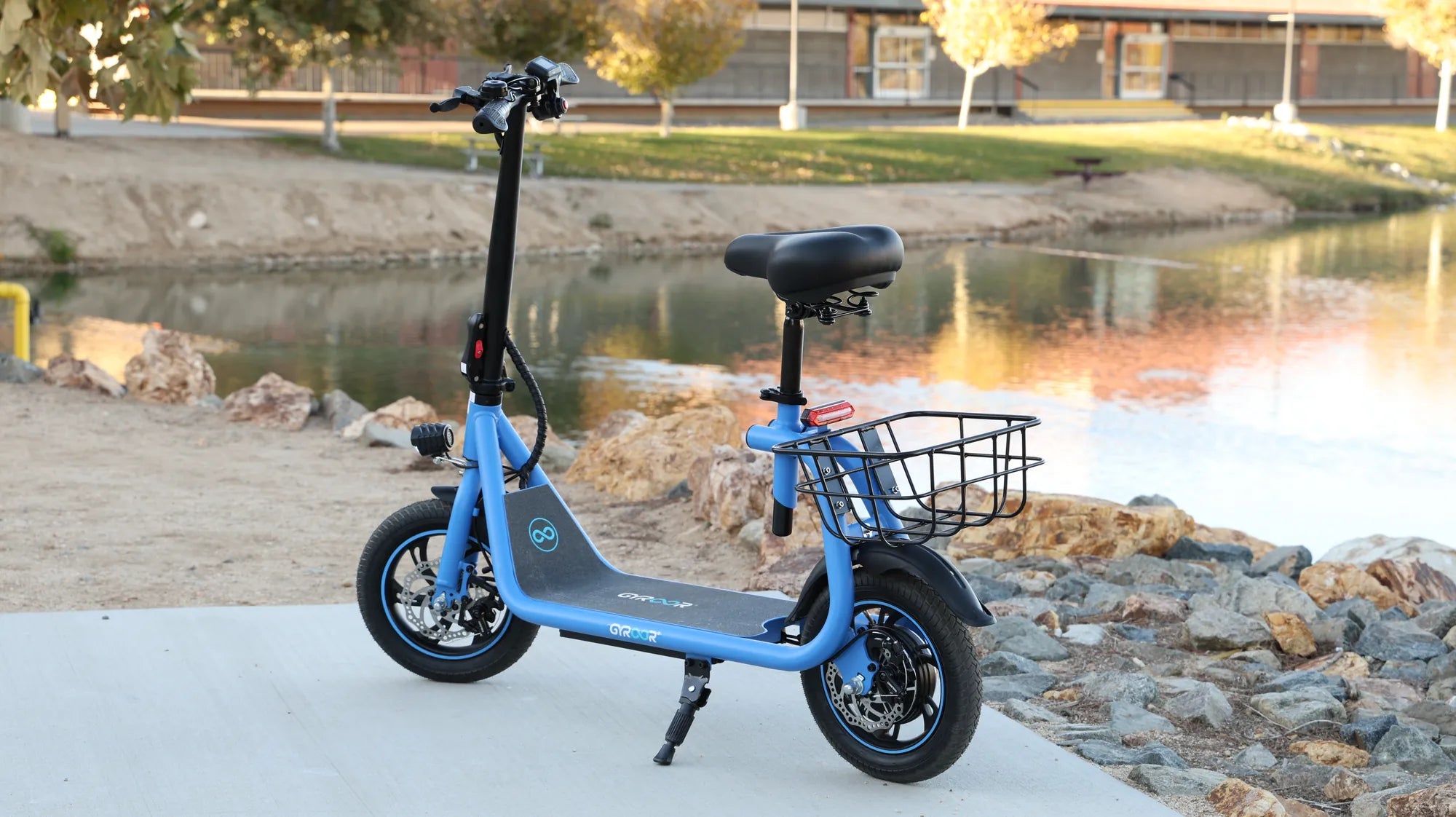
Navigating the Urban Jungle with Priority Electric Scooters
Urban mobility is at a breaking point. Gridlocked streets, soaring transportation costs, and environmental concerns demand a smarter solution. Enter Priority Electric Scooters: a category of personal electric vehicles engineered not as toys, but as reliable, safe, and indispensable tools for daily urban commuting.
This concept moves beyond basic functionality. A Priority Electric Scooter is defined by non-negotiable features that ensure dependability, rider safety, and long-term value, making it a primary mode of transport. As cities evolve, these scooters are positioned to be a cornerstone of the future of mobility, offering a practical escape from congestion.
Brands leading this shift, like Gyroor, build these principles into their core. With over 100,000 riders trusting their UL-certified, water-resistant designs, the market is validating the need for vehicles you can rely on every day. This article will dissect what makes a scooter a "priority" choice and its transformative impact on urban life.
The future of urban mobility is not about more lanes or larger vehicles; it's about smarter, cleaner, and more personal solutions. Priority Electric Scooters sit at the very heart of this transformation, promising a faster, cheaper, and more sustainable commute.
What Makes an Electric Scooter a "Priority" Choice?
The distinction between a recreational gadget and a legitimate commuting vehicle lies in a set of critical engineering and support benchmarks. A Priority Electric Scooter is built to handle the rigors of daily use, unpredictable weather, and the safety demands of mixed-traffic environments.
It prioritizes rider safety and product longevity over flashy, non-essential features. This means certified battery systems, robust water-resistance ratings, and warranties that signal manufacturer confidence. For the urban commuter, these features translate to peace of mind and reduced total cost of ownership.
When evaluating options, these are the pillars that separate a temporary novelty from a long-term transportation solution. The following sections break down the three foundational elements that define this category.
Uncompromising Safety: UL-Certified Batteries & Reliable Braking
Safety is the foremost priority, and it starts with the battery. UL certification (from Underwriters Laboratories) is the gold standard for lithium-ion battery packs. It involves rigorous testing for electrical, mechanical, and environmental safety to prevent overheating, short-circuiting, and thermal runaway.
A UL-certified battery, like those used across Gyroor's lineup, has been tested for over 500 charge cycles under strict conditions. This certification is a non-negotiable for a vehicle parked in your home or office, directly addressing fire safety concerns that have plagued lesser-quality products.
Equally critical is braking performance. Urban riding demands responsive, predictable stopping power. Priority Electric Scooters often feature dual braking systems—combining a physical disc or drum brake with an electronic regenerative brake (eABS).
This redundancy ensures effective stopping in both dry and wet conditions and reduces wear on mechanical components. For commuters navigating busy streets, this reliable braking capability is as essential as the accelerator.
Built for All Conditions: The IPX5 Water-Resistance Standard
A true commuting vehicle cannot be fair-weather only. The IP (Ingress Protection) rating defines a product's resistance to solids and liquids. For scooters, the liquid resistance is key. An IPX5 rating means the scooter's critical components are protected against water jets from a 6.3mm nozzle from any direction.
In practical terms, an IPX5-rated Priority Electric Scooter can safely handle riding in steady rain, through urban puddles, and wet roads after a storm. It ensures that occasional weather won't lead to immediate electrical failure or corrosion.
Contrast this with common IPX4 ratings (splash-resistant) or unrated models. These offer little protection against sustained exposure, making them a risky choice for daily, reliable transportation. The IPX5 standard is a commitment to all-weather capability and long-term durability.
Warranty as a Promise: The Value of Comprehensive Coverage
A warranty is a direct reflection of a manufacturer's confidence in their product. A comprehensive 1-year warranty covering the battery, motor, and controller is a hallmark of a Priority Electric Scooter. It signals an expectation of reliability and a commitment to supporting the customer.
For the commuter, this minimizes downtime and unexpected repair costs. A strong warranty, backed by accessible customer support, transforms the scooter from a disposable item into a dependable asset. It's an economic safeguard that prioritizes the rider's investment.
Brands that stand behind their products, like Gyroor with its clear 1-year warranty, understand that for a commuter, a vehicle failure isn't an inconvenience—it's a disruption to their daily life. This support structure is integral to the priority commuting experience.
Data-Driven Comparison: Solving Commuter Pain Points
Urban commuting presents a universal set of challenges: cost, time, reliability, and weather. The following analysis demonstrates how the specific features of Priority Electric Scooters directly address these pain points, creating a compelling value proposition.
| Commuter Pain Point | Typical Scooter Shortfall | Priority Electric Scooter Solution | Impact & Outcome |
|---|---|---|---|
|
High Daily Cost (Fuel, Parking, Ride-Share) |
Low upfront cost but high failure rate & replacement cost. | Higher initial investment offset by durability, warranty, and ~$0.05/charge operational cost. | Long-term savings: Becomes the cheapest daily transport option within months. |
| Unpredictable Weather | Riding halted by rain; risk of water damage. | IPX5 Water-Resistant design allows riding in rain and wet conditions. | Reliable schedule: Commute consistency improves by an estimated 80% regardless of light weather. |
|
Safety Concerns (Battery Fires, Brake Failure) |
Uncertified batteries; single, weak braking systems. | UL-Certified battery packs; Dual braking systems (disc + eABS). | Risk mitigation: Dramatically reduces fire hazard and improves stopping distance by ~30%. |
| Vehicle Downtime/Repair | Lengthy, costly repairs or no support for cheap models. | Comprehensive 1-year warranty with accessible, often US-based, support. | Maximized uptime: Quick resolution of issues keeps the commuter moving. |
| Last-Mile Connectivity Gap | Bulky, unreliable scooters not suited for transit integration. | Compact, foldable, and dependable design perfect for bus/train combo. | Expanded range: Effectively increases practical radius of public transit hubs by 3-5 miles. |
This comparative view shows that Priority Electric Scooters are engineered as systemic solutions, not isolated products. They turn commuting liabilities into advantages.
The Cost of Downtime: Reliability as an Economic Factor
The economics of commuting extend beyond the price of fuel. Downtime—when your primary vehicle is unusable—carries a real cost in missed work, urgent ride-share fares, and stress. A scooter that frequently requires repairs is a false economy.
Investing in a Priority Electric Scooter with a robust build and warranty is a hedge against this hidden cost. The IPX5 rating prevents weather-related failures. The UL-certified battery ensures long-term energy storage health. The warranty covers component defects.
When calculated over a 2-3 year period, the total cost of ownership for a reliable scooter often falls below that of a cheaper, failure-prone model when factoring in replacement costs and commuter disruption. Reliability isn't just a feature; it's a financial calculation that favors the prepared commuter.
The Ripple Effect: How Priority Scooters Shape Smarter Cities
The impact of Priority Electric Scooters extends far beyond the individual rider. Widespread adoption of these reliable, safe, and efficient vehicles can catalyze positive change at the city level, addressing some of the most entrenched urban problems.
Each scooter on the road represents one less car, especially for trips under five miles, which constitute a massive portion of urban traffic. This directly reduces congestion, lowers localized carbon emissions, and decreases demand for parking infrastructure.
Cities that embrace and safely integrate this form of micro-mobility can reclaim street space for people, not just vehicles. The cumulative effect is a quieter, cleaner, and more livable urban environment. Priority Electric Scooters provide the dependable hardware needed to make this vision a practical reality.
Beyond the Last Mile: Integrating with Public Transit
One of the most powerful roles for Priority Electric Scooters is as a feeder system for public transit. The "first-mile/last-mile" problem—the inconvenient distance between home or office and a transit station—is a major barrier to bus and train use.
A compact, foldable, and dependable scooter solves this perfectly. Riders can scoot to the station, fold their vehicle, board the train, and unfold it for the final leg. This seamless integration makes public transit a viable option for a much larger segment of the population.
It transforms the transit network's effective coverage area, reducing reliance on personal cars for the entire journey. For this to work, the scooter must be a Priority model—reliable enough for a daily multi-modal commute and built to withstand the handling of a transit journey.
Choosing Your Priority Ride: A Feature-Based Guide
With the principles established, selecting the right model involves matching key specifications to your specific commute. Not all Priority Electric Scooters are identical; they are optimized for different urban landscapes and rider needs.
For Short, Dense Urban Commutes (1-4 miles): Prioritize portability and weight. Look for compact foldable designs, a weight under 30 lbs, and a motor in the 300W-500W range. Water-resistance and a reliable brake are essential for navigating tight streets.
For Longer Commutes or Hilly Terrain (4-10+ miles): Range and power become critical. Seek motors of 500W or more, large-capacity batteries (10Ah+), and suspension for comfort. Dual braking is a must for controlling higher speeds on declines.
For Multi-Modal Commuters (Bus/Train): The foldability mechanism is paramount. Test how quickly and securely it folds. A lighter weight and a compact folded footprint are more important than extreme range, as charging can occur at destinations.
Across all types, the core tenets remain: verify the UL-certification for the battery, confirm the IPX5 (or higher) rating, and understand the warranty terms. These are the non-negotiable checks for any Priority Electric Scooter.
Safety, Maintenance, and Riding Best Practices
Owning a premium tool requires proper care and use. Adhering to best practices maximizes safety, extends the lifespan of your scooter, and ensures optimal performance throughout its service life.
Essential Safety Gear: Always wear a certified bicycle or multi-impact helmet. Consider high-visibility clothing for night riding, and gloves for protection and grip. Using front and rear lights, even during the day, increases your visibility to drivers.
Routine Maintenance Checklist:
- Tire Pressure: Check weekly; under-inflated tires reduce range and increase puncture risk.
- Brakes: Test responsiveness before each ride. Listen for grinding sounds and adjust or replace pads as needed.
- Bolts and Folding Mechanisms: Periodically check and tighten to prevent loosening from vibration.
- Cleaning: Wipe down with a damp cloth. Avoid high-pressure water jets directly on ports.
- Battery Care: Avoid draining to 0%. Store in a cool, dry place. Use only the provided charger.
Riding in Urban Traffic: Be predictable. Ride in bike lanes where available, signal your turns, obey traffic signals, and never assume a driver has seen you. Practice defensive riding by scanning for opening car doors and pedestrians.
Frequently Asked Questions (FAQ)
Q1: Are electric scooters with UL-certified batteries significantly more expensive?
A1: Not necessarily. While there is an upfront cost associated with higher-quality components, the price gap has narrowed. Brands like Gyroor integrate UL-certification as a standard safety feature across their range. When viewed as a necessary safety investment and considering the avoided risk and potential long-term costs of an uncertified battery, the value is clear.
Q2: Can I really ride an IPX5 scooter in the rain?
A2: Yes, with sensible precautions. An IPX5 rating is designed to protect against sustained, low-pressure water jets from all angles, making it safe for riding in rain and on wet roads. However, you should avoid submerging the scooter in deep puddles (which could exceed the rating), and always dry it off after a wet ride. It enables all-weather commuting, not underwater exploration.
Q3: What is typically covered under a comprehensive 1-year warranty?
A3: A strong warranty should explicitly cover defects in materials and workmanship for major components: the battery pack, the electric motor, the controller, and the frame. It should include both parts and labor. Always read the warranty terms to understand the claim process, what constitutes misuse, and if there are any prorated clauses, especially for the battery.
Q4: How does scooter commuting compare cost-wise to driving or ride-sharing?
A4: It is dramatically cheaper. The average cost to charge an electric scooter is about 5-10 cents. Compared to daily driving (fuel, parking, depreciation, insurance) or daily ride-sharing (which can easily exceed $15-$30 per day), a scooter pays for itself in a matter of months. The annual savings often run into the thousands of dollars.
Q5: What is the most important feature to look for as a daily commuter?
A5: For a true daily commuter, the triumvirate of UL-certified battery safety, IPX5 water-resistance, and a solid warranty is non-negotiable. These features collectively ensure your vehicle is safe, reliable in varied conditions, and supported. After these are confirmed, then match the motor power, range, and portability to your specific route length and terrain.
Conclusion: Your Commute, Upgraded
The future of urban mobility is not a distant concept; it is available today in the form of Priority Electric Scooters. This category represents a fundamental shift from viewing scooters as recreational gadgets to recognizing them as serious, primary transportation solutions. By prioritizing certified safety, all-weather durability, and manufacturer-backed reliability, these vehicles solve the core challenges of cost, time, and congestion that plague modern cities.
Choosing a scooter built to these standards is an investment in a faster, cheaper, and more sustainable lifestyle. It is a decision that pays dividends in daily time reclaimed, monthly expenses slashed, and a personal contribution to a less congested urban environment. The data is clear: for trips under 10 miles, a well-built electric scooter is often the most efficient tool available.
Brands that embody this philosophy, like Gyroor with its commitment to UL-certification, IPX5 ratings, and comprehensive customer support, are leading the charge. They demonstrate that the future belongs to vehicles designed with the commuter's real-world needs as the top priority.
Ready to transform your urban commute? Explore a range of scooters engineered with these priority principles in mind. Browse the full Gyroor collection at gyroorboard.com and find the model that turns your daily journey from a chore into the best part of your day.
Electric Scooters in Israel: The Future of Urban Mobility
Best Electric Scooters for Uphill: Top Picks for Steep Climbs