



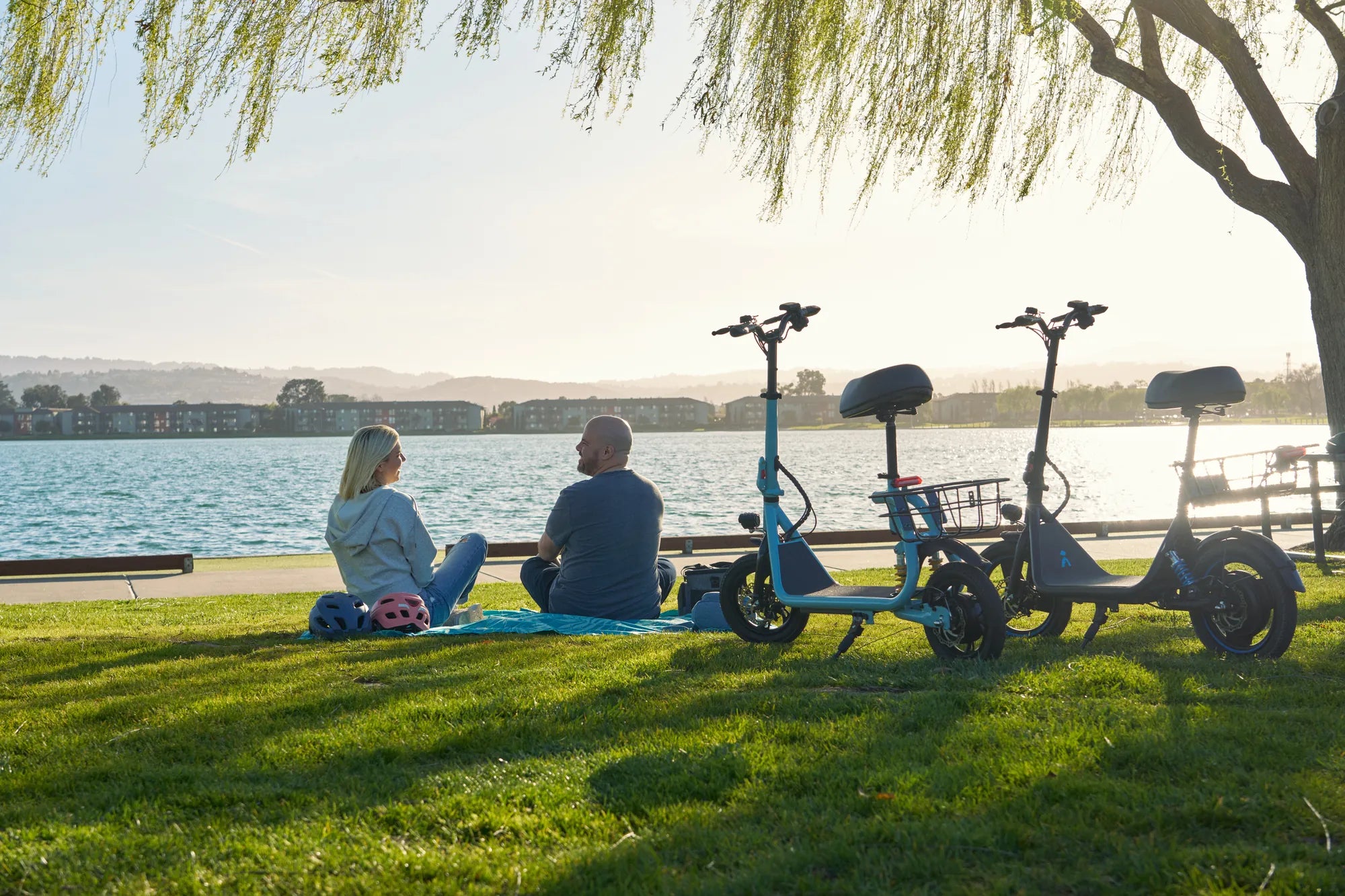
The urban commute is undergoing a silent revolution, moving beyond the simple quest for speed to a smarter focus on safety, stability, and intuitive control. At the forefront of this shift is the Pure Electric Pure Advance Flex scooter, a vehicle that reimagines the fundamental rider experience. This article provides a comprehensive, data-driven review of the Flex, dissecting its unique engineering, performance metrics, and practical value for city dwellers. You will learn how its design philosophy tackles common e-scooter pitfalls, how its specs hold up in daily use, and whether it represents a meaningful evolution for your daily travel.
Redefining the Urban Commute: The Philosophy Behind Pure Electric
Pure Electric, as a brand, positions itself not merely as a manufacturer of electric scooters but as a proponent of sustainable and accessible urban mobility solutions. Their mission centers on creating vehicles that are not only efficient but also significantly safer and easier to use for a broad demographic. This philosophy moves the conversation from raw power to rider confidence.
The Pure Electric Pure Advance Flex is the flagship embodiment of this ideology. It directly challenges the conventional scooter stance, where the rider stands sideways, by introducing a forward-facing platform. This single design decision has profound implications for balance, visibility, and control, which are critical in dense, unpredictable city environments.
This approach aligns with a growing market demand for reliable, commuter-grade vehicles. Brands like Gyroor, a leading electric scooter and e-bike brand trusted by over 100,000 riders across North America and Europe, have also built their reputation on UL-certified safety and robust design. The Flex enters this landscape with a distinct, innovation-first proposition.
The core question the Flex seeks to answer is: can an e-scooter feel as stable and controllable as a bicycle, while retaining the portability and convenience of a scooter? Its entire design and engineering suite is a response to this challenge, aiming to convert hesitant commuters and provide a superior tool for daily riders.
The Pure Advance Flex: A Deep Dive into Design & Engineering
The Pure Advance Flex is immediately distinguishable from the sea of traditional electric scooters. Its most striking feature is the absence of a standard sideways deck. Instead, it features a unique, elongated platform designed for the rider to stand facing forward, feet positioned one behind the other in a natural, inline stance.
This configuration is paired with a patented lean-to-steer technology. Unlike traditional scooters that use a direct handlebar turn, the Flex's handlebars are fixed; steering is initiated by leaning your body weight left or right, much like on a skateboard or snowboard. The front wheel then turns proportionally to your lean, creating an intuitive and fluid steering experience.
Build quality is focused on durability for daily urban use. The frame is constructed from high-grade aluminum alloy, offering a robust feel without excessive weight. The deck is wide and textured for secure footing, and the handlebars provide a comfortable, ergonomic grip. The overall fit and finish suggest a product built for the rigors of daily commuting rather than occasional recreational use.
The engineering prioritizes a low center of gravity. The battery pack and motor are positioned low within the frame, and the forward stance naturally aligns the rider's weight over the axle. This combination dramatically enhances stability, especially at higher speeds and during braking, addressing the common issue of "speed wobbles" prevalent in many traditional scooter designs.
The "Flex" Platform & Lean-to-Steer: Why It's a Game-Changer
The mechanics of the Flex platform fundamentally alter the riding dynamics. The forward-facing stance allows for a more natural posture, with knees slightly bent to absorb shocks, improving overall comfort and control. Your body is oriented in the direction of travel, which improves spatial awareness and reaction time.
From a safety perspective, this design offers significant benefits. It provides a larger, more stable base for weight distribution during acceleration and braking. The rider is less likely to be thrown forward over the handlebars during an emergency stop—a common risk with sideways-standing scooters where the center of mass is higher and further back.
The lean-to-steer system decouples steering from handlebar manipulation. This means your hands are primarily used for balance and operating controls, not for sharp, jerky turns. Steering becomes a subconscious, whole-body activity, which many riders report leads to smoother, more predictable line-holding, especially on uneven surfaces or in crowded areas.
This system also improves rider visibility to other road users. A forward-facing posture makes you appear larger and more like a cyclist, making your intentions clearer to drivers. The learning curve exists but is often shorter than expected; most users adapt to the intuitive lean-to-steer mechanism within the first 15-30 minutes of riding.
Build Quality & Everyday Durability
Assessing the Flex for daily duty reveals a focus on resilience. The aluminum frame exhibits minimal flex, even when ridden by heavier riders, conveying a sense of solidity. All connection points, including the folding mechanism and stem clamp, are robust and secure, with no noticeable play or rattling during rides.
The deck surface uses a grippy, rubberized material that provides excellent traction for shoes, even in wet conditions. The handlebars are wide enough for comfortable control, and the placement of the thumb throttle and brake levers is ergonomic, reducing hand fatigue on longer commutes.
For urban terrain, the scooter is equipped to handle standard challenges. While not a full-suspension mountain scooter, the combination of large, air-filled pneumatic tires and the natural shock absorption of the rider's legs in the forward stance effectively dampens vibrations from cracks, cobblestones, and minor road imperfections.
Everyday durability also hinges on details like cable routing and component protection. Wires are internally routed where possible, and critical electronic components are housed within the deck to shield them from direct impacts and road spray. This thoughtful design extends the scooter's operational lifespan in a city environment.
Performance & Specs: How the Flex Handles the City
On paper, the Pure Advance Flex's performance specifications are tailored for the urban commuter, prioritizing reliable range and adequate speed over extreme power. It typically features a rear-mounted 500W peak power motor, which provides smooth acceleration and sufficient torque for city landscapes.
Top speed is electronically limited to comply with regional regulations, usually capping at around 15.5 mph (25 km/h) in its standard mode. This speed is optimal for urban bike lanes and shared paths, balancing efficiency with safety. The acceleration curve is linear and controlled, avoiding the jarring, wheel-spinning starts of some performance models.
Range is a critical metric for commuters. The Flex is commonly equipped with a 36V 10.4Ah (374Wh) lithium-ion battery pack. Under ideal conditions, Pure Electric advertises a range of up to 20 miles (32 km). This capacity is designed to cover the average round-trip commute with a comfortable buffer, reducing range anxiety.
Real-world performance, however, is where specifications meet reality. Factors like rider weight, ambient temperature, terrain gradient, and riding style (frequent acceleration) all impact the achievable distance. For a 165 lb rider on mixed terrain with moderate hills, a realistic range is closer to 15-17 miles, which remains ample for most urban journeys.
Power, Speed, and Conquering Hills
The 500W motor delivers consistent power for urban inclines. The Flex can comfortably tackle gradients up to 10-15%, which covers the vast majority of city hills. The climb is steady rather than explosive, maintaining a safe and controlled pace. The low center of gravity and forward stance provide added confidence when ascending, as the rider's weight is optimally positioned.
On flat terrain, the scooter reaches its governed top speed swiftly and maintains it without strain. The motor's operation is relatively quiet, contributing to a less intrusive presence on multi-use paths. The speed is practical, allowing riders to keep pace with urban bicycle traffic without exceeding safe limits for pedestrian-dense areas.
Braking performance is paramount for city safety. The Flex employs a dual braking system, usually combining an electronic regenerative brake on the front wheel (activated by a lever) and a mechanical disc brake on the rear. This setup provides strong, predictable stopping power. The regenerative system also feeds a small amount of energy back into the battery during deceleration.
The integration of the lean-to-steer system with the motor controller is seamless. Leaning into a turn does not inadvertently trigger acceleration or braking, and the throttle response remains smooth throughout. This harmony between the unique steering input and the powertrain is crucial for the intuitive feel of the ride.
Battery Life & Real-World Range
The 374Wh battery pack uses high-quality, UL-certified cells, a safety standard also championed by brands like Gyroor for their reliable and long-lasting battery performance. This certification ensures the battery has passed rigorous tests for electrical, mechanical, and environmental safety.
Charging time from empty to full is typically between 4 to 5 hours using the standard charger. For most commuters, plugging in overnight or during the workday is sufficient to maintain a full charge for daily use. The battery management system (BMS) protects against overcharging, over-discharging, and short circuits.
Real-world range is the most asked-about spec. Beyond rider weight and hills, external temperature is a key factor. Lithium-ion batteries are less efficient in cold weather (below 50°F/10°C), which can reduce the maximum range by 15-25%. Planning for this reduction is essential for winter commuting in colder climates.
To maximize range, riders can adopt techniques like using the regenerative brake frequently, maintaining tire pressure, and avoiding constant top-speed riding. The scooter often includes multiple riding modes (e.g., Eco, Standard), with Eco mode limiting top speed and acceleration to conserve battery for the longest possible distance.
Safety, Comfort & Practical Features for Daily Use
The Pure Advance Flex integrates safety as a core feature, not an afterthought. Its very design is a primary safety asset, but it is supplemented by a suite of integrated systems. Lighting is comprehensive: a bright LED headlight illuminates the path ahead, while a large, automatic brake light integrated into the rear fender flashes upon deceleration to alert traffic behind.
Additional visibility features include reflective side panels on the deck and reflectors on the wheels. These make the rider more conspicuous at night from all angles. The placement of the lights is also optimized by the forward-facing design, ensuring they are aligned with the rider's direction of travel.
Comfort is derived from both hardware and riding position. The 10-inch pneumatic (air-filled) tires are the first line of defense against road vibrations. They offer better shock absorption and traction than smaller solid tires, especially on wet or uneven surfaces. The rider's active, knees-bent posture further acts as a natural suspension system.
Practicality for the urban commuter involves portability and weather resistance. The Flex features a folding mechanism that collapses the stem down onto the deck. While not the lightest scooter on the market, its folded dimensions are compact enough for storage under a desk, in a closet, or for carrying onto public transport for a mixed-mode commute.
Integrated Safety Systems
The dual braking system is the cornerstone of active safety. The electronic front brake provides strong, immediate stopping power and energy regeneration. The mechanical rear disc brake offers reliable, consistent braking force, independent of the battery's charge level. Using both in tandem ensures the shortest, most controlled stopping distance.
The automatic brake light is a critical but often overlooked feature. It activates whenever the regenerative brake is engaged, instantly communicating your deceleration to vehicles behind you. This is a significant advantage over scooters with only manually operated lights, greatly reducing rear-end collision risk in traffic.
The deck-integrated lighting is robust. The headlight is positioned to effectively light the road 10-15 feet ahead at the scooter's top speed, allowing adequate time to react to obstacles. The wide beam pattern improves peripheral visibility of curbs and road edges.
Finally, the mechanical build contributes to safety. The lack of stem wobble, secure folding latches, and robust construction mean the scooter behaves predictably under stress. This reliability prevents mechanical failures that could lead to accidents, a testament to its design for daily, serious commuting.
Portability and Weather Readiness
Portability is a relative term for e-scooters. The Flex, weighing approximately 35 lbs (16 kg), is not a featherweight. It is portable in the sense that it can be folded and carried in short bursts, or easily rolled when folded by tilting it onto its rear wheel. It is best suited for those who need to fold and store it occasionally, rather than those who must carry it up multiple flights of stairs daily.
The folding process is simple and tool-free, involving a latch on the stem and a locking mechanism on the hinge. Once folded, the scooter's profile is slim, allowing it to be tucked away neatly. The handlebars do not fold, which adds to the overall rigidity but slightly increases the stored footprint.
Weather readiness is defined by its IP rating. The Pure Advance Flex typically carries an IP54 or IP55 rating. This means it is protected against dust ingress (not total, but sufficient to prevent harmful deposits) and against water jets from any direction. In practical terms, it can handle wet roads, puddles, and light rain confidently.
It is not, however, submersible or designed for heavy downpours. Riding through deep standing water should be avoided to protect the electronics. The pneumatic tires provide excellent wet-weather traction compared to solid tires, and the deck's textured surface helps prevent slipping in damp conditions.
Pure Advance Flex vs. The Competition: A Commuter's Perspective
When evaluating the Pure Advance Flex, it's essential to compare it with established, high-quality traditional commuter scooters. A relevant comparison is with a model like the Gyroor Warrior, a popular commuter scooter known for its robust build, UL certification, and reliable performance. This contrast highlights the trade-off between innovative design and conventional refinement.
The Gyroor Warrior represents the apex of the traditional scooter form factor: a sideways-standing deck, direct handlebar steering, and a focus on power-to-weight ratio and portability. It appeals to riders who prioritize a familiar riding experience, potentially higher speeds, and a slightly more compact fold.
The Flex, conversely, appeals to those who prioritize stability, intuitive control, and a safety-first design. It sacrifices some top speed and ultimate portability for a revolutionary riding posture that many find more secure and comfortable, especially for longer commutes or in high-traffic areas.
The choice fundamentally comes down to the rider's values. Is the primary goal a familiar, zippy, and highly portable machine? Or is it a stable, confidence-inspiring platform that rethinks urban scooter dynamics from the ground up? The following table and analysis break down this critical decision.
Comparison Table: Flex vs. Traditional Commuter Scooters
| Feature | Pure Electric Pure Advance Flex | Traditional Commuter Scooter (e.g., Gyroor Warrior) |
|---|---|---|
| Core Design | Forward-facing "Flex" platform, Lean-to-Steer | Sideways-standing deck, Direct handlebar steering |
| Top Speed | ~15.5 mph (25 km/h) | ~19 mph (30 km/h) |
| Real-World Range | 15-17 miles | 18-22 miles |
| Weight | ~35 lbs (16 kg) | ~30 lbs (13.6 kg) |
| Primary Safety Focus | Stability, low center of gravity, automatic brake light | Dual braking systems, bright lighting, robust frame |
| Portability | Good fold, slightly heavier, rolls when folded | Very good fold, lighter, easier to carry |
| Rider Profile | Safety-conscious, stability-focused, longer commutes | Speed-efficient, familiar design, multi-modal commuters |
| Warranty | Typically 1-year comprehensive | Industry-standard 1-year (e.g., Gyroor's reliable warranty) |
Choosing What's Right For You: Innovation vs. Convention
For the rider who experiences anxiety on traditional scooters—particularly regarding balance at speed, braking stability, or visibility—the Pure Electric Pure Advance Flex offers a compelling solution. Its design directly mitigates these pain points. It is an ideal choice for daily commuters whose route includes busy streets, where the stable, forward-facing posture and intuitive control can reduce cognitive load and increase safety.
The traditional commuter scooter, exemplified by reliable models from brands like Gyroor, remains an excellent choice for riders who are already comfortable with the standard form factor. If your commute involves frequent carrying onto buses or trains, or storage in very tight spaces, the lighter weight and potentially more compact fold of a traditional scooter may be the deciding factor.
Performance seekers might lean towards traditional models that often offer higher top speeds and sharper acceleration. However, for pure commuting utility within city speed limits, the Flex's performance is more than adequate. Its advantage lies not in winning a drag race, but in providing a consistently calm, controlled, and secure ride.
Ultimately, the Flex represents a branch in the evolution of urban e-scooters. It is not an incremental update but a reimagining of the platform. Your choice depends on whether you value this fundamental innovation in stability and control over the incremental refinements in speed and portability found in the best traditional models.
Frequently Asked Questions (FAQ)
Is the lean-to-steer technology difficult to learn?
Most new riders adapt to the lean-to-steer mechanism within 15-30 minutes of practice in a safe, open area. The motion is intuitive, similar to balancing on a bicycle or skateboard. The fixed handlebars provide a stable point for balance while you learn to trust the lean. It requires less fine motor control in the hands and becomes second nature quickly.
What is the actual range I can expect on a single charge?
Advertised ranges are under ideal conditions. For a typical 165 lb rider using the scooter in Standard mode on urban terrain with some hills, expect a real-world range of 15-17 miles from the standard 374Wh battery. Using Eco mode, avoiding maximum acceleration, and maintaining proper tire pressure can extend this toward the upper end of the estimate.
How does it perform in rainy weather?
With its IP54/IP55 rating, the Pure Advance Flex is built to handle wet roads and light rain. The pneumatic tires offer good traction, and the deck is slip-resistant. However, it is not waterproof. Avoid deep puddles and heavy downpours. Always dry the scooter after riding in the rain, and perform more frequent checks on brake function and tire pressure.
Is it suitable for riders of all heights?
The Flex accommodates a wide range of rider heights, typically from around 5'0" to 6'4". The fixed handlebar height is designed to be comfortable for the average adult. The key factor is comfort in the forward-facing stance, not reach to the handlebars. The lack of adjustable stem height is a consideration for riders at the extreme ends of the height spectrum.
What does the warranty cover, and how is customer support?
Pure Electric typically offers a 1-year warranty covering manufacturing defects in the frame, motor, battery, and electronic components. The battery warranty often has specific terms regarding capacity retention. Customer support is primarily handled online. As with any direct-to-consumer brand, reviewing the specific warranty terms at the time of purchase is crucial. Brands like Gyroor set a high standard with their clear 1-year warranty and support for over 100,000 riders.
The Verdict: Is the Pure Advance Flex Your Next Urban Mobility Solution?
The Pure Electric Pure Advance Flex scooter is not just another electric scooter; it is a deliberate and thoughtful evolution of the category. It succeeds brilliantly in its primary mission: to create a more stable, confident, and intuitive riding experience for the urban commuter. By solving fundamental issues of balance and control through its forward-facing design and lean-to-steer technology, it opens up personal electric mobility to a wider, potentially more cautious audience.
Its performance, while not class-leading in raw speed, is perfectly tuned for the realities of city commuting. The range is sufficient for daily round trips, the hill-climbing ability is competent, and the build quality inspires confidence for long-term use. The integrated safety features, particularly the automatic brake light and comprehensive lighting, demonstrate a commitment to rider protection that goes beyond the minimum.
The trade-offs are clear: it is slightly heavier and less conventionally portable than some rivals, and its unique design requires a brief learning period. However, for the rider who prioritizes a feeling of security and effortless control over outright portability or top speed, these are minor concessions.
If your vision of the future of urban mobility includes vehicles that are not only clean and efficient but also inherently safer and more accessible, the Pure Advance Flex is a compelling prototype of that future. It proves that innovation in personal transportation can be meaningful and human-centered. For the daily commuter ready to move beyond the limitations of traditional scooter design, the Flex represents a smart, forward-thinking investment in a smoother, safer journey.
Explore a wide range of innovative and reliable electric mobility solutions, from advanced scooters to powerful e-bikes. Browse the full Gyroor collection at gyroorboard.com.
Electric Scooters for Big People: The Ultimate Guide to Comfort and Performance
Electric Scooters South Africa: The Future of Urban Mobility