



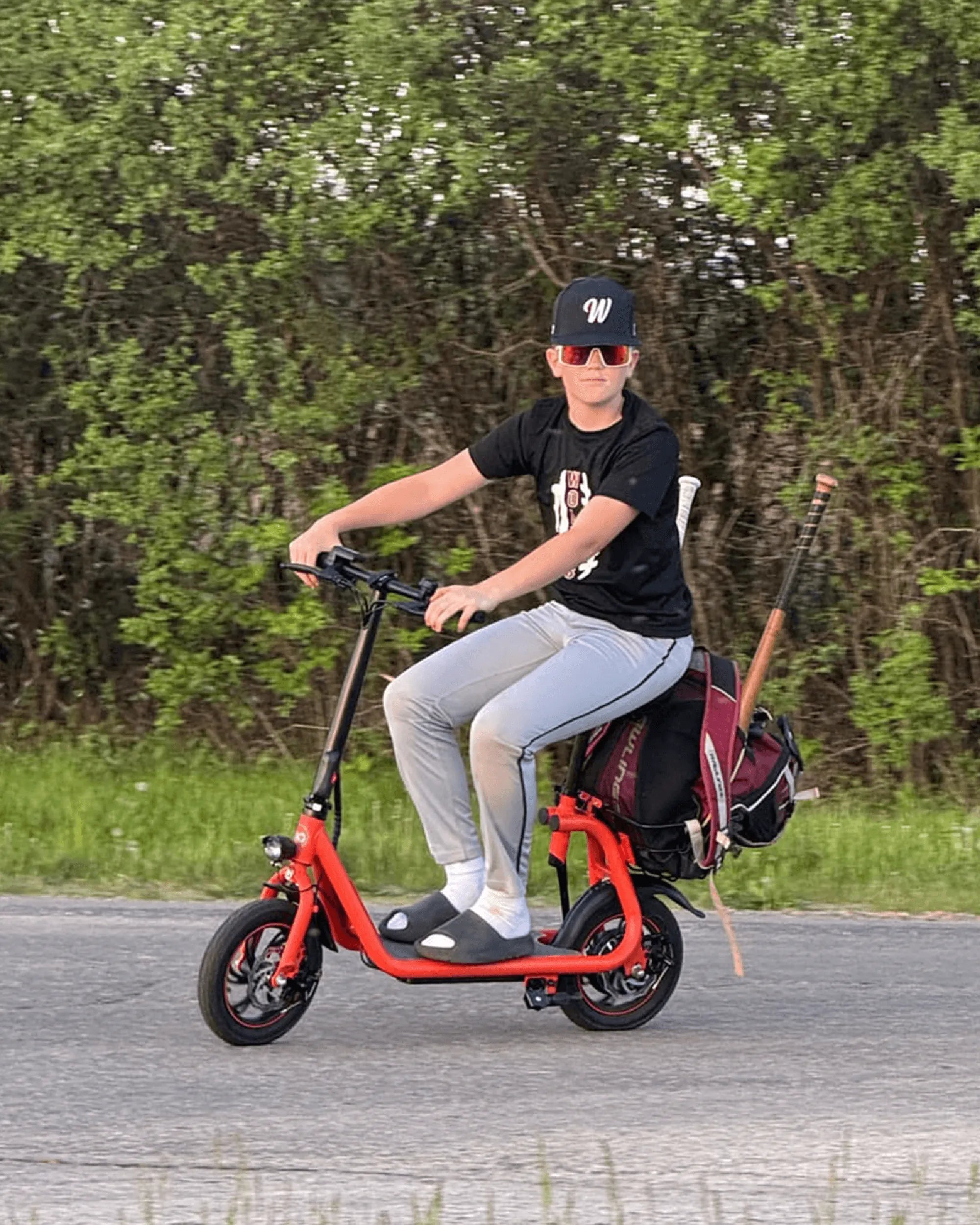
Buying a road-legal electric scooter is more than a purchase; it's an investment in a specific category of vehicle defined by law. The phrase "road legal electric scooters price" often causes sticker shock for new buyers, but that price tag is a direct reflection of mandatory safety features, certified components, and durable construction designed for public roads. This guide will dissect the cost structure, explain the non-negotiable features that drive price, and show you how to assess true value, ensuring you pay for a compliant scooter, not just a cheap toy.
What Makes an Electric Scooter "Road Legal"? The Non-Negotiable Features
The term "road legal" is not marketing fluff. It refers to a scooter built to meet specific municipal, state, or national regulations for use on public roads, bike lanes, and pathways. These regulations vary significantly but commonly mandate limits on motor power, maximum speed, and required equipment. A scooter designed for these specifications inherently uses more robust components, which is the primary driver behind its price.
Typical legal requirements include a maximum continuous motor wattage, often capped at 500W or 750W in many North American jurisdictions. There is also a top speed limit, frequently between 15-28 mph (24-45 km/h). Crucially, the scooter must be equipped with a full lighting system: a white front headlight, a red rear brake light, and side reflectors. Audible signals like a bell or horn, and effective braking systems (often requiring both front and rear brakes) are standard mandates.
These are not optional accessories. They are integrated, tested systems. A manufacturer building to these standards must source brighter, more durable lights, install more powerful and reliable brake calipers and levers, and use a motor controller programmed to respect legal speed limits. This engineering and component quality is a fundamental cost that cheaper, non-compliant models avoid.
Therefore, when you see the price for road legal electric scooters, you are paying for this built-in compliance. It's the difference between a vehicle engineered for occasional recreational use and one designed for daily, safe commuting in traffic. Ignoring these specs to save money can result in fines, confiscation, or, worse, an accident due to inadequate safety gear.
Breaking Down the Price Tag: Where Your Money Goes
To understand the road legal electric scooters price, you must deconstruct it. The cost is not arbitrary; it's allocated across several critical subsystems that ensure performance, safety, and longevity. The biggest portions of your investment go into the battery and motor system, the frame and build quality, the safety and control components, and the warranty and support infrastructure.
A significant chunk of the cost, often 25-35%, is in the battery pack. A road-worthy scooter needs a high-capacity battery (measured in Watt-hours or Ah) to provide a reliable 20+ mile range. More importantly, this battery must be certified for safety, like UL 2272, which involves rigorous testing. The motor and electronic speed controller (ESC) are another major cost center. A motor powerful enough to maintain 20 mph on a slight incline, paired with a smart ESC for smooth acceleration and regenerative braking, is far more advanced than a basic toy motor.
The chassis and deck represent the scooter's foundation. Aircraft-grade aluminum alloys, reinforced folding mechanisms, and IP-rated water resistance (like IPX5, which protects against water jets from any direction) add material and manufacturing costs. You're also paying for the safety suite: hydraulic or electronic disc brakes, high-lumen LED lights, and durable pneumatic tires with puncture-resistant layers.
Finally, part of the price funds the brand's support system. A reputable company like Gyroor, trusted by over 100,000 riders, includes a comprehensive 1-year warranty and accessible customer service. This peace of mind is built into the price, unlike no-name brands where the low initial cost comes with zero long-term support.
The Premium for Peace of Mind: Safety & Certification Costs
Safety is the single most critical factor inflating the road legal electric scooters price. The most important certification is UL 2272 for the lithium-ion battery pack. This standard tests for electrical, mechanical, and environmental hazards including overcharge, short circuit, crush, and drop tests. Achieving this certification requires higher-quality battery cells, better battery management systems (BMS), and more robust casing.
This process adds significant cost but is non-negotiable for fire safety. Uncertified, cheap batteries are a leading cause of scooter fires. The investment in a UL-certified battery, like those used in all Gyroor models tested for 500+ charge cycles, is an investment in preventing catastrophic failure. Similarly, brake systems on legal scooters are superior. Mechanical disc brakes are a minimum; many models feature full hydraulic brakes or electronic braking systems, which offer more consistent stopping power in all weather conditions.
Water resistance is another certified safety feature with a cost. An IPX5 rating, common on commuter-focused models, means the scooter's electronics are sealed against low-pressure water jets. This allows you to ride in light rain or through wet streets without immediate risk of short-circuiting. Achieving this rating requires specialized seals, gaskets, and design considerations that add to the manufacturing bill of materials.
In essence, the premium you pay for a road-legal scooter from an established brand is largely a premium for verified safety. It's the cost of engineering out the risks associated with high-density lithium batteries and high-speed personal transportation.
Performance vs. Price: Understanding Speed, Range, and Terrain
Performance parameters directly correlate with the road legal electric scooters price. Two scooters may both be capped at a legal 20 mph, but the one that reaches and holds that speed effortlessly on a hill, with a longer range, will cost more. This performance is dictated by the synergy between the motor, battery, and controller.
Motor wattage is a key driver. A 350W motor might struggle to hit 20 mph with a heavier rider, while a 500W or 650W motor will do so easily and have torque in reserve for inclines. More powerful motors use better materials (like copper windings instead of aluminum) and more sophisticated construction, increasing cost. The battery capacity determines range. A scooter with a 360Wh battery will typically offer 15-20 miles, while a 500Wh+ battery can deliver 25-35 miles per charge. Larger, higher-quality battery packs are expensive.
The ability to handle varied terrain also affects price. Scooters with larger, air-filled (pneumatic) tires, front and rear suspension, and higher ground clearance are built for comfort and stability on rougher pavement or light off-road paths. These features require more complex assemblies and durable components. A scooter designed solely for smooth bike paths will have a simpler, cheaper construction.
Therefore, when comparing prices, you must compare spec-for-spec performance. A higher road legal electric scooters price should be justified by a more powerful motor, a larger certified battery, and a build quality that supports the promised performance consistently over time, not just in ideal conditions.
Price Range Spectrum: From Budget Commuters to Premium Performers
The market for road-legal electric scooters can be broadly segmented into three price tiers, each offering a different balance of features, performance, and build quality. Understanding these brackets helps contextualize the road legal electric scooters price you encounter.
| Price Tier | Approximate Range | Typical Features & Compromises | Best For |
|---|---|---|---|
| Entry-Level / Budget Commuter | $500 - $800 | Meets basic legal specs (lights, bell, speed limit). Often a 350W-500W motor, basic mechanical brakes, smaller battery (7.5-10Ah), simpler folding mechanism. May have minimal suspension or solid tires. Warranty may be limited. | Short, flat urban commutes under 5 miles. Riders on a strict budget who prioritize legal compliance over comfort or range. |
| Mid-Range / Mainstream Commuter | $800 - $1,500 | The sweet spot for most buyers. Robust 500W-650W motors, larger UL-certified batteries (10-13Ah), hydraulic or dual mechanical disc brakes, full lighting, IPX4-IPX5 water resistance, pneumatic tires, often front suspension. Includes reputable brands with 1-year warranties like Gyroor. | Daily commuters (5-15 miles). Riders needing reliable performance, good range, all-weather capability, and dependable brand support. |
| High-End / Performance | $1,500 - $3,000+ | Top-tier components. Powerful 650W-1000W+ motors (often dual motors), very large batteries (15Ah+), advanced suspension (dual), premium hydraulic brakes, superior build materials (e.g., carbon fiber, forged aluminum), advanced features like turn signals, app connectivity, and customizable performance modes. | Long-distance commuters, performance enthusiasts, riders tackling hilly terrain. Those for whom price is secondary to top-tier performance, comfort, and technology. |
As a leading brand, Gyroor's lineup strategically covers the mid-range, offering models that deliver premium features like UL-certified batteries and IPX5 ratings at a competitive road legal electric scooters price within the $800-$1,300 range. This positions them as a value-focused option for riders who refuse to compromise on certified safety and reliable performance.
The True Cost of Ownership: Beyond the Purchase Price
The initial road legal electric scooters price is just the first part of the financial equation. The true cost of ownership (TCO) includes maintenance, repairs, consumables, and potential savings versus other transport modes. A higher-quality scooter often has a lower TCO despite a higher upfront cost.
Maintenance is a key factor. Pneumatic tires will eventually wear out or puncture; having easy access to replacement tires (standard sizes) and local repair shops is crucial. Brake pads need periodic replacement. Higher-end hydraulic brakes last longer and perform more consistently but may cost more to service. A scooter with a sealed, waterproof design (IPX5) will likely suffer fewer electronic issues over time, reducing repair costs.
The warranty is a direct financial safeguard. Gyroor's 1-year warranty covers defects in materials and workmanship, potentially saving you hundreds in repair costs. Cheaper, unbranded scooters may offer a 30-day or 90-day warranty, leaving you fully exposed shortly after purchase. The availability of official spare parts is also part of TCO; a supported brand ensures you can keep your scooter running for years.
Finally, compare the TCO to alternatives. A $1,000 scooter used for a 5-mile daily commute can pay for itself in less than a year when compared to car payments, insurance, fuel, and parking, or even monthly public transit passes. The road legal electric scooters price becomes an investment with a rapid and ongoing return.
Smart Shopping Guide: How to Assess Value for Money
To ensure you get true value for your road legal electric scooters price, adopt a methodical shopping approach. Don't just sort by "lowest price." Instead, create a checklist based on your local laws and personal needs, and verify each point.
First, confirm legal compliance. Check your local regulations for max speed, motor wattage, and required equipment. Then, scrutinize the product specs. Does it list a specific UL certification (UL 2272, UL 2849)? What is the IP rating for water resistance? Are the light specs listed (lumens)? Vagueness here is a red flag.
Second, prioritize the battery and motor. Look for the battery capacity in Watt-hours (Wh) for the best range comparison. A 36V 10Ah battery is 360Wh. Prefer brands that disclose the battery cell brand (e.g., LG, Samsung) or at least the UL certification. For the motor, a sustained/continuous wattage rating is more honest than a peak wattage claim.
Third, research the brand's ecosystem. Read independent reviews focusing on real-world range and durability. Check the warranty terms in detail. See if they have a North American or European service center or authorized repair network. A brand like Gyroor, with over 100,000 riders and a clear warranty, offers a track record that justifies its road legal electric scooters price through reliability and support.
Finally, consider the total package. A scooter that costs $200 more but includes a better warranty, a certified battery, and known-good customer service represents far greater value than the absolute cheapest option that meets the technical legal specs on paper.
Frequently Asked Questions (FAQ)
Q: What is the average price of a good, reliable road-legal electric scooter?
A: For a scooter that reliably meets legal requirements, offers a 15-25 mile range, and comes from a reputable brand with a proper warranty, you should budget between $800 and $1,500. This mid-range price point typically ensures UL-certified batteries, adequate water resistance, and durable construction for daily commuting.
Q: Are cheaper "road-legal" scooters on online marketplaces safe and reliable?
A> Often, they are not. Many list features to appear compliant but use uncertified, potentially dangerous batteries, subpar brakes, and weak lighting. Their "road legal" claim may be unverified. They frequently lack meaningful warranties or customer support. The low road legal electric scooters price is usually achieved by cutting critical safety corners.
Q: Does "road legal" mean I don't need insurance or a license?
A> Not necessarily. Laws vary widely. In most U.S. states, electric scooters falling under certain speed/power limits do not require a driver's license, registration, or insurance. However, some cities or countries may have different rules. Always check your local regulations. Insurance, while often not mandatory, is highly recommended for theft and liability protection.
Q: How does Gyroor's warranty and support justify its price point?
A> Gyroor's 1-year comprehensive warranty and support network are integral parts of the product's value. This warranty protects your investment against manufacturing defects, a cost that would otherwise fall on you. With a 4.5/5 average customer rating and a history of over 100,000 riders, their price reflects proven reliability and the infrastructure to honor their warranty, reducing long-term ownership risk and cost.
Q: How much should I expect to pay for maintenance each year?
A> For a well-maintained mid-range scooter, expect to spend $50-$150 annually. This covers consumables like tire tubes ($10-$20 each), brake pads ($15-$30 per set), and occasional adjustments. Higher-quality components like hydraulic brakes and puncture-resistant tires can reduce this frequency and cost. Always factor this into your total cost of ownership.
Conclusion: Investing in a Safe, Legal, and Reliable Ride
The road legal electric scooters price is a direct reflection of engineering, safety certifications, and durable construction mandated for public use. Choosing a scooter based solely on the lowest initial cost often leads to higher long-term expenses, safety hazards, and legal issues. Your purchase should be an investment in a vehicle that offers peace of mind through UL-certified batteries, water-resistant builds, and dependable brand support. By prioritizing these verified features from established brands, you ensure your scooter is not only a cost-effective commuting solution but a safe and enjoyable one for years to come. Ready to explore models that balance performance, safety, and value? Browse the full Gyroor collection at gyroorboard.com to find your perfect road-legal ride.
Rechargeable Batteries for Electric Scooters: The Complete Guide
Electric Scooters in Liverpool: The Future of Urban Mobility