

Introduction: Finding the Perfect Ride for Your 11-Year-Old Girl
Choosing the right scooter for your 11-year-old girl is about more than just picking a toy. It's about selecting a tool for outdoor adventure, independence, and developing coordination. At this pivotal age, a scooter can be a fantastic way to encourage physical activity, socialize with friends, and explore the neighborhood. However, the sheer number of options can be overwhelming for parents. This guide will walk you through every critical consideration, from non-negotiable safety features to the subtle differences between scooter types, ensuring you find a model that brings joy and peace of mind. Your primary goal is to find a scooter that matches her skill level, promotes safe riding habits, and is built to last. We'll focus on data-driven facts to help you make an informed decision, highlighting the features that truly matter for a pre-teen rider's safety and enjoyment. By the end of this guide, you'll know exactly what to look for in a scooter for your 11 year old girl.
Key Safety Features You Cannot Compromise On
Safety is the absolute foundation of any scooter purchase for a child. For an 11-year-old girl, the right safety features enable fun and freedom, not restrict it. These elements are non-negotiable and should be the first filter in your selection process. A safe scooter is designed with stability, reliable stopping power, and controlled performance as its core engineering principles. Overlooking these features for aesthetics or minor cost savings is a risk not worth taking. We will break down the three pillars of scooter safety: stability, braking, and speed control.
Stability and Deck Design
The deck is the platform your child stands on, and its design is crucial for control. A wider deck (typically 5.5 to 6.5 inches) provides more secure footing, which is essential for balance, especially during turns or over minor bumps. The deck length should also be sufficient for her to position her feet comfortably in a riding stance. Look for decks made from robust materials like aircraft-grade aluminum, which offer strength without excessive weight. The surface must have an effective non-slip grip, either through a high-quality grip tape (similar to a skateboard) or a deeply textured pattern molded into the deck itself. This prevents feet from slipping during acceleration or braking. Furthermore, the deck's height from the ground affects the center of gravity; a lower deck generally offers more stability for beginners.
Reliable Braking Systems
A predictable and easy-to-use braking system is paramount. There are two primary types: hand-operated brakes and foot fender brakes. For an 11-year-old, a combination of both is often ideal, providing redundancy and different stopping methods. Handbrakes, similar to those on a bicycle, offer precise, modulated stopping power. Look for models with durable disc or drum brake systems that are sized appropriately for smaller hands—the levers should be easy to reach and pull without excessive force. The foot fender brake, where you press down on the rear fender, is a simple and intuitive backup. However, it can be less effective in wet conditions or at higher speeds. Test that the brakes engage smoothly without being jarring, as a sudden stop can throw a rider off balance.
Age-Appropriate Speed and Power
Speed is a major concern for parents. For an 11-year-old, a maximum speed of 10 to 15 miles per hour is generally the safe and appropriate range. Many electric models come with speed limiters or multiple riding modes (e.g., Beginner, Eco, Sport). Starting her in a beginner mode that caps speed at 7-9 mph allows her to build confidence safely. Equally important is the acceleration curve. The scooter should accelerate smoothly and gradually when the throttle is engaged, not with a sudden, jerky surge of power that could cause a loss of control. For non-electric kick scooters, speed is self-regulated by the rider, which can be a good way to learn fundamentals before introducing motorized assistance.
Choosing the Right Type: Kick, Electric, or Off-Road?
Not all scooters are created equal. The right type depends heavily on your child's prior experience, where she plans to ride, and what kind of experience you want to provide. The three main categories serve different purposes and skill levels. Making the correct choice here is the first major step in matching the product to the rider. We will compare the pros, cons, and ideal use cases for each type to help you narrow down the field. Remember, the best scooter for an 11 year old girl is the one she will use safely and joyfully.
Traditional Kick Scooters: Building Fundamentals
For a beginner or a rider focused on fundamentals, a traditional kick scooter remains an excellent choice. These scooters are purely human-powered, requiring the rider to push off the ground to move. They are typically very lightweight, easy to carry, and low maintenance. The key benefit is that they teach core skills like balance, coordination, and steering without the complexity of a motor, battery, or throttle. This makes them a safe and affordable entry point. They are perfect for smooth pavements, sidewalks, and park paths. If your daughter is new to wheeled sports or you want to ensure she has mastered basic control before considering an electric model, start here. Look for a kick scooter with large, smooth-rolling wheels and a sturdy folding mechanism if portability is needed.
Electric Scooters: Responsible Power Introduction
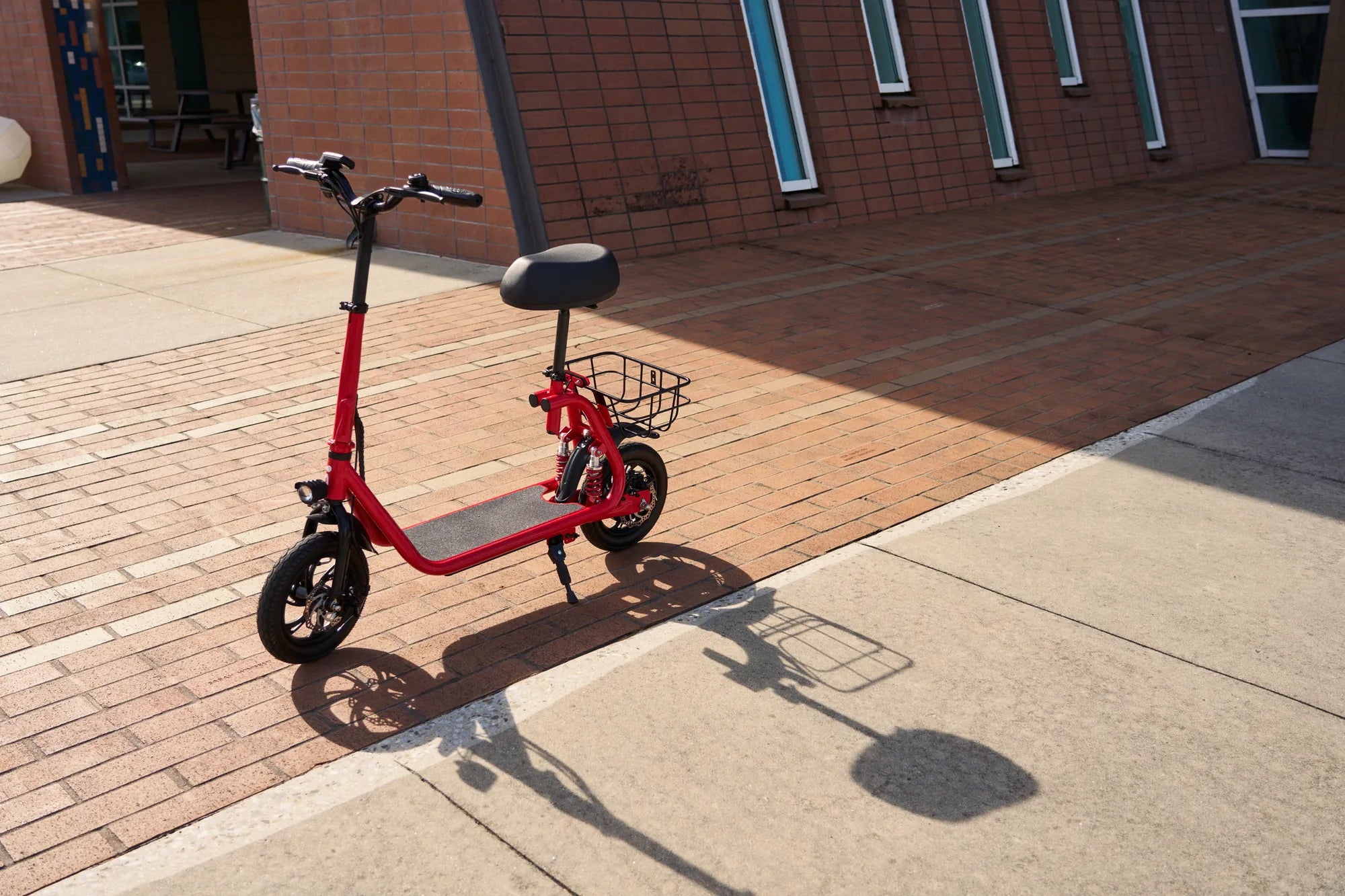
An electric scooter can be a fantastic next step for an 11-year-old girl who is already proficient on a kick scooter and understands basic road safety. It introduces the concept of responsible powered vehicle operation. The critical factor is choosing a model designed with young riders in mind. Essential safety features include a speed limiter, a smooth start throttle, and a robust braking system. Battery safety is non-negotiable; insist on models that use UL-certified battery packs, like those from Gyroor, which are tested for safety and longevity (over 500 charge cycles). The scooter should also be an appropriate weight—light enough for her to maneuver and carry if needed, but not so light that it feels unstable. A good electric scooter for this age group empowers longer rides to a friend's house or around the neighborhood while reinforcing the importance of controlled speed.
Off-Road/All-Terrain Models: For the Adventurous Rider
Is your 11-year-old girl an adventurer who wants to ride on gravel paths, grass fields, or packed dirt trails? If so, a standard sidewalk scooter won't suffice. Off-road or all-terrain scooters are built with specific features for rougher ground. These include larger, air-filled (pneumatic) tires that provide traction and absorb bumps, and often a front or dual suspension system to smooth out the ride. The frame is more robust to handle the extra stress. These scooters, whether kick or electric, are for responsible riders who always wear a helmet and preferably other protective gear, and who ride in appropriate, supervised settings. They open up new areas for exploration but come with the responsibility of handling more challenging terrain. This type is ideal for the active child with access to safe, off-pavement areas.
Critical Sizing and Comfort Considerations
A scooter that doesn't fit properly is difficult to control and can be discouraging to ride. While age is a starting point, the physical dimensions of the scooter relative to your child's height and strength are far more important. A well-fitted scooter promotes confidence and safe riding posture. We will examine the two most critical sizing factors: handlebar height and overall scooter weight, as well as the components that affect ride comfort over different surfaces.
Adjustable Handlebars and Overall Weight
Adjustable handlebars are a must for a growing 11-year-old. The handlebars should come up roughly to her waist or hip level when she is standing on the deck. This allows for an upright, comfortable riding posture with slightly bent elbows, giving her optimal control for steering. Handlebars that are too low force a hunched position, while those too high can make the scooter feel unwieldy. Look for a simple, tool-free adjustment mechanism. The overall weight of the scooter is equally crucial. An electric scooter for a child this age should ideally weigh between 20 and 30 pounds. She needs to be able to lift it slightly to go up a curb, carry it up a few porch steps, or load it into a car. A scooter that is too heavy becomes a chore to manage off the road, which reduces the likelihood she will use it regularly.
Tire Type and Suspension for a Smooth Ride
The choice of tires directly impacts comfort, traction, and maintenance. There are two main types: solid/honeycomb tires and air-filled (pneumatic) tires. Solid or honeycomb (airless) tires are virtually maintenance-free—they never go flat. They provide a decent ride on very smooth surfaces like pavement or indoor floors. Pneumatic tires, like those on a bicycle, offer superior shock absorption, making rides over cracks, bumps, or uneven sidewalks much smoother and more comfortable. They provide better grip, especially on wet pavement or loose dirt. The trade-off is that they require occasional air pressure checks and can potentially puncture. Some higher-end models include a suspension system (spring or hydraulic) to further absorb impacts. For general neighborhood use on paved surfaces, larger pneumatic tires (8-inch or larger) often offer the best blend of comfort and practicality for a young rider.
Parent's Checklist: Before You Buy
Before making a final decision, use this actionable checklist to ensure no critical detail is overlooked. This list consolidates the key safety, sizing, and quality points into a quick pre-purchase verification step.
- Verify Battery Certification: If buying electric, confirm the battery is UL-certified. This is a major safety benchmark that brands like Gyroor meet, indicating rigorous testing for fire and electrical safety.
- Check the IP Rating: Look for a water-resistance rating of at least IPX4, which protects against splashes from any direction. IPX5, found on many Gyroor models, means it can withstand low-pressure water jets, making it safe for riding through puddles or in light rain.
- Understand the Warranty: A comprehensive warranty signals manufacturer confidence. Look for at least a 1-year warranty on the frame, motor, and battery. This protects your investment against defects.
- Test the Fit: If possible, have your child stand on the deck. Can she reach the handlebars comfortably? Can she easily operate the brake levers? Can she lift the scooter's weight?
- Budget for Safety Gear: The scooter cost must include a high-quality, properly fitted bicycle helmet. Knee and elbow pads are highly recommended, especially for beginners or those using electric or off-road models.
- Review Speed Settings: For electric models, ensure it has a beginner or speed-limited mode that you, as a parent, can control or set with a PIN.
Scooter Type Comparison Table
| Type | Best For | Key Features | Safety Priority | Maintenance Level |
|---|---|---|---|---|
| Traditional Kick | Beginners, smooth pavement, short trips, learning fundamentals. | Lightweight, simple design, low cost, no battery. | Mastering balance & control; wearing a helmet. | Very Low (check bolts, wheel bearings). |
| Electric Scooter | Experienced riders, longer neighborhood rides, responsible power use. | UL-certified battery, speed limiter, hand & foot brakes, often foldable. | Controlled acceleration, reliable braking, battery safety. | Medium (tire pressure, battery care, brake checks). |
| Off-Road/All-Terrain | Adventurous riders, trails, grass, uneven surfaces. | Pneumatic tires, suspension, reinforced frame, higher ground clearance. | Full protective gear, supervised terrain, advanced control. | Medium-High (tire punctures, suspension, more complex parts). |
FAQ: Your Top Questions, Answered
What is a good max speed for an 11-year-old?
A maximum speed of 10 to 15 mph is widely considered appropriate and safe for most 11-year-olds. Starting at the lower end of this range (or using a beginner mode capped at 7-9 mph) is highly recommended to build confidence and skill before accessing higher speeds. The key is controlled, predictable acceleration, not just the top speed number.
Is an electric scooter safe for my child?
Yes, when chosen and used responsibly. Safety depends on selecting a model with age-appropriate features: a speed limiter, smooth throttle response, reliable brakes, and a UL-certified battery. It also requires proper training on its use, insisting on helmet use every time, and setting clear rules about where and when she can ride. An electric scooter is safest for a child who has already mastered a non-powered kick scooter.
How important is water resistance?
Very important for real-world use. An IPX4 rating or higher means the scooter can handle wet pavement, puddles, and light rain without immediate damage to electrical components. This adds durability and peace of mind. For example, Gyroor models with IPX5 ratings are designed to withstand more than just accidental splashes, making them reliable for typical riding conditions.
What maintenance does it require?
Regular maintenance ensures safety and longevity. For all types: periodically check and tighten bolts and fasteners, inspect brakes for wear, and ensure wheels spin freely. For electric models: follow battery charging guidelines (avoid overcharging), check tire pressure if using pneumatic tires, and keep the scooter clean and dry when not in use. Store it in a cool, dry place.
Can she ride it to school?
This depends entirely on your local school district policies, the safety of the route (sidewalks vs. roads, traffic density), and your child's maturity and skill. Many schools do not allow scooters, especially electric ones, on campus for liability and safety reasons. Always check with the school first. If permitted, it can be a great way to commute, but reinforce strict adherence to pedestrian rules and safe storage.
Conclusion: Empowering Her Journey on Two Wheels
The perfect scooter for your 11-year-old girl successfully balances safety, proper fit, and pure fun. It is a vehicle for independence, physical activity, and joyful exploration. By prioritizing certified safety features like UL-approved batteries, reliable braking systems, and adjustable components, you invest in her confidence and your peace of mind. Start with the fundamentals if she's new to riding, and choose a reputable brand that stands behind its products with solid warranties and proven customer trust. The right scooter isn't just a purchase; it's an invitation to adventure. Ready to explore models that combine these essential safety features with sleek, fun designs? Browse the full Gyroor collection at gyroorboard.com to find a scooter engineered for performance, safety, and reliability, trusted by over 100,000 riders.
Best Mileage Scooter in India: The Ultimate Guide to Maximum Range
What is a Drift Trike: The Complete Guide to Thrilling Three-Wheel Slides