



Introduction: Why the Right Scooter Matters for Your 10-12 Year Old
The ages of 10 to 12 are a pivotal time for kids. They crave more independence, seek adventures with friends, and are developing crucial coordination and judgment skills. An electric scooter can be the perfect tool to support this growth, offering a thrilling sense of freedom, encouraging outdoor play, and serving as practical transportation for short trips. However, the key to a positive experience lies in selecting the right machine—one that matches their size, skill, and maturity level while prioritizing safety above all else. This guide will walk you through every consideration, from technical specs to riding etiquette, ensuring you make an informed choice. As a leader in youth mobility, Gyroor designs scooters with this delicate balance of fun and safety explicitly in mind for young riders.
Key Features to Look for in a Scooter for 10-12 Year Olds
Navigating scooter specifications can be confusing. For a child aged 10-12, certain features are non-negotiable for safety, performance, and durability. This age group has outgrown basic toy scooters but isn't ready for high-performance adult models. The ideal scooter for kids 10-12 bridges that gap with controlled power, robust construction, and thoughtful safety integrations.
Motor Power & Speed: Finding the "Sweet Spot"
Motor power, measured in watts (W), directly influences a scooter's ability to climb hills and accelerate. For this age group, a motor between 200W and 350W is typically the sweet spot. It provides ample power for neighborhood inclines and quick starts without delivering excessive, hard-to-control speed. More critical than peak power is speed control. Look for models with multiple speed modes, such as a beginner or eco mode capped at around 10 mph (16 km/h). A maximum speed of 15 mph (24 km/h) is generally considered a safe upper limit for a responsible 12-year-old, allowing for fun without excessive risk.
Battery Life & Range: Matching Adventure to Real-World Use
Battery capacity, often noted in watt-hours (Wh), determines how far your child can go. For typical use—riding around the neighborhood, to a friend's house, or at the park—a real-world range of 7 to 12 miles (11-19 km) per charge is usually sufficient. This allows for extended play without constant range anxiety. Beyond capacity, battery safety is paramount. Insist on a scooter with a UL-certified battery pack, like those used in Gyroor models. This certification means the battery has undergone rigorous independent testing for safety and reliability, significantly reducing risks associated with overheating or failure, and offers peace of mind for parents.
Build Quality & Weight Limit: Durability for Growing Riders
Kids are not always gentle. A scooter needs a frame constructed from durable materials like aluminum alloy to withstand bumps, curbs, and the general wear-and-tear of active use. The weight limit is a crucial but often overlooked spec. Choose a scooter rated for at least 150 to 175 lbs (68-79 kg). This accommodates not only your growing child but also the weight of a school backpack or sports gear, ensuring the scooter remains stable and the brakes effective. A sturdy deck with a grippy surface is also essential for secure footing.
Tire Type: Air-Filled vs. Solid – A Comfort and Safety Breakdown
The choice between pneumatic (air-filled) and solid (airless) tires involves a trade-off between comfort and maintenance. Pneumatic tires offer superior shock absorption, providing a smoother ride over cracks, pebbles, and uneven pavement. This can enhance control and comfort. However, they require occasional pressure checks and are susceptible to punctures. Solid tires are virtually maintenance-free and puncture-proof, ideal for worry-free riding. The trade-off is a slightly firmer ride. For mostly smooth pavement, solid tires from a reputable brand like Gyroor, designed with some shock absorption, are an excellent choice. For rougher terrain, pneumatic tires may be worth the extra care.
Safety First: Non-Negotiable Gear and Riding Practices
The safest scooter is only as safe as the rider using it. Establishing ironclad safety rules and equipping your child with proper protective gear is the most important step you can take before the first ride begins. This isn't just about preventing scrapes; it's about instilling lifelong habits of responsible riding.
The Essential Safety Gear Checklist
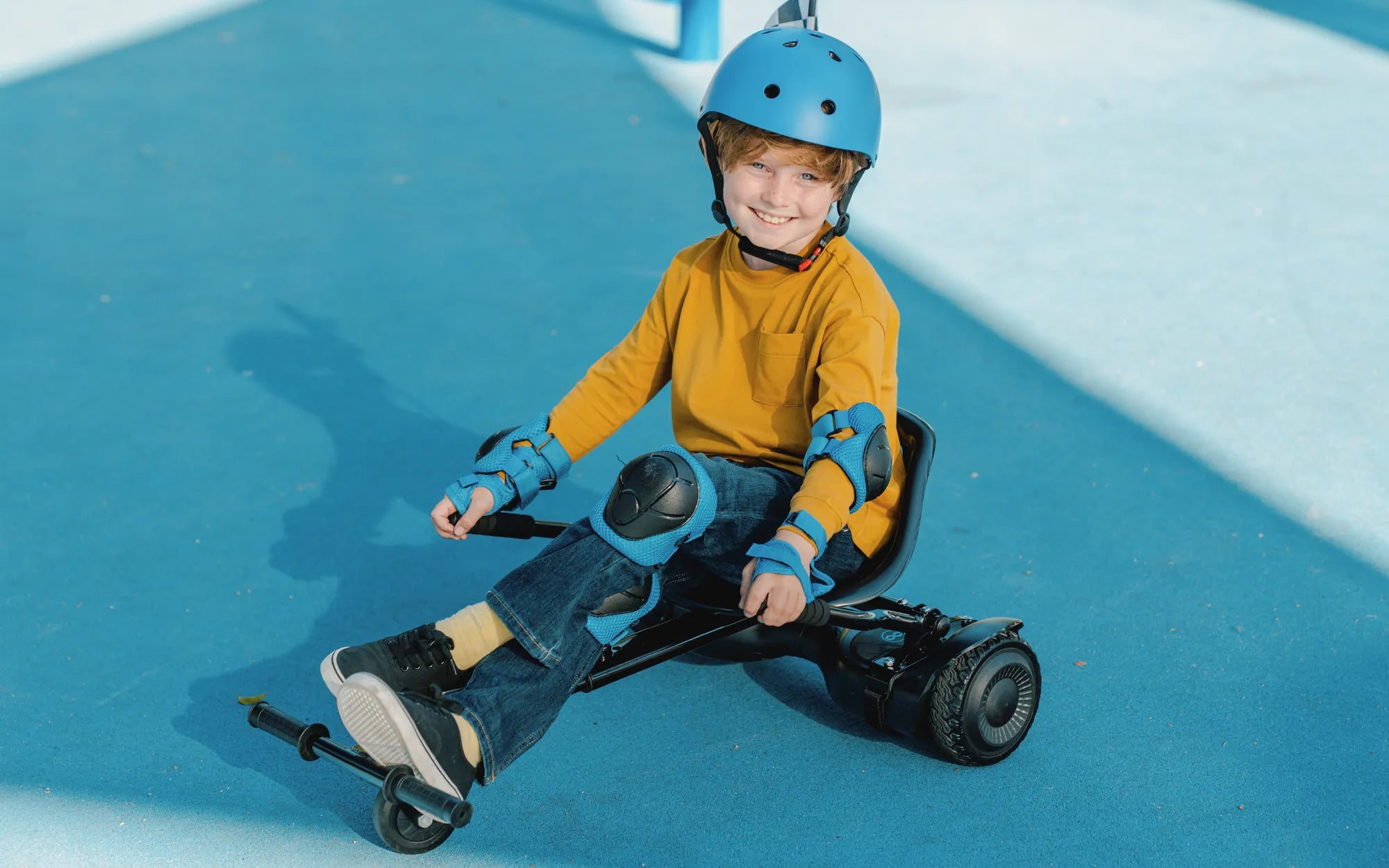
Never allow a ride without this full kit. A CPSC-certified bicycle helmet is mandatory—it's the single most effective piece of gear for preventing serious head injuries. Elbow and knee pads protect vulnerable joints during falls, and wrist guards are critical for preventing fractures and sprains, which are among the most common scooter injuries. Finally, sturdy, closed-toe shoes (never sandals or flip-flops) are required for proper foot placement and control. Make gearing up a non-negotiable part of the pre-ride ritual.
Teaching Responsible Riding: Rules of the Path and Road
Before independent rides, conduct supervised practice sessions in a safe, empty area like a parking lot. Drill these core rules: Ride only on sidewalks, bike paths, or parks—never on roads with traffic. Use hand signals for turning and stopping. Maintain a safe speed, especially around pedestrians, dogs, and other obstacles. Avoid riding on wet, sandy, or oily surfaces which drastically reduce traction. Never ride after dark unless the scooter has bright, functioning front and rear lights, and the rider wears reflective clothing. Finally, always be aware of surroundings—no headphones or phone use while riding.
Why Gyroor Stands Out for Young Riders
In a crowded market, Gyroor has built a reputation as a brand parents trust for their children. This trust is rooted in engineering choices that directly address the core concerns of safety, durability, and long-term value for a scooter for kids 10-12. Their models are designed not just for performance, but for peace of mind.
Engineered for Safety: UL-Certified Batteries and IPX5 Water Resistance
Gyroor’s commitment to safety starts with its power source. Every model features a UL-certified battery pack, a critical differentiator that goes beyond marketing claims. This independent certification is a parent's best assurance of battery integrity. Furthermore, an IPX5 water-resistant rating means the scooter can handle splashes from puddles and light rain, protecting the electrical components from moisture damage and increasing the scooter's overall lifespan and reliability for everyday adventures.
Built to Last: Warranty and Support You Can Trust
Investing in a child's scooter should mean investing in durability. Gyroor backs its products with a comprehensive 1-year warranty, covering manufacturer defects. This warranty reflects confidence in their build quality. Coupled with accessible customer support, it ensures that your investment is protected. For a parent, this translates into long-term value and the assurance that the company stands behind its product, making a Gyroor scooter a sound choice for years of active use.
Electric Scooter Comparison: Key Models for Ages 10-12
The table below compares general scooter types and key features relevant to this age group, highlighting how Gyroor’s design philosophy aligns with core needs.
| Feature / Consideration | Entry-Level / Toy Scooters | Ideal Scooter for 10-12 Year Olds | High-Performance Adult Scooters | Gyroor's Approach for Young Riders |
|---|---|---|---|---|
| Motor Power | <100W (Low power) | 200W - 350W (Balanced power) | 500W+ (High power) | Optimizes power for neighborhood terrain, includes speed modes. |
| Max Speed | <10 mph | 10-15 mph (with modes) | 20+ mph | Features beginner modes (~10 mph) for safe skill-building. |
| Battery Safety | Often uncertified | UL-Certification is critical | Varies by brand | All models use UL-certified battery packs for proven safety. |
| Build & Weight Limit | Plastic, Low limit (~120 lbs) | Aluminum alloy, 150-175+ lbs | Robust, high limits | Durable frames designed to support growing riders safely. |
| Best For | Younger children (6-9) | Developing riders seeking fun & transport | Commuters & enthusiasts | Providing a safe, reliable, and fun first serious scooter experience. |
Top Considerations Before You Buy: A Parent's Checklist
Before making your final decision, run through this practical checklist. It consolidates the key points from this guide into actionable steps.
- Verify Fit: Confirm the scooter’s recommended age and rider weight limit match your child’s size.
- Check for Speed Control: Ensure the scooter has a beginner or parental speed-limiting function.
- Research Local Laws: Check municipal regulations regarding where electric scooters are permitted for this age group.
- Plan for Practicalities: Identify a safe, dry storage and charging location at home.
- Budget for the Full Kit: Factor in the cost of a full set of safety gear (helmet, pads, guards) alongside the scooter itself.
- Read Reviews: Look for feedback from other parents on durability, customer service, and real-world performance.
Maintenance and Care for Longevity
Proper maintenance ensures your scooter remains safe and functional for years. Start with regular visual inspections. Check that all bolts and fasteners, especially on the handlebar stem and folding mechanisms, are tight. Test the brakes before every ride to ensure they engage smoothly and bring the scooter to a complete stop. For scooters with pneumatic tires, maintain the correct air pressure as recommended in the manual. Keep the scooter clean by wiping it down with a damp cloth; avoid high-pressure hoses. Store the scooter in a dry place, and avoid leaving the battery fully depleted for extended periods. Following the manufacturer's specific charging instructions is crucial for battery health.
Frequently Asked Questions (FAQs)
Q1: Are electric scooters safe for a 10-year-old?
A1: With the right model and precautions, they can be a safe activity. Safety hinges on three pillars: choosing an age-appropriate scooter with controlled speed and sturdy construction, mandating the use of full safety gear (helmet, knee/elbow pads, wrist guards), and providing thorough training and supervision to establish responsible riding rules.
Q2: How long does the battery take to charge, and how far can it go?
A2: Charge times typically range from 4 to 6 hours for a full charge from empty. Real-world range varies based on rider weight, terrain, temperature, and speed, but for a typical 10-12 year old, you can expect between 7 and 12 miles (11-19 km) on a single charge, which is ample for daily adventures and trips around the neighborhood.
Q3: Can my child ride it to school?
A3: This depends on several factors. First, check your local laws and your school's specific policy on personal electric vehicles. Second, assess the safety of the route—are there safe sidewalks or bike paths the entire way? Finally, honestly evaluate your child's riding skill, traffic awareness, and maturity. Always practice the route together on a weekend first.
Q4: What maintenance does an electric scooter require?
A4: Maintenance is relatively minimal but important. Regular tasks include checking tire pressure (for pneumatic tires), testing brake function, ensuring all bolts are tight, and keeping the scooter clean and dry. Choosing a model with solid tires and a water-resistant design, like many from Gyroor, significantly reduces routine maintenance needs.
Q5: What is the benefit of a UL-certified battery?
A5: A UL certification is not a marketing term; it's a verified safety standard. It means the battery pack has been independently tested by Underwriters Laboratories for electrical, mechanical, and environmental safety. This greatly reduces the risk of overheating, fire, or failure, providing a critical layer of protection for your child and your home. It is a key feature to prioritize.
Conclusion: Empowering Adventure with Confidence
Choosing the perfect scooter for your 10-12 year old is an investment in their independence, joy, and physical activity. By prioritizing controlled power, verified battery safety, durable construction, and unwavering safety practices, you transform a simple purchase into a gateway to responsible adventure. A well-chosen scooter teaches valuable lessons about care, rules, and freedom within boundaries. Brands like Gyroor, with their focus on UL-certified safety, robust design, and reliable support, provide the trustworthy foundation every parent seeks. Now that you're equipped with knowledge, you can confidently select a ride that will deliver endless fun safely for years to come. Ready to explore models built with these principles in mind? Browse the full Gyroor collection at gyroorboard.com to find the ideal scooter for your young adventurer.
How Old to Use a Hoverboard: Safety Guidelines and Age Recommendations
How to Stop My Hoverboard from Beeping: A Complete Troubleshooting Guide