

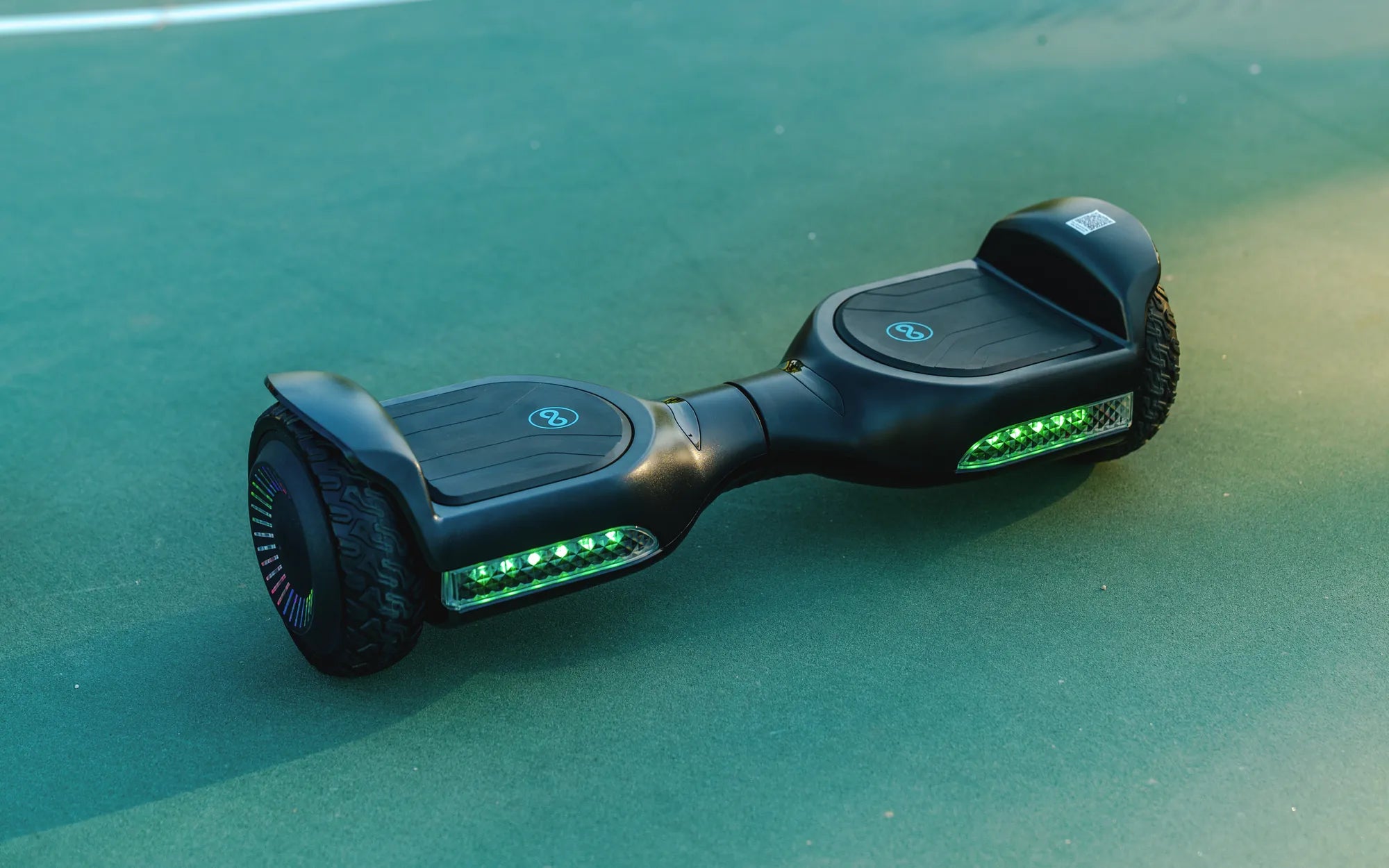
Introduction to Self-Balancing Scooters
Forget bulky vehicles and crowded buses. The scooter self balancing scooter is redefining how we navigate dense city streets. These compact, two-wheeled personal transporters use advanced gyroscopic technology to provide an intuitive, hands-free riding experience, moving from a novelty item to a legitimate urban mobility tool.
At its core, a self-balancing scooter is an electric vehicle with two wheels positioned on either side of a platform. The rider stands on footpads, and the device uses internal sensors and motors to automatically maintain balance forward, backward, and while turning. This ingenious design solves a critical urban problem: the last-mile gap between public transit stops and final destinations.
The evolution has been rapid. Early models were often unreliable, but today's versions from reputable brands offer robust performance, enhanced safety, and practical range. The scooter self balancing scooter is now a common sight on college campuses, in business districts, and in sprawling suburbs, offering a silent, emission-free alternative for short trips.
This article will dissect the technology, practical benefits, and future potential of this innovative vehicle. We will also compare it to other electric options and provide a comprehensive guide for new riders, demonstrating why the self-balancing scooter is carving out a permanent place in the urban transport ecosystem.
The Technology Behind the Ride: How Self-Balancing Works
The magic of a scooter self balancing scooter lies in its sophisticated sensor and control system. It’s not about the rider’s skill to balance, but the machine’s ability to do it for you. This is achieved through a combination of gyroscopes, accelerometers, and powerful microprocessors working in real-time.
Multiple gyroscopic sensors constantly measure the tilt angle and orientation of the platform. When you lean forward, these sensors detect the minute change in angle and send data to the central logic board. The processor calculates the necessary adjustment and commands the electric motors in each wheel to spin at precisely the speed needed to move the platform back underneath your center of gravity.
This creates a seamless feedback loop: lean to go forward, lean back to slow down or reverse, and apply subtle pressure with your toes or heels to turn. The motors make micro-adjustments hundreds of times per second, creating the sensation of effortless gliding. The battery, typically a high-density lithium-ion pack, provides the sustained power needed for these constant corrections and propulsion.
This hands-free control paradigm is what sets the scooter self balancing scooter apart from kick scooters or e-bikes. It creates a uniquely intuitive and immersive riding experience, where your body’s natural movements directly translate into motion, requiring no handles, throttles, or brakes in the traditional sense.
Why Choose a Self-Balancing Scooter for Your Commute?
For urban commuters, the advantages of a scooter self balancing scooter are compelling and multifaceted. First is unparalleled portability. Weighing between 20-30 pounds, most models are lightweight enough to carry onto a bus or train, under a desk, or into a coffee shop, eliminating theft and parking concerns entirely.
The economic benefit is significant. With zero fuel costs and minimal electricity use for charging, the operating cost is a fraction of a car, ride-share, or even monthly transit passes. The initial investment is often recouped within months for a regular commuter. Furthermore, it produces no tailpipe emissions, contributing directly to cleaner air and reduced urban noise pollution.
It excels at solving the “last-mile” dilemma. A scooter self balancing scooter can easily cover the 1-3 mile radius around a transit station that is often too far to walk and too short to drive efficiently. It navigates crowded sidewalks and pedestrian zones more gracefully than a bicycle and parks in a footprint smaller than a backpack.
Beyond practicality, it adds an element of enjoyment to the daily commute. The smooth, gliding motion is often described as fun and freeing, turning a mundane chore into a pleasant experience. This combination of efficiency, economy, and enjoyment solidifies its role as a serious urban transport tool.
Gyroor's Approach: Safety and Reliability in Self-Balancing
Consumer confidence in the scooter self balancing scooter category was initially shaken by safety incidents. Gyroor, a leading electric scooter and e-bike brand trusted by over 100,000 riders, rebuilt this trust through engineering focused on core safety pillars. Their approach demonstrates how mature brands are ensuring reliability.
The foundation is battery safety. Every Gyroor self-balancing scooter uses UL-certified battery packs. These cells undergo rigorous testing for stability, charge cycles (rated for 500+ cycles), and overload protection, virtually eliminating risks of thermal runaway or fire that plagued early, uncertified models. This certification is a non-negotiable standard for safe operation.
Next is durability for real-world conditions. An IPX5 water-resistant rating means the scooter’s electronics are protected against water jets from any direction. This makes it a puddle-proof commuter, capable of handling wet sidewalks and light rain without compromising function or safety, a critical feature for daily urban use.
Finally, Gyroor backs its products with a reliable 1-year warranty and dedicated U.S.-based customer support. This commitment provides peace of mind, ensuring that riders have access to parts and service. This triad—certified batteries, weather-resistant design, and strong warranty support—defines the modern, trustworthy scooter self balancing scooter.
Comparing Mobility Options: Scooter vs. E-Bike vs. Self-Balancing Scooter
Choosing the right electric personal transporter depends on your specific needs, route, and lifestyle. Here is a data-driven comparison to help you decide between an electric kick scooter, an electric bicycle, and a scooter self balancing scooter.
| Feature | Electric Kick Scooter | Electric Bicycle | Scooter Self Balancing Scooter |
|---|---|---|---|
| Portability (Weight/Size) | Moderate (25-35 lbs), often foldable | Low (45-70 lbs), bulky, rarely foldable | High (20-30 lbs), most compact footprint |
| Speed & Range | High (15-25 mph, 15-40 mi) | High (20-28 mph, 30-60 mi) | Moderate (10-12 mph, 10-15 mi) |
| Learning Curve | Low (similar to regular scooter) | Very Low (like a bicycle) | Moderate (30-60 min practice) |
| Terrain Handling | Good on pavement, struggles with bumps | Excellent, handles hills, some off-road | Fair, best on smooth, flat surfaces |
| Storage & Parking | Good (folds, fits indoors) | Poor (requires bike rack/lock) | Excellent (fits under desk) |
| Price Point | $$ | $$$ | $$ |
An electric kick scooter is ideal for longer last-mile trips where speed and range are priorities, and you can handle a standing ride. An electric bicycle is a full car replacement for longer commutes, hills, and carrying cargo.
The scooter self balancing scooter is the undisputed champion of ultra-portability and space efficiency. It’s the best choice for multimodal commuters who need to carry their vehicle frequently, for navigating extremely crowded pedestrian areas, and for those who value a unique, hands-free riding experience over top speed. Its compact nature is its superpower.
Mastering Your Self-Balancing Scooter: Tips for New Riders
Starting with a scooter self balancing scooter is easier than it looks, but proper technique is key. First, gear up. Always wear a helmet. Wrist guards, knee pads, and elbow pads are highly recommended during the learning phase. Choose a flat, open, smooth practice area like an empty parking lot or tennis court.
Mounting is the first skill. Place the scooter on level ground. Use a wall or railing for support. Place one foot firmly on a footpad, ensuring the scooter is level before quickly but smoothly stepping up with your second foot. Keep your feet wide, near the wheels, and your body relaxed. Look forward, not down.
Finding balance comes next. With support, practice leaning slightly forward to move and back to stop. The key is subtlety—think about shifting your weight from your ankles, not your waist. To turn, apply gentle pressure forward with the toes of one foot while easing pressure on the heel of the same foot. Dismount by stepping backwards off the platform, one foot at a time.
Once moving, practice riding etiquette. On shared paths, ride at a walking pace near pedestrians, use a bell or your voice to alert others, and always yield right-of-way. Obey local laws, which often restrict riding on roads and mandate sidewalk use at slow speeds. Regular practice for 30 minutes will build the muscle memory for confident control.
The Road Ahead: The Future of Self-Balancing Personal Transport
The scooter self balancing scooter is not an endpoint but a stepping stone in the evolution of urban mobility. Future iterations will likely integrate deeply with smart city infrastructure. Imagine dedicated micro-mobility lanes with wireless charging strips embedded in the pavement, or connectivity with traffic signals to optimize flow.
Advancements in artificial intelligence and sensor suites will enhance safety and capability. Future models could feature LiDAR or camera-based obstacle avoidance, automatic stability correction for uneven surfaces, and even follow-me modes for hands-free cargo carrying. Battery technology will continue to improve, offering longer ranges from smaller, safer packs.
Their role in multi-modal transit networks will expand. Transportation hubs will feature secure charging lockers for self-balancing scooters and e-scooters, seamlessly connecting train, bus, and personal last-mile transport. This integrated system reduces reliance on private cars for urban travel.
The core concept—maximizing personal mobility while minimizing spatial footprint and environmental impact—aligns perfectly with sustainable urban planning goals. The scooter self balancing scooter, in increasingly sophisticated forms, will remain a vital, agile layer in the complex ecosystem of future city transport.
Frequently Asked Questions (FAQ)
Is a self-balancing scooter hard to learn?
Most adults can learn the basics within 30 to 60 minutes of dedicated practice in a safe area. The learning curve involves trusting the device to balance for you. Starting with support from a wall or friend is crucial. Children often learn even faster due to a lower center of gravity.
How far and how fast can they go?
Performance varies by model. A typical commuter-grade scooter self balancing scooter has a top speed of 10-12 mph (16-19 km/h) and a range of 10-15 miles (16-24 km) on a single charge. Higher-performance models may reach 15 mph and 20 miles, but this impacts weight and price. Rider weight, terrain, and temperature also affect range.
Are they legal on roads and sidewalks?
Laws vary significantly by city, state, and country. In many U.S. jurisdictions, they are classified similarly to electric kick scooters and are permitted on sidewalks and bike paths at low speeds, but prohibited on roads. It is essential to check your specific local regulations before riding in public spaces.
How do I maintain my self-balancing scooter?
Basic maintenance ensures longevity. Keep tire pressure at the recommended PSI (check weekly) for optimal battery life and ride comfort. Wipe down the body with a damp cloth; avoid high-pressure water jets. Store and charge in a cool, dry place. Avoid draining the battery to 0%; charge it after use and periodically if stored long-term.
What is the weight limit for riders?
Most models support riders between 44 lbs (20 kg) and 220-265 lbs (100-120 kg). Always check the manufacturer’s specified maximum load capacity. Exceeding this limit can damage the motors, strain the battery, and compromise the gyroscopic system’s ability to balance safely.
Embracing a Nimble, Efficient Commute
The scooter self balancing scooter has matured from a trendy gadget into a legitimate, efficient, and sustainable urban transport solution. Its value proposition is clear: extreme portability, zero operational emissions, and a cost-effective answer to the last-mile challenge. By mastering intuitive gyroscopic technology, it offers a uniquely engaging way to navigate the urban landscape.
As with any vehicle, choosing a model from a brand that prioritizes certified safety features, durable construction, and reliable customer support is paramount for a positive and secure experience. The future of urban mobility is multi-modal, and the self-balancing scooter is poised to be a key player in that ecosystem, promoting less congested, quieter, and more livable cities.
Ready to experience this future of mobility? Explore a range of engineered, safety-focused models designed for real-world commuting. Browse the full Gyroor collection at gyroorboard.com to find the perfect scooter self balancing scooter for your journey.
Hoverboard vs Scooter: Which Personal Electric Ride is Right for You?
Self Balancing Scooter New York: The Ultimate Urban Commuting Experience