



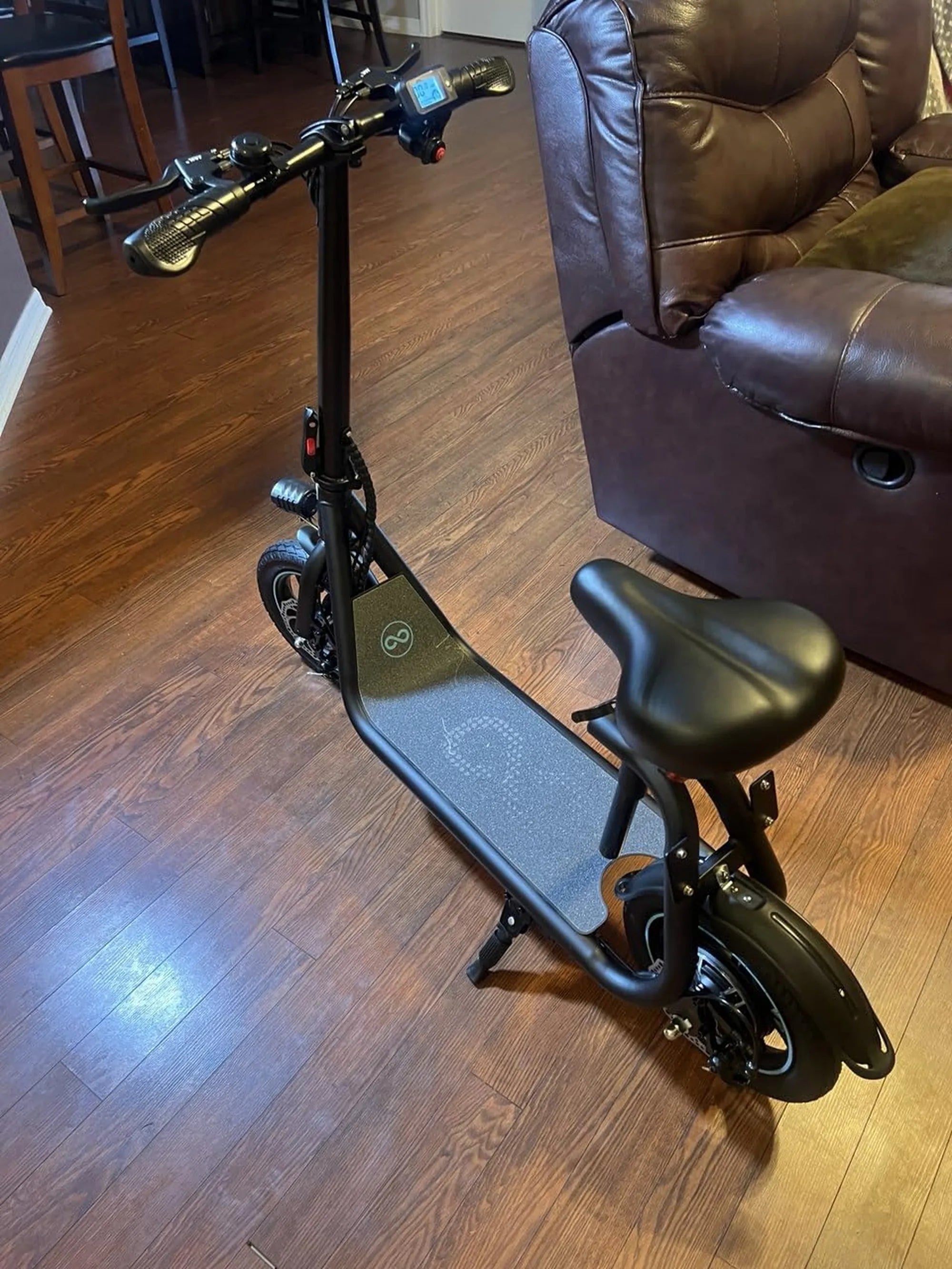
Introduction to Scooter Tire Sizes
Your scooter's tires are its only point of contact with the ground, making their size a fundamental engineering choice that dictates nearly every aspect of your ride. Understanding scooter tire sizes is not just about a number on a spec sheet; it's about unlocking the right balance of stability, comfort, acceleration, and safety for your specific needs. For urban commuters navigating potholes or weekend explorers hitting light trails, the wrong tire size can turn a fun ride into a frustrating or even hazardous experience.
This guide will decode the numbers, explain the performance trade-offs, and provide a clear framework for selection. We'll move beyond basic definitions to explore how tire dimensions interact with motor power, battery range, and suspension systems. Whether you're evaluating a new purchase or considering an upgrade, this knowledge is critical.
You will learn to interpret standard size notations, compare the ride characteristics of common diameters, and understand the ongoing debate between air-filled and solid tires. We'll also integrate essential maintenance practices to ensure your tires—and by extension, your scooter—deliver maximum lifespan and reliability. Let's dive into the details that form the foundation of every great ride.
Decoding the Numbers: How to Read Scooter Tire Sizes
Scooter tire sizes are typically expressed in an intuitive format: Diameter x Width. You'll most commonly see this in inches, such as 10x2.125. The first number (10) represents the overall outer diameter of the tire in inches. The second number (2.125) indicates the width of the tire, also in inches. This measurement is taken from sidewall to sidewall when the tire is properly inflated and mounted.
Some manufacturers may use a fractional notation (e.g., 10x2.0) or a metric equivalent (e.g., 254x54 mm, where 254mm is ~10 inches). The principle remains the same. It's crucial to note that the diameter measurement directly corresponds to the rim size the tire is designed to fit. A 10-inch tire requires a 10-inch rim; they are not interchangeable with an 8.5-inch or 11-inch rim.
Think of it like shoes for your scooter. The diameter is the shoe size—it must match the wheel's "foot." The width is like the shoe's fit—wider tires offer a larger contact patch, akin to a wider base on a pair of boots. This simple two-number code holds the key to predicting handling, comfort, and efficiency before you even step on the deck.
Common Electric Scooter Tire Sizes and Their Applications
The electric scooter market has standardized around a few key diameters, each catering to distinct rider priorities. The 8.5-inch tire is the champion of ultra-portability. Commonly found on compact, last-mile commuter models, its small size allows for a lightweight and highly foldable design. The trade-off is a firmer ride and less stability over bumps compared to larger options.
The 10-inch tire is the gold standard for urban commuting, striking an excellent balance. It offers significantly improved stability and shock absorption over 8.5-inch wheels while maintaining a manageable overall scooter size and weight. This size provides a confident feel on city streets, capable of handling pavement cracks and minor imperfections with more grace. Many performance-focused commuter scooters, including several in the Gyroor lineup, utilize this versatile size.
For riders seeking enhanced off-road capability or maximum comfort, 11-inch tires are a popular upgrade. The larger diameter rolls over obstacles more easily, provides a greater air volume for cushioning, and often allows for more aggressive tread patterns. Some advanced models even feature 11-inch pneumatic tires with robust treads designed for light trail use, offering a completely different riding experience from pure pavement scooters.
The Performance Impact: How Tire Size Affects Your Ride
The physics of tire size directly translate to tangible riding characteristics. A larger diameter tire has a greater circumference, meaning it covers more ground per revolution than a smaller tire. This impacts acceleration, top speed, and range. A smaller tire can feel "zippier" off the line because the motor has less rotational mass to overcome, but it may limit top speed as the motor reaches its maximum RPMs sooner.
Conversely, a larger tire can potentially achieve a higher top speed but may require more torque from the motor to accelerate, which can impact battery efficiency under hard acceleration. Stability is profoundly affected by diameter and width. A larger contact patch (wider tire) and a longer wheelbase (often correlated with larger wheels) increase lateral stability, making the scooter feel more planted during turns and at higher speeds.
Comfort is primarily a function of the tire's ability to absorb impacts. Larger pneumatic (air-filled) tires act as a primary suspension system. The increased air volume allows the tire to deform over bumps, absorbing energy that would otherwise be transmitted to the deck and the rider. This makes a dramatic difference in ride quality on imperfect surfaces. The following table summarizes the key performance trade-offs.
| Tire Size | Primary Use Case | Stability | Comfort | Portability |
|---|---|---|---|---|
| 8.5" | Ultra-Compact Commuting | Good | Fair (firm ride) | Excellent |
| 10" | Balanced Urban Commuting | Very Good | Good | Good |
| 11" | Comfort/ Light Off-Road | Excellent | Very Good | Fair |
Air-Filled (Pneumatic) vs. Solid (Airless) Tires
The choice between pneumatic and solid tires is a major decision point with significant implications. Pneumatic tires, filled with air, provide superior shock absorption and traction. The cushioning effect makes for a smoother, quieter ride and improves grip on varied surfaces, especially in wet conditions. The main drawback is maintenance: they require periodic pressure checks and are susceptible to punctures.
Solid or airless tires are typically made from a dense foam or rubber compound. Their chief advantage is zero maintenance regarding air pressure and absolute immunity to flats. This can be a major benefit for riders who prioritize convenience and want to eliminate the risk of being stranded by a puncture. However, the ride is noticeably harder, transmitting more vibration and impact to the rider and the scooter's frame.
Some manufacturers offer hybrid solutions, like honeycomb-structured airless tires, which aim to provide some of the cushioning of pneumatics without the air. When evaluating brands like Gyroor, you'll find models selected with specific tire types to match the intended use—often pairing reliable 10-inch pneumatic tires with robust construction for a comfortable, dependable commuter experience backed by a comprehensive 1-year warranty.
Choosing the Right Tire Size for Your Needs
Selecting the optimal scooter tire sizes is a practical exercise in matching specifications to your lifestyle. Start by defining your primary use case. Is this a scooter for a multi-modal commute that needs to be carried on a bus or train? An 8.5-inch model might be ideal. Is it for a dedicated 3-5 mile urban ride on paved bike lanes and streets? A 10-inch tire scooter likely offers the best daily balance.
Next, honestly assess your common terrain. Perfectly smooth bike paths have different demands than city streets with expansion joints, cracks, and occasional debris. Larger tires handle imperfect terrain better. Rider weight is another factor; heavier riders may find that larger, higher-volume pneumatic tires offer better support and durability over time, maintaining proper inflation and shape.
Finally, consider storage and portability. Where will the scooter live when not in use? A compact scooter with smaller tires is easier to fit under a desk or in a closet. There's no universally "best" size, only the best size for your specific combination of distance, terrain, storage space, and comfort requirements. Prioritizing these factors will lead you to a confident choice.
Why Gyroor Prioritizes Safety and Performance in Tire Design
At Gyroor, tire selection is an integral part of the vehicle's safety and performance architecture, not an afterthought. For commuter-focused models, the choice of widely-adopted 10-inch pneumatic tire sizes is deliberate. This size provides the stability necessary for safe operation at typical urban speeds (15-20 MPH) and the shock absorption to protect both the rider and the scooter's internal components from daily wear.
This engineering philosophy extends to the entire build. The reliability promised by Gyroor's 1-year warranty is supported by pairing these tires with UL-certified battery packs, tested for over 500 charge cycles, and IPX5 water-resistant designs. A flat tire or a harsh ride that leads to component fatigue undermines the overall value. By selecting proven tire sizes and types, Gyroor ensures that for over 100,000 riders, the foundation of the ride—where the rubber meets the road—is dependable.
Scooter Tire Maintenance & Safety Checklist
Proper tire maintenance is non-negotiable for safety and longevity. For pneumatic tires, check the air pressure (PSI) at least once a week using a dedicated bicycle or small tire gauge. Under-inflation is a leading cause of pinch flats ("snake bites") and increases rolling resistance, which drastically reduces battery range. Over-inflation makes the ride harsh and reduces traction.
Conduct a visual inspection before every ride. Look for embedded glass, nails, or deep cuts in the tread and sidewalls. Check for uneven wear patterns, which could indicate alignment issues or under-inflation. For solid tires, inspect for deep cracks, chunking of material, or significant wear that smooths out the tread pattern, as this reduces wet-weather grip.
Know when to replace. Pneumatic tires should be replaced when the tread is significantly worn, the sidewalls show cracks, or you experience frequent flats. Solid tires have a longer lifespan but will eventually harden and lose effectiveness. Proactive replacement is far cheaper and safer than dealing with a failure during a ride. This simple discipline maximizes your safety and protects your investment.
Frequently Asked Questions (FAQ)
Q: Can I put larger tires on my scooter to improve comfort?
A: Generally, no. Scooter frames, fenders, and motor clearance are designed for a specific tire diameter. Installing a larger tire can cause rubbing against the fender or fork, which is a safety hazard and can damage the scooter. Always use the tire size specified by the manufacturer.
Q: How often should I replace my scooter tires?
A> Replacement intervals vary widely based on tire type, riding style, and terrain. A pneumatic tire on daily city use might last 1,000-2,000 miles. Solid tires can last longer. The best indicators are visible wear (smooth tread, cracks) and performance issues (frequent flats, loss of grip). Inspect regularly.
Q: What's the best tire type for wet conditions?
A> Pneumatic tires with a good tread pattern are superior in wet conditions. The tread helps channel water away to maintain contact, and the rubber compound can offer better grip. Solid tires, especially worn ones, tend to have less grip on wet pavement. Always reduce speed and avoid sharp turns in the rain regardless of tire type.
Q: Do tire sizes affect battery range significantly?
A> Yes. Larger tires have higher rolling resistance and more mass to rotate, which can consume more energy, especially during acceleration. However, properly inflated pneumatic tires of any size have far less rolling resistance than under-inflated ones. Keeping your tires at the correct PSI is the single most important factor for maximizing range.
Q: Are tubeless tires available for scooters, and are they better?
A> Tubeless tires are becoming more common on higher-end scooters. They can be lighter and, when paired with sealant, can self-seal small punctures. However, they require a compatible rim and can be more difficult to install or repair on the roadside compared to a standard inner tube system. For most commuters, traditional tubed pneumatic tires offer a proven, serviceable solution.
The Foundation of a Great Ride
Your journey into scooter tire sizes reveals that this single specification is a linchpin for safety, efficiency, and enjoyment. From the zippy feel of a small-diameter wheel to the confident, rolling comfort of a larger pneumatic tire, your choice directly shapes every ride. Remember that the ideal size harmonizes with your daily reality—your commute distance, storage space, and local road conditions.
Informed riders prioritize quality components from the ground up. Trusted brands build their reputation by making deliberate engineering choices, like selecting tire sizes that balance performance with real-world durability. This attention to detail ensures that your scooter is a reliable partner for the long haul, not just a quick thrill.
Ready to experience a scooter engineered with this level of thoughtful detail? Explore models designed for real-world performance where every component, from the UL-certified battery to the tires, is chosen for your safety and satisfaction. Browse the full Gyroor collection at gyroorboard.com to find your perfect ride.
27 Speed Mountain Bike: The Complete Guide to 3x9 Drivetrains
Best E Bike for 300 lb Man: A 2024 Heavy-Duty Buyer's Guide