



Introduction to Scooter Tricks: From Basics to Pro
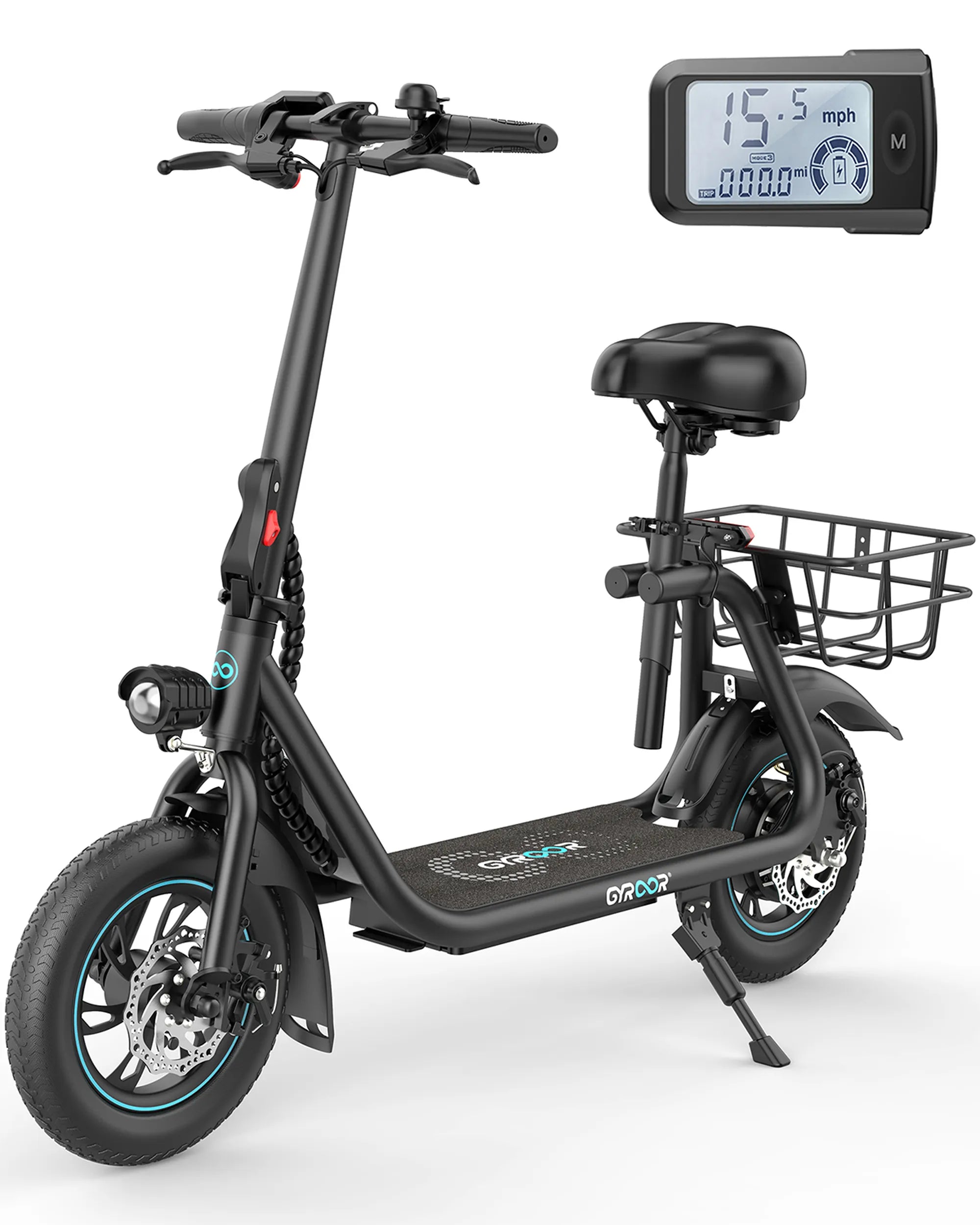
Mastering a comprehensive scooter tricks list transforms your ride from a simple commute into an expressive sport. This progression builds core strength, enhances balance, and unlocks a new dimension of fun, whether you're on a sturdy commuter model or a dedicated trick scooter. For riders of brands like Gyroor, known for durable, IPX5 water-resistant electric scooters trusted by over 100,000 riders, learning tricks can add skillful flair to urban mobility. This guide provides a structured, safety-first pathway through every major trick category, designed for systematic learning and steady improvement.
You will learn a complete scooter tricks list, starting with the absolute fundamentals of balance and control. We will detail the mechanics of foundational moves, intermediate aerial maneuvers, and advanced pro-level techniques. Each section integrates critical safety advice, practice drills, and equipment insights. The goal is to offer a clear, factual roadmap that helps you progress confidently while minimizing risk, turning the scooter tricks list from an intimidating catalog into an achievable series of milestones.
Essential Safety Gear and Scooter Setup
Before attempting any item on a scooter tricks list, proper safety preparation is non-negotiable. A fall from a stationary manual or a failed bunny hop can result in serious injury without adequate protection. This foundational step is the most important trick you will ever learn.
Mandatory protective gear includes a certified multi-impact helmet, knee pads, elbow pads, and durable gloves. Wrist guards are also highly recommended for beginners learning to bail. This gear should be worn for every practice session, regardless of how simple the trick seems. A reliable scooter setup is equally crucial. Before each session, check that all bolts—especially those in the clamp, headset, and wheels—are tightened to the manufacturer's specification. Inspect brakes for full function and tires for adequate pressure and absence of wear.
For riders using electric models for foundational practice, such as those from Gyroor with their UL-certified battery systems, ensure the electrical components are secure and the scooter is in good working order. However, for dedicated, repeated trick practice involving impacts and crashes, a non-electric, reinforced trick scooter is strongly advised to avoid damaging the motor, battery, or wiring, which are covered by Gyroor's comprehensive 1-year warranty for standard use.
Foundational Tricks: Building Your Core Skills
The first tier of any scooter tricks list consists of fundamental maneuvers that teach scooter control, balance, and body coordination. Mastery here is essential for all future progress. Practice these on flat, smooth pavement like an empty parking lot.
The Manual (Wheelie)
The manual involves lifting the front wheel off the ground and maintaining balance while rolling on the rear wheel. It's the cornerstone for learning how to shift your weight and control the scooter's pivot point. Start by rolling at a slow, walking pace. Place your back foot firmly on the deck's rear kickplate and your front foot near the front of the deck. Slightly bend your knees, then lean back while applying gentle downward pressure with your back foot to lift the front wheel a few inches. Use your arms and bent knees as shocks to maintain balance. The goal is not height but sustained, controlled rolling.
The Bunny Hop
The bunny hop is the fundamental aerial trick, where both wheels leave the ground simultaneously. It is the building block for nearly every advanced jump and grind. The motion is a quick, two-part sequence: first, a preload, then an explosive jump. As you ride, bend your knees deeply (preload), then spring upwards, pulling the handlebars towards your hips to lift the front wheel, immediately followed by tucking your knees to bring the rear wheel up. The scooter should follow your body into the air. Practice this motion stationary first to build the muscle memory before adding forward momentum.
The Kickturn
A kickturn allows you to change direction quickly by pivoting on the rear wheel. It's vital for navigating skateparks and setting up for tricks. Approach at a moderate speed, place your weight on your back foot to lighten the front end, then use your front foot to gently kick the front of the deck in the direction you want to turn. Your body and handlebars should follow the rotation. Keep your eyes focused on your new path. This trick teaches precise weight distribution and is a prerequisite for more complex spins like the 180.
Intermediate Maneuvers: Adding Style and Air
Once foundational tricks are consistent, the scooter tricks list expands to intermediate maneuvers that combine basic skills for more impressive results. These tricks require commitment, more airtime, and a solid understanding of scooter and body separation.
The 180° Spin (Frontside & Backside)
The 180 is a half-rotation in the air. A frontside 180 means you spin forwards, in the direction you are facing. A backside 180 means you spin backwards, away from your front. Both start with a strong, committed bunny hop. As you leave the ground, use your shoulders to initiate the spin—look and turn your head sharply in the direction you want to rotate. Your hips and the scooter will follow. Spot your landing as you complete the 180 degrees and absorb the impact with bent knees. Practice on flat ground before attempting off a ramp.
The Tailwhip
The tailwhip is an iconic scooter trick where the deck spins 360 degrees around the handlebars while the rider remains in the air. Start by practicing the deck motion on grass or a soft surface. With a strong bunny hop, kick the deck around with your back foot while maintaining a firm grip on the handlebars. Your body stays relatively centered as the deck completes its rotation beneath you. Catch the deck with your feet as it comes full circle and prepare to land. This trick requires significant airtime and hours of practice to coordinate the kick, spin, and catch.
The Barspin
The barspin involves spinning the handlebars 360 degrees mid-air. Hand placement is critical: use a relaxed, open-palm grip. From a bunny hop, release one hand and use the other to flick the bars around. Some riders use a "double-handed" technique, throwing and catching with both hands. The key is to commit fully to the spin and keep your body centered. Practice the throwing motion while stationary or on a soft surface to build confidence before attempting it in the air. A failed barspin often leads to a loss of control, so mastering the bunny hop height is a prerequisite.
Advanced & Pro-Level Tricks: Pushing the Limits
The advanced section of a scooter tricks list contains complex maneuvers that demand years of practice, exceptional air awareness, and often specialized equipment. These are typically performed in skateparks with foam pits and resi-landing pads during the learning phase.
The 360° Spin and Beyond
A full 360-degree rotation is a major milestone. The mechanics are an amplified version of the 180: a powerful take-off, a hard shoulder and head turn to initiate spin, and a tight tuck of the knees to increase rotational speed. "Spotting" your landing—visually locating the ground as you complete the rotation—is crucial. Success with a 360 opens the door to multiples like the 540°, 720°, and even 900°, which require even more height, spin speed, and flawless technique. These are hallmarks of professional competition riding.
Grinds: 50-50, Feeble, and Smith
Grinds involve sliding the scooter's deck or wheels along a rail, ledge, or coping. They require precise approach speed, balance, and commitment. The 50-50 grind is the most basic, where both pegs (or the deck itself on a pegless scooter) slide evenly along the rail. The feeble grind involves the rear peg grinding while the front wheel hangs over the side of the rail. The smith grind is the opposite, with the front peg grinding and the rear wheel hanging over. Learning these requires first mastering stall positions on a low ledge before attempting the slide.
Inverts and Flips
Inverts and flips, such as the backflip and frontflip, represent the pinnacle of risk and reward on a scooter tricks list. These tricks should only be attempted with professional coaching, a full safety setup (helmets, pads), and initial practice into a foam pit. They involve generating rotational flip momentum from the take-off and having the spatial awareness to complete the rotation and land cleanly. The margin for error is small, and the physical demands are high, making them exclusive to the most dedicated and experienced riders.
Practice Makes Perfect: Drills and Progression Tips
Effective practice is the engine of progression through any scooter tricks list. Structured drills build muscle memory and confidence far faster than random attempts.
Begin every session with a warm-up and a review of foundational tricks. Dedicate time to bunny hop height and manual distance drills. Use a consistent, controlled approach speed; for riders using a Gyroor electric scooter for approach, its reliable acceleration can help maintain a steady pace. However, execute the trick itself on a non-electric scooter if possible. Film your attempts with a phone to analyze your form—this is invaluable for spotting errors in posture, timing, and commitment.
Create a progression ladder. Do not skip steps. For example, the path to a tailwhip is: consistent high bunny hop > deck kick on grass > attempted catch on grass > full attempt on flat ground > attempt off a small ramp. Always practice new tricks over grass or into a foam pit before attempting them on concrete. Celebrate small victories, and understand that plateaus are a normal part of the learning process.
Scooter Type Comparison for Trick Riding
Choosing the right equipment significantly impacts your ability to learn and perform tricks safely. The table below compares key features of commuter electric scooters and dedicated trick scooters.
| Feature | Commuter/Travel E-Scooter (e.g., Gyroor Models) | Dedicated Trick Scooter |
|---|---|---|
| Primary Use | Urban transportation, daily commuting | Performing tricks at skateparks & streets |
| Weight | Heavier (30-50 lbs) due to battery & motor | Lightweight (7-12 lbs) for easy manipulation |
| Deck & Construction | Longer deck, folding mechanism, IPX5 water-resistant | Short, reinforced 1-piece deck, no folding parts |
| Wheels | Larger (8-10") for comfort & stability | Smaller (100-120mm) for quick spins & control |
| Brakes | Electronic & mechanical disc brakes | Simple rear fender brake or no brake |
| Suitability for Tricks | Can practice basic manuals/bunny hops; not for impacts | Designed for high-impact landings, grinds, and aerials |
| Warranty Consideration | 1-year comprehensive warranty; tricks may void coverage | Parts warranties often cover intended trick use |
Frequently Asked Questions (FAQ)
What's the best scooter for learning tricks?
The best scooter for learning tricks is a dedicated, non-electric trick scooter. It features a lightweight, reinforced one-piece deck, a strong IHC or SCS compression system, small wheels for quick control, and pegless or peg-ready design. While Gyroor commuter scooters are built for durability and travel with UL-certified batteries, they are not optimized for the repeated impacts of advanced trick riding.
How long does it take to learn a basic trick like a bunny hop?
With daily practice, a consistent, controlled bunny hop can take a beginner 2 to 4 weeks to master. The timeline varies based on athletic background, practice quality, and commitment. The key is focused repetition rather than elapsed time.
Is it safe to practice tricks on an electric scooter?
Proceed with extreme caution. You can practice very basic balance tricks like slow manuals on a sturdy electric scooter. However, the extra weight, complex electronics, and folding mechanisms make them unsuitable for jumps, grinds, or any trick with impact. Damaging the battery, motor, or frame during trick practice is likely and may void the manufacturer's warranty, such as Gyroor's reliable 1-year coverage.
What's the most important tip for beginners?
Commit fully. Hesitation is the most common cause of falls. If you decide to attempt a trick, see it through with confidence. This mental approach, combined with proper safety gear, is more important than any physical technique at the start.
At what age can someone start learning scooter tricks?
Children can start learning foundational balance and control on appropriate-sized scooters from age 6-8 with close supervision and full safety gear. The progression to intermediate and advanced tricks should be gradual and based on physical development, coordination, and demonstrated responsibility towards safety protocols.
The Rewarding Journey of Scooter Mastery
Working through a structured scooter tricks list is a journey of personal achievement that builds discipline, resilience, and physical skill. It transforms your perspective on urban landscapes, turning curbs, ramps, and plazas into opportunities for creativity and expression. The path from a first wobbly manual to a clean 180 or tailwind is paved with persistence and smart practice. Remember that safety and fundamentals are the true foundation of all progression. The confidence and fun derived from mastering scooter tricks echo the core Gyroor ethos of empowering skilled, enjoyable, and confident mobility. Whether you're enhancing your commute or diving into the sport, start with the basics, gear up, and enjoy every step of the process.
Ready to explore the right equipment for your riding journey, whether it's for skilled commuting or the foundation of your trick practice? Browse the full Gyroor collection of durable, UL-certified electric scooters and e-bikes at gyroorboard.com.
Top 10 Ebike Brands: The 2024 Guide to Performance, Safety & Value
Do You Need a Licence to Drive a Scooter? A Complete Legal Guide