



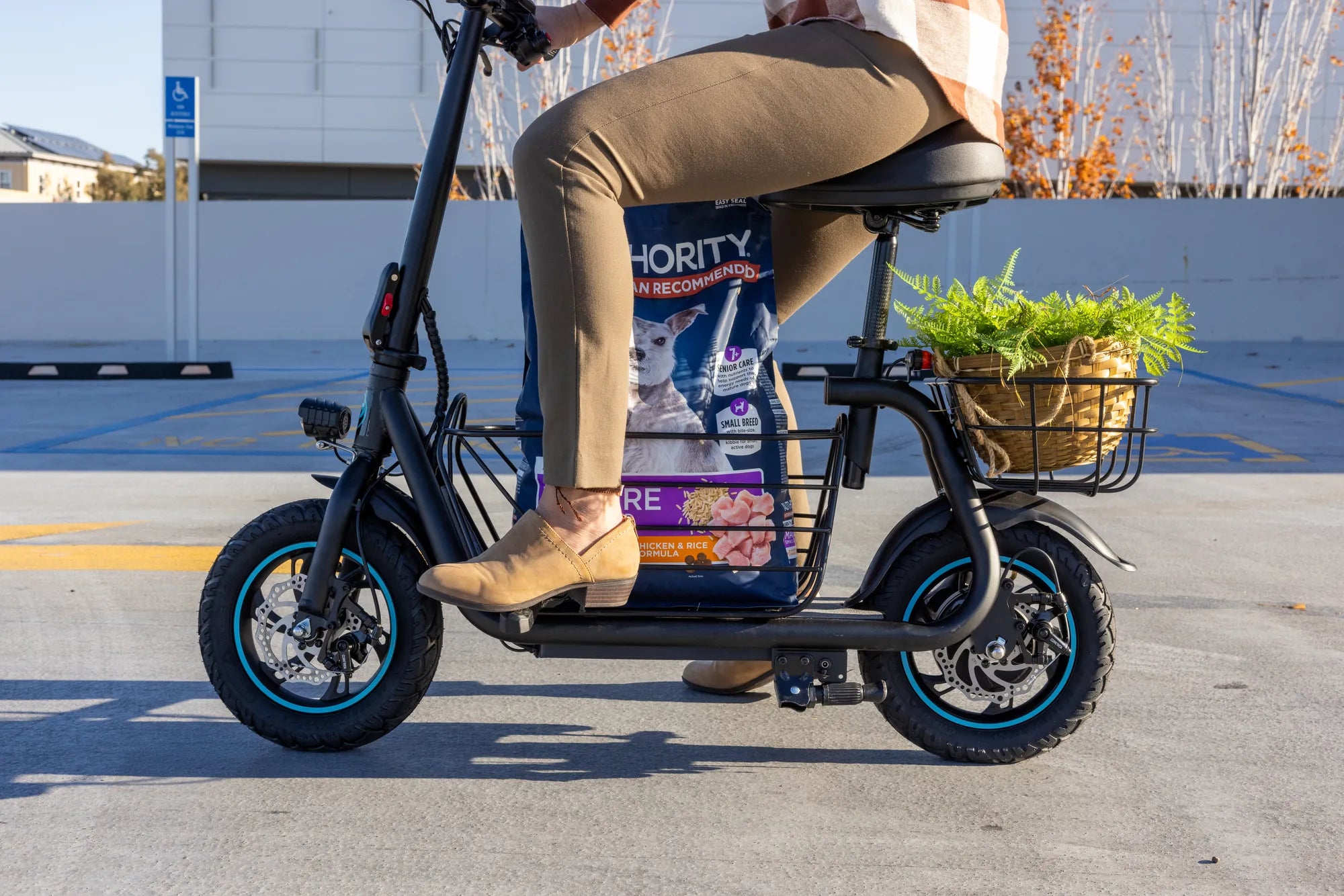
Choosing your primary mode of transportation is one of the most significant financial and lifestyle decisions an urban dweller makes. The classic scooter vs car debate is no longer about toys versus necessities; it's a serious comparison between agile, electric micro-mobility and the entrenched automobile. This article delivers a factual, data-driven breakdown of costs, time, convenience, and environmental impact, empowering you to make an informed choice. We'll analyze how a premium electric scooter, like those engineered by Gyroor—a leader trusted by over 100,000 riders—stacks up against a standard car for daily urban life.
The Cost of Commuting: A Financial Deep Dive
Transportation is often the second-largest household expense. A thorough scooter vs car analysis must go beyond the sticker price to examine the total cost of ownership. We'll break down the numbers over one and five years for a typical scenario: a new compact car versus a high-performance electric scooter.
The initial investment is the most glaring difference. A new economy car starts around $25,000. A top-tier electric scooter with a UL-certified battery and robust construction, such as the Gyroor S90, represents a fraction of that cost. This disparity alone reshapes the financial calculus for many commuters.
Depreciation is the silent budget killer for car owners. A new car can lose 20-30% of its value in the first year and about 60% after five years. This translates to thousands of dollars in vanished equity annually. In contrast, a well-maintained electric scooter from a reputable brand retains a much higher percentage of its value, as it's a lower-risk asset without complex mechanical systems.
Recurring costs tell a similar story. Car insurance averages $1,500-$2,500 annually. Registration and annual taxes add hundreds more. Electric scooters typically require no insurance or registration in most municipalities, representing pure savings. This fundamental difference in ongoing financial obligation is a core advantage in the scooter vs car equation.
Upfront Investment & Long-Term Value
Let's quantify the upfront financial commitment. The purchase of a car often involves financing, which adds interest costs to an already large principal. A $25,000 car with a 5-year loan at 5% APR costs over $28,000. The scooter purchase is usually a one-time, cash-friendly transaction.
The long-term value proposition is stark. After five years, the car owner has paid for the vehicle, interest, and watched its resale value plummet. The scooter owner's initial outlay is recouped quickly through savings on other costs. The scooter's durability, backed by features like Gyroor's reliable 1-year warranty and IPX5 water-resistant designs, ensures it remains a functional asset for years.
Maintenance costs further separate the two. Car maintenance—oil changes, brake jobs, tire rotations—can easily cost $500-$1,000 per year. Electric scooter maintenance is minimal: occasional tire inflation, brake pad checks, and ensuring electrical connections are clean. The simplicity of the scooter's drivetrain translates directly to lower long-term ownership costs.
Unexpected repairs are another financial frontier. A major car repair can cost thousands, a devastating hit to a monthly budget. Scooter repairs, such as replacing a tire or a battery pack, are comparatively minor expenses. The modular design of quality scooters makes component replacement straightforward and affordable.
The Daily Grind: Fuel, Charging & Recurring Fees
The daily cost of movement is where the scooter vs car dynamic becomes intensely personal. Fuel is a volatile, significant expense. At $3.50 per gallon and a car averaging 30 MPG, the cost is about $0.117 per mile. For a 10-mile daily commute, that's $1.17 per day, $23.40 per month, just in fuel.
Charging an electric scooter is remarkably cheap. A scooter with a 500Wh battery (like many Gyroor models) costs less than $0.10 to fully charge from empty, providing a range of 20-30 miles. That's a cost per mile of about $0.003. The same 10-mile commute costs roughly 3 cents. The energy cost savings are over 97%.
Urban fees tilt the scale further. Many cities impose congestion charges, tolls, and low-emission zone fees that can add $10-$15 per day for car entry. Electric scooters are universally exempt from these charges. This isn't just savings; it's access. The scooter rider moves freely while the car driver pays a premium for the same route.
Parking is the final, often exorbitant, recurring fee. Downtown monthly parking can range from $150 to over $500. Daily parking adds up quickly. Scooter parking, however, is typically free at bike racks or designated areas. The ability to park securely almost anywhere eliminates a major line item from the urban commuter's budget.
Beating Gridlock: The Commute Time Analysis
Time is the ultimate non-renewable resource. In dense urban cores, average car speeds can drop below 10 mph during rush hour. A 5-mile commute can take 30 minutes or more by car, not including the time to find parking. This transforms a short distance into a daily ordeal.
Electric scooters excel in traffic. They can use bike lanes, multi-use paths, and sometimes filtered through stalled traffic (where legal and safe). A scooter averaging 15-20 mph can often match or beat a car's door-to-door time for trips under 6 miles. The scooter's agility in the scooter vs car race for time is a decisive urban advantage.
The "last-mile" problem illustrates this perfectly. For commuters using public transit, the distance from the station to the final destination is often inefficient on foot. A folding electric scooter solves this elegantly, cutting a 15-minute walk to a 5-minute ride and seamlessly integrating with trains and buses. A car offers no such synergy with mass transit.
Parking search time is a hidden time tax for drivers. Circling blocks for a spot can add 5-15 minutes to every trip. A scooter rider parks in seconds at a bike rack near the entrance. Over a year, this saved time amounts to dozens of hours reclaimed for the scooter commuter.
The Parking Predicament & Urban Agility
Parking scarcity defines the modern city. The space required for one parked car can accommodate 8-10 parked scooters. This geometric reality gives scooters an inherent logistical advantage. Drivers are forced to plan their lives around parking availability and cost.
Scooters enable spontaneous mobility. The decision to make a quick trip to a cafe, store, or friend's apartment isn't burdened by the question, "Where will I park?" This freedom reshapes how one interacts with their city, encouraging local exploration and supporting neighborhood businesses without the hassle of car storage.
Security is a consideration. Quality scooters from brands like Gyroor feature robust folding mechanisms and built-in locks, allowing them to be secured to fixed objects or even carried inside. This eliminates the risk of parking tickets, towing, and break-ins that plague car owners. Your vehicle is always within sight or securely stored.
The agility of a scooter transforms urban navigation. It can navigate pedestrian plazas, park paths, and other spaces inaccessible to cars. This opens up more direct and often more pleasant routes, turning a commute into a engaging experience rather than a stressful battle with traffic.
Environmental & Health Impact Assessment
The environmental argument in the scooter vs car discussion is compelling. A typical passenger car emits about 4.6 metric tons of carbon dioxide per year. Even the most efficient hybrids contribute significantly to urban air pollution and greenhouse gas emissions. This is a direct cost borne by society.
Electric scooters produce zero tailpipe emissions. Their environmental impact is tied to the electricity grid used for charging. However, even on a grid powered largely by fossil fuels, the tiny energy draw of a scooter results in a carbon footprint per mile that is a small fraction of a car's. As grids become greener, the scooter's impact shrinks further.
From a resource perspective, manufacturing a scooter requires far less steel, plastic, and rubber than a car. The overall lifecycle environmental burden—from production to disposal—is orders of magnitude lower for micro-mobility vehicles. This makes the scooter a more sustainable choice in a resource-constrained world.
Personal health is an often-overlooked benefit. While not as vigorous as cycling, riding a scooter requires balance, core engagement, and situational awareness. It is an active form of transport compared to the passive act of driving. Mentally, avoiding traffic gridlock reduces stress, and time spent outdoors in fresh air (rather than recirculated cabin air) can improve mood and well-being.
Safety, Practicality & Making the Right Choice
Safety is the most common concern in the scooter vs car debate. Cars offer a protective metal cage, airbags, and crumple zones. Scooter riders are exposed. This makes proactive safety non-negotiable for scooter use. A certified helmet is essential, and riders should strongly consider gloves, knee pads, and reflective clothing.
Riding smart is paramount. This means obeying traffic laws, using bike lanes where available, never riding under the influence, and maintaining high situational awareness. Proper lighting (front and rear) is crucial for visibility. Gyroor models, for instance, integrate bright LED systems for this purpose. Defensive riding anticipates the mistakes of drivers and pedestrians.
Practical limitations must be acknowledged. A scooter is not a car. It cannot transport multiple passengers, carry a week's groceries for a family, or handle a highway commute in a rainstorm. For these tasks, a car is necessary. The honest assessment is about use-case fit: a scooter is ideal for the solo commuter's daily urban trip, while a car serves the larger, longer, or weather-dependent journey.
Weather is a key factor. While quality scooters have IPX5 water resistance for light rain, commuting in heavy rain or snow is unpleasant and riskier. In climates with harsh winters, a scooter may be a seasonal tool. This is where a blended approach—using a scooter for 8 months and a car or transit for 4—can be the optimal strategy.
Frequently Asked Questions (FAQ)
Is an electric scooter really cheaper than a car in the long run?
Absolutely. Our financial breakdown shows that even when accounting for purchase price, energy, insurance, maintenance, parking, and depreciation, the total 5-year cost of owning and operating a commuter scooter is typically 90-95% less than that of a new economy car. The savings amount to tens of thousands of dollars.
How far can I realistically commute on an electric scooter?
Most commuters travel under 10 miles each way. High-performance scooters from leading brands offer ranges of 20-40 miles on a single charge. For a 7-mile commute, you could make a round trip and still have ample battery remaining. It's crucial to check the real-world range of a model, as factors like rider weight, hills, and speed affect it.
Are electric scooters safe to use in city traffic?
Safety is a combination of vehicle capability, rider behavior, and infrastructure. A scooter with dual brakes, good suspension, and wide tires (like the Gyroor S90) offers stable control. The rider must wear a helmet, follow traffic rules, and use bike lanes where possible. Cities with dedicated micro-mobility infrastructure are significantly safer for scooter use.
What about theft? Where do I park my scooter?
Theft is a risk, mitigated by strategy and hardware. Always use a high-quality U-lock or chain lock to secure the scooter to a fixed, immovable object. Folding scooters can be brought inside offices, stores, or homes. Many models have built-in electronic alarms and tracking capabilities. Parking at busy, well-lit bike racks is recommended.
Can an electric scooter replace my car completely?
For many urban singles or couples without children, yes, especially if supplemented by ride-sharing or car rentals for occasional large trips. For families or those living in suburbs with poor scooter infrastructure, a scooter is best as a car complement—used for daily commutes and local errands to save money and time, while the car is reserved for longer trips, bad weather, and big hauls.
How do I choose the right electric scooter?
Focus on your needs: required range, top speed (governed by local laws), weight capacity, and terrain (suspension for rough roads). Prioritize brands with UL-certified batteries for safety, a solid warranty (like Gyroor's 1-year coverage), and good customer support. Test ride if possible, and read independent reviews focusing on real-world performance.
Direct Comparison Table: Scooter vs Car
| Category | Electric Scooter | Compact Car |
|---|---|---|
| Avg. Purchase Price | $800 - $2,000 | $25,000 - $35,000 |
| 5-Year Depreciation | ~40-50% | ~60%+ |
| Annual Insurance | $0 (Typically) | $1,500 - $2,500 |
| Fuel/Energy Cost per Mile | ~$0.003 | ~$0.117 (at $3.50/gal) |
| Annual Maintenance | $50 - $150 | $500 - $1,000+ |
| Parking (Monthly Urban) | $0 - $20 | $150 - $500+ |
| Daily Commute Time (5 mi) | 15-20 min (door-to-door) | 25-40 min (incl. parking) |
| Passenger/Cargo Capacity | 1 rider, small backpack | 4-5 people, trunk space |
| CO2 Emissions per Year* | ~0.1 metric tons (indirect) | ~4.6 metric tons (direct) |
| Urban Agility & Parking | Excellent | Poor |
| Weather Protection | Minimal | Full |
| Typical Use Case | Solo urban commute, errands | Family transport, long trips, hauling |
*Scooter emissions based on U.S. grid average; Car emissions from EPA.
Conclusion: Defining Your Personal Mobility Mix
The scooter vs car debate reveals a clear divergence in purpose. The electric scooter is a champion of efficiency, economy, and agility for the solo urban commuter. It slashes costs, reclaims time, reduces environmental impact, and increases engagement with the city. The car remains the master of capacity, comfort, long-range, and all-weather capability. The smartest strategy for most is not an either/or choice, but a blended mobility mix. Use a reliable, high-performance electric scooter for your daily grind—the trips that are predictable, solo, and under 10 miles. Reserve the car for the tasks it does best: family outings, large shopping trips, and journeys in severe weather. This approach maximizes financial savings and personal freedom while minimizing hassle and environmental footprint. For those ready to integrate a premium scooter into their life, the journey begins with choosing a trustworthy brand engineered for safety and durability. Explore the full range of UL-certified, high-performance models designed for real-world commuting and discover how a Gyroor can transform your urban mobility. Browse the full Gyroor collection at gyroorboard.com.
Ebike Won't Turn On? A Complete Diagnostic & Fix Guide (2024)
Lightweight Kids Bike 16 Inch: The Ultimate Guide to the Perfect First Pedal Bike