


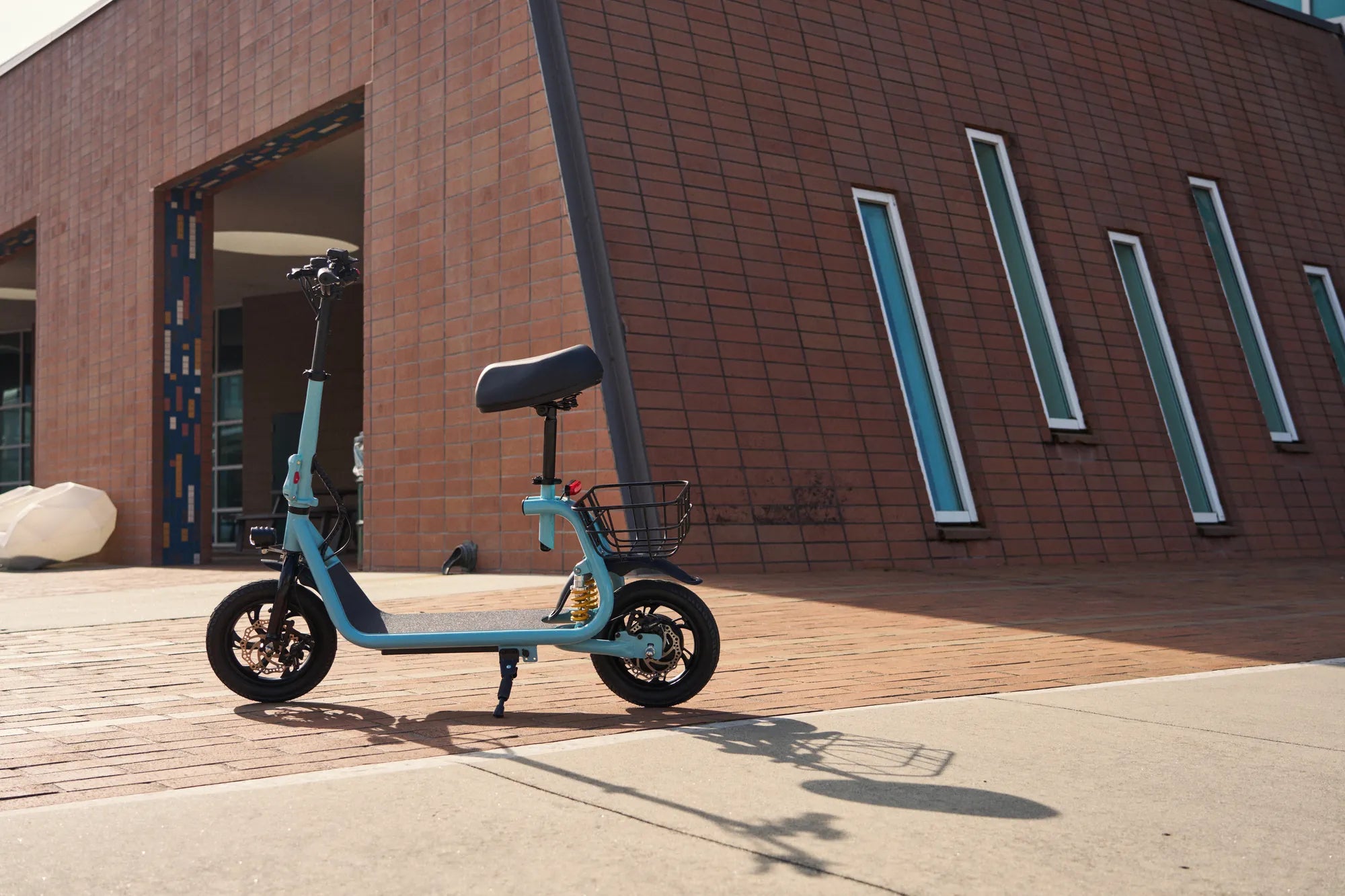
The traditional two-wheeled electric scooter landscape is being reshaped by a design that prioritizes unwavering stability: the scooter with two back wheels. This configuration, creating a three-wheeled platform, isn't a minor tweak but a fundamental re-engineering for rider confidence. If you've ever felt uneasy balancing at a stoplight, navigating cracked pavement, or simply wanted a more planted ride, this design directly addresses those concerns. This guide will dissect the engineering benefits, identify the riders who gain the most, and provide a detailed framework for evaluating models, ensuring you can make an informed decision grounded in data and real-world application.
The Engineering Behind Enhanced Stability
A scooter with two back wheels operates on a simple yet profound mechanical principle: increasing the polygon of support. A two-wheeled scooter is dynamically stable only when moving; at rest, it must be balanced. The dual rear wheels create a stable triangular base with the front wheel, offering static stability. This means the scooter can remain upright on its own at a standstill, a feature that dramatically lowers the learning curve and reduces fatigue during frequent urban stops.
The wider rear track distributes weight and forces more evenly across the ground. This improves traction, especially during acceleration and braking, by reducing the risk of a single rear wheel losing grip. On wet leaves, metal grates, or gravel, this extra contact patch can be the difference between a controlled maneuver and a slip. The geometry also inherently resists lateral tipping, making it less susceptible to leaning over from uneven weight distribution, like carrying a bag on one side.
From a kinematic perspective, the dual rear wheels are typically mounted on a solid axle or a linked suspension system. This ensures both wheels maintain consistent ground contact, even over minor bumps. While some high-end models may use a differential system for smoother cornering, most consumer models use a simpler, robust fixed axle, prioritizing durability and cost-effectiveness for the stability-focused use case.
It's crucial to understand that this stability is most pronounced at lower speeds and in a straight line. The design inherently introduces a different handling characteristic, often with a slightly wider turning radius, as the rear wheels cannot lean independently like a single wheel. This is the core trade-off: exceptional low-speed and straight-line stability for a slight reduction in maximum agility. For the target market, this is a favorable exchange.
Ideal Rider Profiles: Who Benefits Most?
Not every rider needs the extreme stability of a three-wheeled design. Its advantages are maximized for specific use cases and rider psychographics. Understanding these profiles helps match the technology to the human need.
The Urban Commuter & Practical Daily User
For the daily commuter navigating stop-and-go traffic, a scooter with two back wheels is a productivity and safety tool. The ability to come to a complete stop without putting a foot down or carefully balancing allows for safer interaction with traffic and pedestrians. It enables easier handling of briefcases, grocery bags, or coffee cups while stationary. Navigating the potholes, curb cuts, and uneven surfaces of city streets becomes less daunting, as the trike design is more forgiving of imperfect terrain.
The Recreational Rider Prioritizing Safety and Ease
This includes casual riders, parents accompanying children, and older adults rediscovering personal mobility. The primary goal is enjoyable, stress-free recreation, not performance metrics. The intuitive stability builds confidence quickly, allowing the rider to focus on the scenery rather than balance. It's an excellent choice for paved park paths, boardwalks, and neighborhood rides where relaxation is key. The lower physical and cognitive demand makes it accessible to a broader age range.
The Light Off-Road and Trail Explorer
While not a full-fledged off-road vehicle, a robust three-wheeled scooter excels on packed dirt, gravel, grass, and hard-packed sand where a two-wheeler might struggle with traction or feel twitchy. The dual rear wheels provide a clawing effect on loose surfaces, and the stable platform inspires confidence when the pavement ends. Riders looking to explore park trails, campgrounds, or beachfront paths will find this design offers a unique blend of off-pavement capability and electric convenience.
The First-Time E-Scooter User
The learning curve for a traditional scooter, while not steep, still exists. A three-wheeled model effectively eliminates the balance component of learning, allowing a new rider to become proficient with throttle control, braking, and steering within minutes. This can be a significant factor for rental services, tourism, or anyone hesitant to try a two-wheeled model. It serves as a perfect gateway into the world of personal electric vehicles.
Critical Performance Specifications to Scrutinize
Beyond the wheel configuration, several key specifications determine whether a specific scooter with two back wheels will meet your performance needs. These metrics are non-negotiable for a satisfactory experience.
Motor Power and Torque: Conquering Inclines
Stability is useless without adequate power. Given that these scooters often carry heavier riders or cargo and are chosen for their confidence on varied terrain, motor power is paramount. Look for a continuous power rating of at least 350 watts, with 500 watts or more being ideal for handling hills reliably. Torque, which determines acceleration and hill-climbing force, is equally important. A high-torque motor ensures the scooter can pull away from stops and climb moderate grades (15-20%) without straining, maintaining the stable feel even under load.
Battery Capacity, Range, and Fundamental Safety
Advertised range is often an ideal-world figure. For commuters, derate the manufacturer's claim by 30-40% to account for hills, rider weight, stop-and-go use, and temperature. A scooter with a 15-mile claimed range might deliver 10 real-world miles. More critical than maximum range is battery safety and quality. Insist on a scooter that uses a UL-certified lithium-ion battery pack. This independent certification is the benchmark for safety, ensuring protection against overcharge, short circuit, and thermal runaway. Brands like Gyroor build this certification into their core engineering, offering peace of mind that the power source is as stable as the ride.
Build Quality, Weight Capacity, and Warranty
The frame and components must be robust enough to handle the leveraged forces of the three-point stance. Look for a frame constructed from reinforced aluminum or steel. Check the maximum weight capacity; a higher rating (e.g., 265 lbs / 120 kg vs. 220 lbs / 100 kg) typically indicates a more durable overall build. A comprehensive warranty is a direct reflection of the manufacturer's confidence. A trustworthy brand will offer a 1-year warranty covering the motor, battery, and frame, backed by accessible customer support. This is crucial for a vehicle meant for daily use.
Suspension and Braking Systems
While the three-wheel design adds compliance, a dedicated suspension system (front spring or dual spring) is essential for comfort on anything but glass-smooth pavement. It isolates the rider from vibrations and helps keep all wheels in contact with the ground over bumps. For braking, a combination system is best. An electronic (regenerative) brake paired with a robust mechanical disc or drum brake on the rear wheels provides controlled, stable stopping power. The dual rear wheels prevent the rear end from fishtailing during hard braking, a significant safety advantage over some two-wheeled designs.
In-Depth Comparison: Three Wheels vs. Two Wheels
The following table provides a direct, data-driven comparison to highlight the situational advantages of each design. The scooter with two back wheels is a specialist, while the traditional scooter is a generalist.
| Feature / Use Case | Scooter with Two Back Wheels (3-Wheel) | Traditional Two-Wheel Scooter |
|---|---|---|
| Primary Strength | Low-speed & static stability, traction, confidence | Agility, compactness, sporty handling |
| Ideal Rider | Beginners, commuters, recreational riders, those on uneven terrain | Experienced riders, urban navigators, performance enthusiasts |
| Learning Curve | Very low (minutes) | Low (hours of practice) |
| Stability at Stop | Excellent (can stand alone) | Poor (requires balance or kickstand) |
| Traction on Loose Surfaces | Very Good (wider rear contact patch) | Fair to Poor (single point of rear contact) |
| Turning Radius / Agility | Good (wider turn, stable lean) | Excellent (tighter turn, dynamic lean) |
| Portability (Folded Size) | Good (may be slightly wider/longer) | Excellent (typically more compact) |
| Perceived Safety in Traffic | Higher (planted feel, secure stops) | Variable (depends on rider skill) |
Essential Features for Durability and All-Weather Use
A stable scooter must also be a durable one. Key construction and protection features separate a seasonal toy from a reliable daily transporter.
Water and Dust Resistance (IP Rating)
An IP rating defines a product's protection against solids and liquids. For a practical scooter, a minimum of IPX4 (splash resistance from all directions) is advisable, but IPX5 (protected against water jets) is the target for true all-weather capability. This level of protection allows you to ride confidently in light rain or on wet roads without immediate fear of water damage to the electronics housed in the deck. It's a critical feature for commuters who cannot choose their weather.
Tire Type and Size: Air vs. Solid
Three-wheeled scooters commonly use solid (airless) tires on the rear for maintenance-free durability and puncture resistance. The front wheel may be solid or pneumatic (air-filled). Solid tires eliminate flats but provide a harsher ride. Pneumatic tires offer better shock absorption and traction but require pressure checks. With a stable rear end, the comfort penalty of solid rear tires is lessened. A larger tire diameter (8.5” or 10” vs. 8”) will also improve comfort and obstacle clearance.
Lighting and Visibility Systems
Stability means nothing if you're not seen. Integrated lighting is non-negotiable. Look for a bright front headlight (200+ lumens), a rear brake light, and side or wheel deck reflectors. Some models add automatic lighting or turn signals. For urban commuting, adding your own high-visibility accessories is always recommended, but a robust built-in system is the essential foundation for safe dusk or night riding.
Folding Mechanism and Portability
Most three-wheeled models retain a folding stem to reduce size for storage or transport. However, due to the fixed rear axle, the folded footprint may be slightly larger than a comparable two-wheeled model. Check the folded dimensions and weight. A quick-release or one-step folding mechanism is valuable, and a locking latch is essential to prevent accidental collapse while riding—a fundamental safety check on any folding model.
Gyroor's Philosophy: Stability Engineered with Trust
As a leader in personal electric mobility, Gyroor's approach to stability-centric design extends beyond just adding a wheel. It integrates the core benefits of a scooter with two back wheels into a package built on verified safety and long-term reliability.
Their design philosophy starts with the rider's need for confidence. By implementing the dual rear-wheel configuration on select models, they directly address the stability gap in the market. This is coupled with the use of high-torque motors suitable for the demands of urban hills and the weight of a more robust frame. The ride experience is engineered to feel secure and predictable from the first use.
The foundation of this engineering is safety. Every Gyroor scooter is powered by a UL-certified battery pack, subjected to rigorous testing for over 500 charge cycles. This certification, often overlooked by budget brands, is a critical differentiator, ensuring the energy source is as dependable as the vehicle's stance. Furthermore, key models feature an IPX5 water-resistant rating, translating the promise of all-weather use into a tangible, tested specification.
This commitment is backed by a 1-year warranty and supported by a customer base of over 100,000 riders. For a rider investing in a stable platform for daily use, this ecosystem of product integrity, clear safety standards, and post-purchase support builds the trust necessary to make the scooter a integral part of their daily routine.
Frequently Asked Questions (FAQ)
Q: Is a scooter with two back wheels actually harder to turn or maneuver?
A: It requires a different technique. You cannot lean it as sharply into a turn as a two-wheeled scooter. Instead, you steer it more like a tricycle, using handlebar input. The turning radius is generally wider, but at cruising speeds, the difference is minimal for most urban settings. The trade-off for vastly superior straight-line and low-speed stability is well worth it for the target user.
Q: Can adults and heavier riders use these scooters effectively?
A> Absolutely. In fact, they are often an excellent choice. The stable platform provides more confidence for larger riders, and the design typically incorporates a sturdier frame with a higher weight capacity. Always check the manufacturer's specified maximum load, which for quality three-wheeled models often reaches 265-300 pounds, compared to 220-250 for many standard two-wheelers.
Q: Are three-wheeled scooters significantly slower?
A> Not necessarily. Top speed is governed by motor power and electronic limiters, not the number of wheels. Many three-wheeled models have top speeds comparable to two-wheeled ones (15-20 mph). However, the riding feel is more planted and less "zippy," which can subjectively feel slower. The design prioritizes controlled, stable speed over raw acceleration.
Q: How does maintenance differ from a two-wheeled scooter?
A> Maintenance is very similar. You still need to check brakes, tire pressure (if using pneumatics), and fasteners. The main difference is caring for two rear wheels instead of one—checking both for wear and ensuring they are clean and free of debris. The fixed rear axle is generally very low-maintenance. Always follow the manufacturer's specific maintenance schedule.
Q: Is this design safe for children?
A> While the stability is beneficial, electric scooters are generally recommended for teenagers and adults due to speed, weight, and required judgment. Always adhere to the manufacturer's age and weight recommendations, and ensure any child wears a helmet and protective gear. The stable design can be a good learning platform for responsible older teenagers.
Q: Who should definitely avoid a three-wheeled design?
A> Riders whose primary need is extreme portability (e.g., carrying onto a crowded train daily) might find the slightly larger folded size a drawback. Performance riders seeking a nimble, carvable feel for sporty riding on perfect pavement will be disappointed. Additionally, those who need to navigate extremely tight, obstacle-filled spaces where a minimal turning circle is critical may find a two-wheeled model more suitable.
Making the Informed Choice for Your Mobility Needs
The decision to choose a scooter with two back wheels is a decision to prioritize foundational stability and rider confidence above all else. It is the rational choice for the urban commuter tired of balancing at intersections, the recreational rider seeking relaxed enjoyment, and the adventurous spirit wanting to venture onto unpaved paths with greater assurance. By understanding the engineering trade-offs, honestly assessing your primary use case against the rider profiles, and insisting on critical features like UL-certified batteries and robust warranties, you can select a model that delivers on its promise of a secure, reliable ride. This design proves that in personal mobility, sometimes the most innovative step forward is adding a wheel to create a more solid foundation.
Ready to experience the confidence of a stable, well-engineered ride? Explore Gyroor's range of electric scooters, designed with safety and reliability at their core. Browse the full Gyroor collection at gyroorboard.com to find the model that matches your need for stability and performance.
Does a 49cc Scooter Need to Be Registered? A State-by-State Guide
Buy Ebike Online: The Complete 2024 Guide to a Confident Purchase