



Introduction: The Rise of the Self-Balancing E-Scooter
The self balancing e scooter has evolved from a futuristic novelty into a legitimate, transformative mode of personal transport. No longer just a toy, these intuitive devices are solving real-world urban mobility challenges while delivering unparalleled fun. They represent a convergence of advanced gyroscopic technology, electric propulsion, and compact design, creating a new category in the micro-mobility landscape.
This article will dissect exactly why the self balancing e scooter is gaining such rapid adoption. We will explore the sophisticated engineering that makes it work, its practical applications for daily commuting, and its exciting potential for recreation and adventure. For anyone considering this modern form of transport, we provide a thorough, data-driven buyer's guide and essential safety knowledge.
The market has matured significantly, with leading brands like Gyroor focusing on safety certifications, robust construction, and reliable performance. With over 100,000 riders trusting their products across North America and Europe, the discussion has shifted from novelty to necessity for many urban dwellers.
Understanding this technology is key to embracing its benefits. The core appeal of a self balancing e scooter lies in its seamless operation: lean forward to go, lean back to stop, and twist to turn. This intuitive control scheme, powered by precise sensors and motors, creates a riding experience that feels like a natural extension of the body.
How Self-Balancing Technology Actually Works
The magic of a self balancing e scooter is not magic at all—it's precision engineering. At its heart are two key components: gyroscopic sensors and a high-speed microprocessor. These work in tandem to create the stable, responsive ride that defines the category.
Gyroscopic sensors, specifically Inertial Measurement Units (IMUs), constantly measure the board's tilt angle and rotational velocity. This data is fed to the central processor hundreds of times per second. The processor uses complex algorithms to calculate exactly how much power to send to each electric motor housed inside the wheels to keep the rider upright.
When you lean forward, the sensors detect the change in orientation. The processor interprets this as a command to move forward and instructs the motors to spin accordingly. The faster and farther you lean, the more power is delivered, resulting in acceleration. Leaning back triggers the opposite reaction, slowing the motors or even reversing them to brake. Steering is controlled by a subtle twisting motion of the feet, which varies the speed between the two independent wheels.
This entire process happens in real-time, creating a dynamic equilibrium. The rider is not passively standing on a stable platform; they are actively partnering with a computer that makes micro-adjustments to maintain balance. This is why learning to ride is often compared to learning to ride a bicycle—it requires trust in the device's ability to self-correct, which typically clicks within 30 to 60 minutes of practice.
Urban Mobility Revolution: Commuting Reimagined
For the urban commuter, the self balancing e scooter presents a compelling solution to the first-and-last-mile problem. This is the frustrating gap between public transit stations and a rider's final destination, often a distance too long to walk comfortably but too short to justify a car or a full bus ride.
A self balancing e scooter bridges this gap elegantly. Its compact form factor allows it to be carried onto a train or stored under a desk, eliminating the theft and parking concerns associated with bicycles or traditional scooters. With zero direct emissions and operating costs measured in cents per charge, it is an economically and environmentally sound choice.
In dense city environments, agility is paramount. These devices excel in navigating crowded sidewalks, weaving through slow-moving pedestrian traffic, and utilizing bike lanes. Their small turning radius and instant acceleration provide a level of maneuverability that larger vehicles cannot match. For a commute of 3 to 6 miles, a self balancing e scooter can often be faster than a car stuck in gridlock.
The practical benefits extend to logistics. Models from reputable brands like Gyroor feature IPX5 water resistance, meaning a sudden rain shower or wet pavement won't end your trip. Combined with UL-certified battery packs for safety and ranges often between 10-15 miles per charge, the self balancing e scooter transforms a multi-modal commute from a hassle into a seamless, enjoyable experience.
Beyond Commuting: Adventure and Recreation
While commuting showcases its utility, the true joy of a self balancing e scooter is often found in recreation. It unlocks a new way to explore parks, boardwalks, and neighborhoods, turning a simple errand into a mini-adventure. The sensation of gliding effortlessly is inherently fun, appealing to teens and adults alike.
The recreational potential expands dramatically with all-terrain models. Equipped with larger, air-filled tires (often 8.5 or 10 inches) and more powerful motors, these versions of the self balancing e scooter can handle grass, gravel paths, dirt trails, and packed sand. This capability opens up vast new areas for exploration, from forest paths to beachfronts, that are inaccessible to standard street models.
This versatility makes it a fantastic tool for family outings or social activities. Groups can cover more ground than walking, discover new areas of a local park, and enjoy the outdoors in an engaging, active way. The learning curve, while present, is part of the fun—mastering the controls provides a genuine sense of accomplishment.
For the adventure seeker, the right self balancing e scooter offers a unique blend of accessibility and excitement. It requires no special skills to start, yet proficient riders can develop impressive control, navigating varied terrain with confidence. This dual nature—as both a beginner-friendly device and a platform for skilled riding—is a core part of its enduring appeal.
Key Features to Look For: A Buyer's Guide
Choosing the right self balancing e scooter requires careful consideration of several technical and practical factors. A focus on specifications and certifications, rather than just price, ensures a safe, durable, and satisfying purchase that will provide value for years.
Motor Power and Range
Motor power, measured in watts (W), directly impacts performance. A 300W motor is sufficient for flat, smooth surfaces and lighter riders. For hills, all-terrain use, or heavier riders, look for dual motors with a combined 700W or more. This extra power ensures consistent speed and torque when you need it most.
Range is determined by battery capacity, measured in Watt-hours (Wh). Advertised ranges are often based on ideal conditions (light rider, flat terrain, slow speed). In the real world, you should expect 60-70% of the maximum claim. A battery with 36V and 4.4Ah capacity has roughly 158Wh. For a reliable 10+ mile real-world range, seek capacities of 200Wh or higher. All Gyroor models use UL-certified battery packs tested for over 500 charge cycles, ensuring long-term reliability and safety.
Build Quality and Safety Certifications
Build quality is non-negotiable. A sturdy frame, often made from reinforced aluminum alloy, protects the internal components and supports the rider's weight. The most critical safety feature is the battery certification. Always insist on a UL 2272 certified battery pack, which has undergone rigorous testing for electrical, mechanical, and environmental safety to prevent fire hazards.
Additional build considerations include IP ratings for water and dust resistance. An IPX5 rating means the device can withstand water jets from any direction, making it safe to ride in light rain and through puddles. A reliable warranty is also a key indicator of quality; Gyroor offers a comprehensive 1-year warranty on its self balancing e scooters, backed by responsive customer support.
Wheel Size and Terrain Capability
Wheel size defines where you can ride. Standard 6.5-inch solid rubber tires are designed for perfectly smooth indoor surfaces or pristine pavement. For city commuting where cracks and bumps are inevitable, 8.5-inch wheels offer a better balance of comfort and portability.
For true versatility, 10-inch all-terrain air-filled tires are the gold standard. They provide significant shock absorption, superior traction on loose surfaces, and the ability to roll over larger obstacles. When comparing, note that larger wheels may increase the device's overall weight and slightly reduce acceleration but dramatically improve ride comfort and capability.
Self-Balancing Scooter vs. Traditional E-Scooter: A Quick Comparison
Understanding the differences between a self-balancing scooter and a traditional stand-up kick e-scooter helps identify the right tool for your needs. The choice often comes down to portability, learning curve, riding style, and primary use case.
| Feature | Self-Balancing E-Scooter (e.g., Gyroor Hoverboard) | Traditional Stand-Up E-Scooter |
|---|---|---|
| Primary Mechanism | Gyroscopic self-balancing, foot steering | Manual balance, handlebar steering |
| Learning Curve | Moderate (30-60 mins typical) | Very Low (almost instant) |
| Portability | Excellent; compact, no handlebars | Good to Moderate; foldable but larger footprint |
| Riding Posture | Upright, feet side-by-side | Upright, one foot forward, hands on bars |
| Typical Use Case | First/last-mile, recreation, all-terrain fun | Longer-distance commuting, road-focused trips |
| Storage | Fits under desk, in locker, or in car trunk easily | Requires more space even when folded |
| Fun/Novelty Factor | Very High | Moderate |
This comparison shows that the self balancing e scooter excels in ultra-compact storage and offers a uniquely engaging riding experience. The traditional e-scooter is often better suited for longer, faster commutes on dedicated bike lanes where handlebar control is preferred. Your daily needs and desired experience should guide your choice.
Riding Safely and Legally: What You Need to Know
Safe operation is paramount for enjoying your self balancing e scooter and respecting shared spaces. Start by checking local regulations, which vary widely by city and state. Some areas classify them as pedestrian-assistive devices allowed on sidewalks, while others restrict them to bike lanes or prohibit them entirely. Knowing the rules prevents fines and promotes harmony.
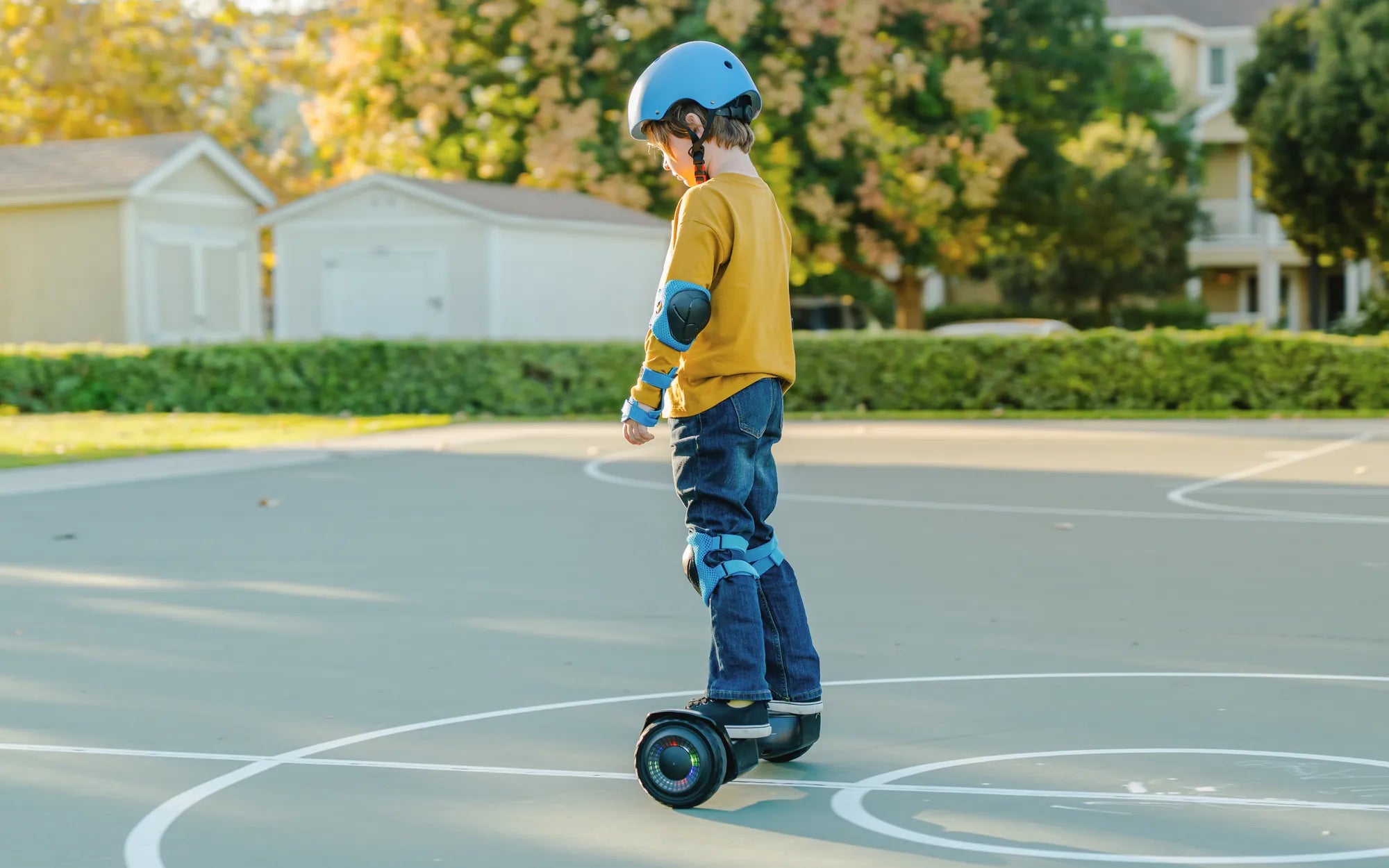
Personal protective equipment (PPE) is essential, especially during the learning phase. A properly fitted bicycle or multi-impact helmet is the minimum. Wrist guards are highly recommended, as falls often involve putting hands out to brace. Knee and elbow pads add further protection for more adventurous riding or for younger users.
Practice in a safe, open, and flat area like an empty parking lot or a quiet cul-de-sac. Learn how to mount, dismount, accelerate, brake, and turn smoothly before venturing into more complex environments. Always be hyper-aware of your surroundings—ride defensively, assume pedestrians and drivers may not see you, and use audible signals (like a bell or your voice) when passing.
Regular pre-ride checks are a simple but critical habit. Ensure tires are properly inflated (for air-filled models), the battery is adequately charged, and the frame shows no signs of cracks or damage. Avoid riding in heavy rain, through deep puddles (even with a good IP rating), or on surfaces covered in ice or wet leaves. Responsible riding ensures your safety and the positive perception of micro-mobility devices for everyone.
FAQ: Your Self-Balancing Scooter Questions Answered
Q: How long does it really take to learn to ride?
A: Most adults can achieve basic competency—mounting, riding in a straight line, and gentle turns—within 30 to 60 minutes of dedicated practice. Mastering tighter turns, spins, and off-road handling can take several days or weeks of regular use. Patience and a safe practice area are key.
Q: What is the average weight limit for these devices?
A> Weight limits vary by model and motor power. Entry-level models typically support riders up to 220 lbs (100 kg). More robust commuter and all-terrain models, like those in Gyroor's lineup, often have limits of 265 lbs (120 kg) or higher. Always check the manufacturer's specification and choose a model that accommodates your weight with a margin of safety.
Q: How do I maintain my self-balancing scooter?
A> Regular maintenance is simple but important. Keep it clean with a damp cloth; avoid high-pressure water jets. For models with air tires, check tire pressure monthly. Store the device in a cool, dry place away from direct sunlight. Avoid draining the battery completely; charge it after use and approximately once a month if storing for an extended period. Periodically check for loose screws or unusual noises.
Q: What does a typical warranty cover?
A> A comprehensive warranty, like Gyroor's 1-year warranty, typically covers defects in materials and workmanship for the frame, motors, and electronic control system. Crucially, it should explicitly cover the battery, provided it is used with the supplied charger. Always read the warranty terms to understand what is excluded, such as damage from accidents, water immersion beyond the IP rating, or wear-and-tear items like tires.
Q: Can I ride it in the rain?
A> Devices with an IPX5 water resistance rating, which is standard for quality brands, are designed to withstand light rain and water splashes from wet roads. However, they are not submersible. You should avoid heavy downpours, deep puddles, and riding through standing water. Always dry the device thoroughly after riding in wet conditions.
Conclusion: Embracing a Smarter, More Enjoyable Way to Move
The self balancing e scooter has firmly established itself as more than a passing trend. It is a legitimate, efficient, and deeply enjoyable solution for modern urban mobility and personal recreation. By mastering the intersection of intuitive control, compact design, and electric power, it addresses specific transportation gaps while delivering a genuine sense of freedom and fun.
Choosing a model from a reputable brand that prioritizes safety certifications, robust construction, and reliable customer support is the most important decision a rider can make. This ensures the experience is defined by confidence and enjoyment, not by concerns over battery safety or mechanical failure. The investment in quality pays dividends in longevity and peace of mind.
As cities continue to evolve and embrace micro-mobility, the role of the self balancing e scooter will only grow. It represents a personal, sustainable, and agile approach to moving through our environments. Whether your goal is to shave minutes off a daily commute, explore local trails, or simply experience the joy of gliding, this technology offers a compelling answer.
Ready to experience the future of urban mobility and fun? Explore a range of reliable, UL-certified, and performance-driven models designed for every rider. Browse the full Gyroor collection at gyroorboard.com to find the perfect self balancing e scooter for your journey.
Christmas Gift Ideas for 17 Year Old Boys: Unique and Thoughtful Presents
Why Is My Hoverboard Not Charging? Common Causes and Expert Fixes