



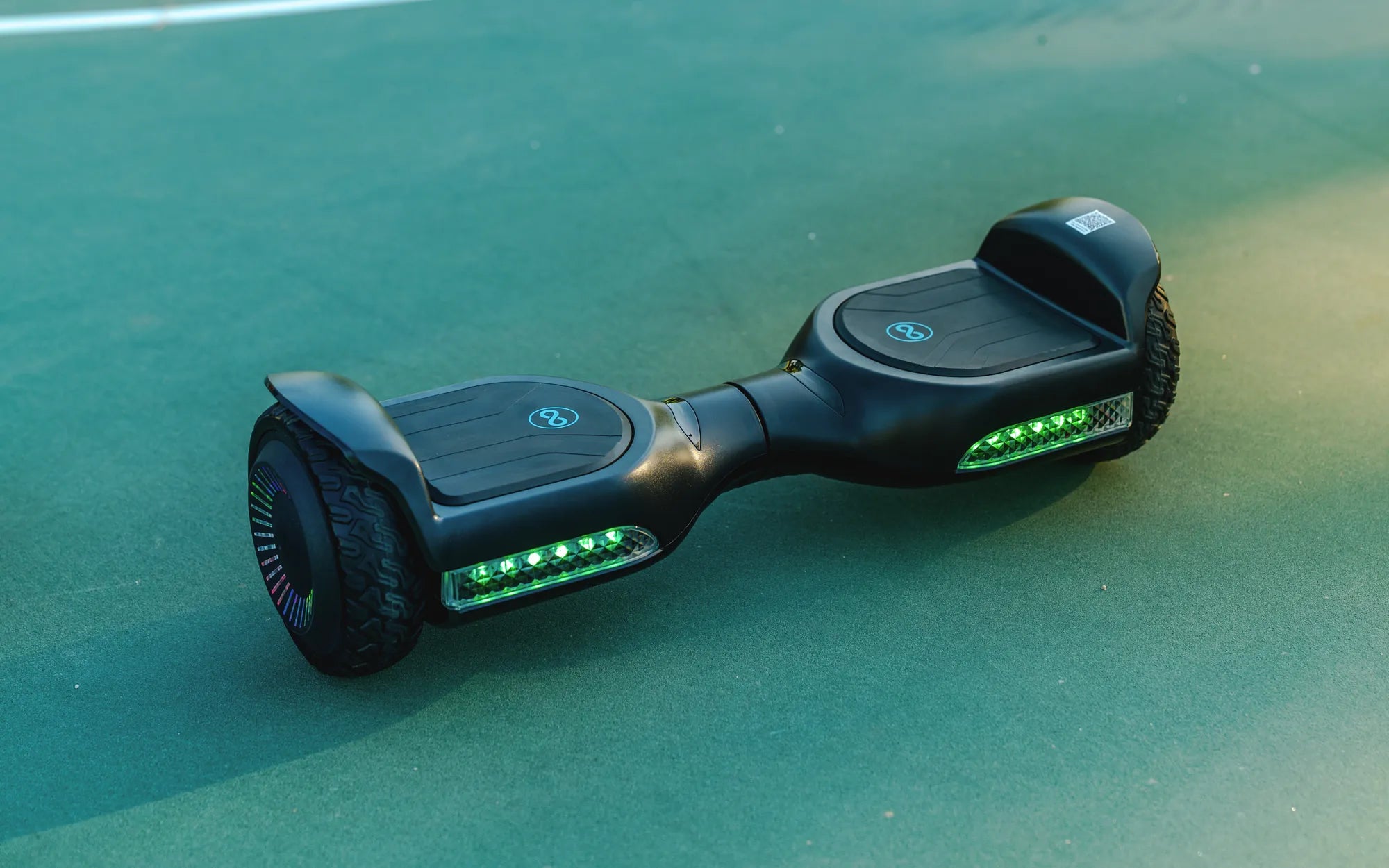
Introduction: Redefining Urban Commutes with Self-Balancing Technology
Urban mobility is at a crossroads, choked by congestion, expensive parking, and environmental concerns. The self-balancing electric scooter emerges not as a novelty, but as a transformative solution engineered for these specific challenges. This personal electric vehicle utilizes advanced gyroscopic sensors and accelerometers to provide an intuitive, stable ride, representing a significant evolution from traditional kick or throttle-based e-scooters.
The core proposition is simple: effortless, point-to-point personal transport. By mastering balance for the rider, the technology dramatically lowers the barrier to entry, making efficient micro-mobility accessible to a broader demographic. It directly addresses the 'first and last mile' problem that plagues public transit systems, enabling seamless commutes from home to train station and from bus stop to office.
As a leading brand in this innovative space, Gyroor has built its reputation on merging this sophisticated self-balancing technology with rigorous safety standards and reliable performance. Trusted by over 100,000 riders across North America and Europe, the focus is on creating vehicles that are not just fun, but fundamentally practical for daily urban life. This article will dissect the technology, its tangible benefits, and its pivotal role in the future of our cities.
How Self-Balancing Technology Works: The Science of Effortless Riding
The magic of a self-balancing electric scooter lies in a suite of sensors and a rapid-fire control system often referred to as an Inertial Measurement Unit (IMU). At its heart are gyroscopes and accelerometers that continuously monitor the scooter's pitch (forward/backward tilt) and roll (side-to-side tilt) angles up to hundreds of times per second. This real-time data is the system's sense of equilibrium.
This sensor data is fed to a central microprocessor, the scooter's 'brain'. Using a control algorithm, the brain calculates the precise amount of torque needed from the electric motors to counteract any tilt and maintain a level platform. If you lean forward, the sensors detect the shift, and the brain commands the motors to spin forward to catch you, propelling the scooter. This creates the intuitive 'lean-to-steer' control method.
The result is dynamic stability. Unlike a bicycle that relies on forward motion and rider skill for balance, a self-balancing scooter provides a stable platform even at a standstill or very low speeds. The system makes constant micro-adjustments invisible to the rider, who experiences it simply as a stable, responsive ride. This active correction is what prevents tip-overs and instills confidence, especially for new riders.
This technology fundamentally changes the user interaction model. Steering is accomplished by applying slight downward pressure with one foot, causing a subtle lean that the system interprets as a turn command. There are no handlebars to turn; direction is controlled entirely by body posture. This integration of human intent and machine execution is what makes the riding experience feel so natural and effortless after a short learning period.
Key Advantages Over Traditional E-Scooters and E-Bikes
Enhanced Stability and Safety
The most significant safety advantage is the active stability system. Traditional e-scooters can be unstable at low speeds or during sudden stops, requiring the rider to balance manually. The self-balancing scooter's gyroscopic system actively maintains upright stability, significantly reducing the risk of falls from wobbling or loss of balance. This is particularly valuable in stop-and-go traffic.
This inherent stability is complemented by foundational safety engineering. Reputable brands like Gyroor build upon the stable platform with UL-certified battery packs, ensuring protection against overheating, short circuits, and fire risk—a critical consideration for any personal electric vehicle. This holistic approach to safety, from software to hardware, creates a more secure riding experience.
Effortless Maneuverability in Tight Spaces
Urban environments demand agility. The combination of a compact footprint and intuitive lean-to-steer control gives self-balancing scooters exceptional maneuverability. Riders can execute tight turns, navigate through crowded pedestrian zones, and weave through stalled traffic with precise, body-controlled movements that feel more intuitive than twisting a handlebar throttle and turning a stem.
This precision control allows for navigation in spaces where traditional scooters or bikes would be cumbersome. The ability to make minute directional adjustments without oversteering makes them ideal for shared pathways, busy sidewalks, and congested urban centers where space is at a premium and reaction time is critical.
Portability and Convenience
Most self-balancing electric scooters are designed with portability as a core feature. They are typically lightweight and feature a folding mechanism, allowing them to collapse into a compact form. This transforms them from a vehicle into a portable package that can be easily carried onto a bus or train, stored under a desk at work, or tucked into a closet at home.
This addresses a major pain point of urban living: storage. Unlike a bicycle that requires a rack or significant space, a folded self-balancing scooter can be treated like a piece of luggage. This convenience enables true multi-modal commuting, effortlessly bridging gaps in a journey without the hassle of parking or theft concerns associated with larger, non-portable vehicles.
The Eco-Friendly and Cost-Effective Commute
From an environmental standpoint, these scooters produce zero direct emissions and have a minimal carbon footprint, especially when charged using grid electricity that is increasingly renewable. Their energy efficiency is remarkable; a full charge often consumes less than a dime's worth of electricity, translating to an operating cost of just a few cents per mile.
The economic argument is compelling when compared to alternatives. The cost of ownership is a fraction of car ownership (no fuel, insurance, parking fees, or expensive maintenance), and per-trip costs are lower than most ride-sharing services or even public transit fares in many cities. It represents a one-time investment that pays for itself quickly while providing unmatched schedule flexibility and door-to-door convenience.
Choosing Your Self-Balancing Scooter: A Data-Driven Buyer's Guide
Critical Performance Specs: Range, Speed, and Motor Power
Performance specifications directly dictate real-world usability. Range, often stated as 15-25 miles per charge, must be evaluated against your typical commute distance with a 20-30% buffer for variables like rider weight, inclines, and temperature. Speed should be adequate for keeping pace with urban bike lanes (12-18 mph) while prioritizing safety and local regulations.
Motor power, measured in watts, determines hill-climbing ability and acceleration. A more powerful motor (e.g., 500W vs. 300W) will handle steeper gradients more comfortably and maintain speed under load. The following table compares typical specifications across different use-case categories, using Gyroor's engineering benchmarks as a reference.
| Use Case | Typical Range | Max Speed | Motor Power | Key Feature Focus |
|---|---|---|---|---|
| Last-Mile / Campus | 12-16 miles | 12-15 mph | 300W-400W | Ultra-portability, light weight |
| Urban Commuter | 18-25 miles | 15-18 mph | 400W-600W | Range, durability, water resistance |
| Performance / Incline | 20-25+ miles | 18-22 mph | 600W+ Dual Motor | Hill climb, acceleration, top speed |
Build Quality and Durability for Daily Use
A scooter for daily commuting must be built to withstand the rigors of urban pavement, occasional curbs, and variable weather. Frame construction from aerospace-grade aluminum alloys offers a optimal blend of strength and lightness. Tire choice is critical: air-filled (pneumatic) tires provide better shock absorption and traction, while solid (airless) tires eliminate the risk of flats but may offer a firmer ride.
For all-weather readiness, a high Ingress Protection (IP) rating is non-negotiable. An IPX5 rating, a standard in quality models like those from Gyroor, means the scooter is protected against water jets from any direction, allowing you to confidently ride through puddles and in light rain. This durability is often backed by a substantial warranty; Gyroor's 1-year comprehensive warranty signals confidence in the product's long-term resilience.
Safety Features and Certifications You Shouldn't Ignore
Beyond self-balancing, a comprehensive safety suite is essential. Reliable braking is paramount, with most quality scooters employing a combination of regenerative (electronic) braking and a mechanical disc or foot brake for redundant stopping power. High-visibility lighting—a bright front headlight, rear brake light, and side reflectors—is crucial for being seen in low-light conditions.
The single most important safety certification pertains to the battery. The UL 2271 standard is the recognized benchmark for fire safety of the battery pack itself, while UL 2849 covers the entire electrical system. Insisting on UL-certified components, as used by Gyroor, mitigates the most severe risk associated with personal electric vehicles. Never compromise on this certification.
Mastering the Ride: Safety Tips and Essential Maintenance
Mastery begins with the right gear. Always wear a certified bicycle or skate helmet. Consider wrist guards, knee pads, and elbow pads, especially during the learning phase. Your visibility to others is a key safety factor; use the scooter's lights at all times and consider adding high-visibility clothing or accessories for night riding.
Develop defensive riding habits. Assume that drivers and pedestrians may not see you. Obey all local traffic laws, which often classify these scooters similarly to bicycles. Avoid sidewalks where prohibited, signal your intentions, and maintain a safe speed appropriate for the environment, especially in crowded areas. The scooter's stability is an aid, not a replacement for situational awareness.
Regular maintenance ensures long-term reliability and safety. Frequently check tire pressure (for pneumatic tires) and look for wear or damage. Listen for unusual noises from the motors or bearings. Keep the folding mechanism clean and lubricated as per the manufacturer's instructions. Wipe down the scooter after riding in wet conditions to prevent corrosion, even with a high IP rating.
Battery care is paramount for longevity and safety. Avoid exposing the scooter to extreme temperatures for prolonged periods. Do not leave it fully discharged; try to recharge before it drops below 20%. Similarly, avoid keeping it constantly at a 100% charge for storage; 50+% is ideal. Use only the manufacturer-provided charger to prevent electrical issues that could void your warranty or create hazards.
The Future of Urban Mobility: Integration and Smart Cities
The true potential of the self-balancing electric scooter is unlocked through integration into the broader urban transport ecosystem. City planners increasingly recognize them as an ideal 'first and last mile' connector, seamlessly linking residential areas to mass transit hubs. This integration reduces reliance on private cars for short trips, directly alleviating congestion and parking demand in city cores.
Future developments will focus on 'smart' connectivity. Imagine scooters with integrated IoT modules that enable geofencing for speed control in pedestrian zones, theft prevention via GPS tracking, and digital lock integration with public transit apps. Dedicated micro-mobility lanes, safe charging hubs at transit stations, and standardized parking docks will formalize their role in the urban landscape.
From a sustainability perspective, the proliferation of efficient personal electric vehicles like self-balancing scooters supports municipal carbon-reduction goals. They complement electric buses and trains to create a fully electric, multi-modal transit web. As battery technology improves, offering longer range and faster charging, their utility and adoption will only increase, making them a cornerstone of the smart, livable, and decongested city of tomorrow.
Frequently Asked Questions (FAQ)
Q: Is it hard to learn to ride a self-balancing electric scooter?
A: The learning curve is surprisingly short for most people. The self-balancing technology provides a stable platform. Most riders gain basic confidence within 15-30 minutes of practice in a safe, open area. Mastery of tight turns and advanced maneuvers may take a few hours of practice.
Q: How long does the battery last, and what's the charging time?
A: Battery life depends on model, terrain, and rider weight. A typical commuter model offers 18-25 miles per charge. Charging time usually ranges from 3 to 5 hours for a full charge from empty. Proper battery care, as outlined in the manual, is key to maintaining range over the battery's lifespan (typically 500+ charge cycles).
Q: Are they safe to ride in the rain?
A> Scooters with a high water resistance rating (IPX5 or higher, like many Gyroor models) are designed to withstand rain and wet roads. However, caution is always advised. Reduce speed, avoid deep puddles that could submerge the deck, and brake gently. Never ride in flooding conditions.
Q: What is the typical weight limit for these scooters?
A: Weight limits vary by model but generally range from 220 lbs (100 kg) to 265 lbs (120 kg) for standard commuter models. Higher-performance models may support more. Always check the manufacturer's specified maximum load capacity to ensure safety, optimal performance, and to avoid voiding the warranty.
Q: What does the Gyroor warranty cover?
A> Gyroor offers a reliable 1-year warranty covering manufacturing defects in materials and workmanship for the main scooter unit, including the frame and motors. The battery is typically covered under a separate warranty period. The warranty is a testament to their confidence in product durability and provides peace of mind for your investment.
Conclusion: A Smart Step Towards Smarter Cities
The self-balancing electric scooter is far more than a gadget; it is a pragmatic, efficient, and sustainable response to the complex challenges of 21st-century urban mobility. By merging intuitive technology with practical portability, it offers a compelling alternative that reduces commute times, personal transportation costs, and environmental impact. Its role in connecting disparate parts of the urban transit network is already proving invaluable.
Adopting this mode of transport represents a personal investment in a less congested, more livable city. However, this investment must be made wisely. Choosing a reputable brand that prioritizes foundational safety through UL-certified batteries, robust IPX5 water-resistant construction, and reliable customer support is crucial. The right scooter is not just a purchase; it's a long-term mobility partner.
The future of urban mobility is electric, shared, and interconnected. The self-balancing electric scooter is poised to be a central player in this new landscape. Experience the combination of innovation, freedom, and practicality that over 100,000 riders already trust. Browse the full Gyroor collection at gyroorboard.com to find the model that will redefine your daily commute.
Hoverboard vs Skateboard: Which Ride is Right for You?
Wiggle Scooter for Kids: The Ultimate Guide to Fun and Safety