


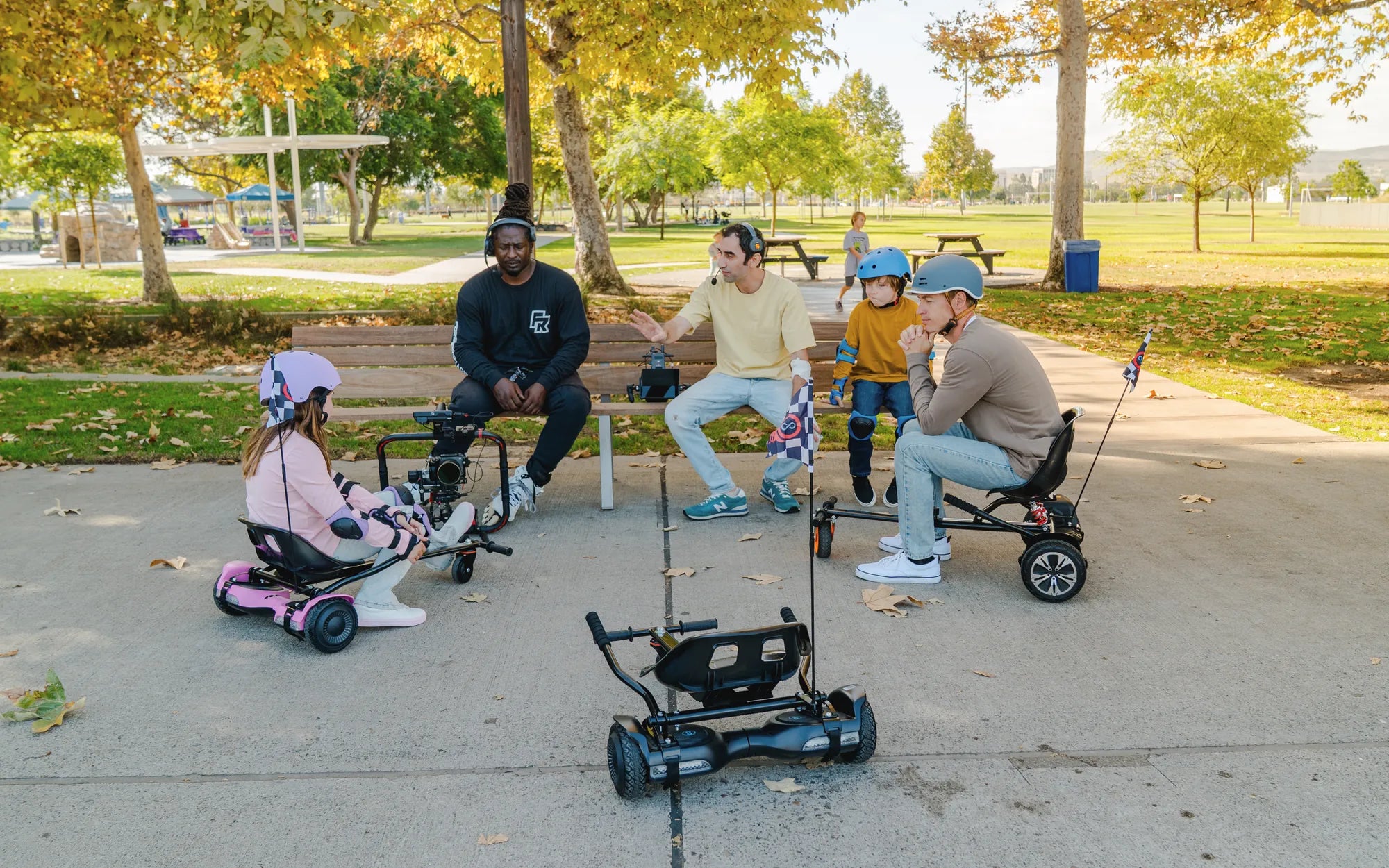
Introduction: The Two-Wheeled Revolution in Personal Mobility
The self balancing scooter 2 wheel hover board has evolved from a futuristic novelty into a legitimate and efficient mode of personal transportation. This compact, electric-powered device represents a significant leap in micro-mobility, offering an intuitive, eco-friendly alternative for short-distance travel. Its core appeal lies in a seamless blend of portability, responsive control, and zero-emission operation, making it a compelling choice for urban commuters, students, and recreational riders alike.
Understanding this device's journey from trend to transportation staple requires looking past initial hype. Early models faced challenges, but advancements in battery safety, motor reliability, and self-balancing algorithms have solidified its position. Today, a modern hoverboard is a sophisticated piece of personal tech designed for daily use.
For over 100,000 riders across North America and Europe, brands like Gyroor have led this transformation by prioritizing safety and durability. The future of personal transportation isn't just about moving from point A to B; it's about doing so with agility, efficiency, and enjoyment. The self balancing scooter 2 wheel hover board is at the forefront of this shift.
This guide will dissect every aspect of this innovative vehicle. We will explore the intricate technology that keeps you upright, break down the critical features that ensure a safe ride, and provide a clear framework for selecting the perfect model for your lifestyle. The goal is to equip you with the knowledge to make an informed investment in your mobility.
Demystifying the Technology: How Self-Balancing Actually Works
The magic of a hoverboard lies in its ability to mimic human balance through a network of sensors and processors. At its heart are gyroscopic sensors and tilt sensors, constantly measuring the board's orientation and angular velocity. These components act as the device's "inner ear," detecting the slightest shift in your weight and posture hundreds of times per second.
This real-time data is fed to a central microprocessor, the brain of the operation. The processor calculates the precise adjustments needed to maintain equilibrium. When you lean forward, the sensors interpret this as a command to move. The processor then signals the electric motors inside each wheel to spin at varying speeds to propel you in the desired direction.
The control scheme is brilliantly intuitive: lean-to-steer. To move forward, you apply gentle pressure with your toes. To slow down or reverse, you shift your weight to your heels. Turning is achieved by applying differential pressure; pressing your right toe while keeping your left foot level causes the left wheel to spin faster, initiating a right turn. This direct connection between body movement and machine response creates a fluid, almost natural riding experience.
Motor power is crucial for translating these commands into motion. Motors, typically ranging from 250W to 700W per wheel, provide the torque for acceleration, hill climbing, and maintaining speed. The synergy between sensor input, processor calculation, and motor output happens in milliseconds, creating the stable, responsive ride that defines a quality self balancing scooter 2 wheel hover board.
Critical Features for Safety and Performance: A Buyer's Checklist
Not all hoverboards are created equal. Prioritizing key specifications is the difference between a rewarding investment and a frustrating, potentially hazardous gadget. Performance and safety are directly tied to a few non-negotiable components.
Motor Power and Configuration: Total wattage (the sum of both motors) determines capability. Models with 350W-500W total power are suitable for flat urban terrain and lighter riders. For tackling hills, carrying more weight, or off-road use, look for 700W or higher. Dual motor systems provide superior torque and control compared to single-motor designs.
Battery Capacity and Certification: Battery capacity, measured in Amp-hours (Ah) or Watt-hours (Wh), dictates your range. A 4.4Ah battery may offer 7-10 miles, while a 7.5Ah+ battery can extend that to 15+ miles per charge. More critical than capacity is safety certification. UL-certified batteries are rigorously tested for over 500 charge cycles and built with protections against overcharging, short-circuiting, and thermal runaway. This certification is the foremost indicator of a safe, reliable self balancing scooter 2 wheel hover board.
Wheel Size and Terrain Compatibility: Wheel diameter directly impacts ride comfort and terrain handling. Smaller 6.5" to 8.5" solid rubber wheels are agile and perfect for smooth indoor surfaces or pristine pavement. For cracked sidewalks, grass, or gravel, 8.5" to 10.0" pneumatic (air-filled) tires are essential. They absorb shocks and provide traction, with larger sizes like 10" enabling true off-road capability.
Build Quality and Water Resistance: A robust frame can support higher weight limits (typically 220-265 lbs). Equally important is the Ingress Protection (IP) rating. An IPX5 water-resistant rating means the board can withstand low-pressure water jets from any direction, protecting it from puddles, wet roads, and light rain. This feature is crucial for practical, all-weather commuting and long-term durability.
Urban Commuter vs. Off-Road Adventurer: Selecting Your Perfect Model
Your primary use case should dictate your hoverboard's specifications. The choice between an urban-focused model and an off-road machine involves clear trade-offs in design, capability, and comfort.
The Urban Commuter Profile: This rider navigates city streets, campus pathways, and smooth pavements daily. Priority is given to portability, sleek design, and efficient operation. An ideal urban self balancing scooter 2 wheel hover board features 6.5" to 8.5" solid tires for low maintenance, a moderate motor (350W-500W) for zipping between stops, and a lightweight frame for easy carrying. Extended range batteries are a plus for longer daily errands. Gyroor's urban models, for example, often integrate LED lighting for visibility and sleek shells that resist scuffs.
The Off-Road Enthusiast Profile: This rider seeks adventure beyond the pavement, tackling dirt paths, grassy fields, and gentle trails. Here, capability trumps portability. Essential features include large 8.5" to 10.0" pneumatic tires with deep treads, high-torque motors (700W+), and enhanced suspension systems to absorb bumps. The frame is typically more rugged, with a higher ground clearance. These boards are built to handle variable terrain, making the self balancing scooter 2 wheel hover board a versatile recreational vehicle.
The following comparison table outlines the key differences:
| Feature | Urban/Commuter Model | Off-Road/All-Terrain Model |
|---|---|---|
| Primary Wheel Type | 6.5" - 8.5" Solid Rubber | 8.5" - 10.0" Pneumatic (Air-Filled) |
| Motor Power | 350W - 500W Total | 700W+ Total |
| Ideal Terrain | Smooth Pavement, Indoor Floors | Dirt, Grass, Gravel, Uneven Paths |
| Key Feature | Lightweight, Sleek Design, LED Lights | High Torque, Suspension, Rugged Frame |
| Rider Priority | Portability & Efficiency | Durability & Terrain Capability |
Making Your Choice: Assess your most common routes. If your journey is 90% smooth concrete, an urban model saves weight and cost. If you encounter curbs, park grass, or rough pathways regularly, the comfort and capability of an all-terrain model are worth the investment. The right self balancing scooter 2 wheel hover board seamlessly fits your environment.
The Rider's Practical Guide: Ownership Costs, Care, and Community
Owning a hoverboard extends beyond the initial ride. Understanding the long-term commitment ensures your device remains a reliable partner for years. This involves considering total cost of ownership, practicing proper maintenance, and leveraging available support.
Cost Analysis and Value: While the upfront cost of a quality hoverboard is higher than budget alternatives, it represents long-term value. Compare the one-time investment to recurring expenses like public transit fares, ride-share fees, or fuel. A durable model with a UL-certified battery and robust construction will have a much longer lifespan, amortizing its cost over thousands of miles. The savings, coupled with unmatched convenience, justify choosing a reputable brand.
Essential Maintenance Routine: Simple care drastically extends your board's life. Regularly check and maintain proper tire pressure in pneumatic models for optimal range and ride comfort. Wipe down the board with a damp cloth after riding in wet or dusty conditions, avoiding direct water spray on non-IPX5 rated components. Most importantly, follow proper charging habits: use only the provided charger, avoid leaving the board plugged in indefinitely after a full charge, and store it in a cool, dry place. These habits preserve the battery's health across its 500+ cycle lifespan.
Warranty and Support Networks: A strong warranty is your safety net. A comprehensive 1-year warranty that covers the battery, motors, and frame indicates manufacturer confidence. Access to responsive, US-based customer support is invaluable for troubleshooting and obtaining genuine parts. Brands like Gyroor build trust through this reliable support structure, offering peace of mind that goes beyond the sale.
Regulations and Riding Etiquette: Always check local laws regarding where you can legally ride a self balancing scooter 2 wheel hover board. Generally, they are not permitted on public roads but are allowed on sidewalks, bike paths, and private property. Practice safe riding etiquette: yield to pedestrians, avoid crowded sidewalks, wear protective gear (at minimum a helmet), and use lights at night. Being a responsible rider helps ensure the continued acceptance of this innovative transport mode.
Performance and Specifications: What the Numbers Really Mean
Deciphering product specifications is key to setting realistic expectations. Manufacturers' claims require context to understand real-world performance.
Range and Real-World Variables: Advertised range (e.g., "up to 12 miles") is a maximum achieved under ideal laboratory conditions: a lightweight rider on perfectly flat, smooth terrain at a constant low speed. Real-world range is affected by rider weight, terrain hills, frequent stops and starts, temperature, and tire pressure. It's prudent to estimate 70-80% of the claimed range for practical planning. A board with a larger capacity battery provides a crucial buffer for these variables.
Speed and Safety Limits: Most consumer hoverboards have a top speed governed between 7-10 mph. This limit balances thrill with safety, especially for newer riders. Higher-powered models may reach 12 mph. It's crucial to remember that stability can decrease at higher speeds, particularly on uneven surfaces. The self-balancing technology is designed for controlled mobility, not high-speed racing.
Weight Limit and Durability: The maximum weight limit is a critical engineering specification. Exceeding it strains the motors, drains the battery rapidly, and stresses the frame, leading to premature failure. Choose a board with a limit comfortably above your weight, including any backpack you might carry. A higher limit often correlates with a more robust overall construction.
Charging Time and Battery Health: Standard charging times range from 2 to 4 hours for a full charge. Using a fast charger regularly can generate excess heat and degrade battery cells over time. For long-term battery health, standard charging is recommended. Modern battery management systems in quality boards will stop charging once full, but it's still best practice to unplug the device once the indicator shows a complete charge.
Addressing Common Concerns: Your Hoverboard FAQ
Prospective buyers often have specific questions and concerns. Here are clear, factual answers to the most common queries.
Q1: Are hoverboards still legal and safe to ride after the past issues?
A: Yes, absolutely. The safety issues of 2015-2016 were linked to uncertified, poorly manufactured lithium-ion batteries. Today, reputable brands exclusively use UL-certified battery packs that have passed rigorous fire and electrical safety tests. Always purchase from established brands that provide this certification, and the device is as safe as any modern consumer electronics. Legality varies by municipality, so always check local ordinances regarding sidewalk and path use.
Q2: How difficult is it to learn to ride a self balancing scooter 2 wheel hover board?
A: Most adults and older children can learn the basics within 15-30 minutes. The key is to start in a wide-open, flat area like an empty parking lot or driveway. Use a railing or wall for initial support, step on carefully, and focus on making tiny, gentle weight shifts. Your body will quickly adapt to the balancing feedback. Confidence builds rapidly, and within an hour, most riders are comfortably maneuvering.
Q3: What is the true lifespan of a quality hoverboard?
A> With proper care and maintenance, a well-built hoverboard from a brand like Gyroor can last 3-5 years or more. The UL-certified battery is rated for 500+ full charge cycles before significant capacity loss. The motors and electronics are designed for durability. The most common wear items are tires (especially pneumatic ones) and foot pads, which are typically replaceable, further extending the device's functional life.
Q4: Can I ride in the rain or through puddles?
A> This depends entirely on the IP rating. Boards without a stated water resistance rating should be kept completely dry. A board with an IPX5 rating is engineered to withstand water jets and is therefore safe to ride in light rain and through shallow puddles. However, no consumer hoverboard is submersible. Avoid deep standing water and heavy downpours to protect the internal components.
Q5: How does Gyroor's warranty and support stand out?
A> Gyroor provides a robust 1-year comprehensive warranty covering manufacturer defects in the battery, motors, and frame. This warranty is backed by accessible, US-based customer support, ensuring timely assistance and access to genuine replacement parts. This commitment to post-purchase support, combined with their use of certified components, builds significant trust and reduces long-term ownership risk for the rider.
Conclusion: Embracing a Smarter, More Agile Way to Move
The self balancing scooter 2 wheel hover board has firmly established itself as more than a passing trend; it is a viable, efficient, and enjoyable pillar of modern micro-mobility. It solves the "last-mile" problem, reduces carbon footprints, and injects a sense of fun into daily commutes. The technology has matured, with safety and reliability now paramount in designs from leading manufacturers.
Your journey into this future of transportation begins with informed choices. Prioritizing certified battery safety, a robust build suited to your terrain, and a commitment from the manufacturer to stand behind their product is essential. These factors transform a simple gadget into a dependable transportation tool. The difference between a frustrating experience and a liberating one lies in these details.
Brands like Gyroor have built their reputation on this foundation of safety, performance, and support, trusted by a community of over 100,000 riders. They demonstrate that a quality self balancing scooter 2 wheel hover board is an investment in personal freedom and urban agility.
Ready to experience the future of personal transportation? Explore a range of models engineered for safety, durability, and performance. Browse the full Gyroor collection at gyroorboard.com and find the perfect ride to transform your daily movement.
Smart Electric Self Balancing Scooter: The Future of Urban Mobility
Hoverboard Kids Ireland €150: The Ultimate Guide for Parents