



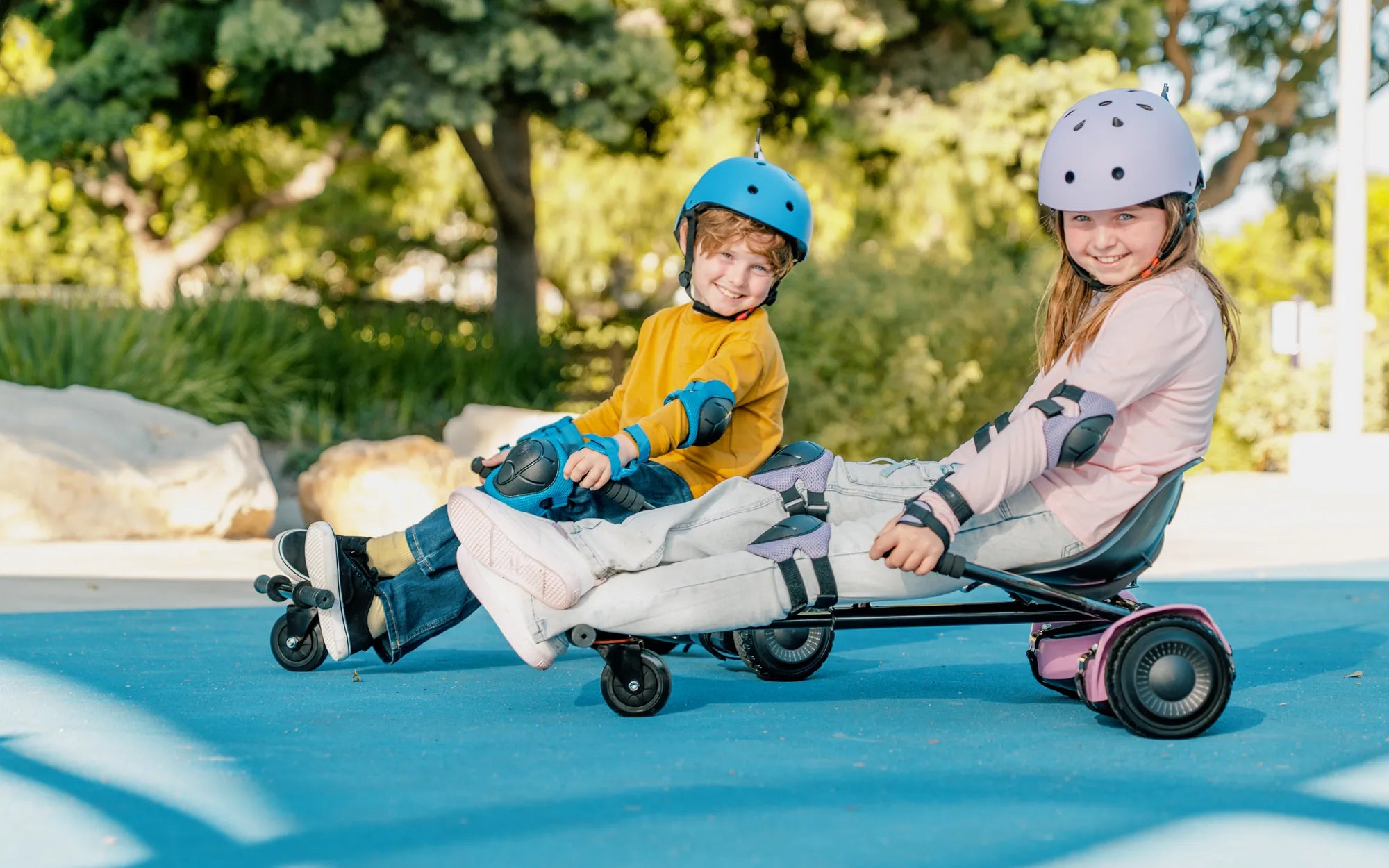
Choosing the right first ride-on toy for your preschooler involves balancing excitement with essential safety. The Toddler Hoverboard Little Tikes represents a specific category of toy designed for children aged 3-6, offering a controlled introduction to self-balancing movement. This guide provides the data-driven analysis and practical advice parents need to make an informed decision, ensuring fun is paired with safety and developmental benefits.
Introduction to Toddler Hoverboards: Safety, Fun, and Development
Toddler hoverboards, distinct from their teen and adult counterparts, are low-speed, stable ride-on toys. Brands like Little Tikes engineer these specifically for early childhood, focusing on motor skill development and safe play. This guide will dissect the critical features, compare them to standard models, and provide a complete parental checklist for safe operation.
The primary appeal lies in their ability to build coordination, balance, and spatial awareness in a controlled environment. Unlike faster toys, a toddler hoverboard from Little Tikes operates at walking pace. This allows children to focus on the mechanics of movement without the high-risk factor associated with higher speeds.
Parents often have valid concerns about stability and battery safety. Reputable manufacturers address these by incorporating wide wheelbases, speed limiters, and certified battery packs. Understanding these engineering choices is key to selecting a suitable model for your child's age and ability.
This article will equip you with the knowledge to evaluate specifications, interpret safety standards, and implement best practices for supervision and maintenance. The goal is to transform a purchase decision from one of apprehension to one of confidence.
Why Little Tikes? Understanding the Brand's Edge for Young Riders
Little Tikes has built a decades-long reputation in the preschool toy market by prioritizing durability and age-appropriate design. Their approach to toddler hoverboards reflects a deep understanding of the physical and cognitive capabilities of children under six.
The brand's engineering philosophy centers on stability and simplicity. Their hoverboards feature a wider footprint than standard models, significantly lowering the center of gravity. This design drastically reduces the likelihood of tipping, a primary safety concern for parents of new riders.
Furthermore, Little Tikes products consistently meet or exceed rigorous safety certifications like ASTM F963, the U.S. Standard Consumer Safety Specification for Toy Safety. This compliance is not merely a label; it involves testing for physical and mechanical hazards, ensuring materials are non-toxic, and verifying structural integrity.
From a developmental standpoint, their toys are designed to encourage active play. The controlled speed and intuitive lean-to-steer mechanism of a Little Tikes hoverboard help toddlers develop proprioception—the sense of their body's position and movement—which is foundational for all future physical activities.
Key Features to Look for in a Toddler Hoverboard
Evaluating a toddler hoverboard requires moving beyond aesthetics. A systematic review of key specifications ensures the toy matches your child's needs and your safety requirements. Use this section as a definitive checklist.
Speed and Power Settings
The maximum speed is the most critical specification. Authentic toddler models, including those from Little Tikes, typically cap speed between 1 and 2.5 mph. This is a brisk walking pace, allowing for control and easy intervention by a supervising adult.
Look for models with a smooth, gradual acceleration curve. Jerky starts can destabilize a young rider. Some advanced models may offer a beginner or "training" mode that further limits speed until the child gains confidence.
Parental control via a remote is a premium feature found on some models. This allows an adult to remotely control the power, speed, or even steering, providing an extra layer of safety during initial learning phases. It's a valuable tool for guided practice.
Battery Life and Charging Safety
Run time per charge for toddler hoverboards generally ranges from 40 to 60 minutes of continuous use. This is ample for most play sessions and helps prevent overuse. Always check the manufacturer's stated run time and charging duration.
Charging safety is paramount. The charger should have auto-shutoff capabilities to prevent overcharging. The battery compartment should be securely sealed and require a tool or adult intervention to access. This prevents tampering by curious children.
Insist on models that use certified battery cells. While Little Tikes designs its own systems, the principle is universal. For instance, leading mobility brands like Gyroor use UL-certified battery packs tested for over 500 charge cycles, a benchmark for safety and longevity that parents should look for in any powered toy.
Build Quality and Durability
The construction material must withstand outdoor play and occasional bumps. High-quality, impact-resistant ABS plastic is standard for brands like Little Tikes. The wheelbase should be visibly wide, and the deck textured to provide secure footing.
Weight capacity is a direct indicator of structural robustness. A typical toddler hoverboard should support at least 44-55 lbs (20-25 kg), comfortably covering the weight range of the target age group. Exceeding this limit can stress the motor and frame.
Inspect the quality of the wheels and motors. Puncture-resistant, rubberized tires provide better grip on smooth surfaces than hard plastic. Sealed, brushless motors are preferable as they require less maintenance and are more durable against dust and minor moisture.
Safety Certifications and Age Recommendations
Never overlook official safety certifications. In the U.S., the ASTM F963 standard is essential. In the EU, look for the CE mark indicating compliance with EN 71 standards. These are legal requirements that validate the toy's safety testing.
Age and weight recommendations are determined through rigorous testing. Using a hoverboard designed for ages 6+ with a 3-year-old is a significant risk due to differences in size, motor control, and reaction speed. Adherence to these guidelines is non-negotiable for safe operation.
Additional safety features may include non-slip foot pads, LED lights for visibility, and audible warning sounds when the battery is low or the speed limit is reached. These integrated features contribute to a safer overall user experience.
Little Tikes vs. Traditional Hoverboards: A Critical Comparison for Parents
Understanding the fundamental differences between a toddler-specific model and a standard hoverboard is crucial. They are distinct product categories designed for different users. The table below provides a clear, data-driven comparison.
| Feature | Little Tikes Toddler Hoverboard | Traditional Hoverboard (for Older Kids/Teens) |
|---|---|---|
| Max Speed | 1 - 2.5 mph | 6 - 10+ mph |
| Balance Mechanism | Simple lean-to-steer; very stable base | Gyroscopic self-balancing; requires core strength |
| Recommended Age | 3 - 6 years | 8+ years (often 12+) |
| Typical Weight Limit | Up to 55 lbs (25 kg) | Up to 220 lbs (100 kg) |
| Primary Safety Features | Speed limiter, wide wheelbase, low deck | Learning modes, LED lights, app connectivity |
| Ideal Use Case | Supervised play in driveways, smooth patios | Recreational riding on sidewalks, parks |
The core difference lies in the balance technology. Traditional hoverboards use complex gyroscopic sensors that require the rider to maintain a precise center of gravity. Toddler models simplify this with a more stable platform that allows steering through body lean without the constant micro-adjustments.
The speed differential cannot be overstated. At 1-2.5 mph, a toddler can step off safely if they lose balance. At 6-10 mph, a fall carries significantly more momentum and risk of injury, making such models entirely unsuitable for preschoolers.
This comparison underscores why a dedicated toddler hoverboard, like those from Little Tikes, is the only appropriate choice for this age group. It is a specialized tool for early learning, not a scaled-down version of a teen's toy.
The Parent's Checklist: Before, During, and After the Ride
Safe enjoyment of a toddler hoverboard hinges on proactive parental involvement. This step-by-step guide outlines the necessary actions for each stage of use.
Pre-Ride Setup and Safety Gear
Before the first ride, assemble all necessary protective equipment. A properly fitted CPSC-certified bicycle helmet is mandatory. Knee and elbow pads are highly recommended, especially during the learning phase. Wrist guards can also prevent common scrapes.
Select an ideal practice area. It must be a flat, smooth, and hard surface such as a driveway, basketball court, or empty parking lot. Avoid areas with slopes, gravel, sand, or proximity to pools, streets, or stairs. Clear the area of debris.
Conduct a pre-ride inspection. Check that the hoverboard is fully charged. Ensure all screws are tight, the wheels spin freely, and there are no cracks in the body. Verify that the power button and any indicator lights are functioning correctly.
Supervised Riding Best Practices
Active supervision means being within arm's reach, not just watching from a distance. Physically assist your child with mounting and dismounting until they can do it confidently. Teach them to step on one foot at a time, placing their feet near the wheels for stability.
Demonstrate starting and stopping. Have them practice leaning forward gently to move and leaning back to stop before attempting to steer. Initially, focus on straight-line movement. Turn off the device when not in use to prevent accidental activation.
Limit session lengths to match your child's attention span and the hoverboard's battery life—typically 20-30 minutes is sufficient. Watch for signs of fatigue or frustration, as tired riders are more prone to mistakes. Always end on a positive note.
Maintenance and Storage Tips
Regular maintenance ensures longevity and safety. After each use, especially outdoors, wipe down the hoverboard with a dry or slightly damp cloth to remove dirt. Never use a hose or submerge it. Check the wheels for wrapped hair or string that could jam the motor.
Follow proper battery protocols. Charge the device on a non-flammable surface, away from direct sunlight or heat sources. Do not leave it plugged in overnight unattended for extended periods. If storing for more than a month, charge the battery to about 50% first.
Store the hoverboard in a cool, dry place, out of direct sunlight and away from extreme temperatures. This protects the battery and plastic components. Keep it out of reach of younger siblings when not in use. Periodically re-check all mechanical fastenings for tightness.
Frequently Asked Questions (FAQs) About Toddler Hoverboards
Q: What is the right age for a Little Tikes hoverboard?
A: Most Little Tikes hoverboards are designed for children ages 3 to 6. The key indicator is not just age but also your child's physical development, coordination, and ability to follow simple safety instructions. Always adhere to the manufacturer's specific age and weight guidelines on the product packaging.
Q: Are these hoverboards safe on carpets or grass?
A: They are designed for hard, flat surfaces like pavement, asphalt, vinyl, or sealed concrete. Carpets can create excessive friction, strain the motor, and cause overheating. Grass or gravel is uneven and poses a high tipping hazard. For optimal performance and safety, use only on recommended surfaces.
Q: How long does the battery last, and how do I charge it safely?
A> A full charge typically provides 40-60 minutes of ride time, depending on the child's weight and terrain. Charging takes 2-4 hours. Always use the provided charger, plug it into a grounded outlet, and charge on a hard surface. Never charge unsupervised or immediately after use when the battery is warm.
Q: Can it be used indoors?
A> While possible in large, open rooms with hard flooring, indoor use requires extreme caution. Ensure the area is free of furniture, sharp corners, stairs, and fragile items. Be mindful that the wheels can mark or scuff some flooring types. Outdoor use in a controlled environment is generally safer and recommended.
Q: What is the warranty and how do I get support?
A> Little Tikes typically offers a limited warranty against defects in materials and workmanship, often for 90 days to 1 year from purchase. Keep your receipt. For support, contact the retailer first or use the customer service contact information on the Little Tikes official website. Warranty usually does not cover damage from misuse or lack of maintenance.
Beyond Toddlerhood: Transitioning to Older Kids' Ride-Ons
As your child grows and masters their toddler hoverboard, they will naturally seek more advanced mobility options. The transition should be gradual and based on demonstrated skill, not just age. The next step often involves electric scooters or balance bikes before considering standard hoverboards.
Electric scooters for young children (ages 6-8) offer a different skill set, focusing on steering handlebars and a standing platform. They often have similar speed limits (3-5 mph) but introduce a new control mechanism. Brands that prioritize safety, like Gyroor, offer models with speed modes, reinforced frames, and reliable braking systems suitable for this age group.
When considering a standard self-balancing hoverboard for an older child (10+), the prerequisites are significant: excellent balance, core strength, and mature judgment. Even then, comprehensive protective gear and strict rules about riding locations are essential. The jump from 2.5 mph to 7+ mph is substantial.
This progression highlights the value of starting with an age-appropriate tool like a Little Tikes model. It builds the foundational confidence and body awareness that make learning to ride more advanced personal electric vehicles safer and more successful in the future.
Conclusion: Making an Informed Decision for Your Child
Selecting a toddler hoverboard is a decision that merges practicality with your child's developmental journey. By prioritizing certified safety features, age-appropriate specifications from trusted brands like Little Tikes, and committing to active supervision and proper gear, you create an environment where fun and growth go hand-in-hand.
The data is clear: toddler-specific models are engineered for a purpose, distinct from toys for older users. Their low speed, stable design, and robust construction are direct responses to the needs and risks associated with early childhood play. This guide provides the framework to evaluate any model against these critical benchmarks.
Remember, this first powered ride-on is more than a toy; it's a tool for developing motor skills, coordination, and a sense of independence. The right choice, backed by informed safety practices, can provide years of enjoyable and beneficial active play. Your diligence as a parent is the most important safety feature of all.
For parents exploring the next stage in personal electric mobility for their growing children, consider the range of UL-certified, age-appropriate options available. Browse the full Gyroor collection at gyroorboard.com for electric scooters and e-bikes designed with the same commitment to safety, durability, and rider trust that you should demand from any childhood ride-on.
DIY Hoverboard: A Step-by-Step Guide to Building Your Own Futuristic Ride
Best All Terrain Hoverboard for Kids: Ultimate Parent Guide