



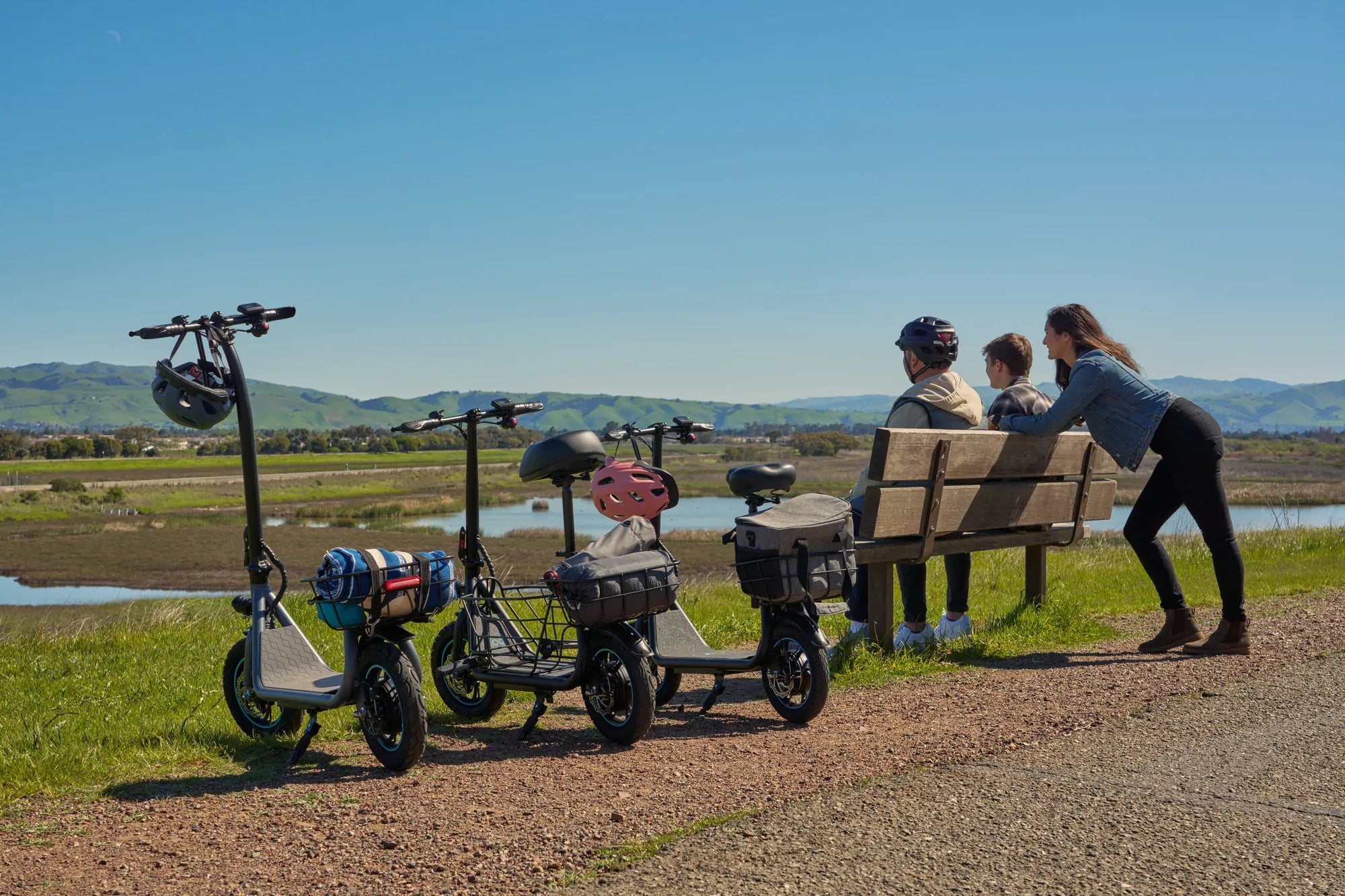
Navigating India's Electric Scooter Revolution
The electric two-wheeler market in India isn't just growing; it's accelerating at a breakneck pace. Driven by volatile fuel prices, compelling government incentives under the FAME II scheme, and the urgent need to decongest and decarbonize urban centers, the shift to electric is now mainstream. For the discerning Indian consumer, this explosion of choice brings both opportunity and confusion.
This definitive guide serves as your roadmap. Our mission is to move beyond marketing claims and provide a clear, data-driven analysis of the top electric scooters available. We'll equip you with the knowledge to select a scooter that matches your daily commute, budget, and local terrain. Finding the right model requires understanding the critical interplay between advertised specifications and real-world Indian conditions.
This article is your one-stop resource for making an informed decision in 2024. We will dissect the essential factors—from battery range to monsoon-ready build quality—and present a detailed breakdown of the leading contenders. The goal is to help you invest in a scooter that delivers reliability, safety, and value for years to come.
Key Factors to Consider Before Buying an Electric Scooter in India
Choosing an electric scooter in India requires a different checklist than a conventional petrol vehicle. The priorities shift from engine capacity to battery efficiency, and from fuel economy to charge cycles. Your decision must account for daily commuting distance, road conditions, parking constraints, and local climate.
It's crucial to look beyond the sticker price. The total cost of ownership, including electricity costs, battery replacement cycles, and maintenance, defines true value. Furthermore, factors like after-sales service network density and warranty coverage are paramount for long-term peace of mind in a rapidly evolving market.
Range & Battery: The Heart of Your E-Scooter
The single most critical specification is range, but it must be interpreted correctly. Manufacturers cite an IDC (Indian Driving Cycle) range, which is a standardized test conducted in ideal conditions. Real-world range can be 20-30% lower, affected by factors like rider weight, frequent stops, hilly terrain, and use of accessories like lights.
Battery technology is key. Lithium-ion batteries are lighter, offer longer lifespans (typically 1500-2000 charge cycles), and support faster charging compared to older lead-acid variants. For many Indian households without dedicated parking or ground-floor charging access, a removable battery is not just a convenience but a necessity.
Motor Power & Performance: Conquering Indian Roads
Motor power, measured in watts (W), dictates acceleration, hill-climbing ability, and top speed. For most city commuting, a motor between 1200W and 3000W is sufficient. However, if your route includes steep flyovers or ghat sections, prioritize higher peak power and torque figures.
Most electric scooters use hub motors integrated into the wheel. While cost-effective and low-maintenance, they can affect unsprung weight. Performance-oriented models may feature mid-drive motors that offer better weight distribution and efficiency. Top speed should be evaluated against your needs and local regulations, with 80-90 kmph being adequate for most highway stretches.
Build Quality & Suspension: Built for Indian Conditions
Indian roads demand ruggedness. Assess the scooter's frame construction, panel fit-and-finish, and overall heft. The Ingress Protection (IP) rating indicates resistance to dust and water. An IP65 rating or higher is highly recommended to ensure reliability through monsoons and on wet roads.
Suspension is non-negotiable. A combination of telescopic forks at the front and twin or mono-shock absorbers at the rear is essential to absorb impacts from potholes and uneven surfaces. Poor suspension not only compromises comfort but can also lead to premature wear on other components.
Features, Safety & Compliance
Modern electric scooters come packed with features. Prioritize safety and utility. Look for regenerative braking, which recovers energy during deceleration, and a robust primary braking system—disc brakes are preferred, with Combined Braking System (CBS) or Anti-lock Braking System (ABS) offering superior control.
Digital displays provide vital info like remaining range, trip data, and battery status. Mobile app connectivity can offer navigation, ride statistics, and vehicle diagnostics. Legally, ensure the scooter is ARAI (Automotive Research Association of India) certified. This certification is mandatory for registration, insurance, and eligibility for the FAME II subsidy.
The Top 10 Electric Scooters in India for 2024: A Detailed Breakdown
This list is curated based on a composite score of performance, features, value proposition, and market presence. Prices are indicative (ex-showroom, pre-subsidy) and can vary by state. The ranking considers the diverse needs of Indian riders, from hyper-urban commutes to suburban family use.
| Rank & Model | Key Specs (Motor/IDC Range/Top Speed) | Price Bracket | Best For | Key Pros | Key Cons |
|---|---|---|---|---|---|
| 1. Ola S1 Pro Gen 2 | 8.5 kW / 195 km / 120 kmph | Premium | Tech enthusiasts, performance seekers | Hypercharger network, massive boot space, powerful performance | Service network consistency, hefty weight |
| 2. Ather 450X | 6.2 kW / 146 km / 90 kmph | Premium | Urban professionals, quality-focused buyers | Excellent build & ride quality, extensive public charging, reliable brand | Premium pricing, smaller battery than some rivals |
| 3. TVS iQube | 4.4 kW / 145 km / 78 kmph | Mid-Range to Premium | Trust-conscious commuters, city riding | TVS reliability & vast service network, balanced performance | Lower top speed, design may be conservative for some |
| 4. Bajaj Chetak | 4.1 kW / 126 km / 73 kmph | Mid-Range | Style-conscious urbanites, brand loyalists | Iconic retro design, good build quality, decent range | Limited variant options, slower acceleration |
| 5. Simple Energy Mark 2 | 4.5 kW / 212 km / 100 kmph | Mid-Range | Range-anxious riders, family use | Class-leading claimed range, spacious design | Newer brand, service network expansion in progress |
| 6. Vida V1 Pro | 6 kW / 125 km / 80 kmph | Mid-Range | Value seekers in Hero's network | Swap-enabled battery (optional), Hero MotoCorp's backing | Average range, feature set lags behind direct rivals |
| 7. Okinawa Okhi 90 | 3000W / 160 km / 90 kmph | Budget to Mid-Range | Budget buyers needing good range | Affordable pricing for the range offered, decent features | Build quality inconsistencies, after-sales service varies |
| 8>Ampere Magnus EX | 1200W / 107 km / 55 kmph | Budget | First-time EV buyers, short commutes | Extremely affordable, low running cost, simple operation | Basic performance, lower top speed and features |
| 9. Bounce Infinity E1 | 1500W / 85 km / 65 kmph | Budget | City students, ultra-short commute specialists | Battery subscription model reduces upfront cost, lightweight | Very limited range, subscription adds to long-term cost |
| 10. Hero Electric Optima CX (Dual Battery) | 1200W / 140 km / 42 kmph | Budget | Last-mile delivery, extreme range on a budget | Phenomenal range for the price, established brand in budget segment | Very low speed, basic design and features |
How to Choose: Matching Your Lifestyle with the Right E-Scooter
The best electric scooter is the one that disappears into your daily routine, providing reliable, stress-free transportation. This decision matrix moves beyond specs to align with user profiles and primary use cases prevalent in India.
The Daily Urban Commuter
Your needs: A reliable 70-100 km real-world range, comfortable ride quality for bad roads, moderate speed (60-80 kmph), and a dependable service network for quick repairs. You prioritize low daily running costs and hassle-free ownership.
Top Picks: TVS iQube and Ather 450X. Both offer the right blend of performance, range, and have invested heavily in city-centric service infrastructure and public fast-charging networks, making them ideal for stop-and-go city traffic.
The Budget-Conscious Buyer
Your needs: The lowest possible entry price without sacrificing essential reliability. You seek the best value, focusing on cost-per-kilometer over flashy features. A real-world range of 60-80 km is sufficient for daily needs.
Top Picks: Ampere Magnus EX and Okinawa Okhi 90. These models dominate the value segment, offering functional transportation with lithium-ion batteries. The key is to verify the local service support and read detailed ownership reviews before purchase.
The Performance & Tech Enthusiast
Your needs: Thrilling acceleration, high top speed, cutting-edge connectivity features (like over-the-air updates, ride modes, detailed analytics), and premium build quality. You view your scooter as a tech gadget as much as transport.
Top Picks: Ola S1 Pro Gen 2 stands alone in raw performance and tech features. The Ather 450X offers a more refined and balanced tech-forward experience. These scooters redefine what electric two-wheelers can do.
The Family & Practicality Focused Rider
Your needs: Best-in-class storage (under-seat boot), comfortable pillion seating with generous footboards, stable and easy-to-ride dynamics, and a long range for occasional longer trips. Durability and space are key.
Top Picks: Simple Energy Mark 2 offers exceptional range and a spacious design. The Bajaj Chetak provides a stable, comfortable ride with good build quality. The Ola S1 Pro's 36-liter boot is a major practical advantage.
The Gyroor Promise: Engineering for Confidence in Every Ride
While Gyroor is a global leader in electric mobility solutions for North America and Europe, its engineering philosophy sets a benchmark for the qualities Indian riders should demand. Trusted by over 100,000 riders worldwide, Gyroor's focus is on foundational safety and durability.
In a market where battery safety is paramount, Gyroor's commitment to UL-certified lithium-ion battery packs is crucial. These batteries undergo rigorous testing for over 500 charge cycles and are engineered for thermal stability, a vital feature for India's extreme summer temperatures.
India's monsoon season tests every vehicle. Gyroor builds its scooters and e-bikes with an IPX5 water-resistant rating across the lineup. This provides essential protection against heavy rain and road splash, ensuring critical electronics remain safe from water ingress, a standard every Indian buyer should verify.
Finally, ownership peace of mind comes from support. Gyroor backs its products with a 1-year comprehensive warranty, emphasizing accessible customer service. In a segment where after-sales experience can be inconsistent, partnering with a brand that prioritizes long-term reliability is a wise investment.
Ownership Essentials: Incentives, Charging & Maintenance in India
Purchasing the scooter is just the first step. Understanding the financial benefits and daily care routines will maximize your investment and ensure longevity.
Incentives: The FAME II subsidy provides a significant discount at the point of purchase. Ensure your chosen model is on the government's approved list. Additionally, many state governments offer extra incentives, like road tax exemption or additional cashbacks. Calculate the final on-road price including these subsidies, insurance, and registration.
Charging: Most owners will charge at home overnight using a standard 5A/15A socket. Install a dedicated circuit if possible. While public charging networks are expanding in metros, they are not yet ubiquitous. If you lack parking space, a scooter with a removable battery is essential. Charging costs are remarkably low—typically ₹30-₹50 for a full charge, compared to hundreds for petrol.
Maintenance: EV maintenance is simpler but specific. Keep the battery charge between 20% and 80% for daily use to prolong its life. Avoid deep discharges. Clean the scooter regularly, especially after riding in rain or on dusty roads, and check tire pressure weekly. Service intervals are longer than petrol vehicles, but adhere to the manufacturer's schedule for brake fluid, suspension, and general health checks.
Frequently Asked Questions (FAQs) About Electric Scooters in India
Q1: What is the real-world range I can expect?
A: Expect 20-30% less than the IDC-claimed range. For a scooter claiming 120 km, a realistic range is 85-100 km under mixed city riding conditions with a single rider.
Q2: How much does charging cost compared to petrol?
A: It is significantly cheaper. Charging a 3 kWh battery from empty to full costs about ₹30 (at ₹10/kWh). This can deliver ~100 km, whereas a 100 km petrol scooter ride would cost approximately ₹250-₹300 (at ₹100/litre and 40-50 km/litre efficiency).
Q3: Is servicing expensive and complicated?
A: No, servicing is generally less expensive than petrol scooters. There are fewer moving parts—no engine oil, spark plugs, or clutch to replace. Primary costs are related to brake pads, tires, suspension, and periodic battery health checks.
Q4: Are the batteries safe? Can they handle rain?
A>Reputable brands using certified lithium-ion batteries with proper battery management systems (BMS) are very safe. Always check for a good IP rating (IP65 or higher) which certifies the scooter's ability to handle heavy rain and wet roads.
Q5: How do I claim the FAME II subsidy?
A: You don't need to claim it separately. The subsidy is applied directly by the manufacturer or dealer at the time of purchase, reducing the ex-showroom price. Ensure you receive an invoice clearly showing the subsidy deduction.
Embracing a Smarter, Greener Commute
The journey to find your ideal electric scooter is highly personal, shaped by your daily route, budget, and performance expectations. The Indian market in 2024 offers compelling options for every segment, from ultra-affordable commuters to high-tech performance machines. The key is to prioritize your primary use-case above all else.
We encourage you to use this guide as a framework for evaluation. Where possible, take a test ride to assess comfort, ergonomics, and real-world performance. Pay close attention to the fundamentals: battery safety certifications, water resistance ratings, and the strength of the warranty and service promise.
As India charges towards an electric future, making an informed choice today ensures you become part of the solution—enjoying lower costs, a quieter ride, and a cleaner environment. For those seeking the engineering confidence of global safety standards, explore the robust and reliable designs that define leading brands. Discover a range of UL-certified, IPX5 water-resistant electric mobility solutions engineered for reliability. Browse the full Gyroor collection at gyroorboard.com.
Batteries Used in Electric Scooters: Powering the Future of Urban Mobility
Best Electric Scooters Online: Top Picks for Every Rider