



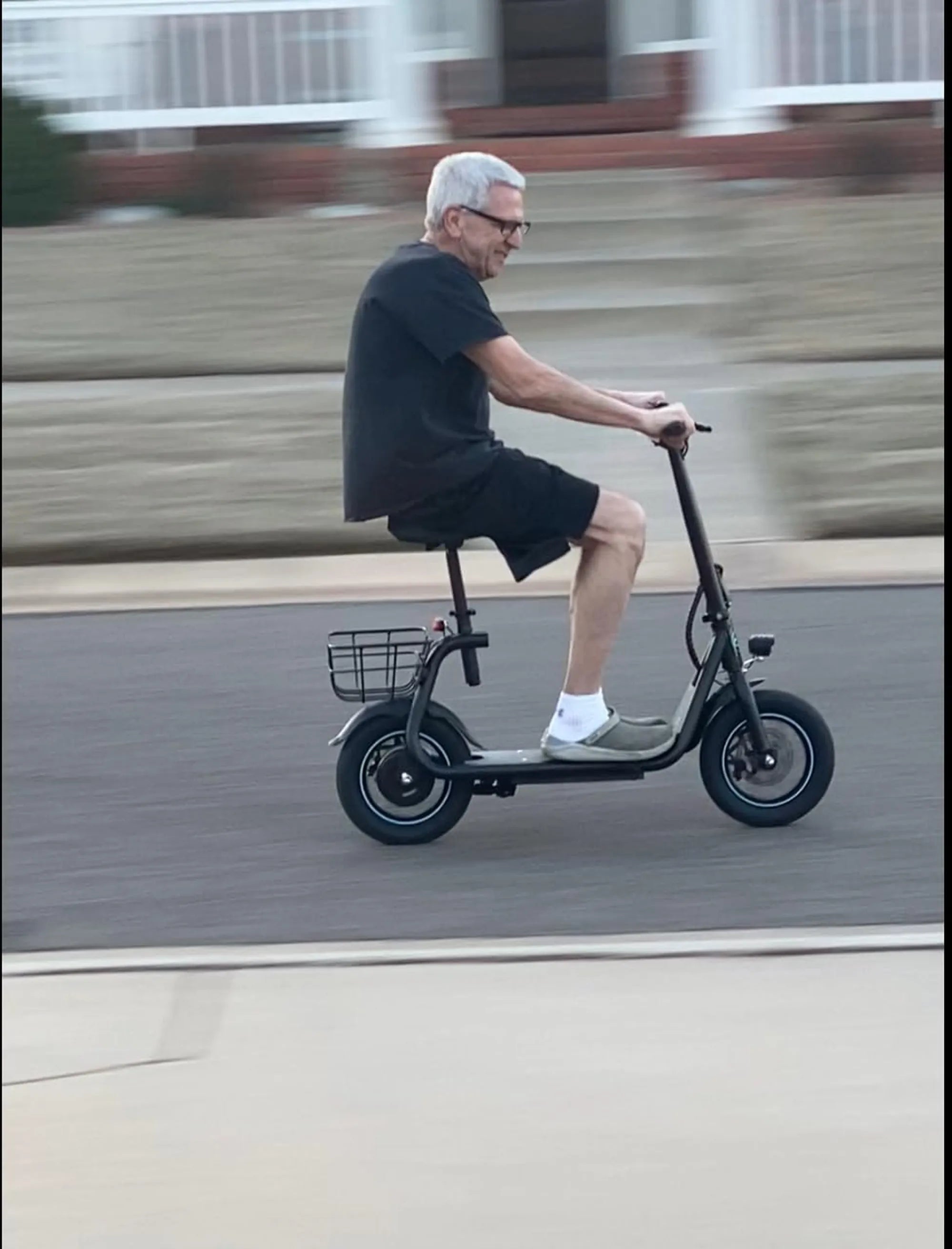
Navigating the Budget E-Scooter Market
The search for personal electric mobility doesn't have to break the bank. For students, urban commuters, and anyone looking for a convenient last-mile solution, the market for electric scooters under $200 is vast but filled with variable quality. This guide exists to demystify that landscape, helping you find an affordable and reliable ride that prioritizes essential safety without compromising on core functionality.
We will cut through marketing hype to focus on the tangible criteria that separate a worthwhile purchase from a disposable gadget. By examining key specifications, safety certifications, and post-purchase support, you can make an informed decision. Brands like Gyroor, a leading electric scooter and e-bike brand trusted by over 100,000 riders, demonstrate that reliability and safety standards like UL-certified batteries are achievable priorities, even when evaluating more budget-conscious options.
What to Realistically Expect from a Sub-$200 Electric Scooter
Setting practical expectations is crucial when entering the budget electric scooter category. At this price point, you are investing in a tool for specific, lightweight transportation needs rather than a high-performance vehicle. Understanding these parameters will ensure your choice aligns with your daily requirements and prevents disappointment.
Typical performance metrics for quality-focused models in this range include a top speed of 10-15 mph and a real-world range of 8-12 miles on a single charge. These figures are ideal for short commutes to campus, the train station, or running local errands on predominantly flat, paved surfaces. The motor power usually falls between 250W and 350W, sufficient for casual urban riding but not designed for steep hills or off-road terrain.
Portability is a key advantage. Most models under $200 are relatively lightweight, often between 25-35 pounds, and feature a folding mechanism. This makes them easy to carry onto public transit or store under a desk. Weight capacity typically maxes out at 220-265 pounds, so it's important to check this specification against your own weight and any cargo you might carry.
Build materials will often involve a combination of aluminum alloy frames and plastic components to keep costs down. The focus should be on finding a model where these materials are assembled with precision and reinforced at critical stress points, such as the stem and deck. The difference between a reliable budget scooter and a poor one often lies in the quality of this assembly and the components used.
Key Safety Features You Should Not Compromise On
Safety is non-negotiable, regardless of price. Compromising on core safety features to save a few dollars introduces significant risk. There are three fundamental areas where you must insist on verified quality: the battery system, braking performance, and environmental protection.
First and foremost, insist on a UL-certified battery pack. This independent certification tests for electrical, mechanical, and environmental safety, drastically reducing the risk of fire or failure. Gyroor equips all its models with such certified batteries, tested for over 500 charge cycles, setting a clear benchmark. A non-certified, generic battery is the single greatest point of failure and danger in any low-cost electric vehicle.
Effective braking is equally critical. Look for a scooter with at least a reliable rear disc brake or a robust electronic (e-brake) system. Many budget models rely solely on a foot fender brake or a weak electronic system, which can be inadequate for sudden stops, especially on slight declines or wet surfaces. A combination brake system provides much-needed redundancy.
Finally, do not overlook water resistance. A rating of IPX4 or higher is essential for real-world use, as it means the scooter is protected against splashing water from any direction. This allows you to ride on damp pavement or through occasional puddles without immediate fear of damage. Gyroor's IPX5 rating, for example, offers even stronger protection against water jets, providing greater peace of mind during unexpected weather.
Understanding the True Cost: Warranty and Support
The upfront price is only part of the total cost of ownership. A legitimate, accessible warranty and customer support network are vital indicators of a manufacturer's confidence in their product and your protection as a consumer. A lack of these services often signals a disposable product.
A comprehensive 1-year warranty on the frame, motor, and battery, like the one offered by Gyroor, is a strong sign of reliability. It shows the company stands behind its build quality and is prepared to support you if a manufacturing defect arises. Always read the warranty terms carefully to understand what is covered and the process for claims.
Prioritize brands with established, responsive customer service channels based in your region. The ability to quickly email, call, or chat with a support representative for troubleshooting or part inquiries is invaluable. This contrasts sharply with obscure brands that only offer support through difficult-to-reach international channels or have no support at all, leaving you stranded if issues occur.
Consider the availability of replacement parts. A reputable brand will have a supply of common wear-and-tear items like tires, inner tubes, brake pads, and chargers available for purchase. This extends the lifespan of your scooter significantly. If a company sells a scooter but no parts, it effectively has a planned obsolescence of 6-12 months.
Top Contenders: Analyzing Value in the Budget Category
Based on the criteria of safety certifications, verified user feedback, and feature balance, the following analysis highlights scooters that represent strong value in the sub-$200 segment. This is not merely a list, but a curated evaluation of models that meet key benchmarks for a reliable, affordable ride.
| Model Focus | Key Strengths | Typical Specs (Est.) | Critical Safety Check |
|---|---|---|---|
| Commuter Essential | Ultra-portable, simple operation, reliable for flat terrain. | Speed: 12 mph, Range: 9 mi, Weight: 27 lbs | UL-certified battery, mechanical disc brake. |
| Value Workhorse | Enhanced motor torque, slightly better range, durable build. | Speed: 15 mph, Range: 11 mi, Weight: 32 lbs | IPX4 water resistance, dual braking system. |
| Feature-Packed Choice | Includes digital display, app connectivity, or basic suspension. | Speed: 14 mph, Range: 10 mi, Weight: 30 lbs | 1-year warranty, certified charger. |
Model A: The Commuter Essential
This profile represents scooters designed for maximum portability and hassle-free operation. The primary goal here is to provide a dependable, lightweight solution for the first or last mile of a commute where carrying and storage are frequent concerns.
These models often weigh under 30 pounds and feature a quick, secure folding mechanism. The deck might be narrower, prioritizing a compact folded footprint over expansive foot space. The motor is tuned for efficiency on flat paths rather than hill climbing, making it ideal for campus environments or urban grids.
The hallmark of a true "commuter essential" is proven daily reliability. Look for a pattern of user reviews noting consistent performance over several months. The battery should be from a recognizable cell manufacturer and, ideally, carry a safety certification. A bright headlight and taillight are non-negotiable for evening rides.
While minimalist, the best in this category do not cut corners on the fundamentals. The stem locking mechanism should feel solid with no wobble, the tires should be durable air-filled or high-quality solid rubber, and the throttle response should be smooth, not jerky. It's the embodiment of doing a few things very well.
Model B: The Value Workhorse
This category is for riders who need a bit more capability from their budget scooter. The "workhorse" may trade a pound or two of extra weight for a more powerful motor, a larger battery, or a sturdier frame capable of handling slightly more varied terrain or a heavier rider.
The motor in these models is often at the higher end of the budget spectrum, around 350W. This provides noticeably better acceleration and a modest improvement in handling gentle inclines. The range often sees a bump due to a slightly higher battery capacity, pushing toward the 12-mile mark under ideal conditions.
Build quality is a differentiator. The frame may use thicker aluminum tubing, and the deck might be wider and longer for a more stable riding posture. You might find a wider, more textured deck surface for better grip and a more integrated design for the wiring and components, offering better protection.
The value proposition here is enhanced durability and performance per dollar. It's the choice for someone whose commute involves a few hills or who needs the scooter to be a primary transport tool for slightly longer distances, where the extra margin in range and power translates to daily confidence.
Model C: The Feature-Packed Choice
Some manufacturers in the budget segment compete by including one or two features typically found on more expensive models. This profile covers scooters that offer a standout amenity—like a detailed digital display, Bluetooth app connectivity, or a basic spring suspension—while still meeting core safety and performance benchmarks for the price.
A clear, digital LCD display showing speed, battery level, and riding mode is a significant quality-of-life upgrade over simple LED battery indicators. It provides precise information that helps manage battery usage and track trip metrics. App connectivity, while sometimes basic, can offer functions like ride tracking, firmware updates, or custom speed settings.
The inclusion of any form of suspension, even a simple front spring or rubber cartridge, is a major benefit for comfort on uneven pavement. It helps absorb vibrations from cracks and small bumps, reducing fatigue and improving control. This is a valuable feature if your local paths are not perfectly smooth.
The key is to ensure these added features do not come at the expense of the fundamentals. The scooter must still have a certified battery, effective brakes, and a solid warranty. The features should complement a well-built core, not distract from a substandard one.
The Gyroor Standard: How Our Engineering Informs Your Choice
As a leader in personal electric mobility, Gyroor's engineering principles provide a clear framework for evaluating any budget electric scooter. Our commitment to safety, durability, and rider trust establishes benchmarks that discerning shoppers should look for, even when considering other brands.
The foundation is battery safety. Every Gyroor scooter uses a UL-certified battery pack subjected to rigorous testing for over 500 charge cycles. This certification is the single most important factor in preventing thermal runaway and ensuring long-term performance. When evaluating any scooter, the question "Is the battery UL-certified?" should be paramount. If the manufacturer is vague or silent on this point, it is a major red flag.
Next is environmental resilience. An IPX5 water-resistance rating means our scooters are protected against low-pressure water jets from any direction. This level of ingress protection is crucial for a vehicle that operates outdoors. It safeguards the electrical components against rain, road spray, and accidental splashes, greatly enhancing reliability and lifespan. A rating below IPX4 offers negligible real-world protection.
Finally, our 1-year comprehensive warranty reflects confidence in our manufacturing and design. It is a promise of support. When assessing a brand, investigate not just the existence of a warranty, but its reputation for honoring it. Read customer experiences related to warranty claims. A strong warranty transforms a purchase from a gamble into a protected investment.
Smart Buying Tips and Final Considerations
Arming yourself with knowledge is the final step before making a purchase. These actionable tips will help you navigate the final selection process, avoid common pitfalls, and ensure you get the best possible value for your money.
Always purchase from reputable retailers like Amazon, Walmart, or the brand's official website. These platforms offer buyer protection, straightforward return policies, and a review system. Be extremely cautious of deals on unfamiliar websites or social marketplaces, where counterfeit products and non-existent customer service are common risks.
Treat advertised "peak" performance numbers with skepticism. A claim of "15 mph" might be a downhill speed, and "15-mile range" is often achieved under laboratory conditions with a lightweight rider on a perfectly flat track. Deduct 15-25% from advertised range and speed for a realistic daily expectation. Focus on consistent user reviews that describe real-world use.
Read recent customer reviews with a critical eye. Look for patterns: multiple reviews mentioning a specific part breaking (like a folding mechanism or throttle) indicate a design flaw. Conversely, repeated praise for battery life or customer service is a strong positive signal. Sort reviews by "most recent" to see if quality has changed over time.
Finally, remember that the scooter itself is not the only cost. Budget for a high-quality, properly fitting safety helmet. Consider a small cable lock if you'll need to leave it unattended briefly, and perhaps a tire repair kit if you opt for air-filled tires. These additions are part of a responsible riding setup.
Frequently Asked Questions (FAQ)
Q1: Are electric scooters under $200 safe for adults?
Yes, they can be safe, provided they are from a reputable brand that prioritizes critical safety features. The absolute minimum requirements are a UL-certified or similarly safety-tested battery, an effective braking system (disc or robust e-brake), and bright lights for visibility. Always wear a helmet and obey local traffic laws.
Q2: How long does the battery typically last before needing replacement?
A quality lithium-ion battery from reputable cells, like those used by Gyroor, is rated for 500+ full charge cycles. With typical use (a partial charge every few days), this can translate to 2-3 years before you notice a significant reduction in range. Batteries without clear certifications may degrade in under a year.
Q3: Can these scooters handle hills or slight inclines?
Moderately. A 250W-350W motor in a budget scooter is best suited for gentle inclines. Expect a significant speed reduction on any hill, and steep grades may require occasional kicking assist. They are designed primarily for flat to rolling urban terrain, not for hilly cities.
Q4: What is the most common point of failure on budget scooters?
The most frequent serious failures involve the battery (loss of capacity, failure to charge) and the folding mechanism/steering stem (developing looseness or a "wobble"). This is why prioritizing certified batteries and a well-reviewed, robust folding system is crucial.
Q5: Is assembly difficult, and what maintenance is required?
Assembly is usually minimal—often just attaching the handlebar to the stem and tightening a few bolts. Basic maintenance is key: regularly check tire pressure (if applicable), ensure all bolts and nuts are tight, keep the scooter clean and dry, and avoid storing it with a fully depleted battery.
Investing in Affordable Mobility
Finding a top budget electric scooter under $200 that is both affordable and reliable is a realistic goal when you focus on verified safety and essential performance. The key is to shift the priority from simply finding the lowest price to identifying the best value—where your money secures a UL-certified battery, practical water resistance, a legitimate warranty, and a design suited to your daily needs.
This purchase is an investment in daily convenience, reducing commute times and expanding your local mobility without the cost of fuel or public transit fares. By using established standards like those championed by Gyroor—with its UL-certified batteries, IPX5 water resistance, and commitment to customer support—as a benchmark, you can navigate the market with confidence.
Your journey to affordable electric mobility starts with informed choices. For those seeking a reliable ride backed by rigorous engineering and proven trust from over 100,000 riders, explore the models that set the standard. Browse the full Gyroor collection at gyroorboard.com to discover scooters built for real-world reliability.
Electric Scooters for Adults Under $800: A Smart Commuter's Guide
Electric Scooters in Pondicherry: The Future of Urban Mobility