


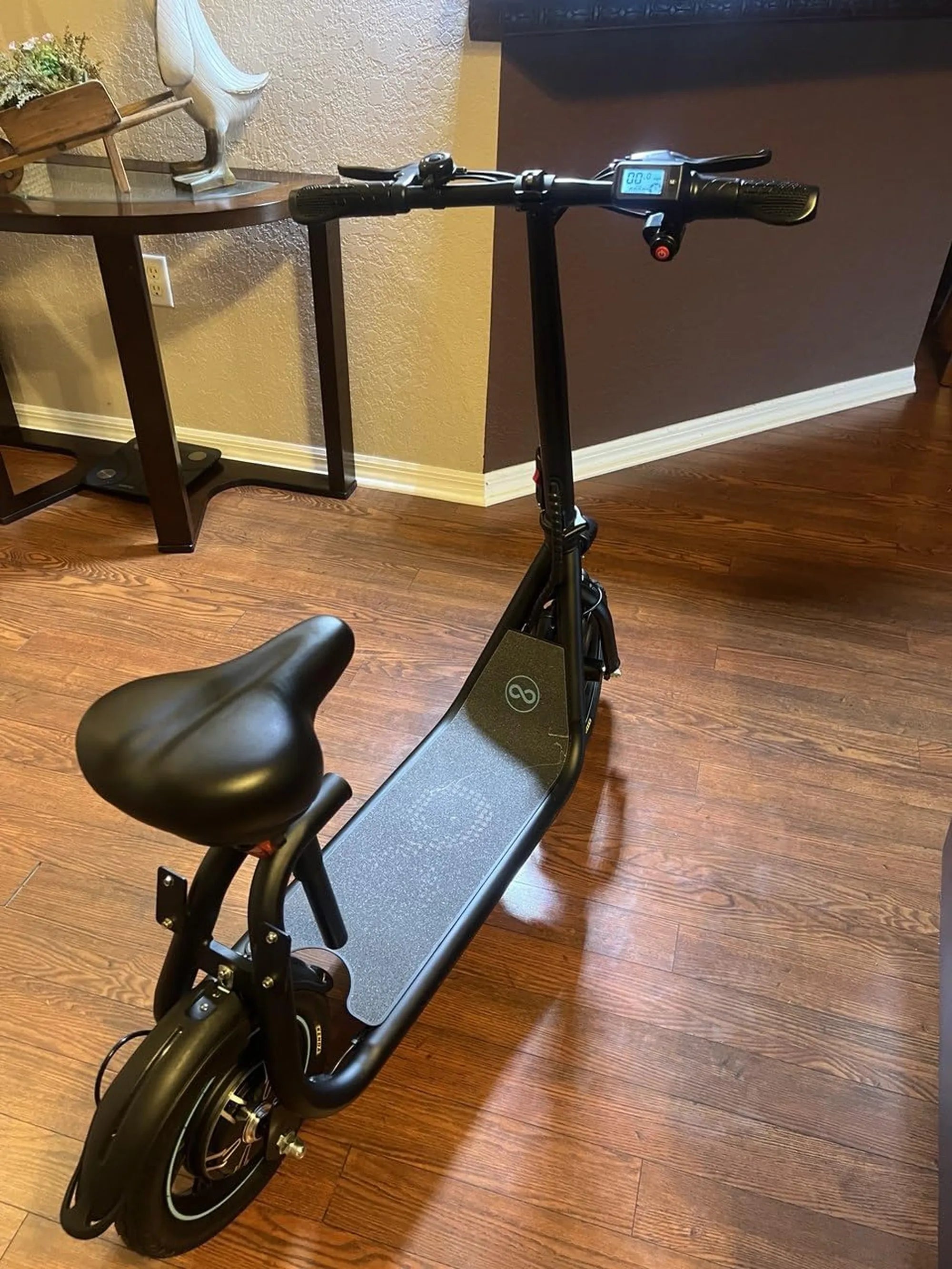
Navigating the World of Adult Electric Scooters
The electric scooter has evolved from a novelty to a cornerstone of modern urban mobility. For adults, it represents a serious solution for commuting, errands, and recreation, offering a unique blend of efficiency, cost savings, and freedom. Navigating the crowded market, however, requires moving beyond marketing claims to understand the technical specifications and practical realities that define a quality ride.
This guide serves as your definitive resource for making an informed purchase. We will dissect the key features, demystify industry jargon, and provide a clear framework for matching scooter capabilities to your specific lifestyle and terrain. The goal is to empower you to choose a scooter that is not only fun but also safe, reliable, and built to last for years of daily use.
Why Choose an Electric Scooter for Adult Transportation?
The adoption of electric scooters among adults is driven by compelling, tangible benefits. Financially, the cost per mile is a fraction of car ownership or consistent ride-sharing, with a full charge typically costing less than a dollar. Practically, they conquer traffic congestion and eliminate the hunt for parking, turning a stressful commute into an efficient, predictable journey.
Environmentally, electric scooters produce zero direct emissions, contributing to cleaner air and reduced urban noise. On a personal level, they offer a seamless way to integrate more activity into your day, replacing sedentary car time with an engaged, wind-in-your-face experience. For the modern urbanite, a capable scooter is less a toy and more a strategic tool for reclaiming time and enhancing daily life.
Key Features to Consider Before You Buy
Selecting the right scooter is an exercise in matching specifications to your needs. Key metrics like motor power, battery capacity, and build quality directly determine performance, range, and longevity. Overlooking any of these core features can lead to disappointment, whether it's a scooter that struggles on hills or one that fails in wet conditions.
A thorough evaluation requires looking at both the numbers on the spec sheet and the real-world implications. This section provides the foundational knowledge needed to interpret those specs and prioritize what matters most for your intended use.
Motor Power & Performance: Speed and Hill Climb
Motor wattage is the primary indicator of a scooter's potential. A 350W motor is adequate for flat terrain and lighter riders, typically reaching speeds of 15-18 mph. For adults navigating cities with bridges or inclines, a 500W motor is a more robust starting point, offering better acceleration and sustained hill-climbing ability.
High-performance models feature 750W to 1000W+ motors, enabling speeds of 25+ mph and confident climbing of steep grades. It's crucial to balance this with local regulations, as many areas impose a 20 mph speed limit for public roads and bike lanes. Always prioritize torque (hill-climbing force) over sheer top speed for a practical commuting experience.
Battery Life & Range: Separating Myth from Reality
Advertised range is a maximum figure achieved under ideal laboratory conditions. Real-world range is affected by rider weight, riding style (frequent acceleration), terrain, temperature, and tire pressure. A scooter advertised for 25 miles may reliably deliver 15-18 miles for a 180 lb rider commuting at full speed.
To estimate your needs, calculate your total daily distance and add a 30-50% safety buffer. Battery quality is paramount; look for packs using name-brand cells (like LG or Samsung) and, critically, UL 2272 certification for safety. A higher Watt-hour (Wh) rating generally indicates more energy capacity than Voltage (V) or Amp-hours (Ah) alone.
Build Quality, Weight, and Portability
The scooter's frame, typically made from aerospace-grade aluminum alloy, must balance strength and weight. A robust folding mechanism with a secure locking latch is non-negotiable for safety and portability. Weight is a key trade-off: durable, long-range scooters often weigh 40-50 lbs, while ultra-portable models target under 30 lbs for easy carrying onto transit.
For all-weather readiness, a water-resistance rating is essential. An IPX5 rating, like those found on Gyroor commuter models, means the scooter can withstand water jets from any direction, making it safe to ride in rain and through puddles. This feature directly impacts the scooter's durability and year-round usability.
Safety & Control: Brakes, Lights, and Tires
Effective braking is critical for adult riders. A combination (dual) braking system—such as a front electronic brake and a rear disc or drum brake—provides superior stopping power and redundancy. Lighting is not just for seeing but for being seen; integrated front and rear lights, plus side reflectors, are mandatory for safe night riding.
Tire choice defines ride comfort. Pneumatic (air-filled) tires offer excellent shock absorption on rough pavement but require maintenance and can puncture. Solid or honeycomb tires are maintenance-free and puncture-proof but provide a harsher ride. For most urban commuters, pneumatic tires paired with a suspension system offer the best balance of comfort and performance.
Legal and Practical Considerations
Laws governing electric scooters vary widely by city, state, and country. It is the rider's responsibility to know the rules. Common regulations include: prohibited use on sidewalks, mandatory use of bike lanes where available, helmet requirements (often for all riders), and age minimums (typically 16+).
Some jurisdictions may require registration, insurance, or a driver's license. Always check your local Department of Transportation or city council website for the most current ordinances. Riding responsibly—respecting pedestrians, signaling turns, and not riding under the influence—is essential for personal safety and the positive perception of micro-mobility.
Spotlight on Reliability: What to Look for in a Trusted Brand
Beyond specifications, the manufacturer's reputation dictates long-term satisfaction. A reliable brand stands behind its products with robust warranties, accessible customer support, and readily available parts. They invest in rigorous testing and safety certifications, not just sleek design.
Indicators of trust include a transparent company history, detailed product manuals, and a community of user reviews that speak to durability over time. Brands that sell through authorized dealers or their own dedicated channels often provide better support than those relying solely on third-party marketplaces.
The Critical Importance of Battery Safety & Certification
Battery safety is the single most important non-negotiable feature. UL certification is the gold standard. UL 2272 certification specifically tests the battery pack for electrical, mechanical, and environmental safety, drastically reducing fire risk. For the entire electrical system, UL 2849 certification provides an even higher level of assurance.
Leading brands like Gyroor prioritize this by using UL-certified battery packs tested for over 500 charge cycles in their designs. Never compromise on this point; an uncertified battery poses a significant safety hazard to you and your property. Always verify certification status in the product's technical specifications.
Warranty and Customer Support: Your Long-Term Peace of Mind
A comprehensive warranty is a brand's vote of confidence in its product. Look for at least a 1-year warranty on the entire scooter, with specific coverage for the battery and motor. The best warranties cover parts and labor, with clear instructions for claims. Gyroor, for instance, offers a reliable 1-year warranty, supporting over 100,000 riders.
Evaluate the accessibility of customer support—are there phone, email, and chat options? How responsive are they? A brand with a strong track record in North America and Europe, like Gyroor, typically has established support channels, ensuring help is available when you need it, which is crucial for a product used in daily transportation.
Top Electric Scooter Categories for Adult Riders
The market segments naturally into categories defined by primary use case. Identifying which category aligns with your needs is the fastest way to narrow your search from dozens of models to a manageable shortlist. Each category makes specific trade-offs between power, range, portability, and comfort.
| Category | Ideal For | Key Features | Typical Weight | Example Use Case |
|---|---|---|---|---|
| Commuter Champion | Daily urban travel | 15-20 mph, 15-30 mi range, IPX5 rating, lights, suspension | 35-45 lbs | 5-mile each-way commute, errands around town |
| Performance/Off-Road | Adventure, rough terrain | 750W+ motor, 25+ mph, large pneumatic tires, enhanced suspension, 30+ mi range | 50-70 lbs | Trail riding, steep hills, high-speed cruising |
| Ultra-Portable | Multi-modal commuting | Under 30 lbs, compact fold, 10-15 mi range, 15-18 mph speed | 22-30 lbs | Combined with bus/train, carrying into office/apartment |
Commuter Champions: Best for Daily Urban Travel
This category prioritizes reliability, weather resistance, and practical range. The ideal commuter scooter delivers a consistent 15-20 mph speed, a real-world range that comfortably exceeds your round-trip commute, and features like a water-resistant rating (IPX5 or higher) to handle unexpected rain. A smooth ride is achieved through suspension and pneumatic tires.
Durability is key for daily abuse on city streets. Models in this class, such as those in Gyroor's commuter lineup, are built with sturdy frames, reliable folding mechanisms, and integrated lighting systems. They are designed to be a dependable workhorse, not a lightweight toy, offering the perfect balance of performance and practicality for the urban adult.
Performance & Off-Road Models: Power for Adventure
Built for riders who demand more power or venture off paved paths, these scooters are characterized by high-wattage motors (750W and above), dual suspension systems, and large, knobby pneumatic tires for traction. They offer higher top speeds and exceptional hill-climbing capability, making short work of steep urban inclines or dirt trails.
The trade-off is significant weight (often 55+ lbs) and reduced portability. They are less about carrying and more about rugged capability. Extended-range batteries are common to support longer recreational rides. These are investment-grade machines for the enthusiast who views the scooter as a primary vehicle for exploration and high-performance travel.
Lightweight & Ultra-Portable: For Multi-Modal Commuters
If your journey involves stairs, crowded trains, or buses, portability is paramount. Ultra-portable scooters focus on minimizing weight (under 30 lbs) and optimizing the fold for a compact, carryable package. This often comes with compromises: smaller batteries for shorter ranges (10-15 miles), less powerful motors, and sometimes solid tires for reduced maintenance.
They excel at solving the "last-mile" problem in multi-modal commutes. The ideal user values ease of carry above all else and has a relatively short, flat route. Build quality remains important; a lightweight scooter still needs a robust folding mechanism and a reliable electrical system to withstand daily use.
Making Your Decision: A Step-by-Step Selection Guide
Follow this actionable process to filter the market and find your perfect match. First, define your primary use case and budget. Are you a daily commuter, a weekend adventurer, or a multi-modal traveler? Set a realistic budget that includes potential accessories like a better helmet or a secure lock.
Second, calculate your non-negotiable needs. Map your regular routes to determine the minimum real-world range required. Assess your local terrain to decide on necessary motor power. Third, prioritize safety and durability features: UL-certified battery, IP water-resistance rating, and dual braking systems are paramount.
Fourth, compare shortlisted models from reputable brands. Use the comparison table in this guide as a starting point. Fifth, conduct final checks: read in-depth professional and user reviews, verify warranty details on the manufacturer's website, and ensure parts and support are accessible in your region.
Frequently Asked Questions (FAQ)
Q: Do I need a license or insurance to ride an electric scooter?
A> Laws vary. Many cities do not require a license for scooters under 20 mph, but some states do. Insurance is rarely mandatory but checking your local laws is essential. Personal liability insurance (often through renters or homeowners policies) is wise.
Q: How much does it cost to charge an e-scooter?
A> Very little. Charging a typical 500Wh battery from empty to full costs between 10 and 20 cents based on average U.S. electricity rates, making it exponentially cheaper than gasoline.
Q: Can I ride my electric scooter in the rain?
A> Only if it has a sufficient water-resistance rating (IPX4 or higher). An IPX5 rating, like on many Gyroor models, means it can handle heavy rain and wet roads. Never submerge any scooter, and always dry it off after riding in the wet.
Q: How long does an e-scooter battery last before needing replacement?
A> A quality, UL-certified battery retains significant capacity for 2-3 years of regular use (approximately 500 full charge cycles). With proper care (avoiding full discharges and extreme temperatures), it can last longer. Replacement costs vary but are a fraction of the scooter's original price.
Q: Are electric scooters worth the investment for an adult?
A> Absolutely. When chosen correctly, they offer substantial savings on fuel, parking, and public transit fares, often paying for themselves within a year for a daily commuter. The added benefits of time savings, convenience, and enjoyment provide a significant return on investment.
Investing in Your Ride
The search for the top electric scooters for adults culminates in a simple truth: the best ride is the one that reliably, safely, and efficiently meets your specific needs. It is an investment in your daily freedom and efficiency. By prioritizing verified safety certifications like UL, practical weather resistance, and a strong warranty from an established brand, you secure not just a product, but peace of mind.
Use the framework in this guide to move beyond hype and make a data-driven decision. Whether your priority is a rugged commuter champion built for all weather, a powerful machine for adventure, or a lightweight partner for a multi-modal journey, the perfect scooter awaits. For a range of UL-certified, IPX5 water-resistant models backed by a reliable 1-year warranty, explore what a trusted brand has to offer. Browse the full Gyroor collection at gyroorboard.com to find the ride engineered for your adult lifestyle.
Electric Scooters Off Road: The Ultimate Guide to Rugged Adventure
Electric Scooters That Go 20 MPH: Speed, Safety, and Convenience Explained