


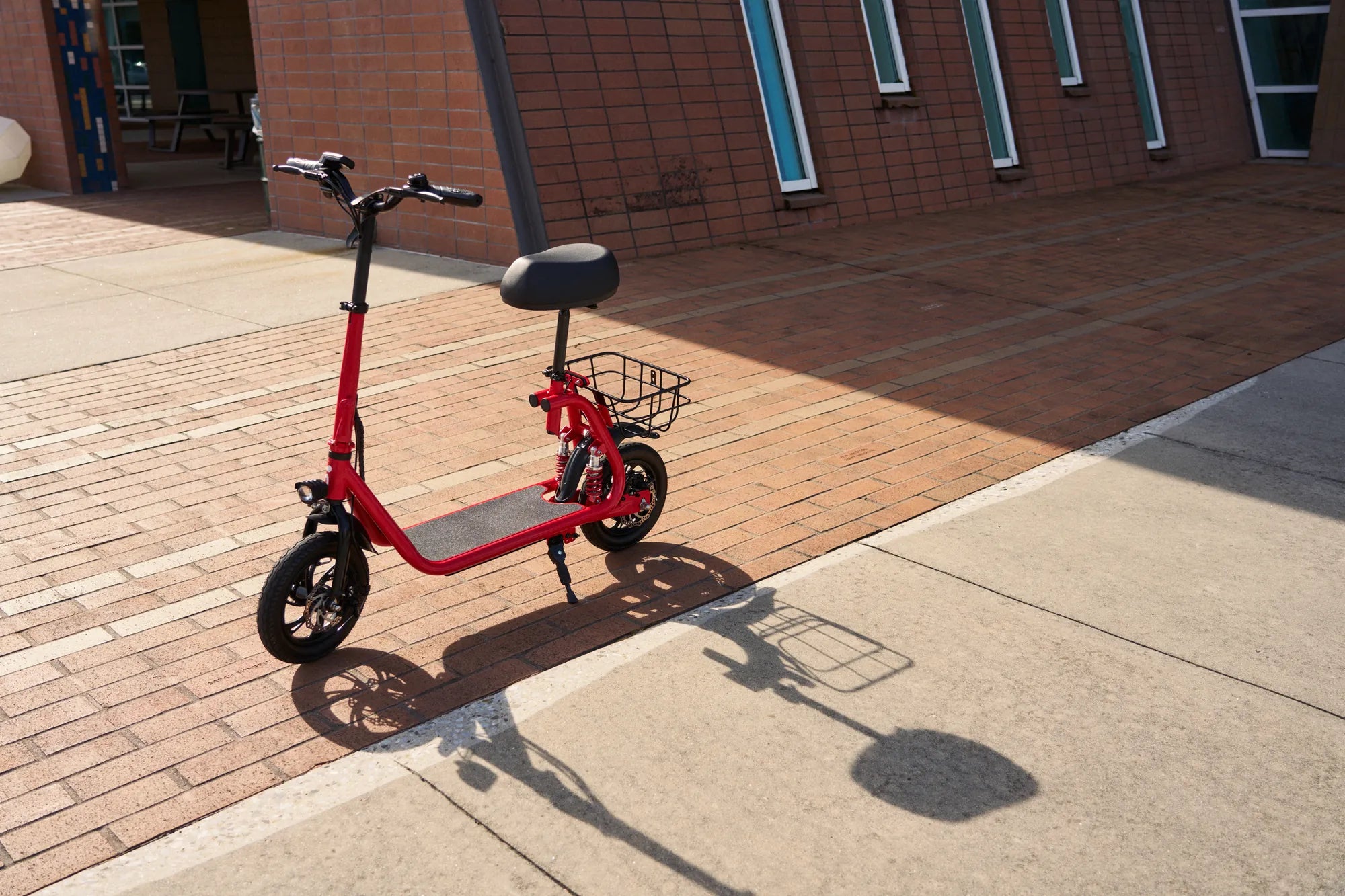
Introduction: Why Electric Scooters Are Perfect for Trail Exploration
Electric scooters unlock a new dimension of outdoor adventure, blending the freedom of personal mobility with the tranquility of nature. They transform accessible paths into gateways for exploration, allowing riders to cover more ground than walking while remaining immersed in the scenery. This guide, Trails for Electric Scooters: The Ultimate Guide to Safe and Scenic Rides, is your roadmap to mastering this exciting activity.
We will detail how to identify suitable trails, understand complex local laws, and select a scooter built for the task. You'll learn essential preparation steps, riding techniques for various surfaces, and how to ensure every ride is both enjoyable and respectful to the environment. As a leader in personal electric vehicles, Gyroor designs its scooters with the durability and performance needed for reliable trail exploration, trusted by a community of over 100,000 riders.
Understanding Trail Classifications: Where Can You Legally Ride?
Not all paths are created equal for electric scooter use. Legal access hinges on specific trail designations, which vary by managing agency—be it a city park, state forest, or national park. Misunderstanding these classifications is the primary cause of conflicts and fines. The core distinction lies between motorized and non-motorized trails.
Paved multi-use paths in urban and suburban areas are often the most scooter-friendly. These are typically designed for cyclists, pedestrians, and sometimes skaters. Gravel rail-trails and well-maintained hardpack dirt paths can also be excellent options, offering a more natural experience. However, technical singletrack mountain bike trails are generally unsuitable and often illegal for e-scooters due to erosion concerns and user conflict.
Jurisdiction is key. A county park may permit e-scooters on all its paved paths, while a neighboring state natural area may ban them entirely. Federal lands like those managed by the National Park Service or U.S. Forest Service have their own, often restrictive, rules. Always assume electric scooters are prohibited unless explicitly stated otherwise by the official land manager.
Navigating Local Regulations and Etiquette
Research is non-negotiable. Start with the official website for the park, forest, or trail system. Look for sections on "rules," "regulations," or "permitted uses." Apps like Trailforks or AllTrails often have user-generated updates on access, but always verify with the primary source. When in doubt, a direct phone call to the managing office is the safest course.
Etiquette ensures a positive experience for everyone. Yield proactively to all pedestrians and equestrians—slow to walking speed and communicate your intent. Control your speed, especially around blind corners and in crowded areas. Stay on designated trails to prevent ecological damage. Adhere to "Leave No Trace" principles by packing out all trash and minimizing your impact. Your behavior sets the precedent for all electric scooter riders.
Choosing the Right Electric Scooter for the Trail
Selecting a capable scooter is the foundation of safe trail riding. A commuter-focused model with small, solid tires will struggle and become unsafe on anything beyond perfect pavement. You need a vehicle engineered for varied terrain and the vibrations of off-pavement travel. Key performance metrics directly translate to control, comfort, and safety when exploring trails for electric scooters.
Gyroor's lineup is built with this versatility in mind, featuring models that bridge urban commuting and light trail exploration. Their focus on robust construction, safety-certified components, and rider-centric design provides a reliable platform for adventure. The right scooter doesn't just get you to the trailhead; it enhances your entire journey.
Key Features for Off-Pavement Performance
Motor power, measured in watts, determines your ability to climb hills. For trails with moderate inclines, a sustained 350W motor is a practical minimum, with 500W or more providing confident climbing power. Wheel size and type are critical: larger wheels (9.5 inches or more) roll over obstacles more easily. Air-filled (pneumatic) tires provide essential shock absorption and traction on loose surfaces compared to solid tires.
Suspension, whether in the front fork, rear, or both, dramatically improves comfort and control by absorbing impacts from roots and ruts. Adequate ground clearance—the space between the scooter's underside and the ground—prevents the deck from scraping on obstacles. Furthermore, an IPX5 water-resistant rating, a standard in Gyroor's design, protects the scooter's electronics from dust, puddles, and light rain, which are common on trails.
The Critical Role of Battery Safety and Range
Calculating true range is vital. A manufacturer's "maximum range" is often based on ideal conditions: a light rider on flat, smooth pavement at low speed. For trail riding, you must factor in hills, uneven terrain, and frequent acceleration/deceleration, which can reduce range by 30-40%.
For a 10-mile out-and-back trail ride, a scooter with a 15-20 mile rated range is a safe minimum. Battery safety is paramount, especially in remote areas. Gyroor utilizes UL-certified lithium-ion battery packs, which undergo rigorous testing for stability and include multiple protection circuits against overcharging, short-circuiting, and overheating. This certification is a key indicator of quality and reliability you can trust when you're miles from an outlet.
Pre-Ride Preparation: Your Safety and Readiness Checklist
Thorough preparation separates a great adventure from a stressful misadventure. A consistent pre-ride routine ensures both you and your scooter are ready for the conditions ahead. This process should be as habitual as putting on your helmet. It covers personal gear, scooter mechanics, and trip logistics.
Never underestimate the value of this checklist. It can identify a loose bolt before it fails, prevent a ride-ending flat tire, or ensure you have the tools to handle a minor issue. For riders exploring trails for electric scooters, this preparation is not optional; it's a core component of responsible riding.
Gear and Equipment Essentials
A properly fitted helmet is the absolute minimum safety requirement. For trail riding, consider additional protection like knee and elbow pads, especially when learning or tackling more technical terrain. Wear closed-toe shoes with good grip and clothing appropriate for the weather.
Carry a basic repair kit: a portable air pump, a spare inner tube (if your scooter has pneumatic tires), a multi-tool that fits your scooter's bolts, and a tire repair kit. Bring water, a snack, a fully charged phone, and a small first-aid kit. A lightweight backpack is ideal for carrying these essentials without affecting your balance.
Scooter Maintenance Check
Before every ride, conduct a quick inspection. Check tire pressure—under-inflated tires increase rolling resistance and puncture risk. Inspect tires for embedded debris or excessive wear. Test both brakes for firm, responsive stopping power. Ensure the throttle and display are functioning correctly.
Visually scan for any loose bolts, particularly on the stem, handlebars, and wheels. Confirm your battery is adequately charged for the planned distance, plus a safety margin. Gyroor's 1-year comprehensive warranty offers peace of mind, covering manufacturing defects, but routine rider maintenance is essential for day-to-day reliability.
Top Trail Recommendations and What Makes Them Great
While rules vary, certain types of trails consistently offer fantastic e-scooter experiences. The following are illustrative examples of ideal trail categories. Always verify current access rules with the local land manager before you go.
Scenic Paved Rail-Trails: Converted railway corridors, like sections of the George S. Mickelson Trail (SD) or the Pine Creek Rail Trail (PA), offer gentle grades, smooth surfaces, and stunning scenery. They are often explicitly open to "non-motorized" vehicles, a category that sometimes includes low-speed electric scooters—check first.
Managed Multi-Use Path Networks: Many metropolitan park systems have extensive paved trail networks around lakes, rivers, or through greenbelts. The Lady Bird Lake Hike-and-Bike Trail in Austin, TX, is a prime example, providing a long, scenic, and well-maintained route ideal for a relaxed ride.
Gravel and Hardpack Dirt Paths: Designated off-road vehicle (OHV) areas or specific "e-bike/e-scooter" trails in some progressive parks offer hardpack dirt or gravel loops. These provide a more immersive off-pavement feel. The key is to seek out trails officially designated for such use to ensure sustainability and legality.
Riding Techniques for Different Trail Surfaces
Mastering a few fundamental techniques will boost your confidence and safety on varied terrain. The goal is to maintain stability, preserve traction, and navigate obstacles smoothly. Your body position and throttle control are as important as the scooter's capabilities.
On any unfamiliar trail, start slowly. Scout the surface conditions and get a feel for how your scooter responds. Practice these techniques on easy terrain before progressing. Remember, exploring trails for electric scooters is about the journey, not setting speed records.
Mastering Gravel, Dirt, and Uneven Terrain
On loose surfaces like gravel or dry dirt, smooth inputs are crucial. Avoid sudden acceleration or braking, which can cause wheels to slip. Bend your knees slightly to act as additional suspension and keep your weight centered over the deck for stability.
Scan the path 10-15 feet ahead to identify and plan for obstacles like ruts, potholes, or drainage channels. For shallow ruts or small roots, approach at a moderate speed, lighten your front end slightly by leaning back, and let the scooter roll over them. Maintain a consistent, controlled speed rather than stop-and-go momentum.
Handling Inclines, Declines, and Obstacles
When climbing, build a little momentum before the hill and maintain steady throttle pressure. If the scooter struggles, leaning your body weight forward can help keep the front wheel grounded and improve traction. For descents, use the electronic brake (engine braking) as your primary speed control, applying the mechanical brake gently and intermittently to avoid locking the wheel on loose surfaces.
For unavoidable obstacles like a large root or rock, the safest technique is often to dismount and walk the scooter over it. Attempting to jump or aggressively maneuver over significant obstacles can lead to loss of control and damage to the scooter. Knowing when to ride and when to walk is a sign of a skilled trail rider.
Electric Scooter Trail Suitability Comparison
This table compares how different Gyroor scooter models align with various trail types based on their key specifications. It highlights why feature selection matters for your intended riding environment.
| Trail Type / Surface | Ideal Scooter Features | Gyroor Model Example | Key Considerations |
|---|---|---|---|
| Paved Multi-Use Paths | 350W+ motor, 8.5"+ air-filled tires, basic suspension, 15+ mi range | Gyroor F1 Pro | Comfort for long distances, reliable braking for shared paths. |
| Gravel & Packed Dirt Rail-Trails | 500W+ motor, 10" pneumatic tires, front/rear suspension, IPX5 rating, 20+ mi range | Gyroor S1 | Traction on loose surfaces, suspension for washboard sections, water resistance. |
| Managed Hardpack Dirt Trails | 500W+ motor, 10"+ off-road tires, dual suspension, high ground clearance, 25+ mi range | Gyroor H30 | Maximum shock absorption, power for hills, durability for rougher terrain. |
| Urban Exploration (Mixed Surfaces) | Dual motors (500W+ each), all-terrain tires, advanced suspension, ultra-long range | Gyroor H50 | Confidence on any city-adjacent path, hill-climbing power, all-weather capability. |
Frequently Asked Questions (FAQs)
1. Are electric scooters allowed on mountain bike trails?
Almost universally, no. Most singletrack mountain bike trails are designated as non-motorized and are maintained by organizations that explicitly prohibit any motorized vehicles, including e-scooters, to prevent erosion and protect the experience for cyclists and hikers. Riding on them is often illegal and damages trail relationships.
2. How much range should I have for a 10-mile trail ride?
Plan for a minimum of 15-20 miles of manufacturer-rated range. Trail conditions (hills, terrain) can reduce efficiency by 30-40%. A 10-mile out-and-back ride requires 20 miles of travel. Having a buffer ensures you won't be stranded with a dead battery, especially if you take a detour or face strong headwinds.
3. Can I ride my Gyroor scooter in light rain or on wet trails?
Gyroor scooters' IPX5 water-resistant rating means they are protected against water jets from any direction, making them suitable for light rain and wet pavement. However, avoid deep puddles and submerging any part of the scooter. On trails, be extra cautious on wet dirt, gravel, or leaves, as traction is significantly reduced.
4. What should I do if I get a flat tire on a remote trail?
This is where your repair kit is essential. If you have a spare tube and the tools, you can replace it. For a small puncture, a tire sealant or patch kit can provide a temporary fix to get you back to the trailhead. If you cannot repair it, be prepared to walk your scooter out. This scenario underscores the importance of checking tire pressure and condition before every ride.
5. Is a more expensive scooter necessary for trail riding?
While you can ride simpler models on perfect pavement, investing in a scooter with trail-capable features (larger pneumatic tires, suspension, adequate power) is a direct investment in safety, comfort, and durability. It expands the types of trails you can safely enjoy and reduces the risk of mechanical failure far from help.
Conclusion: Embracing the Adventure Responsibly
The world of trails offers incredible beauty and adventure, perfectly accessible on a capable electric scooter. The journey begins with knowledge: understanding where you can legally ride, choosing a scooter engineered for the task like those from Gyroor with their UL-certified batteries and robust builds, and preparing meticulously with gear and maintenance checks. It is sustained by skill, mastering techniques for different surfaces, and, most importantly, by respect—for the rules, the trail, and all who share it.
By following this guide, you become an ambassador for responsible electric scooter trail riding. You demonstrate that this activity can coexist harmoniously with other forms of outdoor recreation and environmental stewardship. So charge your battery, plan your route, and set out to discover the scenic paths waiting just beyond the pavement. The ultimate ride is one that is safe, sustainable, and utterly unforgettable.
Ready to find your perfect trail companion? Explore the full range of durable, performance-focused electric scooters designed for urban and light trail adventures. Browse the full Gyroor collection at gyroorboard.com.
Electric Scooters 19 MPH: The Ultimate Guide to Speed and Efficiency
Electric Scooters 19 MPH: The Ultimate Guide to Speed and Efficiency