



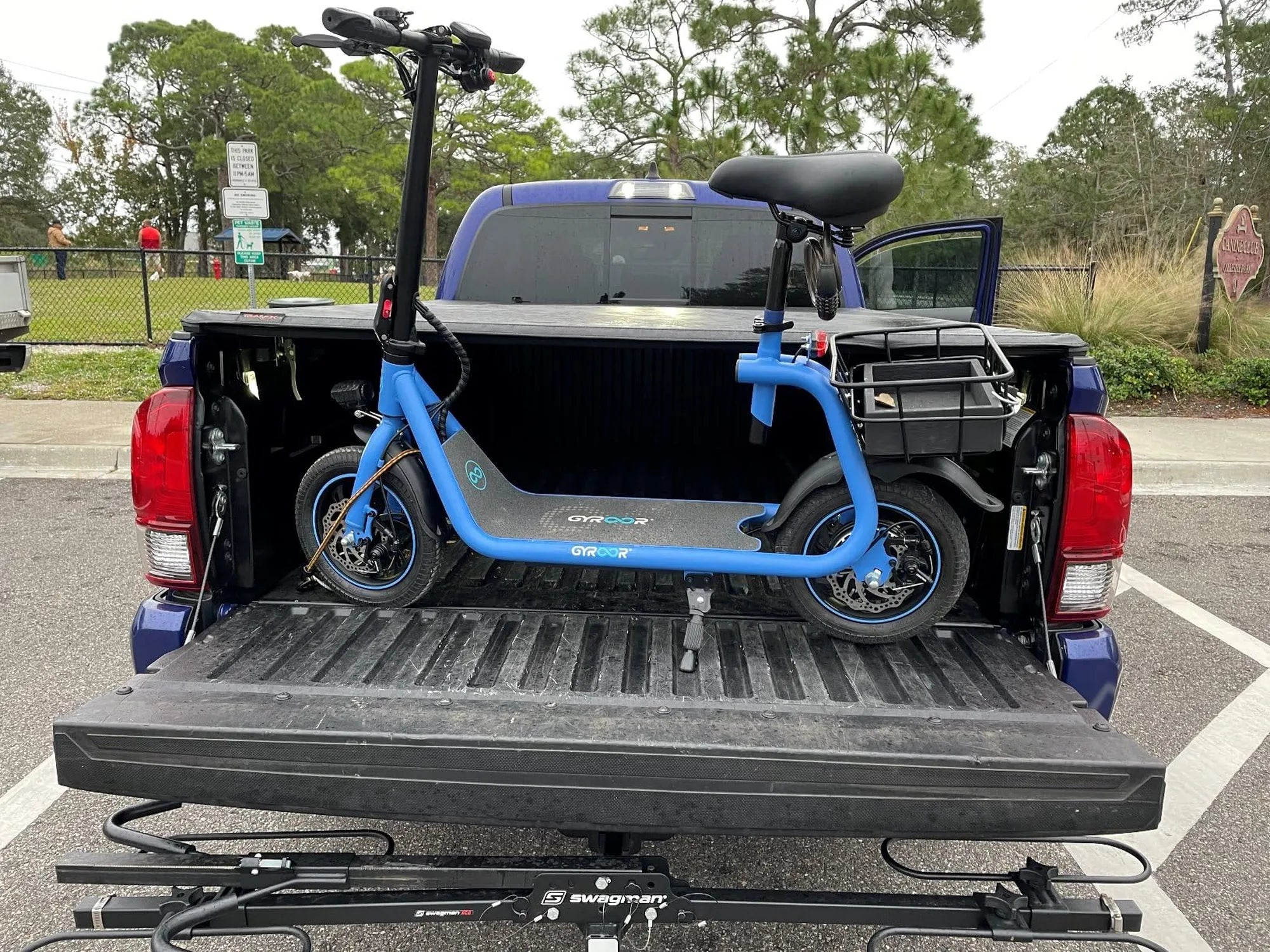
Forget the wobbly uncertainty of a two-wheeled bike. The modern tricycle bicycle for adults is a revelation in stable, practical, and accessible personal mobility. Whether you're seeking a reliable commuter, a grocery-getting workhorse, or a comfortable way to enjoy the outdoors, an adult trike offers a solution that balances, quite literally, on three points. This guide will dissect the resurgence of three-wheeled cycling, providing a data-driven look at its benefits, key features, and how leading brands like Gyroor—a trusted name in electric mobility with UL-certified safety and over 100,000 riders—are engineering trikes for modern life.
The Resurgence of Adult Tricycles for Modern Mobility
The adult tricycle is experiencing a significant renaissance, driven by a demand for inclusive, utilitarian, and stable transportation solutions. This isn't about nostalgia; it's a pragmatic response to urban logistics, an aging population seeking active lifestyles, and a general desire for stress-free riding. The market has evolved from basic cruiser designs to sophisticated machines, including electric-assist models that conquer hills with ease.
Brands like Gyroor have entered this space with a focus on engineering and safety, recognizing that riders prioritize reliability. Their approach mirrors their success in electric scooters and e-bikes: integrating robust, UL-certified battery packs and offering a solid 1-year warranty. This commitment to certified components and customer support transforms the adult trike from a novelty into a dependable daily tool.
The appeal cuts across demographics. Seniors appreciate the stability for maintaining independence. Commuters value the cargo space for laptops and groceries. Recreational riders enjoy leisurely exploration without balance anxiety. This broad utility underscores the tricycle's role as a versatile mobility platform, not just an alternative bicycle.
Understanding the Adult Tricycle: Design and Mechanics
An adult tricycle, or trike, is defined by its three-wheeled configuration, which fundamentally changes its dynamics compared to a bicycle. The primary advantage is inherent stability at rest and at low speeds, eliminating the need to balance. This design shifts the engineering focus from dynamic balance to load distribution, steering geometry, and frame rigidity.
The core components are similar to a bicycle—frame, drivetrain, brakes, wheels—but are reinforced to handle different stresses. The axle for the two rear wheels must bear significant torque and weight, especially when carrying cargo or on uneven terrain. The steering system is also crucial, as it manages a different turning dynamic than a single front wheel.
Key Design Variations: Delta vs. Tadpole
The two primary frame configurations are delta and tadpole, named for their resemblance to the Greek letter and a young frog, respectively.
The delta trike features one wheel in the front and two in the rear. This is the most common design for casual, utility, and senior-focused models. Its layout allows for easy step-through frame access and naturally accommodates a large rear cargo basket between the wheels. The delta design is straightforward, cost-effective to manufacture, and offers excellent stability for straight-line cruising and loading.
The tadpole trike positions two wheels at the front and one at the rear. This configuration is often associated with recumbent or performance-oriented trikes. Tadpole designs typically offer a lower center of gravity and more precise, sportier handling, as the steering is directly linked to two wheels. They can have a higher learning curve for steering but provide exceptional cornering stability. For electric models, the tadpole design can efficiently house a motor in the rear and battery low in the frame.
Why Choose an Adult Tricycle? Top Benefits Unveiled
The decision to choose a tricycle bicycle for adults over a traditional bicycle is rooted in solving specific challenges. The benefits are tangible, addressing safety, utility, and accessibility in ways two-wheelers cannot.
Unmatched Stability and Safety
This is the paramount advantage. Three wheels provide a stable tripod base, making it impossible to tip over when stopped. This eliminates the fear of falling during mount/dismount or at traffic lights, a major concern for seniors, those with balance issues, or riders recovering from injury. Brands like Gyroor enhance this inherent stability with well-designed geometry and reliable, often dual braking systems, ensuring confident stopping power even with a loaded trike.
Enhanced Cargo Capacity and Practicality
Adult tricycles are unparalleled utility vehicles. The frame naturally supports large rear baskets, front racks, and panniers. It's common to see trikes with a total cargo capacity of 100+ pounds. This transforms errand-running; you can carry multiple grocery bags, a week's shopping, or even small packages for local delivery without the precarious balancing act of a standard bike. For urban dwellers, it's a car replacement for short trips.
Accessible Exercise and Leisurely Exploration
Cycling's cardiovascular benefits are preserved, but without the core strength and balance demands. This makes it an excellent form of low-impact exercise for joint health. Riders can enjoy long rides on trails, park paths, or boardwalks at a comfortable pace, taking in the scenery without physical strain or anxiety. It promotes an active lifestyle for those who might otherwise avoid cycling, fostering mental well-being through outdoor exploration.
Key Features to Look for in a Quality Adult Tricycle
Not all trikes are created equal. Investing in a well-built model from a reputable brand ensures longevity, safety, and satisfaction. Here are the critical specifications to evaluate.
Motor and Battery Performance (For Electric Models)
Electric-assist tricycles amplify their utility, making hills and long distances manageable. Key metrics are motor wattage (typically 350W-750W) and battery capacity (measured in Amp-hours, Ah, or Watt-hours, Wh). A 500W motor with a 10Ah battery might offer a 20-35 mile range per charge, depending on terrain and assist level. The most critical factor is battery safety. Insist on a UL-certified lithium-ion battery pack, like those used by Gyroor. These undergo rigorous testing for thermal stability and longevity (500+ charge cycles), drastically reducing fire risk—a non-negotiable for a vehicle stored in your home or garage.
Build Quality, Warranty, and Weather Resistance
Frame material matters: steel offers durability and a smooth ride but is heavier; aluminum is lighter and rust-resistant. Check the gross vehicle weight rating. A robust comprehensive warranty (1 year is standard for quality brands) covers frame, motor, and electronics, signaling manufacturer confidence. For real-world use, an IPX5 water-resistant rating is invaluable. This means the trike can withstand water jets from any direction, allowing you to ride in light rain or through puddles without worrying about electrical damage, a key feature in Gyroor's design philosophy.
Comfort and Adjustability
Look for a step-through frame for easy mounting. An adjustable, padded saddle and an upright handlebar position reduce back and wrist strain. Gearing is crucial for non-electric models; a 7-speed internal hub gear is low-maintenance and sufficient for moderate hills. For electric models, consider pedal-assist levels and whether it includes a throttle for effortless starts.
Adult Tricycle vs. Traditional Bicycle vs. E-Bike: A Situational Comparison
Choosing the right vehicle depends on your primary use case. This comparison table clarifies the strengths of each.
| Feature | Adult Tricycle | Traditional Bicycle | Electric Bicycle (E-Bike) |
|---|---|---|---|
| Primary Stability | Excellent (inherently stable) | Good (requires balance) | Good (requires balance, but assist helps starts) |
| Cargo Capacity | Superior (integrated baskets, stable platform) | Limited (requires racks/panniers, affects balance) | Moderate (can use racks, motor helps with weight) |
| Ease of Use | Very Easy (no balance needed, easy mount/dismount) | Moderate (requires learning balance) | Moderate (heavier, but assist reduces effort) |
| Exercise Intensity | Low to Moderate (steady, low-impact cardio) | High (full body engagement, builds core strength) | Adjustable (can provide full exercise or significant assist) |
| Storage Footprint | Larger (wider due to rear axle) | Smallest (vertical storage possible) | Moderate (similar to bike, but heavier) |
| Best For | Stability-focused riders, utility/errands, seniors, accessible recreation | Fitness, agility, sport riding, minimal storage space | Hilly commutes, longer distances, riders wanting assist but bike-like handling |
Integrating an Adult Tricycle into Your Daily Life
Adopting a trike involves practical considerations for storage, commuting, and maintenance. Its width (often 30-36 inches) requires more garage or shed space than a bike. For apartment dwellers, ground-level storage or a dedicated outdoor cover is ideal. When commuting, use your vehicle's presence—take the lane when necessary for safety, as you are a legitimate, slower-moving vehicle. Most bike paths permit trikes, but always yield to pedestrians.
Routine maintenance is simpler than a bicycle in some ways (no balancing during tire changes) but has unique aspects. Regularly check the tightness of the rear axle nuts and lubricate the wheel bearings. Keep the drivetrain clean, especially if used for cargo, as debris can be kicked up. For electric models, follow the manufacturer's charging guidelines to maximize battery life. Store the battery in a cool, dry place when not in use for extended periods.
Safety and Etiquette for Riding an Adult Tricycle
While stable, a trike has different handling characteristics. Practice turning in an empty parking lot to understand its wider turning radius. Avoid sharp, high-speed turns, as the trike can tip if centrifugal force overcomes its low center of gravity. Always use front and rear lights, reflectors, and a flag on a tall pole to increase visibility to motorists, as you sit lower than a cyclist.
Etiquette is key for community acceptance. On shared paths, maintain a predictable line and announce your presence politely when passing. Be mindful that your trike is wider; don't block the path when stopped. When loading cargo, ensure it's secured and doesn't protrude dangerously. Wearing a helmet is always recommended, regardless of the vehicle's stability.
Frequently Asked Questions About Adult Tricycles
1. Are adult tricycles difficult to maneuver or turn?
They have a wider turning radius than a bicycle and require a different technique. You steer a delta trike by turning the front wheel; you don't lean. This feels intuitive at moderate speeds but requires more space for U-turns. With a little practice, maneuvering becomes easy. Tadpole trikes offer tighter turning but have a steeper learning curve for steering input.
2. Can I ride a tricycle on bike paths and sidewalks?
Laws vary by municipality, but adult tricycles are generally permitted anywhere bicycles are allowed, including bike paths and lanes. Riding on sidewalks is often prohibited for adults on any wheeled vehicle. Always check local regulations. Regardless, on shared paths, ride courteously and yield to pedestrians.
3. How do I maintain an electric tricycle's battery?
Follow the 20-80% rule when possible: avoid draining it completely and don't always charge to 100% for daily storage. Store the battery at room temperature. Use only the manufacturer-provided charger. Quality batteries, like Gyroor's UL-certified packs, have built-in Battery Management Systems (BMS) for protection, but proper care extends lifespan beyond 500 charge cycles.
4. Is assembly difficult, and what support is available?
Most trikes ship 85-90% assembled. Final assembly typically involves attaching the front wheel, handlebars, seat, and pedals, and installing the battery. It requires basic tools and mechanical aptitude. Choosing a brand with strong customer support, like Gyroor's US-based team and clear instructional videos, is crucial for troubleshooting and ensuring your trike is set up safely and correctly.
5. Can I use an adult tricycle for weight loss or fitness?
Absolutely. While low-impact, riding a trike provides consistent cardiovascular exercise and leg muscle engagement. You control the intensity through speed, distance, and gearing (or assist level on an e-trike). Regular use, especially on varied terrain, can significantly contribute to calorie burning, improved heart health, and joint mobility, making it a sustainable fitness tool.
Finding Your Perfect Ride for Confidence and Freedom
The modern tricycle bicycle for adults stands as a testament to intelligent, inclusive design. It solves real-world problems of stability, utility, and accessibility without sacrificing the joy of riding. Whether your goal is stress-free errands, accessible outdoor activity, or a stable commute, a well-chosen trike delivers. The key is selecting a model built with safety-first principles: UL-certified batteries, weather-resistant construction, and backed by a trustworthy warranty. This ensures your investment translates into years of reliable, empowering mobility. Explore how a three-wheeled perspective can open up new avenues for your daily life.
Ready to experience the stability and freedom of a premium adult tricycle? Browse the full Gyroor collection, featuring models with UL-certified safety, IPX5 weather resistance, and a reliable 1-year warranty, at gyroorboard.com.
100 cc Scooter for Sale: The Ultimate Urban Commuter's Guide
What Does 2 Stroke Mean on a Dirt Bike? The Complete Guide