

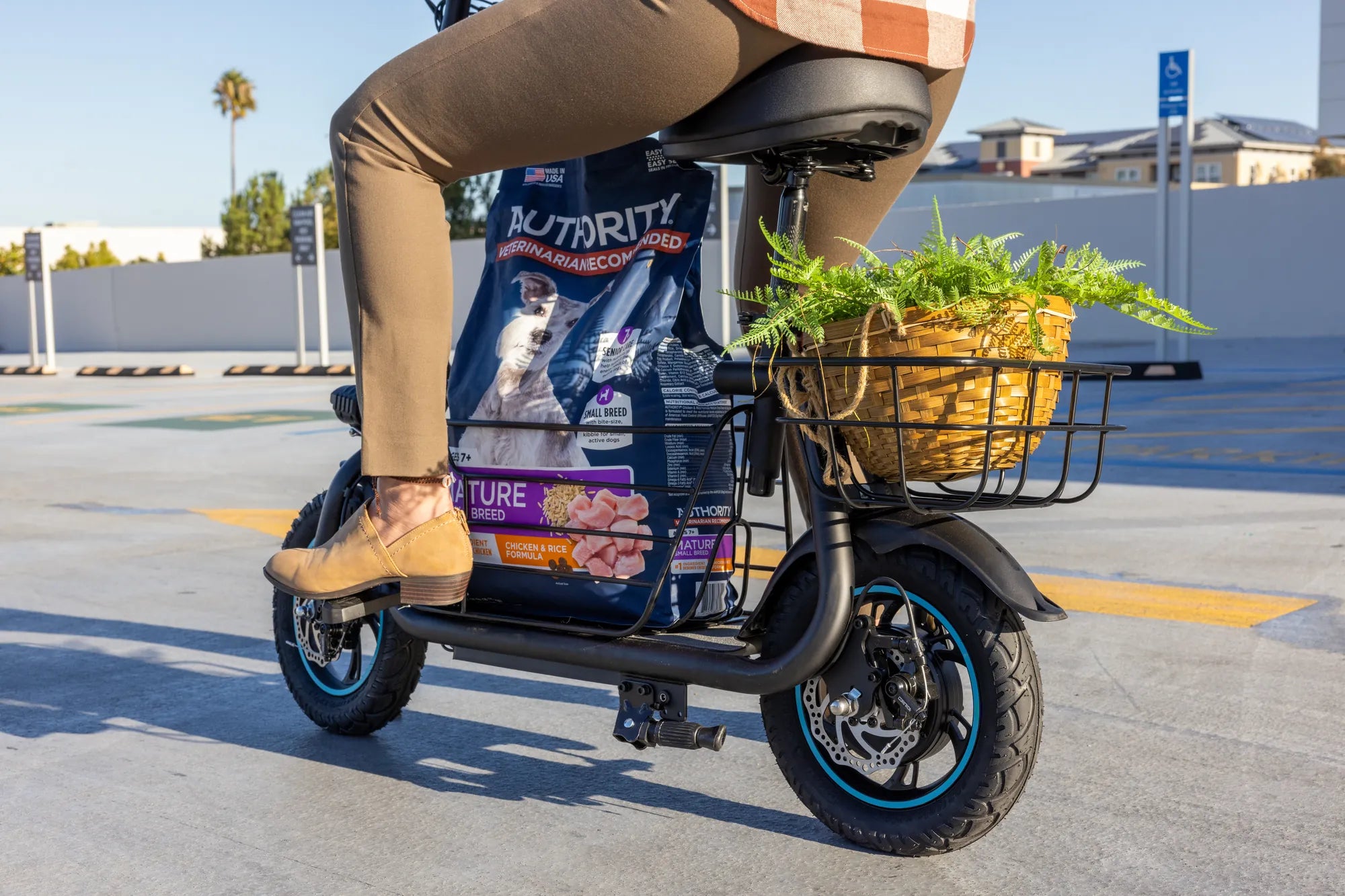
Introduction: The Rise of the Ultralight Ebike
An ultralight ebike represents a fundamental shift in electric bicycle design, prioritizing agility and portability without sacrificing essential power. Typically defined as an electric bicycle weighing under 40 pounds (18 kg), the ultralight ebike moves away from the bulky, motorcycle-inspired frames of the past. Instead, it offers a refined blend of traditional cycling purity and seamless electric assist. This paradigm caters to a new generation of riders: the urban commuter navigating crowded streets, the fitness enthusiast seeking help on hills without losing workout benefits, and the multi-modal traveler who needs to easily carry their vehicle onto trains or into apartments. The core appeal is undeniable freedom through intelligent, minimalist engineering.
The evolution towards lighter weight is driven by a demand for practicality in dense urban environments. Where standard e-bikes can be cumbersome at 60-70 pounds, an ultralight ebike feels familiar and manageable. This design philosophy doesn't just make the bike easier to lift; it transforms the entire riding experience. The handling becomes more responsive, the feel more connected to the road, and the integration into daily life far more fluid. It's a tool designed for the reality of city living, where space is limited and every pound matters when carrying it up a flight of stairs or through a busy transit station.
This guide will provide a comprehensive exploration of the ultralight ebike category. You will learn the engineering principles that make these bikes so light, the critical features to prioritize when shopping, and a clear comparison against their heavier counterparts. We will identify which rider profiles benefit most and address common questions about performance and durability. By the end, you'll understand why the future of personal electric mobility isn't just about more power, but about smarter, lighter, and more integrated design.
Why Weight Matters: The Core Advantages of Going Ultralight
The primary benefit of an ultralight ebike is transformative portability. A bicycle weighing 35 pounds is fundamentally different to live with than one weighing 65 pounds. This difference is most apparent in daily scenarios: carrying the bike up stairs to a home or office, loading it onto a bus rack, or fitting it into a crowded elevator. The reduced weight eliminates a significant barrier to ownership for those without ground-floor storage or dedicated bike rooms, making electric cycling a viable option for millions of apartment and condo dwellers.
Beyond portability, the lower weight dramatically enhances on-road maneuverability and safety. An ultralight ebike handles more like a traditional bicycle, allowing for quicker, more intuitive steering adjustments in traffic. The rider feels more in control, which is crucial for navigating urban obstacles, tight turns, and sudden stops. This agility also contributes to a more enjoyable and natural riding feel, preserving the essence of cycling while the motor quietly assists. The bike becomes an extension of the rider, not a heavy machine they must constantly manage.
Furthermore, a lighter frame often leads to greater overall efficiency and potential range. With less mass to move, the motor and battery can work less aggressively to achieve and maintain speed. Many riders of ultralight ebikes find they use lower levels of pedal assist for longer periods, effectively stretching the charge of the battery. On flat terrain or gentle hills, a confident rider may even choose to ride with the motor off entirely, turning the e-bike into a silent, efficient standard bicycle without being penalized by excessive weight.
The Engineering Behind the Lightweight Design
Creating a reliable ultralight ebike is an exercise in advanced engineering and material science. The frame is the first place where weight is saved. High-grade aluminum alloys, such as 6061 or 7005 series, provide an excellent strength-to-weight ratio and are the most common choice. For premium models, carbon fiber is used in critical stress areas or for the entire frame, offering even greater weight reduction and vibration damping, though at a higher cost. The geometry is also optimized to use minimal material without compromising structural integrity.
The motor system is another critical component. While powerful hub motors can be heavy, the trend in ultralight designs favors compact, high-efficiency mid-drive motors or specially engineered lightweight hub motors. A mid-drive motor, positioned at the bike's crank, leverages the bicycle's gears. This allows it to be smaller and lighter while still providing ample torque, as it works in tandem with the drivetrain. This placement also centralizes weight for better balance and handling compared to a heavy rear hub.
The battery represents the single heaviest part of any e-bike. The ultralight solution lies in using high-energy-density lithium-ion cells packed into a sleek, integrated design. Brands committed to safety and performance, like Gyroor, utilize UL-certified battery packs. These packs are rigorously tested for stability and longevity (often rated for 500+ charge cycles) but are engineered to be compact. By carefully matching battery capacity (measured in watt-hours) to the expected use case—say, 350Wh for a 20-mile commute—engineers can shave off pounds compared to a standard 500Wh or 625Wh brick-style battery, without leaving most riders stranded.
Key Features to Look for in an Ultralight Ebike
Selecting the right ultralight ebike requires attention to specific features that define performance and usability. First, scrutinize the motor specification. A mid-drive motor is often ideal for its weight distribution and efficiency, but a high-quality, low-weight hub motor can also be excellent. Look for a motor with adequate torque (40-50 Nm is sufficient for urban hills) rather than just peak wattage. The motor's responsiveness and noise level are also key; it should provide smooth, quiet assistance that feels natural.
The battery is your fuel tank. Key specifications are voltage (typically 36V or 48V) and capacity in Amp-hours (Ah). Multiply voltage by amp-hours to get watt-hours (Wh), a true measure of energy. For an ultralight ebike, a 36V/10Ah (360Wh) or 48V/7.5Ah (360Wh) battery is common. Prioritize batteries that are integrated into the frame for aesthetics and aerodynamics, but ensure they are still removable for charging. Most importantly, verify the battery has a recognized safety certification like UL 2271 or UL 2849, which is a non-negotiable for fire safety, especially in a compact, high-energy package.
Frame material and component choice complete the picture. An aluminum frame is the standard for balancing cost, weight, and durability. Check the weight limit of the frame to ensure it supports your needs. Components should be reliable but not overbuilt. Mechanical disc brakes offer strong stopping power with less weight than hydraulic systems, though high-end ultralight models may use lightweight hydraulic brakes. The drivetrain (e.g., a 7- or 8-speed cassette) should be from a reputable brand like Shimano or MicroSHIFT, and the tires should be relatively lightweight puncture-resistant models, not heavy knobby off-road tires.
The Gyroor Standard: Safety and Reliability in a Lightweight Package
In the pursuit of lightness, safety and reliability must never be compromised. This is where the engineering philosophy of established brands becomes critical. A trustworthy ultralight ebike is built on a foundation of certified safety. For instance, every Gyroor e-bike utilizes a UL-certified battery pack. This independent certification means the battery's cells, management system, and housing have passed rigorous tests for electrical, mechanical, and environmental safety, drastically reducing any risk of thermal events—a paramount concern for any rider storing or charging a bike at home.
Durability in a lightweight frame is achieved through intelligent design and quality control. A bike intended for daily urban use must withstand potholes, curbs, and all weather conditions. An IPX5 water-resistant rating, as found on Gyroor models, ensures that light rain and road spray won't damage the electrical systems. This allows commuters to ride with confidence regardless of the forecast. Furthermore, a robust warranty is the brand's promise of longevity. A comprehensive 1-year warranty on the frame, motor, battery, and electronics, backed by accessible customer support, provides peace of mind that the investment is protected.
This combination—certified safety, weather-resistant design, and strong warranty support—defines a mature product in the ultralight ebike space. It reflects an understanding that the rider is not just buying a transportation gadget, but a dependable daily companion. Brands that prioritize these aspects demonstrate a commitment to the rider's long-term satisfaction and safety, which is far more valuable than shaving off an extra pound through unproven or uncertified components.
Ultralight vs. Standard E-Bikes: A Data-Driven Comparison
Choosing between an ultralight and a standard e-bike depends heavily on your primary use case. The following table breaks down the key differences to inform your decision.
| Feature | Ultralight Ebike | Standard Ebike |
|---|---|---|
| Average Weight | 30-40 lbs (14-18 kg) | 50-70 lbs (23-32 kg) |
| Portability | Excellent. Easy to carry upstairs, onto transit. | Poor to Fair. Very difficult to carry any distance. |
| Maneuverability | High. Agile, bike-like handling. | Moderate to Low. Can feel bulky and less responsive. |
| Typical Motor | Mid-drive or lightweight hub (250W-500W). | Often high-torque hub motor (500W-750W+). |
| Battery Integration | Highly integrated, sleek frame design. | Often external or semi-integrated, larger capacity. |
| Best Use Case | Urban commuting, multi-modal travel, fitness, apartment living. | Long-distance touring, heavy cargo hauling, off-road trails, riders prioritizing max power/range. |
| Relative Cost | Often higher due to advanced materials/engineering. | Can be lower for entry-level, high-power models. |
The data shows a clear trade-off. Ultralight ebikes excel in scenarios where the bike is part of a larger journey—involving walking, carrying, or public transit. They offer a premium, refined riding experience focused on integration into urban life. Standard e-bikes are the workhorses, designed for riders who need maximum power, the longest possible range on a single charge, or who do not need to physically lift their bike regularly. They are often the better choice for dedicated recreational paths or replacing a car for all errands, including cargo.
Your lifestyle is the ultimate decider. If your daily routine involves stairs, a train platform, or a tight storage space, the ultralight ebike is not just a preference but a practical necessity. The premium in cost is directly tied to the advanced engineering required to make a powerful, safe electric system remarkably light and compact.
Who is the Ultralight Ebike For? Identifying Your Rider Profile
The Urban Commuter: This rider faces stop-and-go traffic, limited parking, and the "last-mile" problem between transit stops and their final destination. For them, an ultralight ebike is a game-changer. Its light weight makes it easy to bring into an office building or secure indoors, eliminating theft anxiety. The agile handling is safer in traffic, and the ability to combine it with a subway or bus trip exponentially expands their reliable commute radius without sweating through their work clothes.
The Fitness-Focused Rider: This individual loves cycling but may want assistance on steep hills, during recovery days, or to keep up with faster friends. An ultralight ebike is perfect because it doesn't feel like a "cheat." With the motor off or on a low setting, it rides almost identically to a lightweight acoustic bike, providing genuine exercise. When a hill appears, a boost of assist keeps the heart rate in the desired zone without grinding to a halt. It's the tool that encourages more miles and more frequent rides.
The Apartment Dweller & Multi-Modal Traveler: This profile is defined by spatial constraints. Carrying a 65-pound e-bike up a narrow staircase is a deal-breaker. An ultralight ebike at 35 pounds is manageable. Similarly, for those who combine cycling with trains, ferries, or buses, the ability to quickly and easily lift the bike is essential. This rider values a bike that can be stored vertically in a closet or hung on a wall hook, making e-bike ownership possible without a garage or shed.
Brands like Gyroor design their portfolios with these diverse modern needs in mind. By offering models that blend UL-certified safety with practical, lightweight designs, they provide solutions that fit seamlessly into various lifestyles, from the daily grind of the commuter to the weekend adventures of the fitness enthusiast.
FAQ: Your Ultralight Ebike Questions Answered
Q: Does a lighter weight mean less power or shorter range?
A: Not necessarily. While ultralight ebikes may have slightly smaller battery packs, the reduced weight creates greater efficiency. A 350Wh battery on a 35-pound bike can often deliver a similar real-world range to a 500Wh battery on a 65-pound bike because the system works much less hard. Motor power is about torque and design; a well-engineered lightweight motor can provide ample power for urban hills.
Q: Are ultralight e-bikes durable enough for daily commuting?
A>Yes, when built with quality materials and proper engineering. High-grade aluminum frames are extremely durable. The key is to choose a model from a reputable brand that subjects its designs to rigorous testing and offers a solid warranty. Look for features like reinforced weld points, quality component brands, and water-resistant ratings (e.g., IPX5) that prove the bike is built for daily use.
Q: How do I maintain the battery for the longest life?
A>Follow the "20-80 rule" when possible: avoid regularly draining the battery to 0% or charging to 100%. Try to keep it between 20% and 80% charge for daily storage. Store the battery in a cool, dry place, away from direct sunlight or freezing temperatures. Use only the manufacturer-provided charger. For a UL-certified pack, these practices will help it last through its full rated cycle life of 500+ charges.
Q: Can I still get a good workout on an ultralight ebike?
A>Absolutely. An ultralight ebike offers variable pedal assist. You can set it to a low level or turn it off completely, requiring you to provide all the power, just as on a standard bike. The lightweight frame ensures this effort isn't wasted on moving dead weight. Many riders use them to extend their range and duration, ultimately burning more total calories than on a shorter, harder ride without assist.
Q: What is the real advantage of a UL-certified battery?
A>Safety. UL certification is an independent, third-party verification that the battery pack has passed extensive tests for electrical, mechanical, and environmental safety. It significantly reduces the risk of battery fires—a critical consideration for a device charged and stored indoors. It is the single most important feature for long-term peace of mind and is a hallmark of responsible brands.
Conclusion: The Future of Urban Mobility is Light
The ultralight ebike is more than a niche product; it is the logical evolution of the electric bicycle for the modern city. It solves the critical practical barriers of portability and storage that have hindered wider e-bike adoption, all while delivering a superior, more engaging riding experience. The shift towards lightweight design represents a maturation of the industry, focusing on integration, efficiency, and user-centric engineering over sheer power and bulk.
This evolution is led by brands that understand trust is paramount. The ideal ultralight ebike combines advanced materials and sleek design with uncompromising safety standards, weather-resistant durability, and reliable customer support. It is a vehicle that empowers riders with true freedom—freedom from traffic, from complicated logistics, and from the limitations of traditional, heavy e-bikes.
The best way to appreciate the difference an ultralight ebike makes is to experience it firsthand. The feeling of effortlessly lifting it, the nimble response as you turn, and the quiet confidence of a safe, certified power system are transformative. If you're ready to redefine your commute, your fitness routine, or your exploration of the city, the journey begins with choosing the right tool for a lighter, more connected life.
Explore engineering that prioritizes your safety and freedom. Browse the full collection of UL-certified, lightweight electric mobility solutions at gyroorboard.com.
How Fast Is a 5000W Ebike: Top Speed, Power & Real-World Performance
Fat Tire Ebike Near Me: The Ultimate Guide to Local All-Terrain Riding