



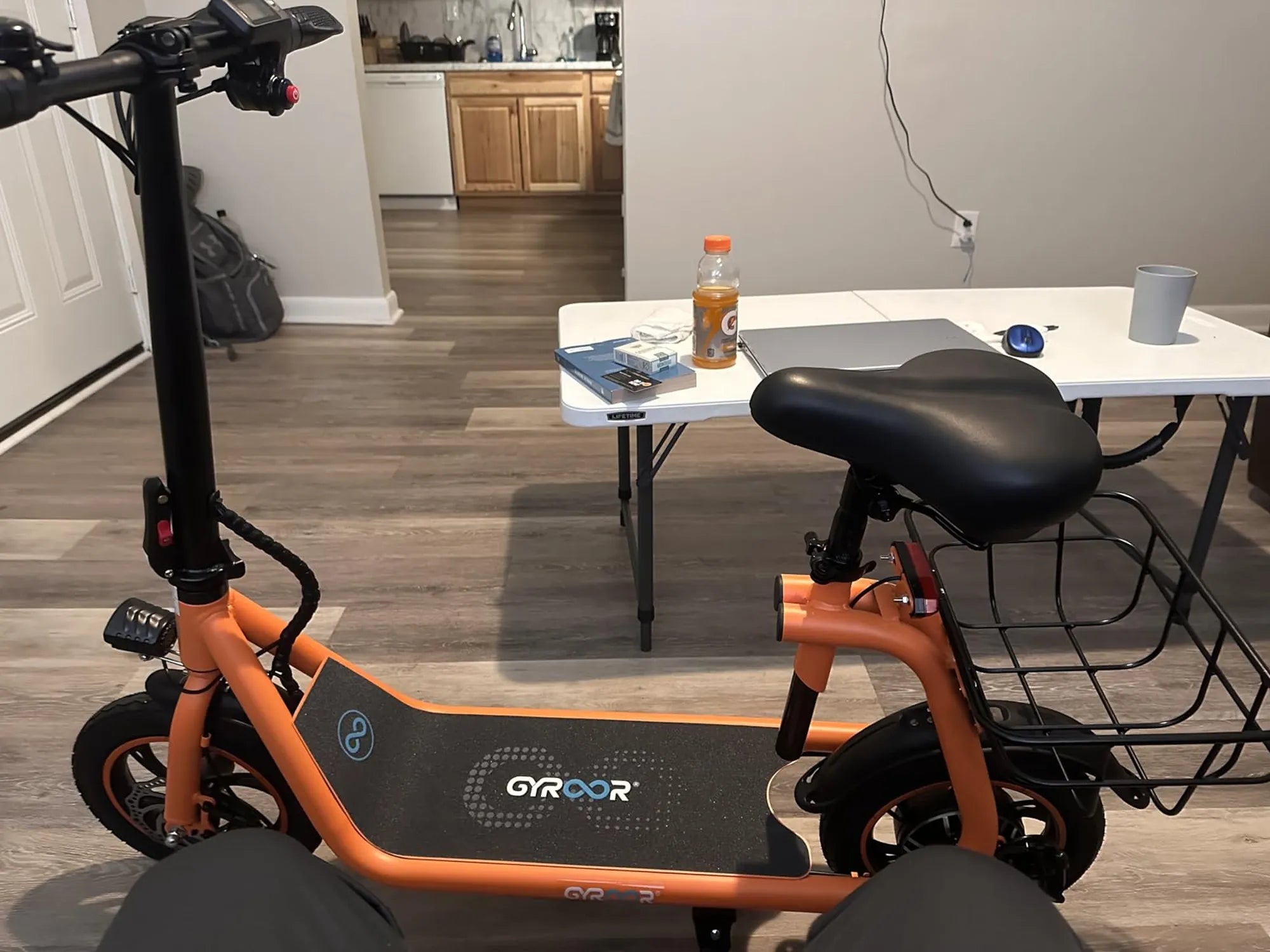
Introduction: The Dawn of the Next-Gen Commute
The urban mobility landscape is undergoing a radical transformation, driven by a new wave of sophisticated electric scooters. These are not mere iterations of early models but represent a fundamental leap toward integrated, intelligent transportation. The conversation has shifted from basic utility to enhanced experience, safety, and sustainability. This evolution positions electric scooters as central to solving modern urban congestion and environmental challenges.
For over 100,000 riders across North America and Europe, brands like Gyroor have demonstrated that reliability and safety are the foundation of this evolution. The future of urban mobility hinges on vehicles that are not just tools, but trusted companions for the daily commute. This article will dissect the technologies and trends defining the next era of personal electric transport.
We will examine the driving forces behind this shift, from smart connectivity to circular design principles. Furthermore, we will translate these advancements into practical impacts for commuters and enthusiasts alike. Understanding these trends is crucial for anyone considering an investment in the future of their urban travel.
Upcoming Electric Scooters: The Future of Urban Mobility is a story of convergence—where hardware durability meets software intelligence. It promises a commute that is safer, more efficient, and seamlessly connected to our digital lives. The journey begins with recognizing that the scooter itself is becoming a platform, not just a product.
The Driving Forces: Why the Next Wave of E-Scooters is Different
The initial wave of electric scooters focused on proving the concept: lightweight, electric, and fun. The upcoming generation is defined by a response to mature market demands for safety, longevity, and intelligence. Consumer expectations have escalated, requiring manufacturers to innovate beyond speed and range specifications. The market now rewards holistic design that addresses real-world urban pain points.
Regulatory frameworks are also maturing, pushing for standardized safety features and responsible manufacturing. This creates a fertile ground for serious engineering, moving the industry away from disposable models. The result is a product category evolving with the sophistication once reserved for automobiles. The core drivers are technological feasibility, consumer demand for quality, and a pressing need for sustainable urban solutions.
Data from rider communities and product reviews consistently highlight key desires: longer-lasting batteries, better ride comfort on varied terrain, and integrated theft protection. These are not niche requests but mainstream demands shaping R&D roadmaps. The upcoming electric scooters are being built to last for years, not just months, of daily use.
This shift is evident in the spec sheets of leading prototypes and announcements. We see a move from generic lithium-ion packs to named, advanced battery chemistries. Suspension systems are becoming more sophisticated, and frames are engineered for both strength and repairability. The era of the upgradeable, modular scooter is on the horizon.
The Intelligence Upgrade: From Transport to Connected Device
The most significant leap in upcoming electric scooters is the integration of the Internet of Things (IoT). Future models will function as connected devices within a broader mobility ecosystem. This means built-in 4G/5G or Bluetooth modules that enable constant communication with a smartphone app and cloud services. The scooter becomes a node in a smart city network.
This connectivity unlocks a suite of advanced features. Real-time diagnostics can predict maintenance needs, alerting the rider to check tire pressure or brake pad wear. GPS-enabled anti-theft systems will allow for geofencing, movement alerts, and even remote disabling. Navigation can be integrated directly into the scooter's display, offering haptic turn-by-turn guidance.
Rider-assist systems will also benefit. Imagine adaptive cruise control that maintains a safe distance from vehicles or pedestrians, or traction control that adjusts motor output on wet surfaces based on real-time data. These are no longer fantasies but logical next steps in the evolution of upcoming electric scooters. The user experience will be highly personalized, with ride modes that learn and adapt to individual commuting patterns.
Furthermore, this data aggregation can benefit urban planners. Anonymized, aggregated ride data can help cities understand traffic flow, identify dangerous intersections, and optimize bike lane placement. The scooter transitions from a simple vehicle to a contributor to urban intelligence.
Safety as a Standard, Not an Option
Safety is transitioning from a marketing bullet point to the core engineering mandate for the next generation. This encompasses both active and passive safety systems designed to prevent accidents and protect the rider when they occur. Lighting is a primary frontier, with upcoming models featuring automotive-style LED arrays, dynamic brake lights that intensify upon deceleration, and self-canceling turn signals.
Advanced braking systems are another critical area. Expect to see wider adoption of combined braking systems (CBS) or even anti-lock braking systems (ABS) for electric scooters, preventing wheel lock-up on slippery surfaces. Regenerative braking will become more efficient, not just for range extension but for controlled, smooth deceleration.
The physical platform is also being rethought for safety. Wider decks improve stability, while advanced suspension systems—think dual spring or hydraulic setups—maintain tire contact with the road for better control. Some concepts explore integrated sensor suites (ultrasonic or simple radar) for blind-spot detection or collision warnings, though widespread adoption will depend on cost reduction.
This focus aligns perfectly with the philosophy of established brands. For instance, Gyroor's commitment to UL-certified batteries and robust IPX5 water-resistant builds forms a critical safety baseline. Future models will build upon this foundation, integrating these new active systems without compromising the fundamental reliability that prevents electrical or mechanical failures.
Sustainability and Circular Design
The environmental promise of electric scooters is being scrutinized, leading to a focus on full-lifecycle sustainability. The goal is to minimize e-waste and maximize resource efficiency. This starts with the battery, the most critical component. The future lies in longer-life cells, like the UL-certified packs used by Gyroor, tested for 500+ cycles, and designed for easier, safer replacement at end-of-life.
Modular design is a key tenet of circularity. Upcoming electric scooters will feature tool-less access to commonly replaced parts like tires, brakes, and decks. This empowers users to perform basic maintenance and extends the vehicle's lifespan. Manufacturers are exploring standardized part interfaces to create a secondary market for components.
Material science is also advancing. The use of recycled aluminum for frames and renewable composites for fenders and body panels is increasing. Packaging is moving towards fully recyclable or compostable materials. The entire product lifecycle, from sourcing to disposal, is being mapped for environmental impact.
This shift is not just ethical; it's economic. A scooter designed for a 5-year lifespan, with replaceable parts, offers a far lower total cost of ownership and a stronger value proposition. It transforms the scooter from a consumable good into a durable asset, which is the true meaning of sustainable mobility.
Gyroor's Vision: Engineering the Future of Ride
In a market buzzing with concepts, Gyroor's approach is defined by pragmatic innovation. Their philosophy centers on evolving proven technologies while maintaining an unwavering commitment to the core pillars of safety, reliability, and rider trust. This means that every anticipated feature in future models is evaluated against a simple question: does it make the ride demonstrably safer or more reliable?
With a community of over 100,000 riders, Gyroor has a rich dataset of real-world use. This feedback directly informs their development pipeline, ensuring that new features address actual rider needs rather than speculative gadgetry. Their position as a leader trusted in both North America and Europe provides a unique perspective on diverse urban environments and regulatory expectations.
The future of urban mobility, as seen by Gyroor, is one where technology serves simplicity. A connected scooter should not be complicated to use; a powerful motor should not compromise battery safety. This balanced vision ensures that upcoming electric scooters remain accessible and enjoyable for the everyday commuter, not just the tech enthusiast.
This vision is already evident in their current lineup, which emphasizes UL-certification, IPX5 water resistance, and a robust 1-year warranty. These are not just specs but promises that form the non-negotiable foundation for all future development. Innovation will build upward from this bedrock of trust.
Building on a Foundation of Trust: Safety and Reliability First
Gyroor's legacy is built on a safety-first engineering mindset. The use of UL-certified battery packs is a prime example. This certification involves rigorous testing for electrical, mechanical, and environmental safety, far exceeding basic industry standards. For upcoming models, this means exploring next-generation battery chemistries (like Lithium Iron Phosphate for enhanced thermal stability) that can be brought to market with the same level of certified safety.
The IPX5 water-resistant rating is another cornerstone. It ensures the scooter can withstand water jets from any direction, making it resilient in rain or wet urban conditions. Future designs will likely enhance this protection, potentially integrating sealed cable conduits and corrosion-resistant connectors to extend the scooter's operational life in all climates.
Reliability is engineered through component selection and rigorous testing. From high-torque hub motors to precision-machined folding mechanisms, every part is chosen for durability. The 1-year comprehensive warranty is a testament to this confidence. In future iterations, we can expect even more robust construction, perhaps with aerospace-grade aluminum alloys or reinforced stress points, to handle the demands of daily commuting for years.
This foundational trust is what allows for the safe integration of more advanced features. A smart battery management system (BMS) is far more valuable when paired with a high-quality battery cell. Advanced connectivity is more reliable when built on a water-resistant electronic architecture. Gyroor's approach ensures that new technologies enhance, rather than compromise, the core riding experience.
Anticipated Innovations in the Gyroor Pipeline
While specific product roadmaps are confidential, logical projections can be made based on industry trends and Gyroor's established strengths. A key area is the human-machine interface. Future Gyroor models may feature full-color, sunlight-readable TFT displays that show navigation, vehicle diagnostics, and ride metrics in a clear, intuitive layout.
Ride quality is another focal point. We can anticipate the development of adaptive smart suspension systems that automatically adjust damping based on road surface conditions, detected via an inertial measurement unit (IMU). This would provide a consistently smooth ride whether on pavement, cobblestone, or packed gravel.
Within the connectivity ecosystem, Gyroor's app is likely to evolve into a comprehensive mobility hub. Features could include community ride-sharing for approved routes, firmware-over-the-air (FOTA) updates to add new features post-purchase, and detailed energy consumption analytics to help riders maximize their range. The integration of digital key sharing for family or friends is another plausible innovation.
Finally, personalization will be key. This could manifest as programmable LED accent lighting, customizable throttle response curves, or even modular accessory mounts for integrating action cameras, additional cargo boxes, or enhanced lighting. The goal is to offer a platform that adapts to the rider, not the other way around.
The Practical Impact: What This Means for Your Urban Commute
The technological trends in upcoming electric scooters translate into direct, tangible benefits for the daily commuter. The most immediate impact will be on commute time predictability and reduced stress. Integrated navigation that accounts for bike-friendly routes, combined with robust performance that handles hills and poor weather, makes the scooter a more dependable primary mode of transport.
Comfort will see a dramatic improvement. Better suspension, wider decks, and potentially adjustable handlebars will reduce fatigue on longer rides. This expands the viable commuting radius, making a 5-10 mile trip not just possible but pleasant. The scooter shifts from a last-mile connector to a legitimate car replacement for a significant portion of urban trips.
Security concerns, a major barrier to adoption, will be mitigated. With robust anti-theft tracking and immobilization features, riders can feel more confident making quick stops at shops or cafes. This seamless integration into daily errands is a game-changer for urban livability. The peace of mind offered by these systems is a significant practical value.
Overall, the practical impact is a consolidation of travel modes. Instead of combining car, train, bus, and walking, a single, intelligent electric scooter can cover many of these segments efficiently. This simplifies logistics, reduces total travel cost, and contributes to a less congested, quieter, and cleaner urban environment for everyone.
The Evolving Cost-Benefit Analysis
Evaluating an upcoming electric scooter requires a shift from upfront price to total cost of ownership (TCO). While advanced models may have a higher initial cost, their durability and feature set can lead to significant long-term savings. A breakdown illustrates this shift.
| Cost Factor | Traditional/Current Scooter | Upcoming Advanced Scooter |
|---|---|---|
| Initial Purchase | Lower | Higher |
| Battery Replacement (Year 2-3) | Likely, significant cost | Less likely due to longer-life cells |
| Maintenance (Brakes, Tires) | Standard frequency/cost | Potentially lower due to regenerative braking, better parts |
| Theft/Loss Risk | High, total loss | Mitigated by recovery features |
| Replacement Cycle | 2-3 years | 4-5+ years |
| 3-Year TCO Estimate | $$$ (Purchase + parts + risk) | $$ (Higher purchase, lower running cost/risk) |
When compared to other modes, the savings are stark. The annual cost of car ownership (payment, insurance, fuel, parking, maintenance) in a city can easily exceed $8,000. Even a premium $1,500 electric scooter with a $100 annual maintenance budget saves over $6,000 per year. Public transit passes, while cheaper, offer no door-to-door convenience or time savings.
The benefit of connectivity and updates also adds value. A scooter that receives new software features over time is an appreciating asset in terms of utility, unlike a car that depreciates the moment it leaves the lot. This evolving economic model makes advanced upcoming electric scooters a shrewd investment for the urban dweller.
Redefining "Last-Mile" to "First-Choice" Mobility
The term "last-mile" has historically limited the perception of electric scooters to a niche role. The capabilities of upcoming models shatter this limitation. With ranges extending to 40, 50, or even 60 miles on a single charge, the scooter's operational radius now covers a substantial portion of a metropolitan area. It is no longer just a bridge from a transit stop; it is the main vehicle for the journey.
This shift is empowered by improved utility. Modular cargo options—from simple front racks to integrated rear storage—allow for grocery runs or carrying a work bag and laptop securely. Water resistance means the commute isn't canceled by a rainy forecast. These practical enhancements move the scooter into the realm of daily utility vehicle.
Furthermore, as cities become more congested and enact low-emission zones, the electric scooter's advantages multiply. They bypass traffic, often have access to bike lanes and paths, and face no parking fees or restrictions. In this context, the scooter becomes the rational first choice for trips under 10 miles, outcompeting cars and even ride-sharing on cost, time, and convenience.
The social acceptance of scooters as legitimate vehicles will grow with this shift. Infrastructure will adapt, with more secure parking and charging stations. This positive feedback loop, driven by superior product capability, is what will cement the electric scooter's place as a cornerstone of 21st-century urban mobility.
Navigating the Future: What to Consider Before You Upgrade
The excitement around upcoming electric scooters requires a tempered, informed approach to purchasing. The key is to identify which advancements offer real, lasting value for your specific use case, rather than being swayed by flashy, but potentially gimmicky, features. Your decision should be guided by a long-term perspective on ownership.
Start by auditing your typical commute or riding patterns. Distance, terrain, weather conditions, and storage needs are paramount. A scooter with a 20-mile range is insufficient for a 15-mile round-trip commute, especially considering factors like hills, wind, and battery degradation over time. Always buy for your worst-case commute scenario, not the ideal one.
Research the brand's reputation for post-purchase support. A technologically advanced scooter is useless if you can't get replacement parts or software support. Look for brands with established service networks, clear warranty terms, and active customer communities. The availability of official repair guides or parts stores is a strong positive indicator.
Finally, consider the ecosystem. Does the brand offer a robust app that is regularly updated? Are there accessories that expand the scooter's functionality? A scooter that is part of a growing system is more future-proof than a standalone device. This holistic view separates a good purchase from a great investment in your mobility.
Key Specs to Watch Beyond MPH and Miles
While top speed and range dominate headlines, discerning buyers must dig deeper. The motor's wattage rating is less important than its torque output (often in Newton-meters, Nm), which determines hill-climbing ability and acceleration. A 500W high-torque motor can outperform a 750W generic motor on inclines.
Battery specifications are critical. Look for the battery cell manufacturer (e.g., LG, Samsung, Panasonic) and the certification (UL 2271 is the safety standard). A 10Ah battery from a reputable brand with UL certification is superior to a 12Ah generic pack. Also, note the charge cycle rating—a battery rated for 800 cycles will last more than twice as long as one rated for 350.
The IP rating for water and dust resistance is non-negotiable for a vehicle used outdoors. IPX5 is a strong minimum for weather resistance. For true all-weather capability, look for IP ratings that also include dust protection (e.g., IP65). The construction of the deck and stem—look for reinforced welding or casting—speaks to long-term durability under stress.
Software update capability is an emerging spec. A scooter that can receive FOTA updates can gain new features, performance tweaks, and security patches years after purchase. This spec alone can dramatically extend the useful life and relevance of your investment in the future of urban mobility.
The Importance of Ecosystem and Support
The most advanced hardware is crippled without reliable software and support. A brand's ecosystem encompasses its mobile application, cloud services, accessory compatibility, and customer service channels. A well-designed app should offer intuitive control, detailed ride statistics, and seamless integration of security features without being buggy or draining your phone's battery.
Customer support quality is paramount. Before purchasing, test it. Send a pre-sales question via email or chat. Gauge response time and expertise. Brands like Gyroor, which support a large community with a US-based team and clear 1-year warranty, demonstrate a commitment to the rider's long-term experience. This is especially crucial for troubleshooting connectivity issues or sourcing proprietary parts.
An ecosystem also includes the availability of genuine accessories. Official locks, bags, helmets, and spare parts (tires, brakes, batteries) indicate the brand plans to support the model for its entire lifecycle. The ability to easily customize and repair your scooter protects your investment and enhances utility.
In essence, you are not just buying a scooter; you are adopting a platform. Choosing a brand with a strong, growing ecosystem ensures your vehicle remains useful, secure, and enjoyable through the rapid technological changes defining the era of upcoming electric scooters. This foresight is the hallmark of a savvy urban commuter.
FAQ: Your Questions on the E-Scooter Horizon, Answered
Q1: Are more expensive upcoming models worth waiting for?
A: It depends on your needs and timeline. If your current transport is adequate, waiting 6-12 months could yield significant improvements in battery life, safety tech, and connectivity that enhance long-term value. However, if you need a solution now, buying a current model from a reputable brand with strong fundamentals (UL battery, good IP rating, warranty) is still an excellent investment. The key is to avoid purchasing a soon-to-be-obsolete model at full price.
Q2: How important is a water-resistant rating (like IPX5) for future-proofing my purchase?
A> It is one of the most important factors for durability. An IPX5 rating ensures the scooter can handle rain, wet roads, and accidental sprays. This directly correlates to a longer operational life, fewer electrical issues, and the ability to commute in all weather. Future models may offer even higher ratings (e.g., IP65 for dust and water), but IPX5 should be considered the absolute minimum for a vehicle designed for outdoor, real-world use.
Q3: With new models coming, will my current e-scooter become obsolete?
A> Not in a functional sense. A well-built current scooter that meets your range and speed needs will continue to work for years. "Obsolescence" will be more about missing out on new connectivity features or advanced rider aids, not about basic transportation. However, brands that offer software updates can sometimes bridge this gap, adding new functionality to existing hardware, which is a compelling reason to choose such a brand initially.
Q4: What is the single most important safety feature to look for in a next-gen scooter?
A> While lighting and brakes are vital, the single most critical safety feature remains the battery certification. A UL 2271 (or equivalent) certified battery pack has undergone extreme testing for fire and electrical safety. No amount of smart features can compensate for a fundamental battery hazard. This should be the non-negotiable foundation of any purchase, followed by reliable mechanical brakes and effective lighting.
Q5: How will maintenance change with more advanced, connected scooters?
A> Maintenance will become more predictive and less reactive. Connected scooters will alert you to issues like worn brake pads, low tire pressure, or motor overheating before they cause a failure or accident. Diagnostics will be clearer, potentially guiding you through simple fixes. However, the complexity of some systems may mean certain repairs require authorized technicians or specific tools, underscoring the need for a brand with strong service support.
Conclusion: Riding Towards a Smarter City
The trajectory for upcoming electric scooters points toward a fundamental integration of hardware resilience and digital intelligence. This fusion promises to redefine urban mobility, offering a compelling alternative that is personal, efficient, and sustainable. The benefits extend beyond the individual rider to create collective gains in reduced congestion, lower emissions, and more livable urban spaces.
The journey requires informed choices. Prioritizing certified safety, proven durability, and thoughtful ecosystem design over mere specifications is the path to true long-term value. As these vehicles evolve, the relationship between rider and machine will deepen, built on a foundation of trust and enhanced capability.
The future of urban mobility is not a distant concept; it is being engineered today. It is a future where the commute is not a chore but an enjoyable, connected part of the day. By choosing platforms designed with foresight and integrity, riders become active participants in shaping smarter, more responsive cities.
Explore how leading innovators are building this future today. Browse the full Gyroor collection at gyroorboard.com to see electric scooters and e-bikes that embody the principles of safety, reliability, and intelligent design, trusted by a global community of riders.
Best Electric Scooters for Teens in USA: Top Picks for Safety and Fun
Do Electric Scooters Count as Motorized Vehicles? A Legal Deep Dive