


Introduction: Understanding the Hoverboard Age Question
Parents searching for the perfect gift or activity often ask, 'What age is a hoverboard for?' This isn't a simple question with a one-size-fits-all answer. It hinges on a crucial balance between a child's physical development, cognitive maturity, and the specific safety features of the hoverboard itself.
Navigating this decision requires moving beyond marketing claims to understand industry standards, key readiness indicators, and non-negotiable safety rules. This guide provides a comprehensive, evidence-based framework to help you make an informed choice. We'll reference models from Gyroor, a leading electric scooter and e-bike brand trusted by over 100,000 riders, known for integrating foundational safety features like UL-certified batteries and IPX5 water-resistant designs into their hoverboards.
The Official Stance: Manufacturer Recommendations & Safety Standards
The industry-standard age recommendation for most self-balancing scooters, commonly called hoverboards, is 8 years and older. This guideline isn't arbitrary; it's based on developmental benchmarks and product specifications. The core rationale involves motor power, typical speed ranges (often 6-10 mph for beginner models), and the balance required to operate a two-wheeled, self-balancing device.
Reputable manufacturers base their age labels on rigorous testing protocols. A key differentiator in safety is the battery certification. Hoverboards equipped with UL 2272 certified battery packs have passed stringent tests for electrical, fire, and mechanical hazards. Gyroor, for instance, uses UL-certified batteries tested for 500+ charge cycles in all its models, providing a critical safety foundation that directly informs responsible age recommendations.
Weight limits are another concrete specification tied to age. Most hoverboards designed for younger riders have a minimum weight requirement of around 44 lbs (20 kg) and a maximum between 150-220 lbs (68-100 kg). These limits ensure the gyroscopic sensors can function correctly; a child who is too light may not activate the board properly, while exceeding the max weight risks motor strain and potential failure.
Key Factors Determining Readiness Beyond Age
Chronological age is a useful starting guideline, but it's not the definitive measure. A child's readiness depends on a combination of physical, cognitive, and behavioral factors. A mature, coordinated 7-year-old might be ready under strict supervision, while some 9-year-olds may need more time to develop the necessary skills and judgment.
Evaluating your child individually against these factors is more important than the number on the box. The goal is to ensure a positive, confidence-building experience that prioritizes safety. Rushing the process can lead to frustration, fear, or accidents. The following sections break down the specific attributes to assess.
Physical Development & Motor Skills
Hoverboarding requires a specific set of physical competencies. Core strength and ankle stability are paramount for maintaining balance and making subtle steering adjustments. A child should be able to stand on one foot comfortably for 10-15 seconds, demonstrating basic balance.
Good overall coordination and a developed sense of proprioception (body awareness in space) are essential. Reaction time is also a factor; a child needs to process slight shifts in balance and respond appropriately. If your child is proficient at riding a bicycle without training wheels or can balance on a skateboard, they likely possess the foundational motor skills for a hoverboard.
Cognitive Maturity & Responsibility
This is often the most critical differentiator. Operating a personal electric vehicle requires consistent good judgment. Can your child understand and remember multiple safety rules, such as avoiding roads, staying away from wet surfaces, and not exceeding safe speeds?
They must comprehend cause and effect: leaning too far forward means going faster, which increases stopping distance and risk. Maturity also involves knowing personal limits, recognizing when they are tired (which impairs balance), and being willing to wear safety gear every single time without a battle. A responsible attitude is non-negotiable.
Gyroor Hoverboards: Matching Models to Age & Skill Level
Choosing the right model is as important as determining readiness. Matching specs to your child's age and skill level enhances safety and enjoyment. Here is a practical guide using Gyroor's lineup, which emphasizes safety through UL-certified batteries and robust construction.
| Age & Skill Tier | Recommended Gyroor Model Features | Key Specs & Benefits |
|---|---|---|
| Ages 8-10 (Beginners) | Entry-level or Kid-Focused Models |
Max Speed: 7.5 mph Wheel Size: 6.5" - 7.5" Features: Lower deck height for stability, beginner/learning mode, IPX5 water-resistance for driveway use. The moderate speed allows mastery of balance and steering fundamentals in a controlled way. |
| Ages 10+ (Intermediate) | Standard & All-Terrain Models |
Max Speed: 9 - 10 mph Wheel Size: 8.5" all-terrain Features: More powerful motor for gentle inclines, brighter LED lights, longer range. Ideal for riders who have mastered basics and seek more versatility on varied surfaces like grass or packed dirt paths. |
| Teens & Adults (Advanced) | High-Performance & Off-Road Models |
Max Speed: 12+ mph Wheel Size: 10"+ Features: Dual motors, superior suspension, high weight limits. Designed for experienced riders with excellent control, seeking performance and off-road capability. |
Always verify the specific weight limit and recommended age for the exact model. A Gyroor hoverboard with a UL-certified battery provides the safety assurance necessary for any age group, making the age-matching process about skill development rather than mitigating fundamental product risks.
Safety First: Non-Negotiable Gear and Rules for Every Age
Safety is not a suggestion; it's a prerequisite. This protocol applies universally, regardless of the rider's age or skill level. Establishing these habits from the very first ride is critical.
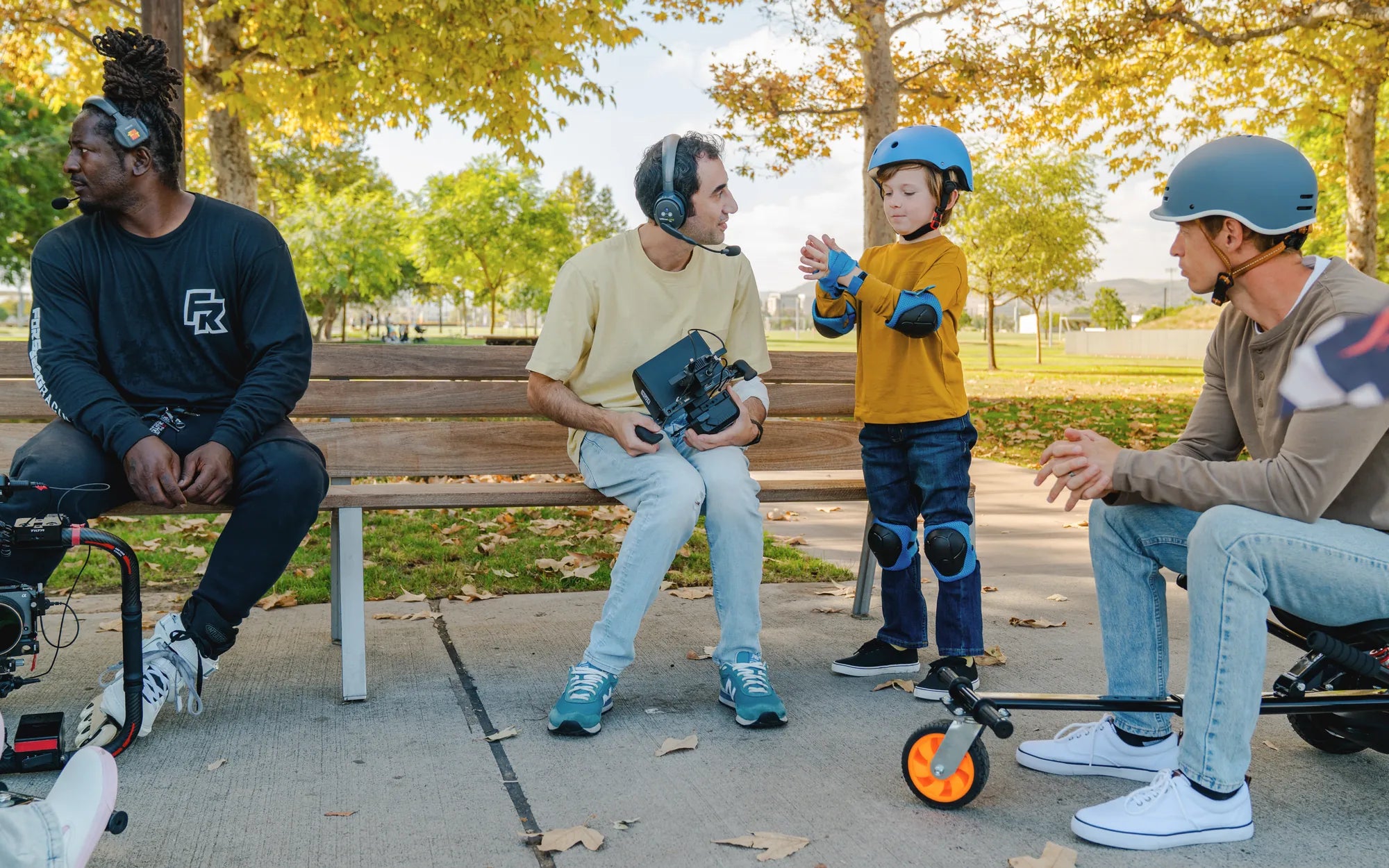
Protective Gear is Mandatory: A properly fitted, CPSC-certified bicycle or multi-sport helmet is an absolute must. Elbow pads, knee pads, and wrist guards are strongly recommended, especially during the learning phase. Wrist guards are particularly important as falling forward is common, and they prevent fractures and severe abrasions.
Core Riding Rules:
- Practice Zone: Start in a flat, smooth, private area like an empty parking lot or driveway. Avoid public roads, sidewalks near traffic, and areas with slopes or debris.
- Weather Awareness: Never ride in rain, on wet pavement, or through puddles. Water can damage electronics and cause catastrophic loss of traction.
- Supervised Learning: An adult should be actively present and engaged during all initial practice sessions and until the rider demonstrates consistent competence and rule-following.
- Speed Management: Use beginner modes if available. Master slow, controlled riding and stopping before attempting higher speeds.
Parental Guide: Supervision, Maintenance, and Creating a Rider Agreement
The parent's role extends beyond the purchase. Active involvement ensures long-term safety and teaches responsible ownership. This involves hands-on supervision, basic maintenance, and setting clear expectations.
Phased Supervision: Start with holding your child's hands as they step on and off, getting a feel for the balance. Progress to walking alongside them. Gradually increase distance as they gain confidence. Supervision should remain active until you are confident in their skill and, more importantly, their judgment.
Basic Maintenance Checks: Regularly inspect the hoverboard with your child. Check tire pressure (for air-filled tires), look for cracks or damage in the frame and wheels, ensure all lights work, and listen for unusual noises from the motors. Follow the manufacturer's guidelines for battery charging and storage—never leave it charging unattended or overnight.
The Rider Agreement: A powerful tool to formalize responsibility. Create a simple, signed contract outlining the safety rules, gear requirements, permitted riding areas, and consequences for breaking the agreement. This makes the expectations clear, gives the child ownership of their safety, and provides a clear reference point if rules are forgotten.
Frequently Asked Questions (FAQ)
Q: Can a 6-year-old ride a hoverboard?
A: Most manufacturers, including Gyroor, recommend ages 8 and up due to balance, strength, and safety judgment requirements. For exceptionally mature and coordinated 6- or 7-year-olds, if a parent insists, it must be with a kid-specific model (very low speed), constant hand-holding supervision, and full protective gear. A balance bike is often a better preparatory tool at this age.
Q: Are hoverboards with UL-certified batteries safer?
A: Yes, unequivocally. UL 2272 certification means the battery pack has passed rigorous independent testing for electrical, fire, mechanical, and environmental safety. This significantly reduces the risk of battery-related incidents, which have been a historical concern with hoverboards. It is the single most important safety feature to look for.
Q: What is the most important safety feature for a kids' hoverboard?
A: While features like speed modes and water-resistance are valuable, a UL 2272 certified battery is paramount. Following that, appropriate speed limits (with a beginner mode), durable construction to handle bumps, and clear, responsive controls are crucial for safety.
Q: How long does it typically take a child to learn?
A: With daily practice, most children gain basic control—mounting, dismounting, slow forward/backward movement, and gentle turns—within 30-60 minutes. Achieving confident, fluid riding usually takes a few days to a week. The learning curve is generally faster than for bicycles.
Q: Where is it legal to ride a hoverboard?
A: Laws vary by city, state, and country. Generally, they are not permitted on public roads and are often restricted from sidewalks in business districts. They are typically allowed on private property and sometimes in parks or on bike paths (check local ordinances). Always prioritize safety and courtesy, yielding to pedestrians.
Conclusion: Fostering Fun and Responsibility on Two Wheels
Determining the right age for a hoverboard is a multi-faceted decision that blends manufacturer guidelines, individual child assessment, and an unwavering commitment to safety protocols. The question, 'What age is a hoverboard for?' is best answered by considering physical coordination, cognitive maturity, and the proven safety credentials of the product itself.
By choosing a brand like Gyroor that builds safety in from the foundation with UL-certified batteries and robust designs, you remove a major variable from the equation. This allows you to focus on mentoring your child, teaching them valuable lessons in responsibility, risk assessment, and skill development. A hoverboard introduced thoughtfully at the appropriate time can be a fantastic tool for outdoor activity, building confidence, and creating family fun.
Ready to explore models that match your child's age and skill level with safety as the top priority? Browse the full Gyroor collection at gyroorboard.com to find a UL-certified hoverboard designed for fun you can trust.
Useful Birthday Gift for 5 Year Old Boy: Top Picks to Delight and Educate
Best Hoverboard in the World: The Ultimate Guide to Top-Performing Models