



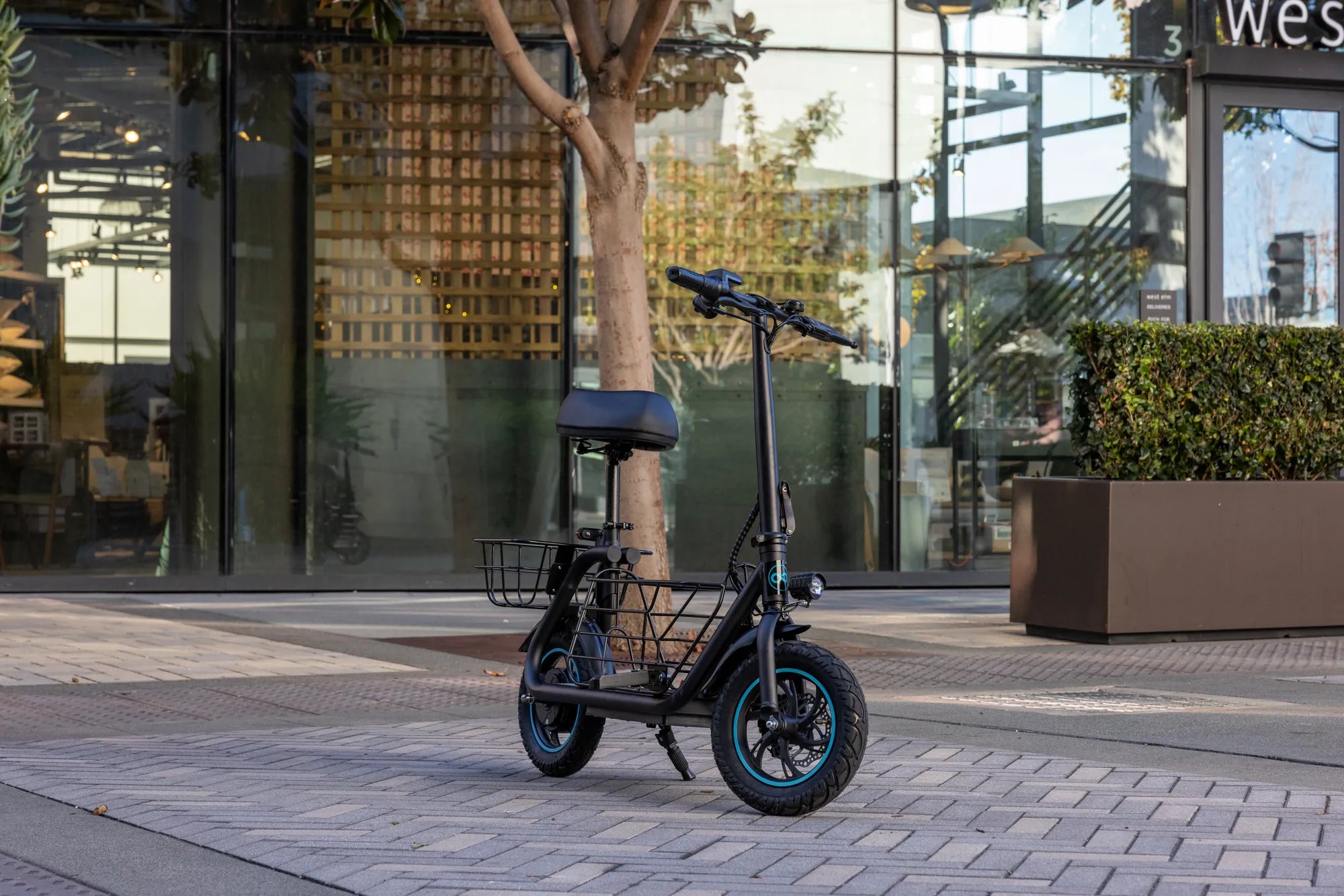
You see them zipping through city streets and parked on sidewalks, but what are the electric scooters called? The answer is more complex than you think. 'Electric scooter' is a broad umbrella term covering a diverse range of personal electric vehicles with distinct designs, capabilities, and official names. This guide will demystify the terminology, from regulatory classifications to rider slang, helping you understand exactly what you're looking at or shopping for.
Beyond "Electric Scooter" – A World of Names and Designs
The term 'electric scooter' can refer to a lightweight, foldable commuter device or a powerful, seated vehicle resembling a moped. This ambiguity stems from rapid innovation and varying regional regulations. Understanding the specific names and categories is crucial for making informed purchases, complying with local laws, and communicating with other riders.
Names are derived from design, intended use, performance, and legal status. A model marketed as a 'hyper scooter' shares little with a device legally classified as a 'personal light electric vehicle.' This guide will navigate this landscape, providing clarity on what are the electric scooters called in every context.
We will explore core categories, dissect technical jargon, and explain how reputable brands build trust through safety features. By the end, you'll be able to decode product listings and community discussions with ease.
The Core Categories: Official Names and Classifications
Electric scooters are primarily categorized by their riding posture, power, and design. These categories have formal names used by manufacturers, retailers, and, increasingly, lawmakers.
Stand-Up Electric Scooters (E-Scooters)
This is the most ubiquitous image. These are upright, typically foldable, personal transport devices. They are synonymous with terms like 'last-mile solution,' 'kick-scooter style,' and 'shared micromobility.'
Designed for urban environments, they feature a deck to stand on, a vertical stem with handlebars, and often a folding mechanism. Their electric motor assists propulsion, which may be initiated by a kick-push. This category dominates ride-share programs and personal ownership for short urban trips.
Their official names often include 'personal electric scooter' or 'electric kick scooter.' Performance varies widely within this group, from basic 250-watt models to high-performance machines.
Sit-Down Electric Scooters (E-Mopeds & E-Scooters)
This category blends scooter and motorcycle features, often called e-mopeds, electric scooters (causing confusion), or electric mopeds. They are defined by a seated riding position, a step-through frame, and often higher power and speed capabilities.
They more closely resemble traditional gas-powered scooters or mopeds. Distinguishing them from stand-up models is essential, as their legal classification often differs significantly, sometimes requiring registration, insurance, or a driver's license.
These models prioritize comfort for longer distances and may include storage compartments. Their naming often leans on terms like 'e-scooter' (in a vehicular sense) or specific brand lineages.
Electric Kickbikes and Scooter Bikes
This hybrid category merges a large scooter deck with bicycle-like elements. Models may feature larger wheels, bicycle-style handlebars, and sometimes even pedals, leading to names like 'electric scooter bike' or 'pro scooter' for adults.
They often bridge the gap between a standard e-scooter and an e-bike, offering a unique riding stance. Some are built for performance and tricks, while others are designed for comfortable cruising on varied terrain, including light off-road trails.
The terminology here is less standardized, but they represent a growing niche that challenges traditional classifications.
What Riders Call Them: Street Slang and Brand-Specific Names
Beyond official categories, a rich vernacular exists within riding communities. This slang evolves from abbreviations, performance tiers, and influential brands.
E-Scooter, E-Scoot, eSkate
'E-scooter' is the universal shorthand, often shortened further to 'e-scoot' in online forums. It's crucial to note that 'eSkate' almost exclusively refers to electric skateboards, a related but distinct category of personal electric vehicle.
Other blends include 'e-ride' or simply 'scooter,' with context indicating the electric version. In shared mobility contexts, they're often just called 'scooters,' as in 'I took a scooter from the station.'
Power Levels & Nicknames: Commuter, Off-Road, Hyper
Performance creates sub-categories with their own names. A 'commuter scooter' denotes a reliable, portable model for daily urban travel, emphasizing foldability and moderate range.
'Off-road scooter' or 'all-terrain scooter' describes models with robust suspension, knobby tires, and higher ground clearance. The pinnacle is the 'hyper scooter,' a term for ultra-high-performance models featuring dual motors, extreme speed (often 40+ mph), and advanced suspension systems.
These nicknames quickly convey capability within enthusiast circles, answering the nuanced question of what are the electric scooters called based on their performance envelope.
Branding as Identity: How Names Like "Gyroor" Define a Category
Trusted brands often see their names used as shorthand for quality. For instance, a brand like Gyroor, known for rigorous safety standards, can define a category of reliable, feature-rich scooters. With over 100,000 riders across North America and Europe, brands that emphasize UL-certified batteries and IPX5 water resistance build a reputation that becomes part of the product's identity.
Enthusiasts might refer to a 'Gyroor-class commuter' to imply a scooter with a dependable battery system and solid construction. This brand-specific naming underscores the importance of safety certifications in product differentiation and consumer trust.
Technical Specs That Define the Type: A Buyer's Glossary
The technical specifications are the DNA of an electric scooter's type. These metrics directly influence its common name and classification.
Motor Power & Configuration: Single vs. Dual, Watts, and MPH
Motor wattage is a primary differentiator. A 250-500W motor typically indicates a 'lightweight' or 'standard' commuter scooter. Motors ranging from 500W to 1000W often belong to 'performance' or 'all-terrain' models.
Dual-motor configurations (e.g., 2x500W) are hallmarks of 'off-road' or 'hyper' scooters, providing immense torque and top speed. The maximum speed (MPH) directly correlates with these names; models capped at 15-20 mph are commuters, while those exceeding 30 mph enter performance or hyper territory.
Battery & Range: The "Long-Range" Designation
Battery capacity, measured in Watt-hours (Wh) or Amp-hours (Ah), dictates range. Models advertised as 'long-range electric scooters' explicitly feature high-capacity batteries, often 500Wh or more.
The advertised range (e.g., 20 miles vs. 40+ miles) becomes a key part of the model's name and marketing. It's vital to note that real-world range depends on rider weight, terrain, and speed. Brands that use UL-certified battery packs, like those in Gyroor scooters tested for 500+ charge cycles, add a layer of safety and longevity to this critical component.
Tire & Suspension: "Off-Road" vs. "City" Models
Tire type is a dead giveaway. Solid or airless tires are common on basic 'city' models for puncture resistance. Inflated (pneumatic) tires, especially larger ones (10+ inches), improve comfort and are found on 'comfort' or 'cruiser' scooters.
Knobby, inflated tires paired with front and rear suspension (spring or hydraulic) are the definitive features of an 'off-road electric scooter.' Suspension travel and quality further separate entry-level from high-end off-road models.
Making Sense of the Market: A Comparative Overview
To practically apply this knowledge, here is a data-driven comparison matching common names and types to user needs. This table clarifies what are the electric scooters called in a commercial context and what they offer.
| Common Name & Type | Typical Specs (Motor / Range / Speed) | Best Use Case | Example Reference |
|---|---|---|---|
|
Lightweight Commuter Foldable, portable |
250-350W Single / 10-15 mi / 15-18 mph | Short urban trips, combining with public transit | Gyroor C1 Series – Emphasizes portability and UL-certified safety for daily commuting. |
|
Performance Commuter Balanced power & features |
350-500W Single / 15-25 mi / 18-22 mph | Daily commuting, handling hills, longer errands | Models with enhanced batteries and IPX5 water resistance for reliable all-weather use. |
|
All-Terrain / Off-Road Rugged, suspended |
500-1000W+ (often Dual) / 20-35 mi / 25+ mph | Trails, parks, rough pavement, adventurous riding | Gyroor F Series – Features dual motors, suspension, and knobby tires for off-road capability. |
|
High-Speed / Hyper Scooter Maximized performance |
1000W+ Dual / 30-50 mi / 35+ mph | Enthusiasts, long-distance speed-focused riding | Premium models with extreme power outputs and advanced braking systems. |
Legal and Regulatory Names: What Does the Law Call It?
The legal name of your vehicle dictates where you can ride, what you need to operate it, and your responsibilities. This is the most critical naming convention for riders.
Micromobility Device, Personal Light Electric Vehicle (PLEV)
Many municipal codes use terms like 'micromobility device,' 'electric stand-up scooter,' or 'Personal Light Electric Vehicle (PLEV).' These definitions usually specify maximum speed (often 15-20 mph), motor power, and may require them to be operated in bike lanes or on roads, not sidewalks.
Understanding your local definition is essential to avoid fines. These legal names are what police and city ordinances will reference.
State-by-State Classifications: Moped, Motorized Scooter, or Bicycle
In the United States, classification varies wildly. Some states classify stand-up e-scooters similarly to bicycles, requiring no license. Others label them 'motorized scooters' with age restrictions and helmet laws.
More powerful sit-down models may be classified as 'mopeds' or even 'motorcycles,' necessitating registration, insurance, and a driver's license. Always check your state's vehicle code under terms like 'electric scooter,' 'motorized scooter,' or 'electric bicycle' to know the exact rules.
FAQ: Your Questions on Electric Scooter Names, Answered
What's the difference between an e-scooter and an e-moped?
The key differences are design and legal status. An e-scooter typically refers to a stand-up, kick-scooter style vehicle. An e-moped is a seated vehicle with a step-through frame, often more powerful, and is more likely to be classified as a motor vehicle requiring registration, insurance, or a license in many jurisdictions.
Are electric scooters called something else in Europe or Asia?
Yes, regional terms exist. In French, they are 'trotinette électrique.' In German, 'E-Scooter' is common. Across Europe, 'e-scooter' is widely used. In Asia, local brand names often dominate, but the English term 'e-scooter' is frequently understood in metropolitan areas.
Why is the term "last-mile solution" so common?
It describes the primary use case: solving the transportation gap between a public transit hub (train station, bus stop) and a person's final destination (home, office). Electric scooters are ideal for these short, 1-3 mile trips, making them synonymous with 'last-mile' transport.
What does "dual motor" mean in a scooter's name?
It means the scooter has two electric motors, typically one in each wheel hub. This configuration provides significantly more torque for acceleration and hill climbing, better traction, and higher top speeds. It's a hallmark of performance-oriented 'off-road' or 'hyper' scooters.
Why do some brands, like Gyroor, emphasize certifications (UL, IPX5) in their model names?
These certifications are critical safety and durability markers. A UL certification for the battery pack indicates rigorous testing for fire and electrical safety. An IPX5 water resistance rating means the scooter can withstand water jets, making it suitable for riding in rain or wet conditions. For informed buyers, these features become part of the product's identity, signaling reliability and reducing risk, which is a key differentiator in a crowded market.
Finding Your Perfect Ride by Name and Type
Decoding what are the electric scooters called is the first step to becoming an informed rider or buyer. The landscape spans from regulated 'personal light electric vehicles' to colloquial 'hyper scooters.' Your choice should align your riding needs with the technical specifications that define each type, always filtered through the lens of local legality.
Prioritize models from reputable brands that transparently offer safety certifications like UL for batteries and IPX ratings for water resistance. These features, championed by brands like Gyroor with their reliable 1-year warranty and proven track record, are non-negotiable for long-term satisfaction and safety. Always verify the legal classification of your chosen model in your city and state before you ride.
Now that you understand the names, types, and key differentiators, you're ready to explore the market with confidence. Discover a range of models built with safety and performance in mind.
Browse the full Gyroor collection at gyroorboard.com to find your ideal electric scooter.
Can Kids Ride Electric Scooters? A Parent's Complete Safety Guide
Electric Powered Scooters for Adults: The Ultimate Urban Commuting Solution