


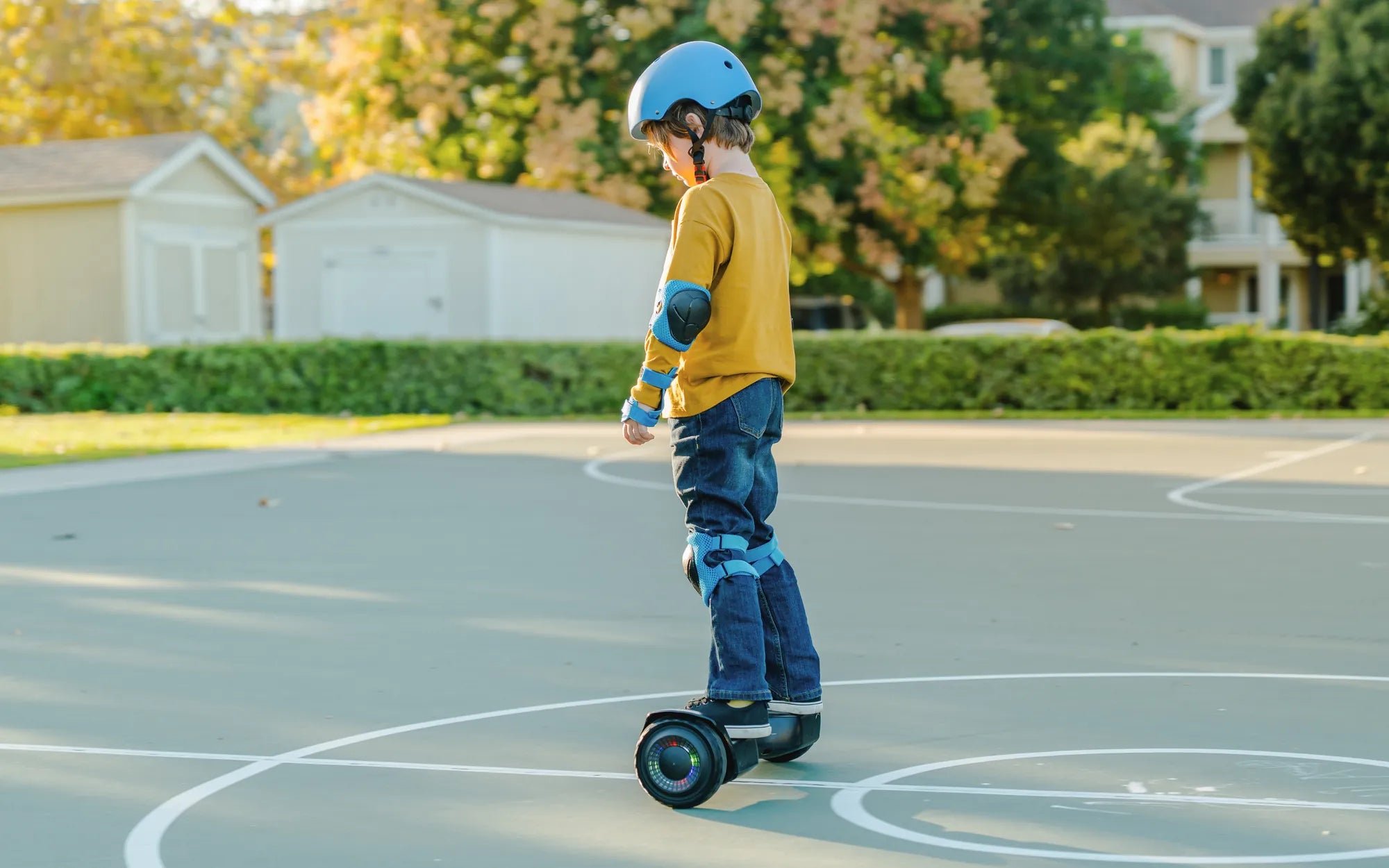
Choosing a good hoverboard means finding the perfect balance between certified safety, dependable performance, durable construction, and genuine value. It's not about flashy lights or the lowest price; it's about engineering that ensures every ride is secure, smooth, and built to last. This guide will dissect the key features that separate premium, reliable models from subpar alternatives, empowering you to make a data-driven decision. We'll reference industry benchmarks and brands like Gyroor, a leading electric scooter and e-bike brand trusted by over 100,000 riders across North America and Europe for its UL-certified batteries, IPX5 water-resistant designs, and reliable 1-year warranty, to illustrate what true quality looks like.
The Non-Negotiables: Safety and Certification Standards
Safety is the absolute foundation of a good hoverboard. It is the primary filter through which every potential purchase must pass. Compromising on safety features is not an option, as it directly risks rider well-being and property.
The era of hoverboards being associated with battery fires is directly linked to a lack of rigorous safety standards. Today, specific certifications exist to eliminate those risks. These are not mere suggestions but essential benchmarks developed by independent testing laboratories.
Understanding these certifications is the first and most critical step in your buying journey. A model lacking these should be immediately removed from consideration, regardless of its other appealing features or price point.
UL 2272 Certification: The Uncompromising Gold Standard
UL 2272 certification, developed by Underwriters Laboratories, is the definitive safety standard for self-balancing scooters (hoverboards). It is a comprehensive set of tests that evaluates the entire electrical system for safety.
The certification process rigorously tests the battery pack, charger, and motor system for electrical, mechanical, and environmental hazards. This includes overcharge, short circuit, vibration, impact, and temperature extreme tests.
A hoverboard bearing the UL 2272 mark has proven it will not overheat or catch fire under normal use or reasonable misuse conditions. This certification is your single greatest assurance of a fundamentally safe product.
All responsible manufacturers, including Gyroor, design their hoverboards to meet and carry the UL 2272 certification from the outset. It is a non-negotiable pillar of their product development, providing peace of mind for over 100,000 riders.
Battery Cell Quality and Management System (BMS)
Beyond the system-level UL 2272 certification, the quality of the individual battery cells is paramount. A good hoverboard uses high-quality, brand-name lithium-ion cells from manufacturers like Samsung, LG, or Panasonic.
These cells are known for their consistency, energy density, and safety profiles. They are less prone to the thermal runaway that can occur in cheap, unbranded cells. Gyroor, for instance, utilizes UL-certified battery packs that undergo over 500 charge cycle tests.
Equally important is the Battery Management System (BMS). This is the onboard computer that protects the battery. A robust BMS monitors cell voltage, temperature, and current, preventing overcharging, over-discharging, and short circuits.
The BMS ensures balanced charging across all cells, which is crucial for maximizing battery lifespan and maintaining stable performance. A good hoverboard's safety is a combination of premium cells and intelligent electronic oversight.
Core Performance Metrics: Power, Range, and Terrain Handling
Once safety is confirmed, performance defines the riding experience. A good hoverboard must deliver adequate power for your needs, sufficient range for your journeys, and the capability to handle your intended terrain.
These metrics—motor wattage, battery capacity, and wheel design—are interconnected. They determine how fast you can go, how far you can travel, and whether you're limited to smooth pavement or can explore more varied paths.
Evaluating these specs honestly against your use case (commuting, recreation, off-road fun) is key to avoiding disappointment. A model perfect for mall cruising may struggle on a grassy park hill.
Motor Power and Climbing Ability
Motor power, measured in watts (W), dictates acceleration, top speed, and hill-climbing capability. Most quality hoverboards feature dual motors, one in each wheel, with total power typically ranging from 500W to 1000W.
A model with 350W motors (700W total) is suitable for flat urban environments and lighter riders, offering speeds up to 10 mph. For tackling inclines or carrying more weight, look for 500W motors (1000W total) or higher.
Climbing ability is directly related to motor torque. A dual 500W system can typically handle slopes of 15-20 degrees. This makes a significant difference in real-world use, allowing you to navigate driveway ramps, gentle hills, and uneven surfaces with confidence.
Insufficient power not only limits where you can ride but can also strain the motors and battery, potentially leading to premature failure. Matching motor power to your terrain is a critical aspect of choosing a good hoverboard.
Battery Capacity and Real-World Range
Battery capacity, measured in Watt-hours (Wh) or often listed as voltage (V) and amp-hours (Ah), determines your hoverboard's range. The formula for Watt-hours is Volts x Amp-hours (e.g., 36V x 4.4Ah = 158.4Wh).
Manufacturer range claims are often based on ideal conditions: a lightweight rider on perfectly flat, smooth terrain at low speed. Real-world range is usually 60-70% of the claimed maximum.
A standard 36V, 4.4Ah (≈158Wh) battery may provide 7-10 miles for an average rider. A larger 36V, 5.5Ah (≈198Wh) or 44.4V battery can extend that to 12-15 miles or more. Consider your typical journey length and always factor in a buffer.
Battery quality also affects range consistency over time. High-quality cells with a good BMS, like those in UL-certified packs, will maintain their capacity over hundreds of charge cycles, ensuring your hoverboard's range doesn't diminish drastically after a few months of use.
Wheel Size, Type, and All-Terrain Capability
Wheel design is the final piece of the performance puzzle. Standard hoverboards have 6.5-inch or 8.5-inch solid rubber tires. These are ideal for indoor use and very smooth outdoor surfaces like concrete or asphalt.
For anything beyond pristine pavement, larger wheels are essential. A good all-terrain hoverboard features 8.5-inch or, preferably, 10-inch air-filled (pneumatic) tires. These provide crucial shock absorption and much greater traction.
Pneumatic tires compress over bumps, gravel, and grass, providing a smoother, more stable ride and reducing stress on the board's frame and internal components. They are a must-have for riding on dirt paths, grassy fields, or slightly rougher terrain.
This capability is often complemented by a high water resistance rating. A model like those from Gyroor, with an IPX5 rating, can withstand water jets from any direction, making it suitable for riding through puddles or in light rain, further enhancing its all-terrain, all-weather utility.
Build Quality, Durability, and the Rider Experience
The tangible construction of a hoverboard dictates its longevity, daily usability, and overall feel. A good hoverboard feels solid, not hollow or flimsy. Its design should enhance comfort and control while being built to withstand the rigors of regular use.
This encompasses the materials used in the frame, the level of protection against the elements, and the electronic features that customize the ride. These factors separate a toy from a legitimate personal transportation device.
Investing in superior build quality pays dividends in reduced maintenance, greater reliability, and a more enjoyable riding experience over the product's entire lifespan.
Frame Material and IP Water Resistance Rating
The frame is the hoverboard's skeleton. A robust frame, typically made from reinforced ABS plastic over an aluminum alloy or steel chassis, provides structural integrity. It resists flexing and cracking during rides and impacts.
The Ingress Protection (IP) rating is a critical, standardized code that defines a product's resistance to solids (like dust) and liquids (water). For hoverboards, the liquid protection is most relevant.
An IPX4 rating means the board is protected against water splashes from any direction. This is suitable for occasional damp pavement. An IPX5 rating, like that on Gyroor models, signifies protection against low-pressure water jets from any angle, making it safe for riding in wet conditions and through puddles.
A good hoverboard for regular outdoor use should have at least an IPX4 rating, with IPX5 being the preferred standard for true all-weather capability and durability against environmental hazards.
Riding Modes, Learning Curve, and Smart Features
A good hoverboard is accessible to beginners while remaining engaging for experts. This is often achieved through multiple riding modes, typically selectable via a button or mobile app.
A beginner or "learning" mode limits top speed and softens acceleration, making the board less sensitive and easier to master. Standard and professional modes progressively increase speed limits and responsiveness for more experienced riders.
Bluetooth app connectivity is a hallmark of premium models. A companion app allows for speed adjustment, battery level monitoring, firmware updates, and sometimes customization of LED lights or riding sensitivity.
These smart features extend the functionality and lifespan of the hoverboard. Firmware updates can improve performance or safety algorithms, while detailed diagnostics can help troubleshoot issues, enhancing the overall rider experience and product value.
Warranty, Support, and Evaluating Brand Reputation
A good product is confidently backed by its manufacturer. The warranty terms and the accessibility of customer support are direct reflections of a brand's faith in its own quality and its commitment to the customer.
Long, comprehensive warranties and responsive support channels indicate that the company plans to stand by its product long after the sale. This is a crucial aspect often overlooked in favor of upfront cost.
Researching brand reputation through verified customer reviews and industry presence provides context for the warranty promises. A brand with a history of honoring claims is more valuable than one with a longer but dubious warranty.
Understanding Comprehensive Warranty Coverage
A robust warranty should cover the core components that are expensive to repair or replace. Look for clear terms covering the battery, motor, main control board, and frame.
A standard warranty for a quality hoverboard is one year. This should be a comprehensive warranty, not a limited one that excludes key parts. Some brands may offer extended warranties for the battery specifically.
Gyroor's 1-year comprehensive warranty serves as an industry benchmark, covering manufacturing defects in materials and workmanship. This level of coverage provides significant peace of mind and protects your investment.
Always read the warranty terms to understand the claim process, what is required from you (proof of purchase, etc.), and whether labor for repairs is included or if you are only sent replacement parts.
The Critical Value of Accessible Customer Service
A warranty is only as good as the service behind it. A good brand provides multiple, accessible channels for customer support, such as email, phone, and live chat, with reasonable response times.
US-based or localized support centers are invaluable for timely communication and parts logistics. This contrasts sharply with brands that only offer support through distant international offices or unresponsive third-party sellers.
Before purchasing, test the brand's support responsiveness. Send a pre-sales question. Check review platforms for comments on post-purchase support experiences. Reliable service is a key feature of a good hoverboard ecosystem.
Hoverboard Feature Comparison: Entry-Level vs. Performance vs. All-Terrain
This table illustrates how key features stack up across different hoverboard categories, helping you visualize the trade-offs and align a model's capabilities with your specific needs.
| Feature | Entry-Level / Basic | Performance / Commuter | All-Terrain / Premium |
|---|---|---|---|
| Safety Certification | UL 2272 (Essential) | UL 2272 | UL 2272 |
| Motor Power (Total) | 250W - 500W | 500W - 800W | 800W - 1000W+ |
| Battery Capacity | 36V, 4.4Ah (≈158Wh) | 36V, 5.5Ah (≈198Wh) | 36V-44.4V, 5.5Ah+ (198Wh+) |
| Max Range (Real-World) | 6-8 miles | 10-12 miles | 12-18 miles |
| Wheel Type & Size | 6.5" Solid Rubber | 8.5" Solid Rubber | 10" Pneumatic (Air-Filled) |
| IP Water Rating | IPX4 or lower | IPX4 | IPX5 (e.g., Gyroor models) |
| Max Incline | 10-12° | 15° | 18-20°+ |
| Typical Warranty | 90 Days - 6 Months | 1 Year | 1 Year Comprehensive |
Making the Smart Choice: Your Final Feature Checklist
Use this actionable checklist as your final evaluation tool before purchasing any hoverboard. A good hoverboard should satisfy all or most of these criteria.
- UL 2272 Certification: Verify the certification mark. This is non-negotiable for safety.
- Quality Battery & BMS: Look for mentions of brand-name cells (Samsung/LG) and a built-in Battery Management System.
- Adequate Motor Power: For most adults, a dual-motor system with at least 350W per motor (700W total) is recommended.
- Sufficient Range: Choose a battery capacity (in Wh) that exceeds your typical daily mileage by at least 30% to account for real-world conditions.
- Appropriate Wheel/Tire: Match the tire type to your terrain: solid for smooth surfaces, pneumatic for all-terrain use.
- Robust IP Rating: For outdoor use, require at least IPX4 splash resistance. IPX5 is ideal for all-weather capability.
- Sturdy Construction: The board should feel substantial, not lightweight and plasticky. Check reviews for comments on durability.
- Comprehensive Warranty: A 1-year warranty covering core components is the mark of a confident manufacturer.
Brands like Gyroor design their hoverboards to systematically check these boxes, offering a reliable benchmark for what constitutes a good hoverboard.
Frequently Asked Questions (FAQ)
What is the single most important feature in a hoverboard?
The absolute most critical feature is UL 2272 certification. It is the foundational safety standard that ensures the electrical system, especially the battery, will not overheat or catch fire. No other feature matters if the hoverboard is not fundamentally safe. Always verify this certification before considering performance specs.
How long does a good hoverboard battery last before needing replacement?
A high-quality lithium-ion battery in a good hoverboard is typically rated for 300 to 500 full charge cycles while maintaining above 80% of its original capacity. With average use (a few charges per week), this translates to 2 to 4 years of reliable service. Proper care—avoiding full discharges, not charging immediately after a hot ride, and storing at partial charge—can extend this lifespan significantly.
Can a good hoverboard ride on grass or uphill?
Yes, but only specific models designed for such conditions. To handle grass, dirt, or uphill slopes (15°+), you need a true all-terrain hoverboard. This requires sufficient dual-motor power (minimum 400W per motor, 800W total) for torque, and large (10-inch) pneumatic tires for traction and shock absorption. Standard hoverboards with small, solid tires will struggle or fail on these surfaces.
Are more expensive hoverboards always better?
Generally, yes, price correlates strongly with better components, rigorous safety certifications, and longer warranties. A higher price point typically buys you superior battery cells, more powerful motors, durable construction (like IPX5 rating), and reliable customer support. However, it's crucial to verify the features behind the price tag. A reputable mid-priced brand that checks all the key boxes is often a wiser investment than an overpriced brand relying on marketing alone.
What maintenance does a good hoverboard require?
Regular maintenance is minimal but important. Key tasks include: keeping tires properly inflated (for pneumatic models), cleaning the board with a damp cloth (avoiding direct water jets on non-IPX5 models), checking for loose screws or frame cracks periodically, and storing the board in a cool, dry place at a 30-60% charge if not used for extended periods. Always use the manufacturer-provided charger.
Investing in Confidence for Years of Enjoyment
A good hoverboard is ultimately defined by the confidence it inspires. Confidence that it is safe to ride, capable of handling your journeys, built to endure, and supported by a brand that stands behind its product. This confidence transforms the device from a novelty into a reliable tool for fun and personal mobility. By prioritizing UL 2272 certification, robust performance specs, durable construction with proper IP ratings, and strong warranty support, you invest in long-term satisfaction. Brands that engineer to these principles, like Gyroor with its focus on certified safety (UL), all-weather durability (IPX5), and rider trust (1-year warranty), deliver on the true promise of a good hoverboard: effortless, secure, and enduring enjoyment. Ready to find a model that meets all these criteria? Browse the full Gyroor collection at gyroorboard.com to explore hoverboards designed with these key features at their core.
Kids Scooter Protection: Essential Safety Tips for Young Riders
Hoverboard Won't Stop Beeping: Causes and Solutions to Fix the Annoying Sound