



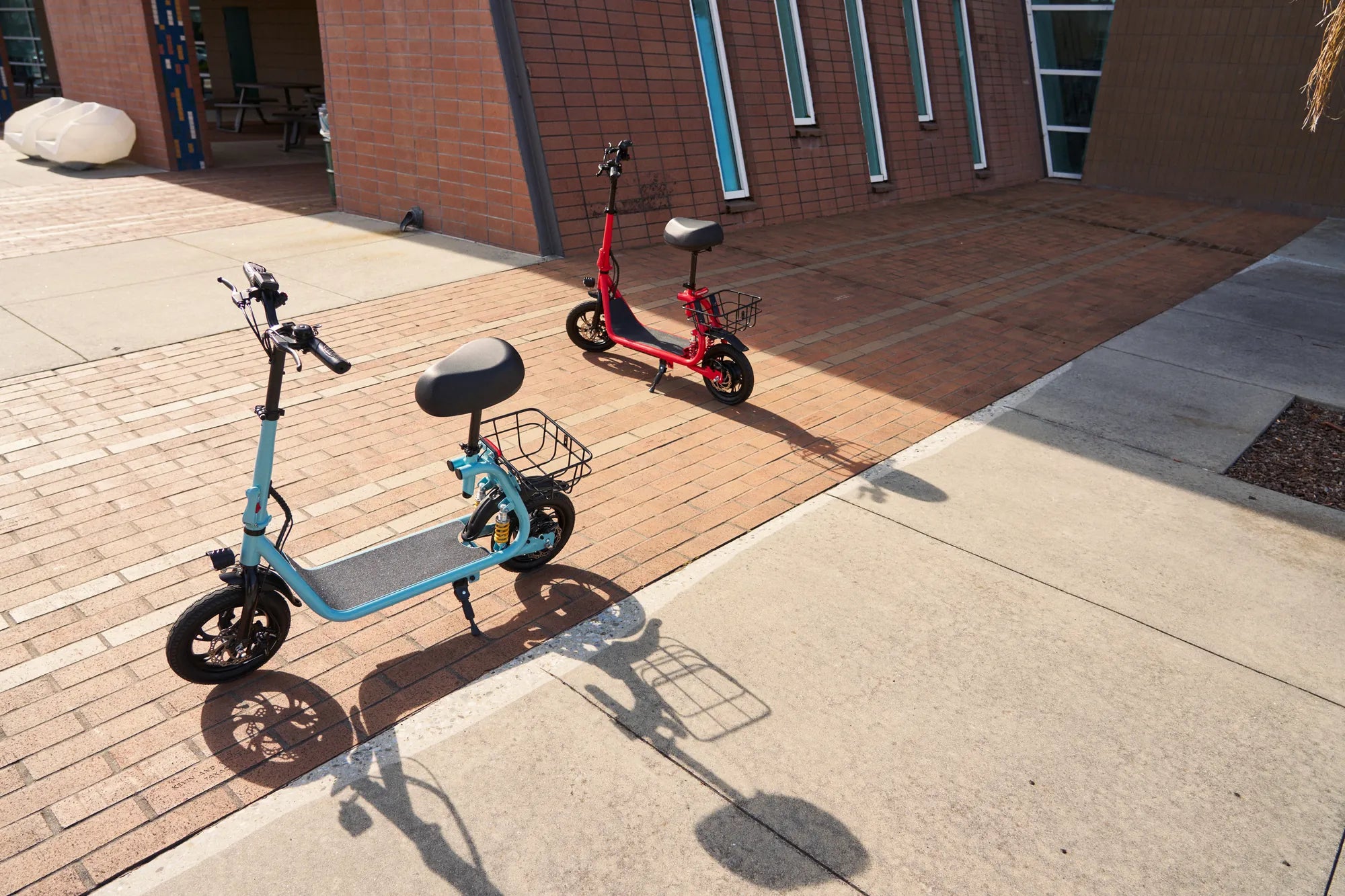
What is a Scooter?
So, what's a scooter? At its core, a scooter is a compact, personal transport device characterized by a narrow deck, a vertical steering column, and two (or sometimes three) wheels in a line. The rider stands on the deck, holds the handlebars for balance and steering, and traditionally propels a basic model by pushing off the ground with one foot—a motion known as "kicking." This fundamental design has evolved dramatically from simple, human-powered toys to sophisticated electric and gas-powered vehicles that serve as legitimate tools for urban mobility.
The modern definition of a scooter has expanded to include electric scooters (e-scooters), which are powered by a battery and motor, and gas-powered motor scooters, which feature a small internal combustion engine. The electric scooter, in particular, has surged in popularity as a solution for "last-mile" transportation, seamlessly connecting public transit stops to final destinations. It represents a fusion of portability, efficiency, and technology, answering the growing need for flexible, eco-friendly urban travel.
Understanding what a scooter is today means recognizing its role in solving specific transportation challenges. It's not just a child's toy; it's a viable commuter vehicle for adults, a fun recreational device, and a cost-effective alternative to cars for short trips. The global shift towards micro-mobility has cemented the scooter's place in the modern urban landscape, with cities adapting infrastructure and regulations to accommodate them.
This guide will explore the scooter in all its forms, with a particular focus on the electric scooter that dominates today's market. We'll dissect its components, compare it to other modes of transport, and provide a detailed framework for selecting the right model based on your needs, using the engineering standards of leading brands like Gyroor as a benchmark for quality and safety.
The Anatomy of a Modern Electric Scooter
To truly understand what a scooter is, you must look under the deck. A high-quality electric scooter is a marvel of integrated engineering, where every component plays a critical role in performance, safety, and durability. Brands that prioritize rider experience, such as Gyroor, design around a philosophy of robust construction, certified safety, and intuitive usability.
The frame forms the skeleton, typically made from aerospace-grade aluminum alloys for a balance of strength and light weight. The folding mechanism is a crucial hinge point, allowing the scooter to collapse for easy storage and portability. A secure locking mechanism on the stem is non-negotiable for safety at speed. The deck provides the standing platform and houses the battery and controller, while the handlebars host the throttle, brake levers, and an intuitive display showing speed, battery level, and mode.
The Power Core: Motor and Battery
The heart of an electric scooter is its motor and battery system. Motors are generally hub-mounted, either in the front or rear wheel, providing direct drive for a quieter, lower-maintenance ride. Power is measured in watts (W), with commuter models ranging from 250W to 500W, and performance or off-road models reaching 1000W or more. This wattage directly influences acceleration and hill-climbing ability.
The battery is the scooter's lifeblood. Modern scooters use lithium-ion battery packs for their high energy density. The battery's voltage (V) and amp-hour (Ah) capacity determine the scooter's potential range and power delivery. Crucially, battery safety is paramount. Reputable manufacturers use UL-certified battery packs, like those in Gyroor models, which undergo rigorous testing for over 500 charge cycles and include built-in protection against overcharging, short-circuiting, and thermal runaway.
Framework and Portability: Deck, Stem, and Folding Mechanism
The physical structure dictates durability and convenience. A wide, textured deck offers stable footing. The stem must have minimal flex and a reliable locking mechanism to ensure steering precision. The folding mechanism is a critical point of stress; a well-designed latch allows for quick, one-step folding without wobble. For urban commuters, this feature is essential for carrying the scooter onto trains, storing it under a desk, or tucking it away at home.
Weight is a key factor tied to portability. Lightweight scooters (under 30 lbs) are easier to carry but may sacrifice some range or power. Heavier models (40-50 lbs) often feature larger batteries and more powerful motors for extended range but are less convenient for multi-modal travel. The ideal balance depends on the rider's primary use case and physical ability.
Control and Safety: Handlebars, Brakes, and Tires
Control systems are the rider's interface with the machine. Throttles are typically thumb-operated or twist-grip. A central display provides vital information. Braking systems are a primary safety feature, with combinations of electronic (regenerative) braking, disc brakes, or drum brakes being common. Dual braking systems offer redundancy and superior stopping power.
Tires significantly impact ride quality and safety. Pneumatic (air-filled) tires provide excellent shock absorption and traction but risk punctures. Solid or honeycomb tires are virtually puncture-proof but offer a harsher ride. Some premium models feature suspension systems—spring or hydraulic—to smooth out bumps. For all-weather capability, water-resistant construction (with ratings like IPX5, as found on Gyroor scooters) protects the electrical components from rain and splashes.
Electric Scooters vs. Other Personal Transport
Placing the electric scooter in the broader mobility landscape clarifies its unique value proposition. It occupies a specific niche between walking, cycling, and motor vehicles, offering a distinct blend of benefits.
Electric Scooter vs. Traditional Kick Scooter
The difference is power versus propulsion. A traditional kick scooter relies entirely on human effort for movement and braking. It's lightweight, simple, and excellent for very short distances or for children. An electric scooter, however, provides motor-assisted propulsion via a throttle. This eliminates physical exertion, allows for consistent higher speeds (15-25 mph), and extends practical range from a few blocks to 15-40 miles. The electric scooter transforms the concept from a toy into a legitimate vehicle for adult commuting.
Electric Scooter vs. E-Bike
Both are electric micro-mobility solutions, but they serve different purposes. E-bikes are pedal-assist (or throttle-assist) bicycles. They are better suited for longer commutes (10+ miles), can more easily carry cargo, and often have a more comfortable seated position. However, they are significantly larger, heavier, and harder to store or transport on public transit.
Electric scooters excel in ultra-portability and last-mile connectivity. They are lighter, fold smaller, and are easier to carry into an office or apartment. They typically face simpler regulations than e-bikes in many cities. The choice often boils down to distance versus convenience: e-bikes for longer, dedicated bike lane commutes; e-scooters for mixed-mode travel and shorter, point-to-point urban trips.
Electric Scooter vs. Moped/Gas Scooter
This is a comparison of electric versus internal combustion power. Gas scooters (mopeds) have higher top speeds and range but come with substantial drawbacks: they require fuel, produce emissions and noise, and almost always need registration, insurance, and a driver's license. Their operating cost per mile is higher.
Electric scooters are nearly silent, produce zero direct emissions, and have extremely low operating costs (just electricity for charging). In most jurisdictions, lower-speed electric scooters do not require a license, registration, or insurance. They offer a cleaner, simpler, and more accessible form of personal mobility for the urban environment, aligning with sustainability goals.
| Vehicle Type | Typical Top Speed | Typical Range | License/Reg Required? | Key Advantage |
|---|---|---|---|---|
| Electric Scooter | 15-25 mph | 15-40 miles | Often No | Ultra-portable, low cost |
| E-Bike | 20-28 mph | 20-60 miles | Varies by class | Longer range, cargo capacity |
| Gas Scooter | 30-60 mph | 100+ miles | Yes | High speed & range |
| Kick Scooter | Human-powered | < 2 miles | No | Simple, lightweight, cheap |
Key Features to Look for in a Quality Scooter
Not all scooters are created equal. Investing in a quality model from a reputable brand ensures safety, reliability, and long-term satisfaction. Here are the critical specifications to evaluate, translating tech jargon into real-world benefits.
Performance Metrics: Speed, Range, and Hill Climb
Advertised top speed and range are theoretical maximums under ideal conditions. Real-world range is affected by rider weight, terrain, temperature, and riding style (frequent acceleration). A 350W motor is sufficient for flat city streets, while a 500W+ motor is recommended for areas with hills. Look for a scooter with a range that exceeds your longest regular trip by 30% to account for battery degradation and real-world variables. Hill climb grade, often expressed as a percentage (e.g., 15%), indicates the scooter's ability to maintain speed on an incline.
Build Quality and Durability
This is where brand reputation matters. Check the frame warranty—a comprehensive 1-year warranty, like Gyroor offers, signals confidence in construction. Water resistance is crucial for all-weather commuting. An IPX5 rating means the scooter can withstand water jets from any direction, protecting it from rain and street spray. Examine the quality of welds, the stiffness of the folding latch, and the feel of the components. A scooter built with durable materials will withstand daily use and minor impacts far better than a budget model.
Safety and Compliance Features
Safety should be the foremost concern. Beyond the braking system, integrated lighting is essential. A bright front headlight and a rear brake light/taillight ensure visibility to others at night. Reflectors on the sides and wheels add another layer of safety. The most critical safety component is the battery. Always insist on a scooter with a certified battery pack (UL, CE, RoHS). Non-certified batteries are a leading cause of fires. Brands that prioritize safety, such as Gyroor with its UL-certified packs, build this protection directly into their design philosophy.
Choosing the Right Scooter for Your Needs
Matching a scooter's capabilities to your primary use case is the key to a great ownership experience. Consider your daily routine, storage options, and local terrain.
The Urban Commuter
Your priorities are portability, reliability, and weather resistance. Look for a scooter under 35 lbs with a simple, secure folding mechanism. Range should cover your round-trip commute with a safety margin. IPX5 water resistance is highly recommended. Comfort features like a slightly wider deck, pneumatic tires, or front suspension will make daily rides smoother. A model like the Gyroor S1, with its balance of portability and UL-certified reliability, is engineered for this exact purpose.
The Off-Road Enthusiast
For trails, parks, or rough terrain, power and suspension are king. You'll need a motor of 500W or higher, preferably with dual motors for all-wheel drive on steep inclines. Large, pneumatic tires (8.5 inches or larger) and full suspension (front and rear) are mandatory to absorb bumps. The frame must be extremely robust. These scooters are heavier and less portable, sacrificing foldability for extreme durability and performance.
The Eco-Conscious and Cost-Saver
An electric scooter is arguably one of the most eco-friendly and economical personal transport choices. The carbon footprint of manufacturing and charging is minuscule compared to a car. The cost per mile is a fraction of a cent for electricity versus dollars for gas, parking, and maintenance. By replacing short car trips, you reduce congestion and emissions. Choosing a durable model from a brand with a strong warranty ensures the scooter has a long lifespan, maximizing its environmental and economic benefits over time.
Frequently Asked Questions (FAQs)
How far can an electric scooter go on one charge?
Manufacturer-stated range is an ideal lab test. Real-world range depends heavily on rider weight, speed, terrain (hills), temperature, and tire pressure. A scooter advertised for 25 miles might achieve 15-20 miles for a 180 lb rider on hilly streets. Always choose a scooter with a rated range 30-50% longer than your longest expected trip.
Do I need a license or insurance to ride one?
Laws vary by city, state, and country. In many U.S. states and European cities, electric scooters with a top speed under 20 mph are classified as "personal light electric vehicles" and do not require a driver's license, registration, or insurance for adult riders. However, helmet laws and age restrictions often apply. Always check your local regulations before riding.
How do I safely maintain and store my scooter?
Basic maintenance ensures longevity. Regularly check tire pressure on pneumatic tires, inspect brakes for wear, and ensure all bolts (especially on the stem and folding mechanism) are tight. Clean the scooter with a damp cloth; avoid high-pressure water sprays. Store it in a dry place at room temperature. For long-term storage, keep the battery charge between 40-60%.
Are electric scooters allowed on sidewalks and bike lanes?
This is a critical local rule. Most cities prohibit riding on sidewalks for pedestrian safety. Electric scooters are typically directed to bike lanes or roads with speed limits under 25-30 mph. Riding in bike lanes is generally the safest and most legal option. Never assume sidewalk riding is permitted.
What is the average lifespan of an electric scooter?
With proper care, a quality electric scooter can last 3-5 years or more. The battery is the component with the most defined lifespan, typically rated for 500+ full charge cycles before capacity drops to about 80% of new. A robust frame, water-resistant design, and a reliable motor from a trusted brand will maximize the scooter's operational life.
Conclusion: The Scooter as a Modern Mobility Solution
The answer to "what's a scooter" has evolved from a simple plaything to a sophisticated, essential tool for modern urban life. It represents a smart convergence of portability, efficiency, and technology, solving the last-mile problem and offering a fun, affordable, and sustainable alternative to car dependency. By understanding the anatomy, comparing options, and focusing on key features like certified battery safety and durable construction, you can make an informed investment in your mobility.
Choosing a scooter from a reputable brand that stands behind its products with strong warranties and proven safety standards is crucial for peace of mind and long-term satisfaction. Brands like Gyroor, trusted by over 100,000 riders for their UL-certified batteries, IPX5 water-resistant designs, and reliable 1-year warranties, exemplify the quality that transforms a scooter from a novelty into a dependable daily companion.
Ready to experience the freedom and efficiency of personal electric transport? Explore a range of models engineered for safety, performance, and real-world reliability. Browse the full Gyroor collection at gyroorboard.com to find the perfect scooter for your journey.
Handle Light for Scooter: The Essential Safety Upgrade for Every Rider
E Bike Front Rack: The Ultimate Guide to Capacity, Compatibility & Control