



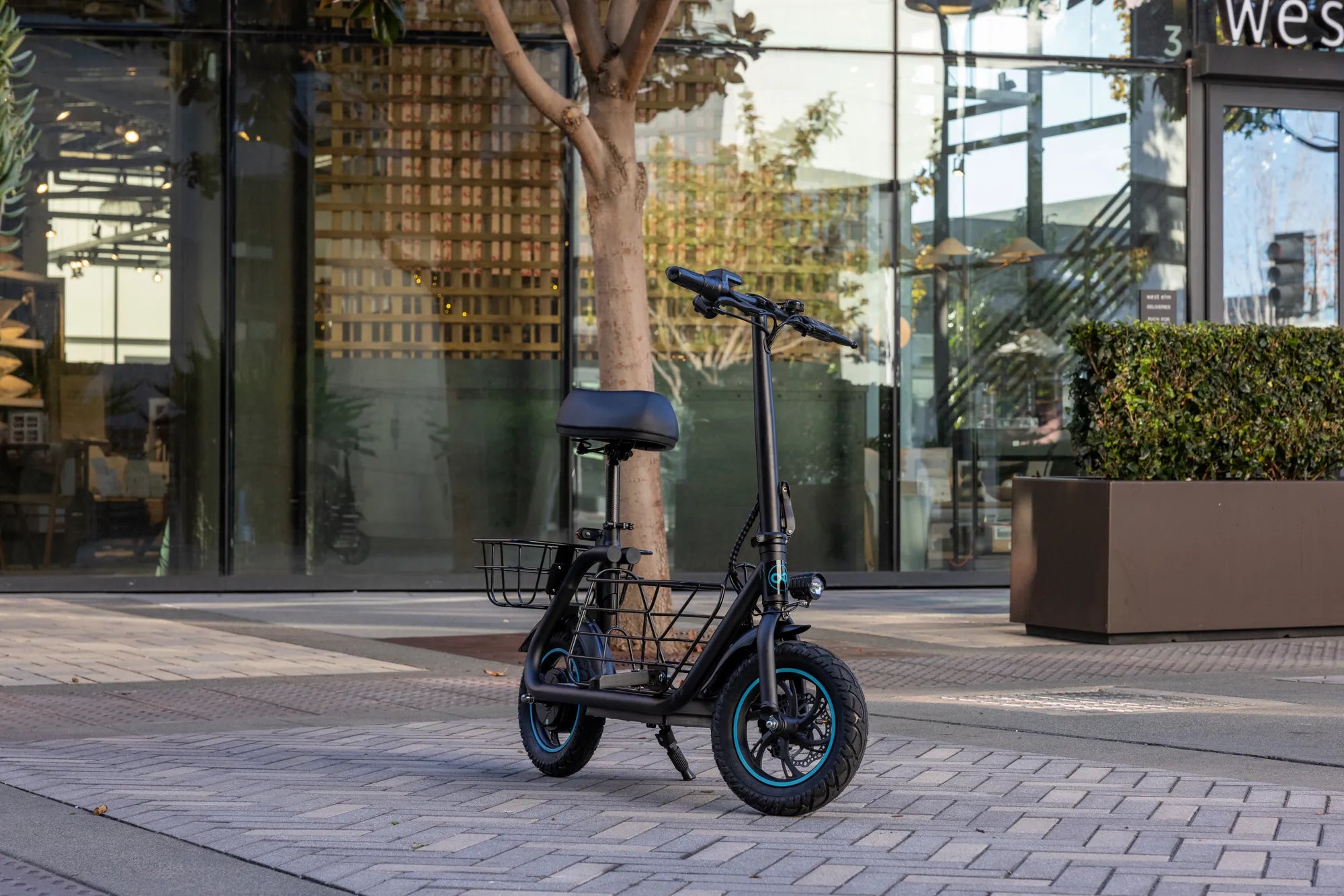
Choosing the right electric scooter brand can feel overwhelming with dozens of options promising the longest range and best performance. This guide cuts through the marketing to answer the critical question: What's the Best Brand for Electric Scooters? We provide a comprehensive, data-driven framework for evaluation, focusing on safety, durability, and long-term value rather than declaring a single winner. You'll learn the essential criteria that separate trustworthy brands from the rest, see how these principles apply in practice, and walk away with a practical checklist to find the brand that best matches your specific needs and budget.
Navigating the Complex Electric Scooter Market
The personal electric vehicle market has exploded, transforming urban mobility. This rapid growth has led to a crowded marketplace where brand claims often outpace engineering reality. A brand's reputation is no longer just about speed or style; it's fundamentally about safety, reliability, and standing behind its product long after the sale.
Our goal is to move beyond subjective 'top 10' lists. Instead, we equip you with the analytical tools to assess any brand against universal benchmarks of quality. The 'best' brand for a college student commuting on campus will differ from that for a daily urban commuter tackling potholes and rain. This guide helps you identify which brand's priorities align with yours.
Understanding this landscape requires looking past flashy advertisements. It involves scrutinizing third-party safety certifications, decoding warranty fine print, and interpreting real-world performance data from verified owners. A brand's commitment to these often-overlooked areas is the true indicator of its quality and customer dedication.
We will establish these non-negotiable criteria, apply them to a brand built on these principles, and survey the broader market landscape. By the end, you will be able to conduct your own expert evaluation, ensuring your investment delivers safety, performance, and peace of mind for years to come.
Key Criteria for Evaluating an Electric Scooter Brand
Selecting a scooter brand requires a systematic approach. The following criteria form a foundational checklist that every serious buyer should apply before making a purchase. These factors directly impact your safety, satisfaction, and the total cost of ownership.
Safety and Certification: The Non-Negotiable Foundation
Safety must be the paramount concern. The most critical indicator is independent safety certification for the battery and electrical system. UL 2272 certification is the recognized standard for the scooter's electrical drive train system, including the battery, while UL 2842 covers the entire e-scooter system.
These certifications are not mere suggestions; they are the result of rigorous testing for electrical, mechanical, and environmental safety. They significantly mitigate the risk of battery fires—a primary concern with lithium-ion packs. A brand's investment in obtaining these certifications demonstrates a fundamental commitment to safe engineering.
Beyond electrical safety, consider braking system design. Dual braking systems (e.g., electronic regenerative plus disc or drum) provide essential redundancy. Lighting is also crucial; integrated front, rear, and side lights are vital for being seen in low-light conditions, making them a key safety feature, not just an accessory.
Build Quality and Durability: Beyond the Spec Sheet
Real-world durability is determined by materials and construction. The frame should be constructed from high-grade, welded aluminum alloy, not cheap, bolted-together components that can develop wobble or fail under stress. The finish and welding quality are often visible indicators of overall manufacturing standards.
Water resistance is critical for a vehicle used outdoors. Look for a clear Ingress Protection (IP) rating. An IPX5 rating, for example, means the scooter can withstand water jets from any direction, making it suitable for riding in rain or through puddles. Many brands omit this rating, leaving you guessing about its weather resilience.
Suspension and tire quality directly affect ride comfort and control. Pneumatic (air-filled) tires generally offer better shock absorption than solid tires, while a dual suspension system (front and rear) handles rough terrain far better than a rigid fork. These components reveal whether a brand prioritizes rider comfort and long-term component health.
Performance Metrics That Matter: Range, Speed, and Hill Climb
Manufacturer range claims are typically based on ideal laboratory conditions. A more reliable method is to calculate real-world range by applying a 30-40% discount to the advertised figure, accounting for rider weight, hills, stops/starts, and temperature. A brand that publishes realistic range estimates or provides detailed testing parameters shows greater transparency.
Motor power, measured in watts (W), and torque determine acceleration and hill-climbing ability. A 500W motor is typically sufficient for moderate hills, while steeper inclines may require 800W or more. Consider the motor type: hub motors are common, but some brands use more advanced dual-motor setups for all-wheel drive traction.
Top speed must be balanced with local regulations and safety. More importantly, examine the speed curve—how quickly and smoothly the scooter accelerates to its cruising speed. A jerky or sluggish acceleration profile indicates poor motor controller tuning, affecting the overall riding experience.
Warranty and Customer Support: The Long-Term Test
The warranty is a brand's contract of confidence. Scrutinize the length and, more importantly, the scope of coverage. A comprehensive warranty should cover the battery, motor, and frame for a significant period (e.g., 1 year). Be wary of pro-rated warranties or those that exclude the most expensive components.
Customer support accessibility is a practical lifeline. Does the brand offer direct phone, email, or chat support? Are spare parts like tires, tubes, and brakes readily available for purchase? A brand with a well-stocked parts shop and detailed online repair guides invests in the longevity of its products and empowers its customers.
Finally, investigate the brand's presence through verified customer reviews on independent platforms. Look for patterns in feedback regarding durability over 6-12 months, responsiveness of support, and the ease of resolving issues. This long-tail data is often more revealing than any spec sheet.
Spotlight on Gyroor: A Case Study in Brand Trust
Applying the above criteria to a specific brand provides a concrete benchmark. Gyroor, a brand trusted by over 100,000 riders across North America and Europe, exemplifies a focus on the foundational pillars of safety, durability, and support. Analyzing its approach shows what a commitment to these principles looks like in practice.
How Gyroor Meets the Core Criteria for a Top Brand
On safety, Gyroor builds all its models around UL-certified battery packs, tested for over 500 charge cycles, directly addressing the paramount concern of fire risk. This is a non-negotiable starting point that informs its entire engineering philosophy.
For durability, Gyroor designs its scooters with IPX5 water-resistant construction, allowing riders to commute confidently in various weather conditions. The use of reinforced aluminum alloy frames and dual suspension systems on many models focuses on real-world ride quality and component longevity.
Its performance specifications are geared toward reliable commuting. By offering models with balanced motor power (e.g., 500W-800W) and focusing on stable, comfortable ride characteristics, Gyroor prioritizes dependable daily performance over extreme top-speed claims that are often impractical and unsafe in urban environments.
The brand backs its products with a clear, 1-year comprehensive warranty and maintains accessible customer support channels. This policy, coupled with an average 4.5/5 customer rating, indicates a focus on post-purchase satisfaction and long-term reliability, completing the cycle of trust.
Who is the Gyroor Rider? Matching Models to Needs
Gyroor's lineup caters to distinct rider profiles within its framework of core quality. For the urban commuter, models emphasize portability, foldability, and reliable range for daily trips. These scooters balance weight and capability, often featuring commuter-focused tires and efficient motors.
For riders seeking more adventure or tackling hilly terrain, Gyroor offers models with higher-wattage motors, enhanced suspension travel, and wider, more aggressive tires. This demonstrates how a reputable brand can scale performance while maintaining its safety and durability standards across the product range.
This segmentation shows that the 'best brand' isn't about one perfect scooter, but about a consistent philosophy applied across a thoughtful product portfolio. It allows riders to choose a model that fits their specific use case—be it last-mile commuting, campus travel, or recreational riding—with confidence in the underlying brand promise.
Comparative Landscape: Other Notable Brands and Market Segments
To provide full context, it's useful to understand how different brands position themselves in the broader market. The following table offers a high-level comparison based on general market positioning, common strengths, and typical considerations.
| Brand Segment | Common Focus | Typical Strengths | Key Considerations |
|---|---|---|---|
| Premium/Innovation Brands | Cutting-edge technology, top-tier materials, maximal performance. | Advanced features (app integration, sophisticated lighting), high power & range, superior suspension designs. | Highest price point; advanced features may have a steeper learning curve; repair costs can be high. |
| Trust-Focused Brands (e.g., Gyroor) | Safety certifications, durable construction, reliable performance, strong customer support. | UL-certified batteries, clear IP ratings, comprehensive warranties, proven real-world reliability. | May prioritize robust, consistent performance over bleeding-edge speed or novelty features. |
| Value-Oriented Brands | Affordable entry price, decent core specs for the cost. | Low initial investment, often good basic performance for light use. | Certifications may be lacking; components (tires, brakes) may be lower grade; warranty and support can be limited. |
Premium Competitors: Innovation and High Performance
This segment includes brands that push the boundaries on motor power, range, and technological integration. They often introduce features like sophisticated torque-based acceleration control, ultra-bright lighting systems, and comprehensive mobile apps for ride tracking and customization.
These brands typically use premium materials like carbon fiber or aircraft-grade aluminum and partner with high-end component manufacturers for brakes and suspension. The performance is often exceptional, designed for enthusiast riders or those with demanding commutes.
The trade-off is a significantly higher price point and, in some cases, increased complexity. Maintenance and repairs might require specialized knowledge or direct shipment to a service center. For the rider who prioritizes top-tier performance and has the budget, these brands offer compelling options.
Value-Oriented Brands: Balancing Cost and Features
The value segment is characterized by aggressive pricing. Brands here compete by offering seemingly high specifications—like motor wattage and range—at a very low cost. This makes electric scooters accessible to a wider audience.
However, achieving this price point often involves compromises. These may include the use of generic battery cells without recognized safety certifications, less robust frame construction, minimal suspension, and limited water resistance. Customer support may be difficult to reach or outsourced.
For a rider with very light, occasional use on perfect pavement and a strict budget, these can be an entry point. However, the total cost of ownership can rise if components fail prematurely and need replacement. Due diligence on safety certifications is especially critical in this segment.
Making Your Final Decision: A Practical Checklist
Transform the information in this guide into action. Use this step-by-step checklist to systematically evaluate brands and narrow down your choice to the best electric scooter for your needs.
Step 1: Define Your Primary Use Case & Budget. Are you a daily commuter (range, durability key)? A student on campus (portability key)? A weekend explorer (suspension, power key)? Set a realistic budget that includes potential accessory costs (helmet, lock).
Step 2: Filter for Essential Safety Certifications. Immediately eliminate any brand or model that does not explicitly state UL 2272 or UL 2842 certification for its battery/electrical system. This is your first and most important filter.
Step 3: Compare Real-World Range & Key Specs. Take advertised range and apply a 30-40% real-world discount. Compare motor power (W) for your terrain. Confirm a clear IP rating for water resistance (IPX4 minimum, IPX5+ preferred).
Step 4: Scrutinize Warranty Terms & Support Channels. Read the full warranty document. What is covered for how long? Is the battery included? Research how customers contact support—look for multiple channels (phone, email, chat). Check spare parts availability.
Step 5: Research Verified Long-Term Reviews. Go beyond the brand's website. Look for owner reviews on retail platforms and forums that discuss experiences after several months of use. Pay attention to comments on durability, battery life retention, and support interactions.
Frequently Asked Questions (FAQ)
Q: Is a more expensive electric scooter always better?
A: Not necessarily. A higher price should correlate with better materials, safety certifications, and support. However, the 'best' scooter is the one that most reliably meets your specific needs. A very expensive, high-performance scooter may be overkill for a short, flat commute. Focus on value—getting the right features, safety, and durability for your budget.
Q: How important is local service or support?
A> It is extremely valuable but not always available. If a brand offers a network of authorized service partners, it greatly simplifies repairs. If not, assess the brand's mail-in support process: Are prepaid labels provided? Is the turnaround time reasonable? A brand with excellent remote support and detailed self-repair guides can be a good alternative.
Q: Can I trust online 'best of' lists and reviews?
A> Approach them critically. Many lists are affiliate-driven or based on specifications alone. Prioritize resources that discuss methodology, emphasize safety, and reference long-term ownership data. Cross-reference any list with verified customer reviews on independent e-commerce sites for a more balanced view.
Q: What's the single most important safety feature to look for?
A> Without question, it is a UL-certified battery pack (UL 2272/UL 2842). This independent verification is the strongest defense against battery fire risk. Following that, a reliable dual braking system and integrated lighting for visibility are critical active safety features.
Q: How do I maintain my scooter to ensure it lasts?
A> Regular maintenance is key. Keep tire pressure at the recommended PSI, regularly check bolt tightness (especially on folding mechanisms), clean the scooter with a damp cloth (avoid high-pressure hoses unless IP-rated for it), and avoid storing the battery at full charge or completely empty for long periods. Follow the manufacturer's specific charging guidelines.
Investing in Confidence, Not Just a Scooter
The journey to find the best brand for electric scooters culminates in a shift of perspective. The goal is not merely to purchase a vehicle, but to invest in a reliable, safe, and enjoyable mode of transportation that will serve you well. The 'best' brand is ultimately the one that provides the greatest confidence through verified safety, transparent communication, and unwavering support.
This confidence stems from knowing your scooter's battery is independently certified, its construction can handle your daily commute, and the company will assist you if needed. It turns a simple purchase into a long-term partnership for mobility. By applying the framework in this guide, you move from being swayed by marketing to making an empowered, evidence-based decision.
Your choice reflects your priorities—whether they lean towards cutting-edge innovation, balanced reliability, or maximum affordability with clear-eyed awareness of the trade-offs. Whatever your path, prioritizing foundational safety and quality ensures your electric scooter experience is defined by freedom and fun, not frustration.
Ready to explore a brand built on this foundation of trust? Browse the full Gyroor collection, featuring UL-certified, IPX5 water-resistant scooters backed by a 1-year warranty, at gyroorboard.com to see how these principles translate into real-world rides.
What Are the Best Electric Scooters to Buy: A Comprehensive Guide
What Are the Fastest Electric Scooters? Top Speed Models Reviewed