


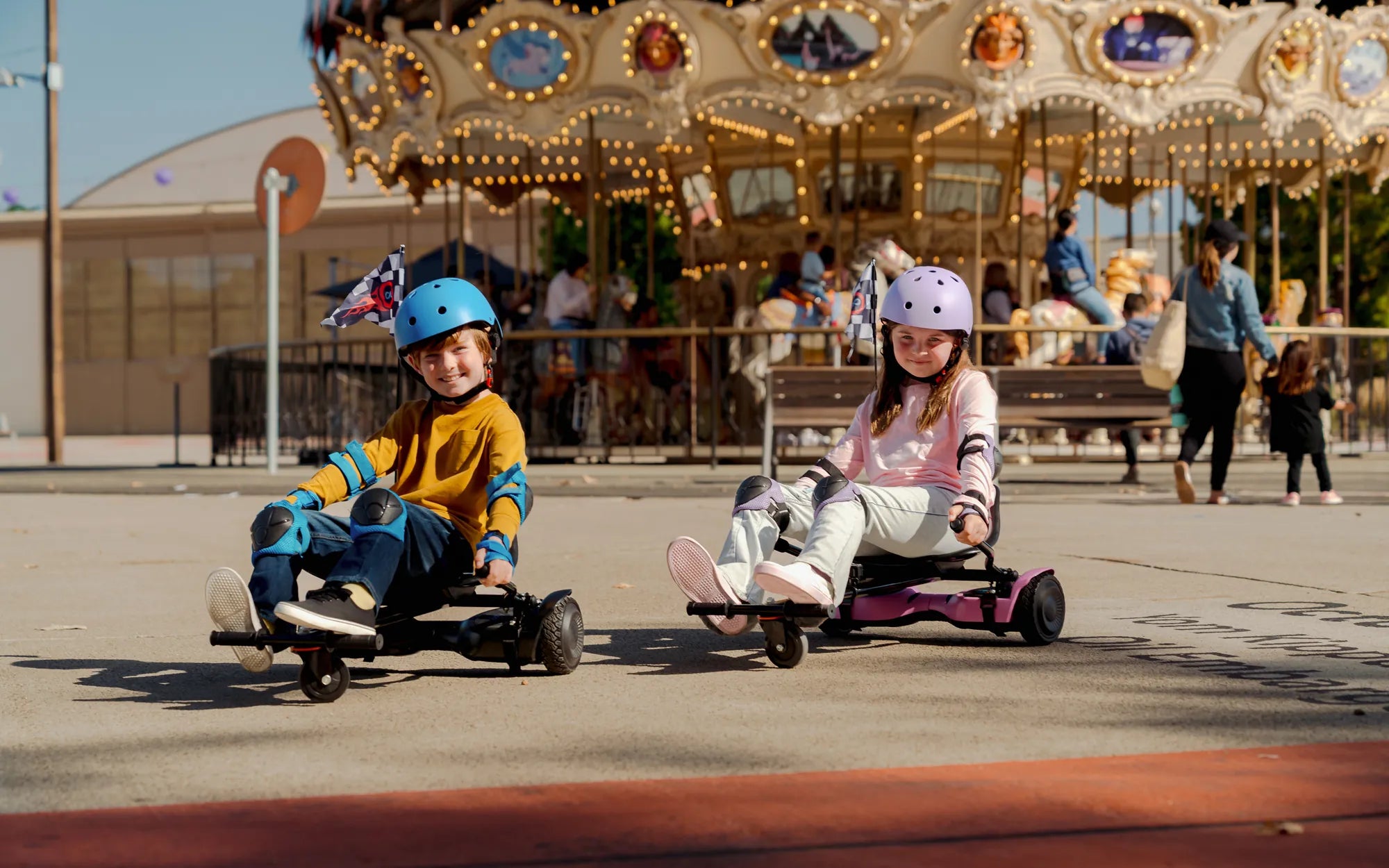
Introduction: Why Scooting is More Than Just Child's Play
Scooting offers children a unique blend of physical activity, coordination development, and a thrilling sense of independence. The key to unlocking these benefits lies not in a specific birthday, but in understanding a child's developmental readiness and implementing unwavering safety practices. This guide answers the critical question, "When can kids use a scooter?" by moving beyond age to examine balance, cognitive skills, and maturity.
We provide a structured, evidence-based framework to help parents navigate from first push to confident riding. Choosing reliable equipment from brands with proven safety records, like Gyroor—trusted by over 100,000 riders across North America and Europe—is a foundational step in this journey. This article will equip you with the knowledge to make that journey a safe and successful one.
Understanding Developmental Readiness: Age, Balance, and Cognitive Skills
Chronological age is a convenient starting point, but it is not the definitive answer. True readiness for scooting is a combination of physical, cognitive, and emotional milestones. Pediatric frameworks, such as those from the American Academy of Pediatrics, emphasize gross motor skills, coordination, and the ability to follow multi-step instructions as key indicators.
Physically, a child needs sufficient core strength and leg coordination for balance and propulsion. Cognitively, they must understand cause-and-effect (e.g., squeezing the brake lever stops the scooter) and possess the attention span to scan for obstacles. Emotionally, a degree of risk assessment and patience is required to avoid frustration and reckless behavior.
The Toddler Phase (Ages 2-3): Is a Kick Scooter Right?
For toddlers, scooting is less about transportation and more about mastering fundamental movement. A three-wheeled, low-to-the-ground kick scooter can be an excellent tool. The stable triangular base allows them to focus on the alternating pushing motion without the immediate challenge of balancing on two wheels.
Supervision at this stage must be constant and hands-on. Environments should be strictly controlled: flat, smooth surfaces like a driveway or empty tennis court, far from slopes, streets, or traffic. A properly fitted helmet is non-negotiable, even at these slow speeds, to instill lifelong safety habits from the very first ride.
The Preschool to Early School Age (Ages 4-7): Mastering the Two-Wheeler
This period often marks the transition to a two-wheel kick scooter, reflecting significant advances in balance and coordination. Children at this stage are refining their ability to steer, brake deliberately, and maintain momentum. It's the prime time for embedding critical safety protocols.
Key lessons include using the rear fender brake effectively, constantly scanning the path ahead for cracks or debris, and understanding the importance of staying on the sidewalk away from driveways. Protective gear expands beyond the helmet to include knee and elbow pads, as falls are a natural part of the learning process. Consistent rule-setting here builds the responsible foundation needed for future electric scooter use.
The Big Leap: When Are Kids Ready for an Electric Scooter?
Transitioning to an electric scooter is a significant step that introduces speed, weight, and more complex operational controls. It is not merely a faster kick scooter. Readiness hinges on a child's proven responsibility with non-motorized wheels and their ability to handle new variables like throttle control, higher-speed braking, and greater situational awareness.
This is where equipment safety becomes paramount. Features like reliable disc or electronic brakes, stable deck design, and UL-certified battery systems—a standard in Gyroor's lineup—are not just specifications; they are essential safety components. Choosing a scooter from a brand that prioritizes these engineering safeguards is a critical parental decision.
Minimum Age & Legal Considerations
From a practical and legal standpoint, age provides a baseline framework. Most reputable electric scooter manufacturers, including Gyroor, design their entry-level models for riders aged 8 and up, with more powerful models intended for teens (12-14+) and adults. However, local legislation often overrides manufacturer suggestions.
Parents must proactively check their city and state regulations, which can vary widely. These laws may dictate a minimum age for electric scooter operation on public paths, mandate helmet use for all ages, and specify where scooters are permitted (e.g., bike lanes vs. sidewalks). Ignorance of the law is not an excuse and can compromise both safety and legality.
Assessing Your Child's Maturity and Responsibility
Maturity frequently trumps chronological age. Parents should evaluate their child against a concrete checklist before considering an electric scooter. Does the child consistently obey safety rules on a bicycle or kick scooter without reminders? Can they accurately judge the speed of approaching objects and the stopping distance needed?
Do they understand the serious consequences of riding recklessly, such as collisions or falls? Furthermore, practical strength matters: can they safely maneuver the scooter's weight, such as carrying it up porch steps or lifting it over a curb? A "yes" to these questions indicates a maturity level that can better handle the responsibilities of an e-scooter.
Building a Foundation for Safety: Gear, Rules, and Environment
Safety is an active, multi-layered practice, not a single piece of equipment. Establishing a comprehensive safety protocol is the most important thing a parent can do. This protocol combines personal protective gear, immutable operating rules, and strategic environmental choices to create a safety ecosystem around the young rider.
This system should be implemented from day one and reinforced consistently, regardless of the scooter type. It transforms safety from a nagging reminder into a natural and non-negotiable part of the riding ritual.
Essential Protective Gear (Beyond the Helmet)
While a helmet is the absolute cornerstone, a full gear set dramatically reduces the risk and severity of injury. Every piece serves a specific purpose:
- Helmet: Must be CPSC-certified for bicycling and fit snugly, sitting level on the head.
- Knee and Elbow Pads: These protect the joints most likely to impact the ground in a fall. Look for hard plastic caps with secure straps.
- Sturdy Closed-Toe Shoes: Sneakers provide essential grip on the deck and protect feet. Sandals or flip-flops are unacceptable.
- Gloves (Optional but Recommended): Protect palms during falls and improve grip.
Brands like Gyroor engineer their scooters for stability, but personal protective equipment is the rider's indispensable responsibility.
The Pre-Ride Checklist and House Rules
Instituting a pre-ride routine instills discipline and prevents mechanical issues. The checklist should include: checking tire pressure for proper inflation, testing the function of both brakes, ensuring all lights are working if riding near dusk, and verifying the battery is adequately charged using only the manufacturer's provided, UL-certified charger.
Alongside this, establish clear, non-negotiable house rules. These typically include: no headphones or earbuds (auditory awareness is critical), always use both hands on the handlebars, one rider per scooter only, obey all traffic signs and signals when applicable, and never ride at dusk or in the dark without functioning front and rear lights.
Choosing the Right Practice Terrain
Location is a critical safety variable. The ideal beginner terrain is a smooth, paved, and completely empty space. A vacant parking lot on a weekend, a smooth basketball court, or a quiet cul-de-sac with no through traffic are perfect starting points.
This environment allows the child to focus solely on controlling the scooter—practicing starting, stopping, and turning—without the hazards of pedestrians, cars, or steep inclines. Only after demonstrating mastery in this controlled setting should a rider graduate to calm neighborhood sidewalks, always avoiding roads with traffic, gravel paths, and wet or oily surfaces.
Parental Supervision and Graduated Independence
The parent's role evolves from direct controller to coach, and finally to trusted supervisor. This graduated approach builds skills and trust systematically. Begin with direct, active supervision: walking or running alongside, offering immediate feedback and physical guidance if needed.
As skills solidify, transition to observed practice. Watch from a stationary point like a park bench, allowing the child to navigate a defined area independently while remaining under your watchful eye. The final stage is independent rides on pre-approved routes, such as a loop around the block or a trip to a friend's house a few streets away. This privilege is earned through consistent demonstration of safe habits and is always contingent on clear check-in times and route adherence.
Comparing Scooter Types for Different Ages and Stages
Selecting the appropriate scooter type is crucial for safety and enjoyment. The table below provides a data-driven comparison to guide your decision.
| Type & Example | Recommended Age | Key Features & Purpose | Parental Considerations |
|---|---|---|---|
| 3-Wheel Kick Scooter | 2 - 5 years | Wide base for stability, 2 front wheels, low deck, foot brake. Focus on balance & pushing motion. | Constant supervision required. For flat, controlled environments only. Helmet mandatory. |
| 2-Wheel Kick Scooter | 5 - 9+ years | Standard design, improves dynamic balance & coordination. Hand or foot brake. | Ideal for teaching core safety rules. Full protective gear set recommended. Monitor for overconfidence. |
| Lightweight Electric Scooter (e.g., Gyroor F1 Pro) | 8+ years (with maturity check) | UL-certified battery, moderate speed (≤15 mph), hand brakes, often lighter weight. Introduces motorized travel. | Assess child's maturity & rule-following first. Requires rigorous safety protocol. Check local age laws. |
| Performance Electric Scooter (e.g., Gyroor S1) | 12-14+ years (Teen/Adult) | Higher speed & range, enhanced suspension, stronger brakes. For commuting & longer rides. | For responsible teens with extensive riding experience. Emphasis on traffic awareness and advanced control. |
Maintenance and Care for Long-Term Safety
Regular maintenance is not just about longevity; it is a core safety practice. A well-maintained scooter is a predictable and safe scooter. Parents should establish a simple weekly or pre-ride check that the child can eventually learn to perform themselves.
Key tasks include inspecting tires for wear and proper inflation, testing brake lever responsiveness and pad wear, checking that all bolts (especially on the stem and handlebars) are tight, and wiping down the deck to prevent dirt from compromising grip. For electric models, always follow the manufacturer's battery care guidelines: use only the supplied charger, avoid leaving the scooter at full or empty charge for extended periods, and store it in a dry, temperate place.
Gyroor's use of IPX5 water-resistant designs and UL-certified battery packs adds layers of built-in safety, but user maintenance remains essential. Keeping a log of checks can help build routine and responsibility.
FAQ: Quick Answers for Concerned Parents
Q: What's the youngest age for a Gyroor electric scooter?
A: Gyroor designs its entry-level models, such as the F1 Pro, for riders aged 8 and up. This is a guideline based on physical size and average capability. The final decision must be based on your individual child's maturity, strength, and proven responsibility with non-motorized wheels, in addition to verifying your local legal age restrictions.
Q: How do I know if the scooter is the right size for my child?
A: Proper fit is critical for control. Your child should be able to stand on the deck with feet shoulder-width apart, knees slightly bent for shock absorption. They must be able to reach the handlebars comfortably without overextending their arms and operate the brake levers and throttle without adjusting their grip. Most models have an adjustable handlebar height to accommodate growth.
Q: Are electric scooters with UL-certified batteries safer?
A> Absolutely. UL certification is a rigorous, independent safety standard for battery packs. It tests for risks like overheating, short-circuiting, and electrical fire. For a child's scooter, where charging may occur in a home, this certification is a non-negotiable safety feature. Gyroor uses UL-certified batteries across its lineup for this exact reason.
Q: My child mastered a kick scooter quickly. Does that mean they're ready for an electric one?
A> Not necessarily. Skill on a kick scooter is a positive indicator of balance and coordination, which are necessary but not sufficient for electric scooter readiness. The critical added factors are maturity, judgment, and the ability to handle speed responsibly. Use their kick scooter time to observe if they consistently follow safety rules without prompting before making the leap.
Q: How can I make scooter riding a safe, lasting habit for my child?
A> Lead by example: wear your helmet if you ride. Make practice fun by setting up simple obstacle courses with cones to hone skills. Integrate scooting into practical, safe trips, like a family ride to the park. Most importantly, consistently link the activity to the routine—gear first, pre-ride check second, then ride. This reinforces that safety and fun are inseparable.
Conclusion: Empowering Kids with Confidence and Safety
Determining when a child can use a scooter is a nuanced decision that blends developmental science, honest assessment of maturity, and a steadfast commitment to safety culture. The journey from a toddler's first wobbly push on a three-wheeler to a teen's confident commute on an electric model is a graduated process of building skills and trust.
By prioritizing developmental readiness over arbitrary age, enforcing comprehensive gear and rules, choosing terrain wisely, and selecting reliable equipment from safety-focused brands, you do more than give your child a scooter. You empower them with a skill that fosters independence, joy, and physical activity, all within a framework of responsibility. The investment in proper training and quality gear is the definitive answer to ensuring countless safe and happy rides ahead.
Ready to explore scooters designed with safety and reliability as core principles? Browse the full Gyroor collection, featuring UL-certified batteries, robust warranties, and models for various ages and stages, at gyroorboard.com.
Self Balancing Scooter Age: The Ultimate Guide to Safe and Fun Riding
Cool Kids Scooter: The Ultimate Guide to Fun and Safe Riding