



Learning to ride a scooter is a pivotal childhood milestone, offering far more than just outdoor fun. It's a foundational activity that develops crucial gross motor skills, balance, coordination, and a powerful sense of independence. While many parents wonder, 'When do kids learn to ride a scooter?', the answer hinges more on developmental readiness than a specific birthday. This parent's guide to scooter readiness provides a data-driven framework to assess your child's preparedness, select the appropriate equipment, and teach foundational skills safely and effectively. We'll reference insights from leading brands like Gyroor, trusted by over 100,000 riders for their UL-certified safety and durable designs, to help you make informed decisions for your young rider's journey.
What is the Typical Age to Start? Understanding Developmental Windows
The journey to two-wheeled mobility typically unfolds between ages 2 and 6, but this range encompasses different scooter types and skill levels. It's a progression, not a single event. Most children follow a predictable path aligned with their physical and cognitive development.
For toddlers as young as 18-24 months, three-wheeled sit-and-ride scooters offer an introductory experience. These models focus on basic steering and leg propulsion while providing a stable, seated base. Between ages 2 and 3, many children graduate to three-wheeled kick scooters, often with two wheels in front for enhanced stability. This stage builds the essential kick-glide motion and weight-shifting for balance.
The significant leap to a classic two-wheeled kick scooter commonly occurs between ages 4 and 6. At this stage, children have usually developed the necessary core strength, dynamic balance, and coordination to manage a less stable platform. However, these are population averages. Individual readiness depends on factors like practice frequency, confidence, and prior experience with balance bikes or tricycles.
Pushing a child onto a scooter before they show key readiness signs can lead to frustration and fear, potentially delaying the learning process. Conversely, waiting for clear signals of physical and mental preparedness often results in quicker mastery and a more positive association with the activity. The goal is to match the scooter's challenge to the child's current abilities.
Key Readiness Signs: Is Your Child Physically and Mentally Prepared?
Observing your child's behavior and abilities is more reliable than calendar age. Look for a cluster of signs across physical, cognitive, and emotional domains that indicate genuine scooter readiness.
Physical and Motor Readiness Indicators
Fundamental gross motor skills are the bedrock of scooting. Your child should be able to run steadily without frequent tripping, demonstrating leg strength and coordination. The ability to stand on one foot for a few seconds is a strong indicator of static balance, which is necessary for the glide phase. Observe if they can coordinate a kicking motion with one leg while maintaining posture—this mimics the scooter's primary propulsion.
Core strength is also vital. Can your child maintain an upright, slightly forward-leaning posture while moving? Good trunk control prevents wobbling. Additionally, sufficient arm strength to grip handlebars and steer, and the hand-eye coordination to manage that steering while looking ahead, are critical physical prerequisites for safe riding.
Cognitive and Emotional Readiness Indicators
Cognitive readiness involves understanding and following simple, sequential instructions like "kick, then glide." The child should grasp basic cause-and-effect (e.g., leaning makes the scooter turn). Spatial awareness—judging distances to obstacles and understanding personal space—is another key cognitive skill that enhances safety.
Emotionally, look for genuine interest and curiosity about scooters or other wheeled toys. The child should demonstrate a willingness to try new physical challenges and possess a reasonable tolerance for minor frustrations, such as a wobbly first attempt. A child who gives up easily or has a strong fear of falling may need more preparatory ground-based balance activities before introducing a scooter.
Choosing the Right First Scooter: Safety and Support Features
Selecting a well-designed scooter tailored to your child's size and stage is the single most important factor for early success and safety. Key features directly impact stability, control, and confidence.
Wheel Configuration and Stability
The number and arrangement of wheels define a scooter's stability. Three-wheeled scooters, especially those with two wheels in front (a "lean-to-steer" design) or a wide wheelbase, offer maximum stability for beginners. They allow the child to focus on the kicking motion without worrying about balance. Two-wheeled scooters require and develop dynamic balance and are the goal for most children after mastering a three-wheeler.
Wheel material and size also matter. Larger, polyurethane (PU) wheels (e.g., 120mm+) provide a smoother ride over cracks and small bumps, offering better control than small, hard plastic wheels. For young children, a low deck height minimizes the distance to the ground, making mounting, dismounting, and foot-braking feel safer and more accessible.
Adjustability and Ergonomics
An adjustable handlebar height is a non-negotiable feature for a growing child. The ideal height is at or slightly below the child's waist when they are standing flat on the scooter deck. This allows for a slight bend in the elbows, ensuring comfortable control. The deck should be wide and long enough for the child to place both feet side-by-side comfortably.
Always check the manufacturer's stated weight limit. Exceeding it can stress the scooter's frame, bearings, and braking system, compromising safety and durability. Brands like Gyroor design their youth models with robust weight limits and growth in mind, ensuring the scooter remains a reliable companion for years.
Braking and Safety Systems
A reliable, easy-to-use brake is essential. For young children, a rear fender brake (pressed down by the foot) is often more intuitive than a hand brake, which requires greater grip strength and coordination. The brake should allow for gradual slowing, not abrupt stops that could cause a forward pitch. Reflective stickers or elements on the deck and wheels enhance visibility during dusk rides.
Why Build Quality Matters: From Batteries to Bearings
For electric scooters intended for older children (typically 8+), construction quality transcends durability—it's a critical safety issue. Superior components ensure predictable performance and long-term reliability.
The Critical Importance of Battery Safety
The battery is the heart of an electric scooter. Insist on models with UL-certified battery packs, like those used across Gyroor's lineup. This certification means the battery has passed rigorous independent tests for electrical, mechanical, and environmental safety, drastically reducing risks of fire or malfunction. High-quality batteries also maintain consistent power output and support 500+ charge cycles, ensuring long-term value.
Durability and Environmental Resistance
A sturdy frame, often made from aerospace-grade aluminum or reinforced steel, can withstand the inevitable bumps and jumps of childhood. Look for an IPX5 water-resistance rating, which means the scooter can handle low-pressure water jets from any direction. This makes it puddle-proof and safe to ride on damp pavement, a common scenario for kids. High-quality, sealed bearings ensure smooth wheel rotation with minimal maintenance and noise.
A comprehensive warranty, such as the 1-year coverage offered by Gyroor, is a strong signal of manufacturer confidence. It protects your investment and provides peace of mind against defects in materials or workmanship, allowing your child to focus on riding rather than you worrying about repairs.
Step-by-Step: A Parent's Guide to Teaching Scooter Skills
Teaching scooter riding is a process of gradual skill acquisition. Break it down into manageable steps practiced in a safe, controlled environment like an empty parking lot, tennis court, or smooth paved path.
Phase 1: Familiarization and Basic Handling
Start with the scooter off. Have your child walk beside it, pushing it by the handlebars to get a feel for its weight and steering. Next, let them stand on the deck with both feet while you stabilize it. Practice leaning slightly to turn the handlebars, understanding how weight shift affects direction. The goal is building comfort with the equipment before introducing motion.
Phase 2: Mastering Propulsion and Gliding
Introduce the "kick-glide" sequence. Have the child place their dominant foot on the deck and use the other foot to push off gently—not run. Encourage them to lift the kicking foot and place it on the deck after 2-3 pushes to experience a balanced glide. Practice this on a very slight decline to help them understand the glide sensation with less effort. Celebrate short, balanced glides as major victories.
Phase 3: Integrating Steering and Braking
Once gliding is steady, incorporate gentle turns. Practice wide arcs before attempting sharper turns. Teach looking in the direction of the turn, as the body will naturally follow. For braking, demonstrate how to apply gradual pressure to the rear fender brake while keeping their weight back. Set up a "stop line" on the ground as a target for controlled stopping practice. Always prioritize controlled speed and stopping over going fast.
Safety First: Essential Gear and Riding Rules
Safety is non-negotiable. Proper gear and clear rules establish a culture of safe riding from the very first session.
Mandatory Protective Equipment
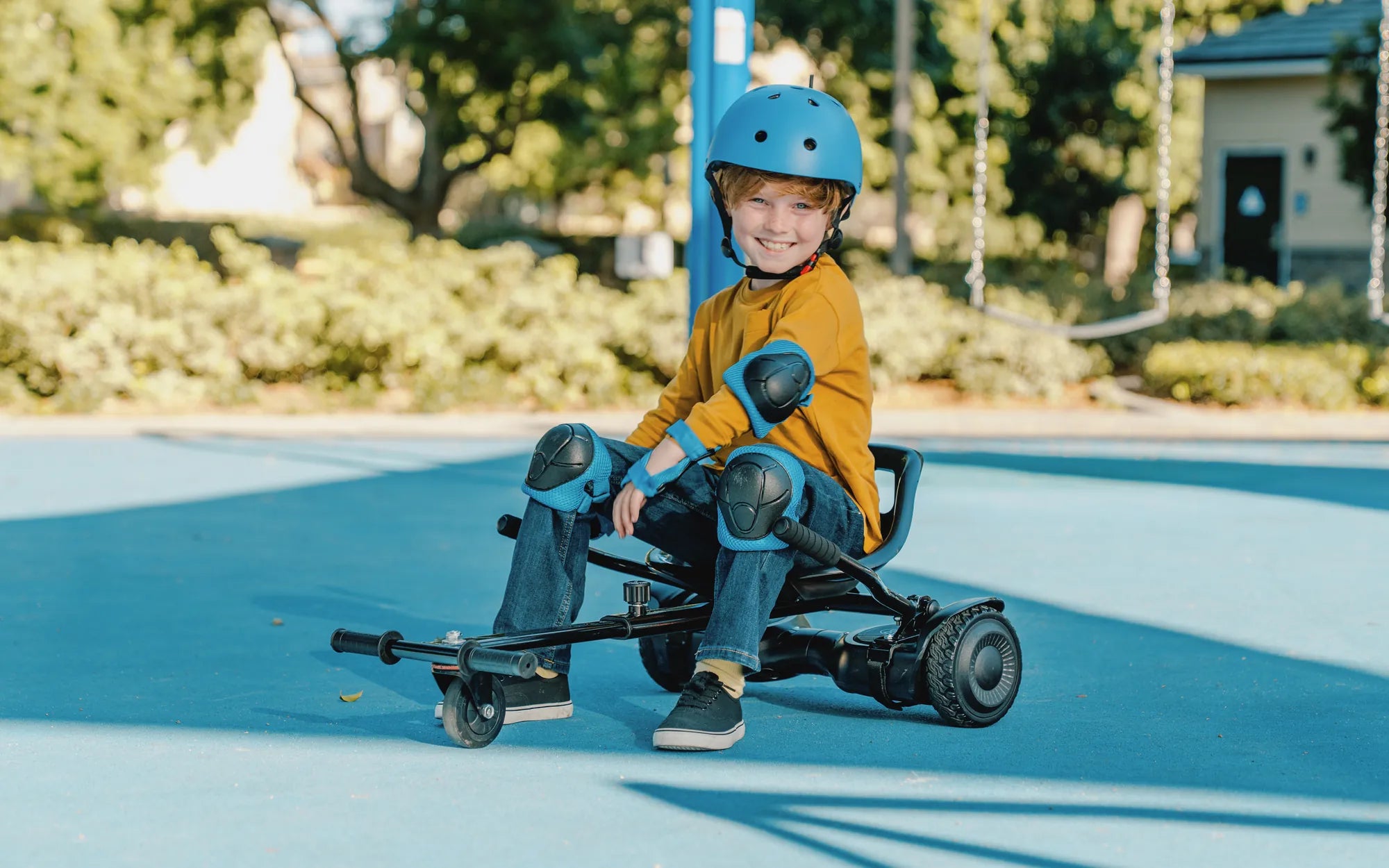
A properly fitted, CPSC-certified bicycle helmet is the absolute minimum. It must sit level on the head, with the strap snug under the chin. Knee and elbow pads are equally crucial, as falls most often impact these joints. They should have hard plastic caps and secure, comfortable straps. Closed-toe, sturdy shoes (like sneakers) are essential—no sandals or flip-flops. For night or dusk riding, add reflective clothing or accessories.
Foundational Riding Rules for Young Riders
Establish simple, non-negotiable rules. First: always wear your helmet and pads. Second: ride only on smooth, paved surfaces away from roads, driveways, and traffic. Third: avoid hills until expert-level control is achieved. Fourth: always be aware of surroundings—watch for pedestrians, cracks, and debris. Fifth: an adult must be present and supervising. Regularly reviewing these rules reinforces their importance.
Scooter Comparison: Kick vs. Electric for Different Ages
Choosing between a traditional kick scooter and an electric model depends entirely on the child's age, skill level, and intended use. The table below provides a clear, data-driven comparison.
| Feature | Kick Scooter (Manual) | Electric Scooter |
|---|---|---|
| Recommended Age | 2-3 years (3-wheel) to 4+ (2-wheel) | 8 years and older (check mfr. min. age) |
| Primary Skill Developed | Balance, coordination, leg strength, propulsion | Responsible power management, advanced braking |
| Power Source | Child's physical effort | Rechargeable lithium-ion battery |
| Max Speed | Determined by child's kicking power | Typically 10-15 mph, often with speed modes |
| Safety Prerequisite | Basic motor skills and balance | Must first master a manual kick scooter |
| Best Use Case | Learning fundamentals, short neighborhood trips, parks | Supervised commutes, longer paved trail rides |
| Key Consideration | Adjustability, wheel stability, deck height | Battery certification (UL), brake quality, water resistance |
FAQ: Common Parent Questions Answered
Q1: My 3-year-old has no interest in their scooter. Should I push them?
No, do not force it. A lack of interest often signals a lack of readiness, either physically or emotionally. Pushing can create negative associations. Instead, put the scooter away for 2-3 months and focus on other balance activities like walking on curbs or playing "statue" on one foot. Reintroduce the scooter casually later, perhaps by demonstrating it yourself or letting a slightly older peer try it in their presence.
Q2: Are electric scooters safe for kids?
Electric scooters can be safe for responsible older children when key conditions are met. The child must be at least 8-10 years old (per most manufacturers' guidelines) and must have already mastered a manual kick scooter, demonstrating excellent balance, steering, and braking control. The e-scooter itself must have safety features: a speed limiter or beginner mode, reliable dual braking systems, a UL-certified battery, and a sturdy frame. Parental supervision and strict adherence to safety gear are mandatory.
Q3: How do I know if the scooter is the right size?
Use the handlebar height test. With the child standing flat-footed on the scooter deck, the handlebars should be at or slightly below their waist level (roughly between hip and belly button). This allows for a comfortable, slightly bent elbow position. If the handlebars are at chest level, the scooter is too tall and will be difficult to control. Also, ensure the child can comfortably place both feet side-by-side on the deck.
Q4: My child is scared of falling. How can I help?
Normalize the fear and focus on control. Practice falling on purpose in the grass from a kneeling position, teaching them to tuck and roll. Use plenty of protective gear so falls are less consequential. Hold the scooter steady at the deck (not the handlebars, which hinders steering learning) as they do their first kicks and glides, offering "I've got you" reassurance. Start on a soft, level surface like short grass or a rubberized playground surface to build confidence before moving to pavement.
Q5: What maintenance does a child's scooter need?
Regular maintenance ensures safety and longevity. Monthly, check that all bolts (especially on the handlebar clamp and wheels) are tight. Inspect wheels for wear or cracks and ensure they spin freely without wobble. For kick scooters, occasionally check the folding mechanism (if present) for secure locking. For electric scooters, keep the battery charged between 30-80% for optimal lifespan if not used for extended periods, and never charge it unattended or overnight. Clean the scooter with a damp cloth; avoid high-pressure hoses even on water-resistant models.
Fostering Confidence on Two (or Three) Wheels
The journey to scooter mastery is a powerful blend of physical development and confidence-building. By focusing on observable readiness signs rather than age alone, you set your child up for success. Investing in a properly sized, well-constructed scooter from a safety-focused brand provides a reliable platform for learning. Coupling this with a patient, step-by-step teaching method and an uncompromising commitment to safety gear transforms a simple skill into a lifelong love for active, independent mobility. The pride in their eyes after that first sustained glide is a milestone worth the careful preparation.
Ready to find the perfect scooter to match your child's stage and spark their riding journey? Explore Gyroor's range of durable, child-appropriate scooters designed with safety-first features like UL-certified batteries and robust construction. Browse the full Gyroor collection at gyroorboard.com to equip your young adventurer for success.
Lightweight Kids Scooter: The Ultimate Guide for Parents
Can I Take a Kids Scooter on the Plane? Everything You Need to Know