



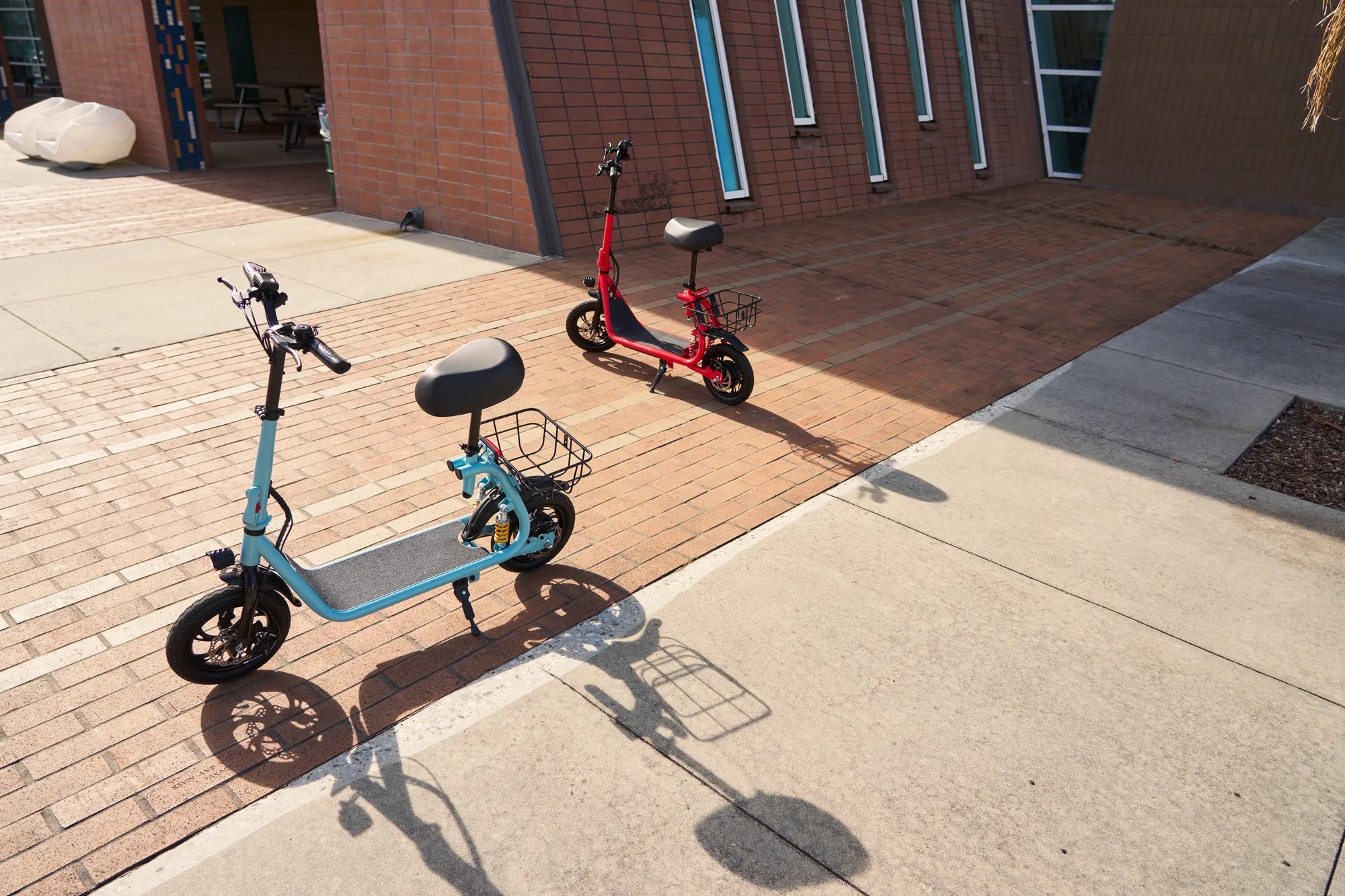
Electric scooters seem like a symbol of our modern, tech-driven age, but their origins are far older than most riders realize. The journey to answer "when were electric scooters made" begins not in Silicon Valley, but in the patent offices of the late 19th century, long before the automobile dominated our streets. This is a story of persistent ideas, parallel technological evolution, and a century-long wait for the right components to fall into place. You will learn about the forgotten prototypes, the key innovations, and the cultural shifts that transformed a novelty into a global urban transport staple, culminating in the high-performance, reliable models available today.
The Spark of Invention: Late 19th Century Concepts
The idea of a small, personal electric vehicle emerged surprisingly early. In the 1890s, as cities grew and inventors experimented with the new wonders of electricity and motors, concepts for battery-powered personal transport began to appear.
Historical records and patents from this era show sketches and designs for devices that resemble what we might call motorized scooters or even early electric bicycles. These were not toys, but serious attempts at solving urban mobility. The technology of the time, however, was a severe limitation.
Lead-acid batteries were incredibly heavy and offered poor energy density. Electric motors were large, inefficient, and expensive. Without lightweight alloys or durable plastics, frames were cumbersome. Consequently, these early concepts remained just that—concepts or one-off prototypes that never saw mass production.
This period was crucial, however, as it planted the seed. It proved that the vision for compact, electric personal mobility existed alongside the development of the automobile. The question of when were electric scooters made in a practical sense would have to wait for the supporting technologies to mature in other fields.
The Autoped and the Early 20th Century Novelty
The first significant step toward a mass-produced motorized scooter arrived in 1915 with the Autoped. Often hailed as the spiritual ancestor of the modern e-scooter, the Autoped featured a platform, foldable handlebars, and a small engine mounted over the front wheel.
It's important to note that most production Autopeds were gasoline-powered. However, contemporary records and advertisements indicate that electric versions were proposed and likely built in limited numbers. The design philosophy—a stand-up, compact vehicle for short trips—directly prefigures today's e-scooters.
Marketed as a novel vehicle for the wealthy and for postal workers, the Autoped was a curiosity. It was expensive, relatively loud, and required a certain daring to operate. Its popularity was ultimately overshadowed by the meteoric rise of the affordable automobile and the economic pressures of the Great Depression.
The Autoped's legacy is its proof of concept. It demonstrated a market for ultra-portable, personal transport. Its fade into obscurity answered part of our central question: electric scooters were made as prototypes and novelties in this era, but they could not yet become a mainstream phenomenon.
The Long Hiatus: Mid-20th Century Dormancy
For decades after the Autoped, the concept of the electric kick scooter lay largely dormant in the public consciousness. The automobile cemented its dominance, and personal mobility innovation focused on cars, motorcycles, and mopeds.
This was not a period of stagnation, but of parallel evolution. The critical technologies needed for a viable electric scooter were being developed for other applications. The aerospace and computing industries drove advances in lightweight materials like aluminum alloys and later, carbon fiber.
Most importantly, battery technology underwent a slow revolution. From heavy lead-acid to somewhat better nickel-cadmium (NiCd), researchers were inching toward a battery that was both powerful and lightweight. The groundwork for the lithium-ion battery was being laid in laboratories.
Similarly, electric motor technology saw refinements in efficiency and power-to-weight ratios. This long hiatus was essential. The answer to when were electric scooters made practically depends on this period of unseen technological incubation across multiple industries.
The Modern Renaissance: The 1990s and 2000s Rebirth
The convergence finally began in the 1990s. Advances in battery technology (first with Nickel-Metal Hydride or NiMH, then with early commercial lithium-ion), the miniaturization of electronics, and the proliferation of efficient brushless DC hub motors created a new possibility.
This era saw the commercial release of devices that closely resemble today's e-scooters. The Peugeot Scoot'Elec, launched in 1996, is a landmark example. It featured a standing platform, a front-wheel hub motor, and lead-acid batteries, offering a glimpse of the future, albeit with limited range and speed.
Throughout the early 2000s, several companies began producing electric kick scooters, often marketed as high-end toys or short-range commuters for enthusiasts. They were improved by lighter batteries and better motor controllers, but remained niche products due to cost, performance limitations, and a lack of infrastructure.
This period marks the true beginning of the modern electric scooter as a consumer product. The foundational technology was now in place. The stage was set for a catalyst that would propel them from niche to necessity, answering when were electric scooters made relevant for the masses.
The Tipping Point: The Shared Mobility Explosion (2017-Present)
The catalyst arrived abruptly in late 2017 with the launch of dockless, app-based electric scooter sharing services. Companies like Bird and Lime deployed fleets of e-scooters in cities like Santa Monica, offering a solution to the "first and last mile" problem in urban transit.
Almost overnight, electric scooters became a highly visible, ubiquitous part of the urban landscape. This wasn't a change in technology, but in accessibility and business model. Millions of people tried an e-scooter for the first time without the commitment of a purchase, normalizing their use as legitimate transport.
This explosion triggered rapid iteration in scooter design for durability and manageability, but also sparked intense regulatory and infrastructure debates. Cities scrambled to create rules regarding riding, parking, and safety.
The shared mobility boom provided the final, decisive answer. Electric scooters were made a global phenomenon post-2017. It validated the century-old concept and created a massive consumer market for personal ownership of reliable, high-performance models.
Anatomy of Innovation: What Makes a Modern E-Scooter
Today's premium electric scooters are the culmination of this long evolution. Brands like Gyroor integrate specific innovations that directly address the limitations of past eras, turning historical concepts into dependable daily tools.
UL-Certified Lithium-Ion Battery Packs
The single most critical advancement is the safe, high-energy-density lithium-ion battery. Early batteries were dangerous, heavy, and short-lived. Modern packs, like those used in Gyroor scooters, undergo rigorous UL certification, ensuring safety from fire or explosion.
These batteries provide the range (often 20-40 miles on a charge) and power necessary for practical commuting. They represent the fulfillment of a quest that began with the lead-acid bricks of the 1890s, making the core question of when were electric scooters made viable finally answerable: when this battery technology matured.
IPX5 Water-Resistant and Durable Designs
Early prototypes and even early 2000s models were fragile. Modern commuter scooters are built for the real world. An IPX5 water-resistant rating, a standard in Gyroor's design philosophy, means the scooter can withstand water jets from any direction.
This allows riders to confidently navigate wet streets or light rain, a fundamental requirement for a reliable transportation device. This durability, combining sealed electronics with robust frame construction, separates modern utilities from historical novelties.
Integration of Smart Features and Safety Systems
Beyond simple throttle and brake, today's e-scooters are integrated digital platforms. Digital dashboards display speed, battery level, and mode. Bluetooth connectivity allows for app-based control, firmware updates, and ride tracking.
Advanced safety features like electronic braking systems (EBS), regenerative braking, and bright LED lighting are now standard. These features enhance safety, efficiency, and the user experience, representing the software and electronic intelligence layered onto the mature hardware.
From Autoped to Gyroor: A Comparative Evolution
The journey from early concept to modern commuter tool is stark. The table below contrasts the key characteristics of the early 20th-century novelty with a modern, purpose-built commuter scooter from a brand like Gyroor.
| Feature | Early 1900s Prototype (e.g., Autoped) | Modern Commuter Scooter (e.g., Gyroor) |
|---|---|---|
| Primary Purpose | Novelty, luxury item | Daily transportation, "first/last mile" solution |
| Power Source | Gasoline or primitive electric (Lead-Acid) | High-efficiency Lithium-ion (UL-Certified) |
| Typical Range | Minimal (a few miles) | 20-40+ miles |
| Speed | ~10-15 mph | 15-25+ mph (varies by model/regulation) |
| Key Materials | Steel, basic alloys | Aerospace-grade aluminum, reinforced steel |
| Safety Features | Basic mechanical brake | Dual braking (disc + electronic), lights, water resistance |
| Weight & Portability | Very heavy, limited folding | Lightweight, one-click folding mechanisms |
| Consumer Accessibility | Extremely expensive, elite | Widely accessible, with financing options |
This comparison highlights how the core idea has been refined, enhanced, and democratized. The modern electric scooter is no longer a curiosity; it is a optimized product for urban mobility.
Frequently Asked Questions
Q: Was the very first electric scooter actually made in the 1990s?
No. While the 1990s saw the first commercial models that resemble today's e-scooters (like the Peugeot Scoot'Elec), motorized and electric scooter concepts were patented and prototyped in the late 1800s and early 1900s. The Autoped of 1915 is a key historical example, with electric variants documented.
Q: Why did it take over 100 years for electric scooters to become popular?
The necessary technologies—specifically lightweight, high-capacity batteries (lithium-ion), efficient compact motors, and durable lightweight materials—were not commercially viable or invented until the late 20th century. The idea persisted, but had to wait for the enabling tech to catch up.
Q: What role did scooter-sharing play in their history?
Scooter-sharing (starting in 2017) was the massive cultural and economic catalyst. It solved the "try before you buy" barrier, normalized e-scooters as transport for millions overnight, and proved the market demand, which in turn accelerated innovation and reduced costs for personal ownership models.
Q: What are the most important features in a modern e-scooter, based on this history?
History teaches us to prioritize safety and durability born from technological maturity. The top features are: 1) A UL-certified battery for safety, 2) A high water-resistance rating (IPX5 or higher) for reliability, and 3) A robust warranty from a reputable brand, indicating confidence in the product's construction for daily use.
Q: How have safety standards evolved with electric scooters?
Early models had almost no standardized safety features. Today, leading brands build to high standards: UL certification for electrical systems (especially batteries), IP ratings for water and dust resistance, integrated lighting systems, advanced braking systems, and compliance with local speed and power regulations.
The Culmination of a Century-Long Journey
The story of the electric scooter is a powerful testament to human ingenuity and the often-nonlinear path of innovation. It shows that a great idea can persist for generations, waiting for the puzzle pieces of technology, economics, and social need to align. From the drafting tables of Victorian inventors to the shared mobility algorithms of the 2010s, the vision of personal, electric mobility has remained constant.
Today, we stand at the peak of this evolutionary journey. Modern electric scooters from established brands represent the safe, reliable, and practical realization of that 130-year-old dream. They are not a fad, but the refined product of sustained innovation, offering a legitimate, eco-friendly solution for modern urban transportation challenges.
If you're ready to own a piece of this evolved technology, choose a scooter that embodies the lessons of its long history. Look for the safety certifications, the durable construction, and the reliable performance that separate a true commuter tool from a simple gadget. Explore the range of high-performance, UL-certified electric scooters and e-bikes designed for the real world. Browse the full Gyroor collection at gyroorboard.com and join over 100,000 riders who trust their daily commute to a century of innovation.
How Expensive Are Electric Scooters: A Comprehensive Price Guide
Electric Scooters Top Speed: How Fast Can They Really Go?