



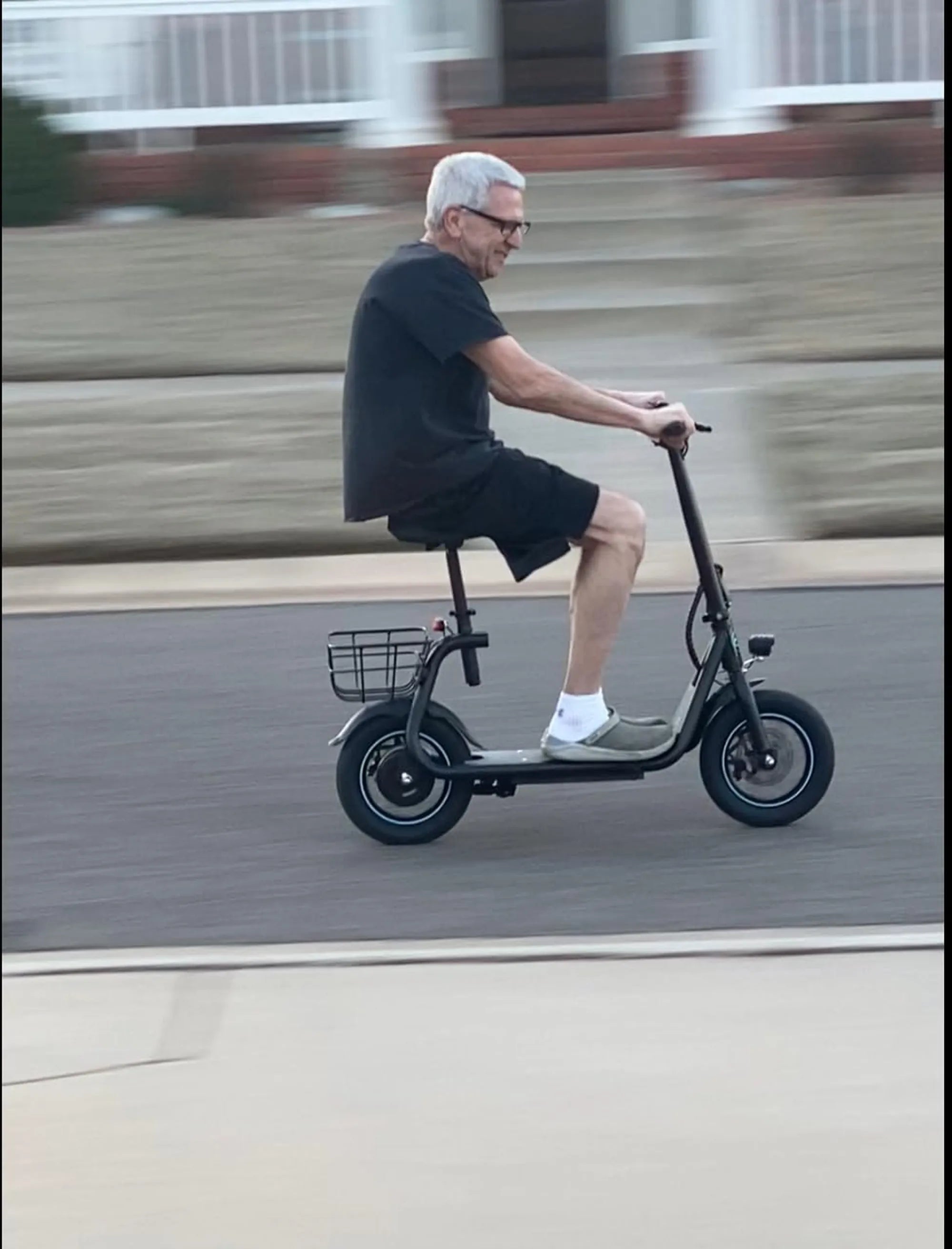
More Than a Modern Gadget
The electric scooter has become a defining symbol of 21st-century urban mobility, zipping through city streets and popping up on sidewalks worldwide. But its sudden ubiquity masks a surprisingly long and complex history. To answer the question, Who Invented Electric Scooters, we must look beyond a single name or patent.
This journey reveals a story of overlapping innovations, from early motorized concepts to the convergence of battery and motor technology. The modern electric scooter is the product of collective ingenuity, solving the age-old problem of personal transportation through decades of iteration.
You will learn about the proto-scooters of the early 1900s, the pivotal patents of the 1990s, and the technological catalyst that finally enabled mass adoption. This history explains not just where our rides came from, but how their core components evolved into the reliable machines we use today.
The Proto-Era: Precursors to the Plug-In Scooter (Late 19th – Mid 20th Century)
The foundation for the electric scooter was laid long before lithium-ion batteries. The basic kick scooter, a simple platform with two wheels and a handlebar, was patented by German inventor Karl von Drais in 1817 as part of his "running machine" developments. Meanwhile, the late 1800s saw rapid experimentation with electric motors and batteries.
Inventors quickly imagined combining these technologies. Patents and prototypes for small, personal electric vehicles appeared as early as the 1890s. However, these concepts were severely limited by the technology of their time.
The primary barriers were weight, cost, and infrastructure. Batteries were lead-acid, incredibly heavy, and offered very short range. Electric motors were inefficient and large. Without a compact, high-energy power source, a practical personal electric scooter remained a dream.
These early experiments were crucial nonetheless. They established the core idea: a stand-up, motorized personal transporter. They proved the concept had appeal, even if the execution was not yet viable for the masses.
The Autoped & the Moto-Ped: Grandparents of Personal EVs
A major leap came in 1915 with the Autoped, patented by Arthur Hugo Cecil Gibson. This is often cited as a key ancestor. The Autoped was a straddle-style scooter with a small gasoline engine mounted over the front wheel, controlled by pushing the handlebar forward to engage the clutch and pull back to brake.
While primarily gasoline-powered, electric versions of the Autoped were reportedly offered. It was marketed as a vehicle for short commutes and even by postal workers and police. Its commercial success was limited, but it cemented the motorized scooter in the public imagination.
Following this, the 1919 Moto-Ped (later known as the Skootamota) offered another take on the motorized scooter. These early 20th-century devices shared the core DNA of today's e-scooters: a standing platform, handlebars for steering, and a compact motor. They demonstrated the demand for personal, efficient mobility, even if the technology was noisy, polluting, and crude by today's standards.
The Pivotal 1990s: The Birth of the Modern E-Scooter
The true answer to Who Invented Electric Scooters in their recognizable modern form points decisively to the 1990s. This decade witnessed the critical convergence of several technologies: commercially viable lithium-ion batteries, compact and efficient brushless DC hub motors, and lightweight aluminum alloys.
This period is characterized not by a single "Eureka!" moment, but by parallel developments across the globe. Multiple inventors and companies recognized the potential of marrying the newly available lightweight batteries with the classic scooter form factor.
The driving force was a renewed focus on urban mobility, congestion, and environmental concerns. The goal shifted from novelty to creating a legitimate last-mile transportation solution. The technological pieces were finally falling into place to make that goal achievable.
Patents filed in this era directly describe the foldable, stand-up electric scooter with a deck-mounted battery and a hub motor in the rear wheel. This is the precise architecture that defines nearly every e-scooter on the market today, from shared fleets to premium consumer models.
Wim Ouboter & the Micro Mobility Revolution
A central figure in this modern lineage is Swiss inventor Wim Ouboter. In the early 1990s, seeking a convenient way to travel the short distance from his home to a local sausage shop, he developed a lightweight, foldable aluminum kick scooter called the Micro.
The kick scooter's success led Ouboter to envision an electrified version. In 1996, he filed patents for a foldable, electric scooter design. His company, Micro Mobility Systems, began developing the "Go-Ped" style electric scooters that became some of the first commercially successful modern e-scooters in the late 1990s and early 2000s.
Ouboter's crucial contribution was refining the user-centric design: portability through folding mechanisms, intuitive controls, and a focus on short-range urban travel. His work directly connects the kick scooter revival to the electric scooter boom, making him a legitimate claimant to co-inventing the modern form factor.
Parallel Developments: Patents and Early Commercial Attempts
Simultaneously, other innovators were working along similar lines. A U.S. patent filed in 1993 by inventor G. H. L. explicitly describes an "Electric Scooter" with many modern features. Japanese automotive companies like Honda also showcased early electric scooter prototypes throughout the 1990s.
On the commercial front, Peugeot launched the Scoot'Elec in 1996. It was an electric, stand-up scooter, but it was relatively heavy and bulky, using older battery technology. While not a mass-market success, the Scoot'Elec was a significant proof of concept from a major manufacturer.
This era of parallel invention often leads to confusion about Who Invented Electric Scooters. The reality is that the enabling technologies reached a maturity point that triggered simultaneous innovation worldwide. Ouboter's patents are among the most influential for the consumer product we recognize, but he was part of a broader wave.
The 21st-Century Catalyst: Tech, Sharing, and the Urban Boom
The 2000s and 2010s were a period of quiet refinement. Lithium-ion batteries became cheaper, more energy-dense, and safer. Brushless hub motors became more powerful and efficient. This allowed companies to produce consumer e-scooters that were genuinely practical, with ranges exceeding 15 miles and speeds suitable for city streets.
These improved consumer models gained a niche following among commuters and enthusiasts. However, the electric scooter remained a relatively specialized product until the seismic shift of 2017-2018.
The launch of dockless, app-based scooter-sharing companies—most notably Bird and Lime—catapulted the e-scooter into the global spotlight. They solved the "first/last mile" problem of public transit in a visibly disruptive way. Suddenly, millions of people tried an electric scooter for the first time, creating unprecedented demand and awareness.
This sharing economy boom was the ultimate catalyst. It validated the e-scooter as a mainstream mobility solution, drove massive investment in R&D, and accelerated the cycle of innovation for durability, connectivity, and safety that directly benefits consumer models today.
The Role of Battery and Motor Technology
If one must name the true "inventor" of the modern electric scooter, it is arguably the underlying technology itself. The commercial viability of the scooter is directly tied to two components.
First, the lithium-ion battery. The foundational work that led to this technology earned the Nobel Prize in Chemistry in 2019. Its high energy density and declining cost throughout the 2000s were the single biggest enabler, transforming e-scooters from heavy curiosities into light, capable vehicles.
Second, the brushless DC (BLDC) hub motor. This motor design is compact, efficient, reliable, and requires minimal maintenance. By integrating the motor directly into the wheel hub, engineers created a clean, simple drivetrain perfect for a small vehicle. The convergence of these two technologies in a lightweight frame is the real invention story.
Gyroor's Place in the Evolutionary Story
Modern brands like Gyroor stand on the shoulders of this long innovation journey. They are the inheritors and refiners of a century of development, focusing on advancing the legacy through enhanced safety, durability, and performance. Understanding the history underscores the importance of these refinements.
Gyroor's commitment to UL-certified battery packs addresses the foremost safety evolution from early, unstable battery systems. This certification, involving rigorous testing for over 500 charge cycles and multiple safety hazards, represents the maturation of the pivotal lithium-ion technology that made scooters possible.
Features like IPX5 water-resistant design directly tackle real-world usability challenges that earlier prototypes ignored, allowing riders to confidently navigate urban environments. Coupled with a reliable 1-year warranty, these elements reflect a focus on building trustworthy consumer products that learn from the past.
With a product range of over 20 models and a customer base of more than 100,000 riders, Gyroor exemplifies how the historical pursuit of personal mobility has crystallized into reliable, accessible technology for today's urban rider.
E-Scooter Evolution: Key Models and Capabilities
The progression of electric scooter technology is best illustrated by comparing the specifications and intent across different eras. The table below highlights this evolution from early concept to modern refined product.
| Era / Model Type | Primary Power Source | Key Innovation | Range & Speed (Typical) | Consumer Target |
|---|---|---|---|---|
| Proto-Era (e.g., 1915 Autoped) | Gasoline / Early Electric | Motorized personal scooter concept | ~10-15 mi / 20 mph | Novelty, Early Adopters |
| 1990s Pioneers (e.g., Early Patents, Peugeot Scoot'Elec) | Lead-Acid / Early Li-ion | Electric drivetrain integration, folding designs | ~8-12 mi / 12-15 mph | Niche Enthusiasts |
| 2010s Consumer Models | Lithium-ion | Lightweight frames, improved battery management | ~15-25 mi / 15-20 mph | Commuters, Hobbyists |
| Modern Performance & Commuter (e.g., Gyroor Fleet) | High-Density Li-ion (UL Certified) | Advanced safety (UL cert), water resistance, connectivity, robust suspension | ~20-40+ mi / 19-28 mph | Mainstream Commuters, Daily Riders |
This evolution shows a clear trajectory from conceptual proof to practical, safe, and reliable daily transportation. Each stage solved critical problems of the previous generation, with modern standards focusing squarely on rider safety and dependability.
FAQ: Untangling the Inventor Question
Q: So, who gets the official credit for inventing the electric scooter?
A: There is no single official inventor. The credit is shared. Key milestones include Arthur Hugo Cecil Gibson's 1915 Autoped (motorized scooter concept) and Wim Ouboter's 1990s patents for the modern, foldable electric design. The technology is the result of incremental innovation across engineering, battery science, and industrial design.
Q: When did electric scooters become popular?
A: Consumer models gained a niche following in the early 2000s. However, widespread, mainstream global popularity was directly and explosively triggered by the launch of dockless scooter-sharing services like Bird and Lime in 2017-2018. This exposed millions to the technology almost overnight.
Q: What was the biggest technological hurdle to overcome?
A: The battery. The shift from heavy, low-capacity lead-acid to lightweight, high-power lithium-ion batteries was the essential breakthrough. Their commercialization from the 1990s onward enabled the practical range and portability that define modern e-scooters. Motor efficiency was the second critical component.
Q: Were electric scooters invented before cars?
A: The concept of a small, personal electric vehicle existed in patent form in the late 1800s, around the same time as early gasoline automobiles. However, the modern, practical electric scooter as we know it was perfected long after the automobile became mainstream, due to its dependence on advanced battery technology.
Q: How have safety standards evolved with modern e-scooters?
A: Early models had minimal safety regulation. Modern brands now prioritize certifications like UL 2272 for the entire electrical system and UL 2849 for e-bikes/scooters, which test for electrical, mechanical, and fire safety. Features like water resistance (IP ratings), improved braking systems, and lighting are now standard, reflecting a focus on safe, real-world use.
A Legacy of Collective Ingenuity
The quest to answer Who Invented Electric Scooters reveals a tapestry woven by many hands across generations. From the mechanical dreams of the 1910s to the battery-powered breakthroughs of the 1990s, the electric scooter is a triumph of incremental progress. It is a tool perfected by time, meeting the enduring human need for simple, personal freedom of movement.
Today, that legacy continues in the focus on safety, reliability, and performance. The historical challenges of poor batteries and unreliable motors have been solved, allowing modern engineers to focus on refining the rider experience. The story is no longer about invention, but about evolution and execution.
Brands that understand this history build for the future. They incorporate the lessons of durability, safety certification, and user-centric design that separate fleeting trends from lasting transportation solutions. The electric scooter has earned its place in our cities, and its next chapter is about building them better.
Explore how a century of innovation translates into your next ride. Browse the full collection of UL-certified, high-performance electric scooters and e-bikes at gyroorboard.com, and join over 100,000 riders who trust in the next evolution of personal mobility.
Shop Electric Scooters for Adults: The Ultimate Guide to Choosing the Right Ride
Best Selling Electric Scooters: Top Picks for 2024