



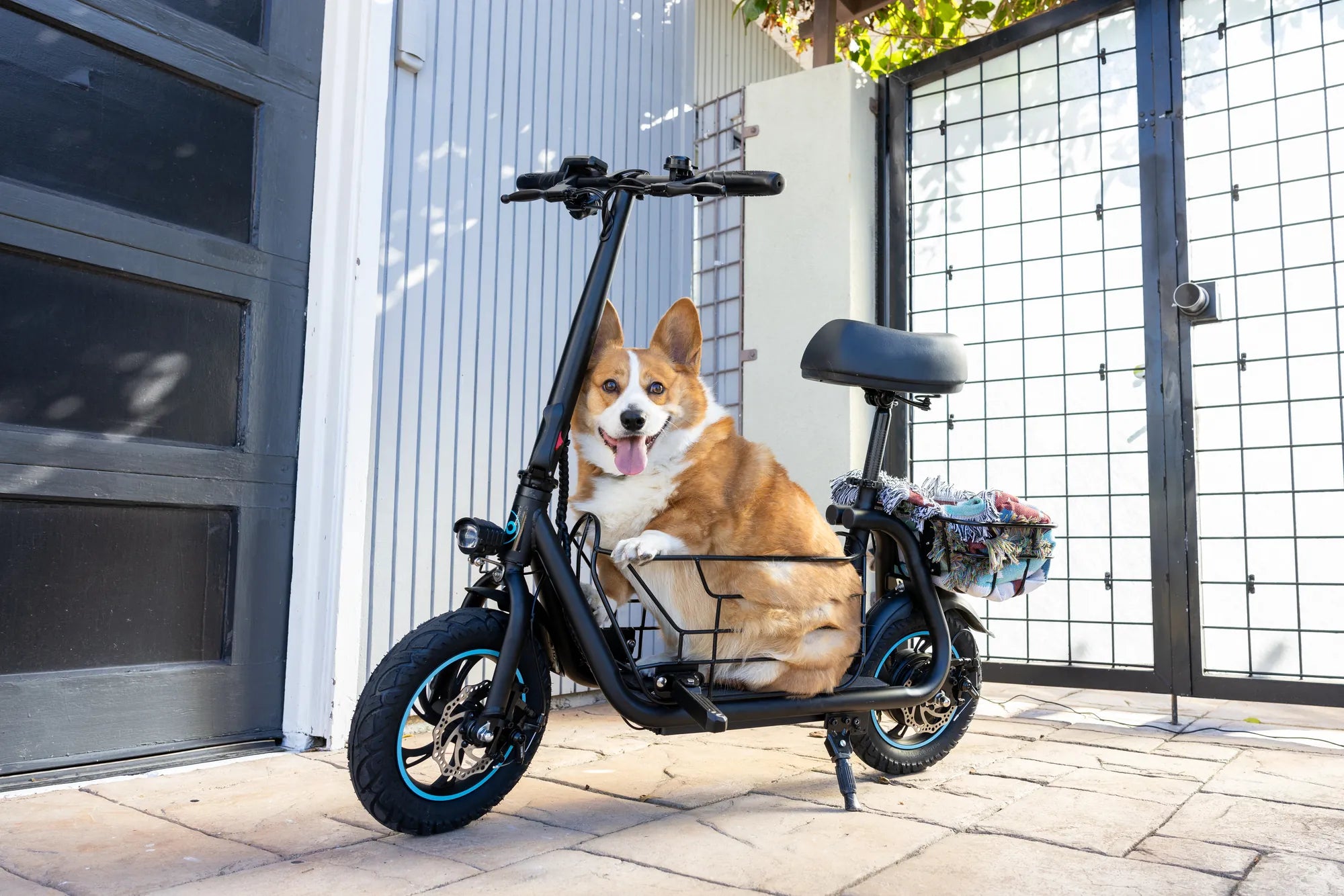
Introduction: The UK's Electric Scooter Conundrum
Electric scooters have surged in popularity worldwide as a convenient, eco-friendly mode of urban transport. Yet in the United Kingdom, a stark legal paradox exists. While you can see them in many cities, privately owned electric scooters remain largely illegal to use on public roads, cycle lanes, and pavements. This leads directly to the core question: Why are electric scooters illegal in the UK?
The answer is not a simple ban but a complex entanglement of century-old laws, contemporary safety concerns, and a regulatory system struggling to adapt to new technology. This article will dissect the current legal status, the government's rationale, the exceptional rental trials, and the ongoing debate about the future. We will also explore how brands like Gyroor are building future-proof, safety-first mobility solutions for UK riders navigating this uncertain landscape.
The Current Legal Status: Understanding the Highway Act
To understand why electric scooters are illegal in the UK, you must start with the law. Most privately owned e-scooters are classified by the UK government as 'Powered Transporters'. This is a catch-all term for personal light-electric vehicles (PLEVs).
Under this classification, they fall under the regulatory scope of the 1835 Highway Act and the 1988 Road Traffic Act. These laws dictate that any motor vehicle used on a public road must have a type approval, be registered with the DVLA, be taxed, insured, and have a valid driving license held by the rider. It must also have functioning lights, number plates, and a horn.
Privately owned e-scooters, as currently designed and sold, cannot meet these requirements. They are not type-approved for road use, cannot be registered with the DVLA, and most standard vehicle insurance policies do not cover them. Consequently, their use on public highways is almost always illegal.
Public Roads vs. Private Land
The critical legal distinction lies in the location of use. It is illegal to ride a private e-scooter on public roads, pavements, footpaths, bridleways, or in cycle lanes. This covers virtually all public spaces.
The only place where riding a private e-scooter is legal is on private land, with the explicit permission of the landowner. This could include private driveways, closed car parks, or specific off-road trails. The penalties for illegal use are severe. Police can issue a £300 fixed-penalty notice and six penalty points on your driving license. The scooter itself can be impounded.
The Rationale Behind the Restrictions: Safety and Regulatory Concerns
The government's primary justification for maintaining these restrictions revolves around public safety and the absence of a suitable regulatory framework. The core concern is that introducing a new, fast-moving vehicle class without proper rules could lead to increased accidents and public harm.
Officials point to the 'wild west' scenario of unregulated scooters: riders of varying ages, scooters with unknown mechanical integrity, and speeds that can exceed 30 mph on some models. Without mandatory insurance, pedestrians or other road users injured in a collision would have no recourse for compensation.
Accident Data and Pedestrian Safety
Safety concerns are supported by emerging data. Department for Transport (DfT) statistics for 2022 reported 1,437 casualties in collisions involving e-scooters in Great Britain, including 12 fatalities. Of these casualties, 32% were pedestrians.
This data fuels the fear of pavement riding and pedestrian conflict. Pavements are designed for walking, and introducing silent, fast-moving vehicles creates a clear hazard, especially for the elderly, disabled, or those with visual impairments. The potential for abandoned scooters creating trip hazards ('clutter') is another cited concern.
The Regulatory Vacuum
E-scooters exist in a regulatory vacuum. They are not bicycles, which have clear exemptions, nor are they mopeds, which have a full regulatory regime. There are no UK-wide rules governing their construction, mandatory lighting, braking standards, maximum power output, or rider age limits for private models.
This vacuum means a 12-year-old could legally purchase a powerful e-scooter online and ride it illegally on a pavement at 20 mph, with no helmet, training, or insurance. The government's position is that this status quo is untenable and that legalisation must be preceded by comprehensive regulation.
The Trial Scheme Exception: Rental E-Scooters on Public Roads
Since July 2020, the UK government has run a series of national trials for rental e-scooters. These trials, operating in over 30 designated regions including London, Birmingham, and Bristol, create the notable exception to the rule and are often the source of public confusion.
In these trial areas, it is legal to rent and ride an approved e-scooter on public roads and cycle lanes. This legality is not a free-for-all; it is a tightly controlled experiment with strict parameters designed to gather data on safety and usage patterns.
How Rental Schemes Differ from Private Ownership
The rental trials operate under specific requirements that private scooters do not meet, which is precisely why electric scooters are illegal in the UK in private hands while rentals are not. The key differences are structured to mitigate risk.
| Feature | Rental Trial E-Scooters (Legal) | Privately Owned E-Scooters (Illegal on public land) |
|---|---|---|
| Insurance | Fully insured by the operator for third-party liability. | No available standard insurance policy. |
| Speed Limit | Geofenced to 15.5 mph (12.5 mph in some zones). | Often capable of 20-30+ mph, with no enforceable limit. |
| Where to Ride | Roads and cycle lanes only; pavement riding is prohibited and geofenced. | Illegal on all public land; legal only on private land. |
| Rider Requirements | Must have a full or provisional driving license (Category Q minimum). | No legal requirement, though illegal to use publicly. |
| Vehicle Standards | Must meet specific trial requirements for lights, brakes, and identification. | No mandated UK safety or construction standards. |
| Parking | Designated parking bays to prevent clutter; fines for improper parking. | No regulated parking system, leading to obstruction risks. |
This controlled environment allows the government to study real-world impacts while maintaining a layer of safety and accountability absent from the private market.
The Future of E-Scooter Law in the UK: Potential for Change
The current situation is widely viewed as transitional. There is significant political and public pressure to reform the law, driven by environmental goals, congestion woes, and the sheer popularity of micro-mobility. The future likely involves creating a new, regulated vehicle class.
The government has conducted consultations on the future of 'Powered Light Electric Vehicles' (PLEVs). The core proposal is to bring certain low-speed, zero-emission vehicles into a legal framework, separating them from the archaic laws that currently govern them.
Arguments for Legalisation and Regulation
Proponents of legalisation make a strong case. E-scooters offer a clean, space-efficient solution for short urban trips, potentially reducing car use, traffic congestion, and air pollution—key pillars of the UK's Net Zero strategy.
They provide an affordable transport option and improve 'last-mile' connectivity from public transit hubs. Many point to successful regulatory models in other European countries like France, Germany, and Denmark, where e-scooters are legal with clear rules on speed, age, and helmet use.
Potential Regulatory Models
A future UK legal framework will likely include a combination of the following measures, many mirrored from the rental trials and European best practices:
- Mandatory Third-Party Insurance: A legal requirement to protect all road users.
- Minimum Rider Age: Likely set at 16 or 18 years old.
- Power & Speed Limits: A maximum continuous rated power (e.g., 500W) and a speed limit capped at 15.5 mph on public roads.
- Technical Standards: Mandatory requirements for lighting (front and rear), reflectors, audible warning devices, and braking systems.
- Helmet Use: Potentially mandatory, especially for younger riders.
- Ban on Pavement Riding: Strictly limited to roads and cycle lanes.
This model would transform e-scooters from illegal 'Powered Transporters' into a recognised, regulated, and safe form of transport.
Choosing a Legal E-Ride: Gyroor's Commitment to Safe, Future-Proof Mobility
For UK riders interested in electric mobility, the current legal landscape requires careful navigation. While the law is restrictive, forward-thinking manufacturers like Gyroor are designing products with safety, quality, and potential future regulations at their core. If you choose to ride on private land, or in anticipation of future law changes, selecting a responsibly built scooter is paramount.
Gyroor, a leading electric scooter and e-bike brand trusted by over 100,000 riders across North America and Europe, embeds safety into its engineering philosophy. This focus aligns directly with the concerns highlighted by UK authorities.
Gyroor E-Scooters: Built to High Standards
Gyroor's electric scooter range addresses key UK safety concerns through robust design. All Gyroor models use UL-certified battery packs, tested for 500+ charge cycles, directly tackling concerns over fire safety—a major issue with uncertified, knockoff batteries.
Their IPX5 water-resistant rating ensures reliable performance in typical UK weather, reducing the risk of electrical failure. Features like dual braking systems, bright headlights, and taillights with brake indicators are standard, providing the foundational safety equipment that future UK regulations are likely to demand. This makes them a responsible choice for legal use on private land today and a potentially compliant option tomorrow.
Exploring Legal Alternatives: Gyroor E-Bikes
For riders seeking immediate, unrestricted access to public roads and cycleways, Gyroor's electric bikes present a perfect, fully legal solution. In the UK, electrically assisted pedal cycles (EAPCs) that meet specific regulations are treated exactly like conventional bicycles.
To be legal, an e-bike must have a motor with a maximum continuous rated power of 250 watts, which should only provide assistance when the rider is pedalling and must cut off when the bike reaches 15.5 mph. Gyroor's e-bikes are designed to comply with these EAPC regulations. This means they require no vehicle tax, insurance, or driving license to ride (for anyone aged 14 and over). They can be used on roads, cycle lanes, and anywhere a traditional bicycle is permitted, offering a seamless, eco-friendly commute today.
FAQ: Electric Scooter Laws in the UK
1. Can I ride my own e-scooter to work or to the shops?
No. It is illegal to ride a privately owned e-scooter on any public road, cycle lane, pavement, or footpath. The only legal place to ride is on private land with the landowner's permission.
2. What happens if I'm caught riding my e-scooter illegally?
You face a £300 fixed penalty notice and six penalty points on your driving license if you have one. The police can also confiscate your scooter.
3. Are electric bikes (e-bikes) legal in the UK?
Yes, fully. Electric bikes that meet the UK's EAPC regulations (250W motor, pedal assist, max speed 15.5 mph) are treated as normal bicycles. No license, tax, or insurance is required for riders aged 14+, and they can be used on roads and cycle lanes.
4. What about the e-scooters I see in cities? Are they legal?
Those are rental e-scooters part of a government trial. They are only legal within the specific trial area, on roads/cycle lanes, and when rented from an approved operator. Riding a private scooter in the same city is still illegal.
5. Will the law change to allow private e-scooters soon?
Change is likely but not immediate. The government has consulted on creating a new legal category for low-speed electric vehicles. Any new law would involve strict rules on insurance, rider age, speed limits, and vehicle standards. It is a matter of 'when', not 'if', but the timeline remains uncertain.
Navigating the Present, Ready for the Future
The question of why electric scooters are illegal in the UK reveals a clash between innovative technology and outdated legislation, framed by legitimate safety concerns. The current ban is not an endpoint but a holding position, with government trials actively testing a safer, regulated model. The future points toward legalisation, but it will be a legalisation with rules—insurance, speed caps, and safety standards will be non-negotiable.
For now, UK enthusiasts must ride responsibly: use private land for e-scooters or embrace the completely legal freedom offered by compliant e-bikes. When choosing any electric ride, prioritise brands that invest in safety certifications and robust construction, like Gyroor, whose UL-certified batteries and water-resistant designs offer peace of mind today and a foundation for compliance tomorrow.
Stay informed on legislative changes, always prioritise safety, and explore the full range of legal, sustainable mobility options available. Discover Gyroor's collection of premium, safety-focused e-scooters for private land use and fully UK-road-legal e-bikes at gyroorboard.com.
Electric Scooters 1600W: Power, Performance, and Practicality for Urban Commuters
Electric Scooters Bangkok: The Ultimate Guide to Urban Mobility