



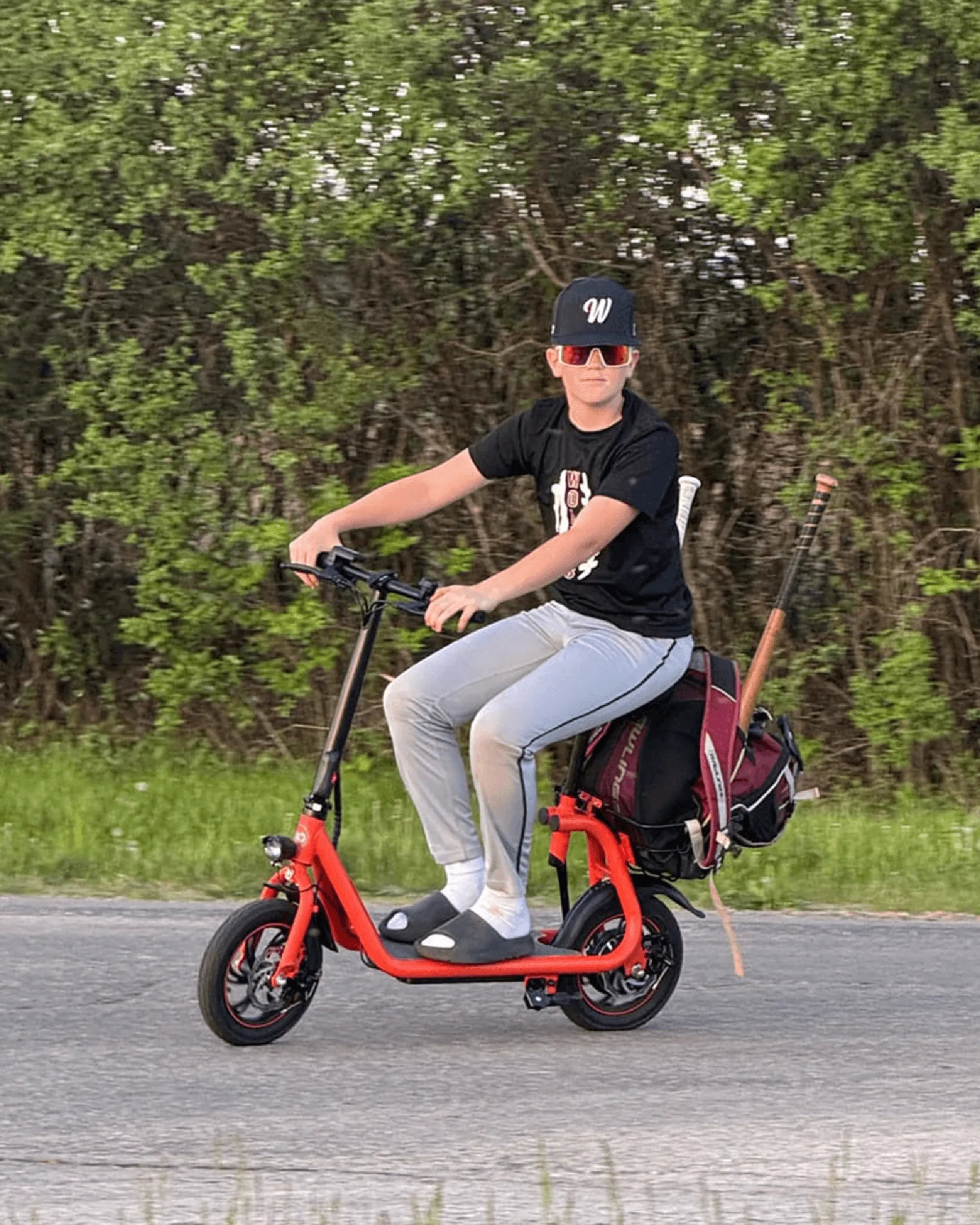
Ever wondered how a self-balancing scooter seems to defy gravity, staying perfectly upright even when you lean forward or backward? These futuristic personal transporters rely on cutting-edge technology to provide a smooth and effortless ride. Let’s dive into the working principle of self-balancing scooters and uncover the science behind their seamless operation.
The Core Components of a Self-Balancing Scooter
At the heart of every self-balancing scooter are three critical components: gyroscopic sensors, a control board, and electric motors. These elements work in harmony to detect shifts in weight and adjust the scooter’s movement accordingly.
- Gyroscopic Sensors: These sensors measure the tilt and angular velocity of the scooter, providing real-time data to the control system.
- Control Board: Acting as the brain of the scooter, the control board processes sensor data and sends commands to the motors.
- Electric Motors: Located in the wheels, these motors adjust speed and direction based on signals from the control board.
How the Self-Balancing Mechanism Works
The magic of a self-balancing scooter lies in its ability to mimic human balance. When you lean forward, the gyroscopic sensors detect the shift in weight and send this information to the control board. The board then instructs the motors to accelerate, moving the scooter forward to counteract the lean. Conversely, leaning backward triggers deceleration or reverse movement to maintain equilibrium.
This dynamic adjustment happens in milliseconds, creating the illusion of effortless balance. The system continuously monitors and corrects its position, ensuring stability even on uneven terrain.
The Role of PID Controllers in Stability
To fine-tune its balancing act, a self-balancing scooter uses a Proportional-Integral-Derivative (PID) controller. This advanced algorithm calculates the necessary adjustments based on three factors:
- Proportional (P): Responds to the current error (difference between desired and actual position).
- Integral (I): Addresses accumulated past errors to eliminate steady-state inaccuracies.
- Derivative (D): Predicts future errors based on the rate of change, improving response time.
By combining these calculations, the PID controller ensures smooth and precise movements, preventing jerky or unstable rides.
Power Source and Energy Efficiency
Self-balancing scooters are powered by rechargeable lithium-ion batteries, which provide the necessary energy for both propulsion and balance control. The efficiency of these batteries allows for extended use, while regenerative braking systems can recover some energy during deceleration, further optimizing performance.
Modern designs also incorporate power-saving features, such as automatic shut-off when idle, to maximize battery life.
Safety Features and Fail-Safes
To ensure rider safety, self-balancing scooters include multiple fail-safes. Overload protection prevents motor burnout, while tilt sensors can disable the scooter if it exceeds safe angles. Some models also feature speed limiters and low-battery warnings to prevent accidents.
These safety mechanisms make self-balancing scooters not only innovative but also reliable for everyday use.
From gyroscopic sensors to PID controllers, the working principle of self-balancing scooters is a marvel of modern engineering. Whether you’re gliding through city streets or navigating tight spaces, these devices offer a glimpse into the future of personal transportation—where balance and motion are effortlessly controlled by intelligent systems.
Adult Road Scooter: The Ultimate Guide to Choosing and Riding
1000w Electric Scooter 30mph: The Ultimate Urban Commuter