


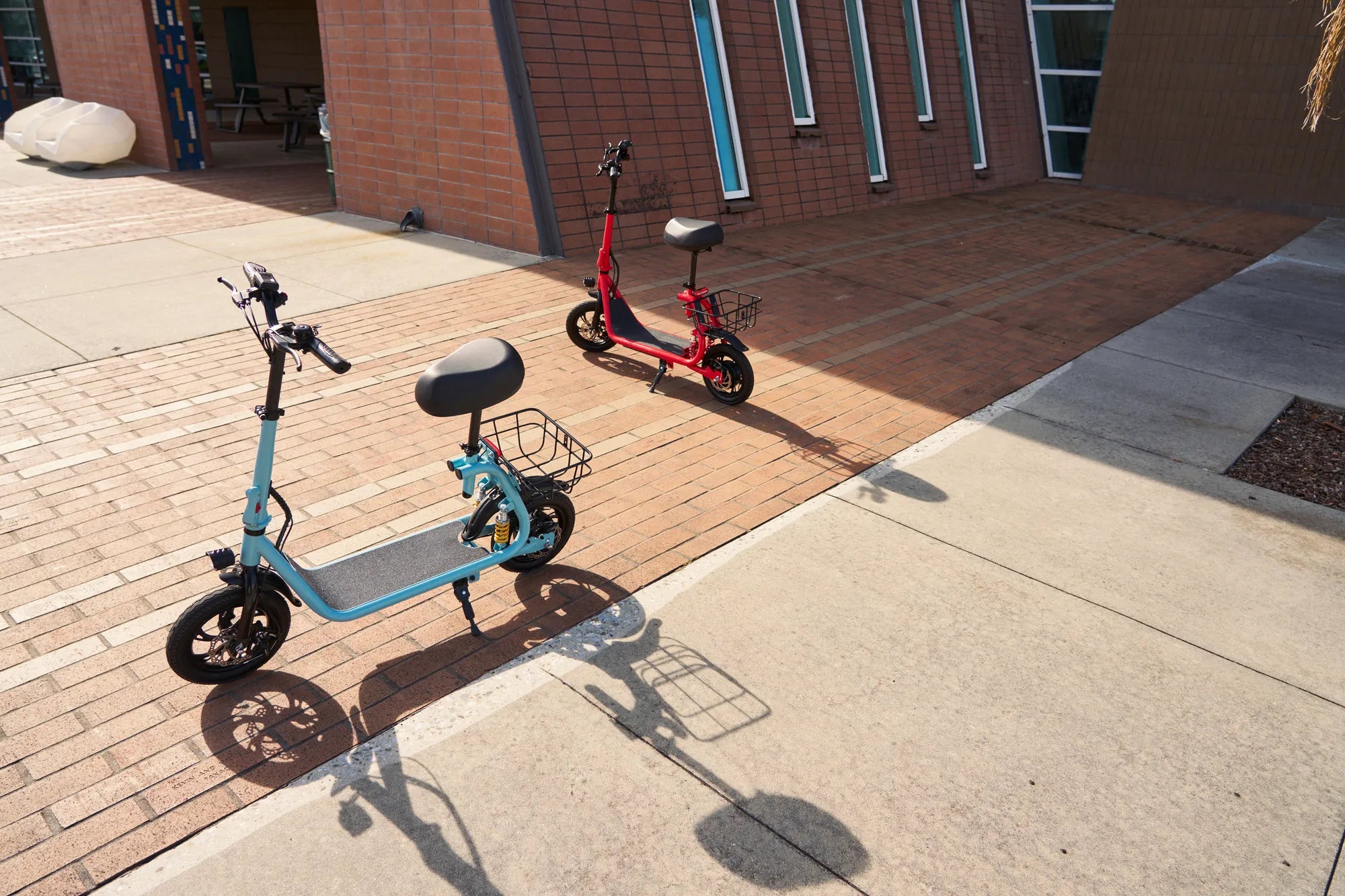
Your Scooter, Your Ride – A Guide to Maximizing the Experience
Your scooter is more than a simple vehicle; it's a passport to efficient urban mobility, spontaneous adventure, and a more sustainable lifestyle. This guide is designed to transform you from a casual rider into an informed owner. Whether you're commuting daily or exploring on weekends, understanding your machine is the key to safety, reliability, and getting the most out of every ride. We'll cover critical selection criteria, pre-ride checks, maintenance routines, and smart riding practices. This knowledge ensures your scooter remains a dependable partner for years, not just months.
Choosing the right model is the first step toward a great experience. The market offers a vast range, from ultra-portable commuters to rugged off-road machines. Your scooter must align with your primary use case, local terrain, and personal needs. A mismatch can lead to frustration, unsafe conditions, or premature wear. We'll break down the specifications that truly matter, helping you cut through marketing jargon to find the perfect match for your lifestyle.
Ownership extends far beyond the initial purchase. Proper care and informed operation are what separate a short-lived gadget from a long-term asset. With over 100,000 riders trusting brands like Gyroor for their UL-certified safety and robust warranties, the emphasis on quality and support is clear. This guide leverages that philosophy, providing data-driven advice to protect your investment and ensure every journey is as smooth as the first.
Choosing Your Perfect Scooter: Key Specs for Your Needs
Selecting your scooter is a balance of performance, practicality, and safety. Key specifications directly translate to real-world capability. Ignoring them can leave you stranded on a hill or struggling with a bulky, impractical device. Focus on motor power, battery range, and build quality as your primary decision-making pillars. These elements define the scooter's core personality and its suitability for your daily life.
Consider your typical route. Is it a flat, smooth bike path or a hilly urban landscape with cracked pavements? Your environment dictates your needs. A commuter navigating crowded sidewalks and public transit needs portability, while a suburban explorer might prioritize range and comfort. There is no one-size-fits-all solution, but understanding the trade-offs allows you to make a confident, personalized choice.
Motor Power & Speed: Matching Performance to Your Terrain
Motor wattage is the engine of your scooter. A 250W motor is sufficient for flat ground and lighter riders, typically reaching speeds of 15-18 mph. For most adults and moderate hills, a 350W to 500W motor is the sweet spot, offering better acceleration and reliable hill-climbing ability. If you face steep inclines or desire higher top speeds (20-25 mph), look for motors rated at 500W or higher. Remember, higher wattage often correlates with increased weight and battery consumption.
Torque is equally important. It's the force that gets you moving from a stop and powers you up inclines. Dual-motor scooters, often found in performance models, provide exceptional torque and hill-climbing prowess. For the average urban rider, a single robust motor from a reputable brand provides the best balance of power, efficiency, and cost. Your scooter's motor should feel capable, not strained, on your regular routes.
Battery Range & Charging: Planning Your Daily Commute
Manufacturer range claims are usually based on ideal conditions: a light rider on flat ground at low speed. Real-world range is typically 60-70% of the advertised figure. To estimate your needs, calculate your daily round-trip distance and add a 30-50% buffer for errands, headwinds, or battery degradation over time. A 15-mile real-world range is a practical minimum for most commuters.
Battery safety is non-negotiable. Always opt for scooters using UL-certified battery packs, like those standard in Gyroor models. These batteries undergo rigorous testing for stability, charge cycles (often 500+), and safety. Use only the manufacturer-provided charger. Smart charging habits, such as avoiding leaving the battery at 0% or 100% for extended periods, will significantly extend its lifespan, which we will detail in a later section.
Portability & Build: From Folding Designs to Rugged Frames
Portability is defined by weight and folding mechanism. A commuter scooter should ideally weigh under 30 lbs for easy carrying up stairs or onto trains. The folding mechanism should be robust, intuitive, and secure when locked. Test the folded dimensions to ensure it fits under your desk or in a car trunk. Build quality is paramount; look for a frame made from aerospace-grade aluminum for strength without excessive weight.
Weather resistance is critical for all-weather readiness. The IP rating indicates protection against solids and liquids. An IPX5 rating, common in quality commuter models, means the scooter can withstand water jets from any direction, making it safe for riding in light rain and through puddles. Your scooter's build determines its durability. A well-built model with proper sealing protects the electrical components, ensuring reliability ride after ride.
Essential Pre-Ride Safety & Maintenance Checklist
A two-minute pre-ride inspection can prevent accidents and costly repairs. Never assume your scooter is in the same condition as your last ride. This checklist is your first line of defense. It systematically verifies the critical systems that keep you safe: tires, brakes, and lights. Making this a habit is as important as putting on a helmet.
Start with a visual overview. Look for any obvious damage to the frame, handlebars, or deck. Check that the folding mechanism (if present) is fully locked and secure. Ensure the throttle and brake levers return smoothly to their resting positions. A quick physical check can reveal loose components that might have vibrated free during previous rides. This baseline assessment sets the stage for the more detailed checks below.
Tire Pressure and Tread Inspection
Proper tire inflation is crucial for safety, range, and ride comfort. Under-inflated tires increase rolling resistance (draining your battery), reduce stability, and risk pinch flats. Over-inflated tires make the ride harsh and reduce traction. Use a reliable pressure gauge. For pneumatic (air-filled) tires, maintain the PSI recommended on the tire sidewall, usually between 40-50 PSI. Check pressure weekly.
Inspect the tread for wear, cuts, or embedded debris. Worn tread significantly reduces grip, especially on wet surfaces. For scooters with solid (airless) tires, check for excessive wear or cracking. While they never go flat, solid tires can wear down and become harder, offering less shock absorption. Your scooter's connection to the road is only as good as its tires; never neglect them.
Brake System Test: Mechanical vs. Electronic
Test your brakes before moving. Squeeze each brake lever firmly while stationary. They should engage smoothly without touching the handlebar grip and hold without slipping. For mechanical disc or drum brakes, listen for grinding sounds which indicate worn brake pads. Pads should be replaced when they are less than 1.5mm thick. For electronic (regenerative) brakes, ensure they engage predictably and don't feel delayed.
Most scooters have a front and a rear brake. Practice using them together for controlled, balanced stopping. The rear brake provides stability, while the front offers more powerful stopping force. In an emergency, apply both evenly but progressively to avoid locking up the wheels. Your scooter's braking system is its most critical safety feature; its reliability cannot be compromised.
Light and Signal Verification
Visibility is safety. Turn on your front headlight, rear brake light, and any side or deck lights. Ensure they are bright, clean, and functional. The headlight should adequately illuminate your path in low-light conditions, not just make you visible. The rear brake light should activate automatically when you apply the brakes. Consider adding additional LED strips or a helmet light for enhanced visibility, especially for night riding.
While not all scooters have electronic turn signals, using hand signals is a vital part of road etiquette and safety. Clearly signal your intentions to drivers, cyclists, and pedestrians. Your scooter's integrated lights are your primary communication tool in traffic; ensuring they work is a legal and practical necessity in most areas.
Maximizing Battery Life and Scooter Longevity
Your scooter's battery is its heart and its most expensive component to replace. Proper care can double its functional lifespan. Longevity isn't just about the battery; it's about the entire ecosystem—the drivetrain, bearings, electronics, and frame. A proactive maintenance mindset protects your financial investment and ensures consistent performance.
Adopt a holistic view of scooter care. It combines smart energy management with regular physical upkeep. The principles are similar to caring for a bicycle or a computer: keep it clean, dry, and properly adjusted. Following a simple routine will keep your scooter running like new long after the warranty expires, providing exceptional value over its lifetime.
Smart Charging Habits for UL-Certified Batteries
Lithium-ion batteries prefer partial cycles. For daily use, try to keep the charge between 20% and 80%. Avoid routinely draining the battery to 0% or leaving it plugged in at 100% for days. If storing your scooter for more than a month, charge (or discharge) it to about 50-60% before storage. Always use the official charger provided; third-party chargers may not have the correct voltage or safety cut-offs.
Allow the battery and motor to cool down for 15-30 minutes after a long or strenuous ride before charging. Avoid charging in extreme temperatures (below freezing or above 95°F/35°C). A full charge from empty typically takes 4-6 hours. Unplug the charger once the indicator shows a full charge. These habits help preserve the battery's chemistry, maintaining its capacity and safety over hundreds of charge cycles.
Routine Cleaning and Post-Ride Care
Clean your scooter regularly to prevent dirt and grime from damaging moving parts. Use a damp cloth to wipe down the frame, deck, and handlebars. For tougher grime, use a mild soap solution. Avoid high-pressure water jets, even on IPX5-rated models, as forced water can eventually compromise seals. Never direct water at the charging port, display, or motor hub.
After cleaning, perform a basic mechanical check. Tighten any loose bolts on the stem, handlebars, and folding mechanism. Apply a drop of light lubricant (like silicone spray) to the folding hinge and brake lever pivots to keep them moving smoothly. Periodically check the wheel bearings for smooth rotation and the brake cables for fraying. This five-minute post-ride ritual dramatically extends the life of your scooter.
Understanding Your Warranty and Support
A strong warranty is a sign of manufacturer confidence. Look for a comprehensive warranty that covers the frame, motor, and battery for at least one year. Reputable brands like Gyroor offer such coverage, often backed by accessible, US-based customer support. Understand what is and isn't covered—typically, wear items like tires, brake pads, and physical damage from crashes are excluded.
Register your product warranty upon purchase. Keep your original receipt and the warranty documentation. If an issue arises, contact support with your serial number and a clear description of the problem. Good support can provide troubleshooting guides, authorize repairs, or ship replacement parts. Your scooter's warranty is a key part of its long-term value proposition, offering peace of mind.
Riding Smart: Rules, Etiquette, and Gear for the Modern Rider
Being a responsible rider ensures your safety and fosters positive community acceptance of e-scooters. It involves knowing the law, sharing space respectfully, and gearing up appropriately. Your behavior on your scooter impacts how all riders are perceived. Adopting a courteous and lawful approach makes the roads and paths safer for everyone.
E-scooter laws vary wildly by city, state, and country. Ignorance is not a legal defense. Taking ten minutes to research local regulations is essential. This knowledge dictates where you can ride, how fast you can go, and whether you need a license or helmet. Smart riding is informed riding.
Knowing Your Local Laws and Classifications
Research is key. Check your city's transportation or police department website. Key questions to answer: Are e-scooters allowed on sidewalks, bike lanes, or roads? Is there a speed limit (often 15-20 mph)? Is there a minimum age requirement? Are helmets mandatory for all ages or just minors? Some cities require registration or have designated parking zones. Your scooter is a vehicle; operate it within the legal framework.
Classify your scooter. Most consumer models are classified as "personal electric mobility devices." This often grants them access to bicycle infrastructure. However, high-speed performance models may fall into different categories with stricter rules. Abiding by the law isn't just about avoiding tickets; it's about integrating safely into the existing transportation ecosystem.
Essential Safety Gear: Beyond the Helmet
A helmet is non-negotiable. Choose a bicycle or multi-sport helmet that fits properly. For higher-speed riding, consider a full-face mountain bike helmet for added protection. Gloves protect your hands in a fall and improve grip. Wrist guards are highly recommended, as wrist fractures are a common scooter injury.
For visibility, wear reflective clothing or a vest, especially at dawn, dusk, or night. Sturdy, closed-toe shoes are essential for secure footing on the deck. For commuters, consider keeping a lightweight rain jacket in a backpack. Your scooter provides mobility; your gear provides protection. Investing in quality safety gear is investing in yourself.
Parking and Public Perception
Park responsibly. Never block sidewalks, ramps, building entrances, or access ways for people with disabilities. Use bicycle racks when available. If you must park on the sidewalk, leave at least a 36-inch clear path for pedestrians. A poorly parked scooter creates hazards and fuels public opposition to micro-mobility.
Practice path etiquette. On shared-use paths, ride predictably, signal passes, and announce yourself politely with a bell or voice when overtaking pedestrians. Yield to pedestrians always. Keep your speed low in crowded areas. By being a considerate rider, you help build a positive image for the entire e-scooter community, ensuring continued access to public spaces.
Performance Comparison: Commuter vs. Off-Road Scooters
Understanding the design philosophy behind different scooter types helps contextualize your choice and set realistic expectations. The table below contrasts the two primary categories: the urban commuter and the off-road explorer. Your scooter will fall somewhere on this spectrum based on its specifications.
| Feature | Urban Commuter Scooter | Off-Road / Performance Scooter |
|---|---|---|
| Primary Use | Daily commuting, errands, flat city streets. | Trail riding, rough terrain, steep hills, recreational speed. |
| Typical Motor | 350W - 500W single motor. | 500W - 1000W+, often dual motor. |
| Top Speed | 15 - 20 mph. | 25 - 40+ mph. |
| Battery Range | 15 - 25 miles (real-world). | 20 - 40+ miles (real-world, varies with use). |
| Suspension | Small or none; relies on pneumatic tires. | Full suspension (front & rear) essential. |
| Tires | 8-10" pneumatic or solid tires. | 10"+ pneumatic, knobby off-road tires. |
| Weight & Portability | 25 - 40 lbs; emphasis on folding. | 50 - 80+ lbs; often less portable. |
| Key Feature | IPX5 water resistance, integrated lights, portability. | High ground clearance, powerful brakes, robust frame. |
Your scooter should match its intended environment. A commuter scooter prioritizes portability, weather resistance, and efficiency. An off-road model sacrifices portability for power, suspension, and durability. There are hybrid models that blend characteristics, but understanding these core differences prevents you from taking a city scooter on a mountain trail or lugging a heavy performance model onto a train daily.
Frequently Asked Questions (FAQ)
Q: How often should I fully charge my scooter's battery?
A: For daily use, partial charges are better for battery health. Aim to keep it between 20-80%. A full charge (to 100%) every few weeks is fine for battery management system calibration. Avoid leaving it at 100% for extended periods.
Q: Can I ride my scooter in the rain?
A: Scooters with an IPX5 water-resistance rating, like many Gyroor models, are protected against water jets from any direction. This makes light rain and wet roads safe. However, avoid deep puddles (submerging the deck), heavy downpours, and riding through standing water after storms.
Q: What basic tools should I keep for maintenance?
A: A multi-tool with Allen keys and screwdrivers, a digital tire pressure gauge, a portable mini-pump (for pneumatic tires), and a set of spare inner tubes or a tire repair kit. A small brush and cloth for cleaning are also useful.
Q: My scooter is making a strange noise. What should I do?
A: First, try to identify the source. A clicking from the wheel could be a loose axle or debris in the brake. A grinding from the motor could indicate a serious issue. Stop riding if the noise is severe. Tighten any visible loose bolts. If the noise persists, consult the manufacturer's support—it's often covered under warranty.
Q: How do I safely store my scooter for the winter or long periods?
A: Clean it thoroughly. Charge (or discharge) the battery to approximately 50-60%. Store in a cool, dry place, away from direct sunlight and freezing temperatures. Check the battery charge every 2-3 months and give it a small top-up back to 50-60% if needed.
The Journey Ahead with Your Scooter
Your scooter represents a shift toward personal, efficient, and enjoyable transportation. The freedom it offers is unparalleled, but that freedom is built on a foundation of informed ownership. By choosing the right model, performing regular maintenance, riding with safety and courtesy, and understanding your machine, you unlock its full potential. This transforms it from a novelty into a reliable tool for daily life and adventure.
The value of selecting a scooter from a brand with strong safety credentials cannot be overstated. Features like UL-certified batteries, IPX5 water resistance, and a robust 1-year warranty provide essential peace of mind. They ensure that your focus remains on the ride itself—the wind in your face, the time saved in traffic, the exploration of your city. Your scooter is a gateway to a more dynamic lifestyle.
Embrace the journey. Continue learning about your scooter, stay updated on local laws, and connect with the riding community. Each trip is an opportunity to refine your skills and deepen your appreciation for this innovative form of mobility. The road ahead is yours to discover, one safe, smart, and satisfying ride at a time.
Ready to find the perfect scooter for your journey or explore upgrades and accessories for your current ride? Browse the full Gyroor collection, featuring UL-certified, IPX5-rated electric scooters and e-bikes trusted by over 100,000 riders, at gyroorboard.com.
How Tall Should a Scooter Be: The Complete Rider's Fit Guide
24 Inch Speed Bike: The Ultimate Guide to Agile Performance Cycling